
Featured
Ugwuanyi’s Relationship Management Savvy and the Gains Therefrom
By Reuben Onyishi (Ugoachataberu)
As it is written in the holy book, go wisdom is better than weapons of warfare. Certain battles in life are avoidable only if men have wisdom. The Almighty God was minded to give King Solomon rest from battles, unlike King David, his father, who, all his life, fought battles up and down the hills and caves. His hands were soiled with blood so much that when he purposed to build a house for God, the Almighty objected to that and would rather his son did build His temple. So when Solomon asked for wisdom, he asked according to the will of God; he asked and received because he did not ask amiss. God granted him unprecedented wisdom and so he could manage relationships effectively with every diplomatic savvy without detracting from the dignity of the exalted office he occupied.
Many of the tyrants that did people the governance of the world were men who lacked the wisdom of governance embedded in interpersonal skills and relationship management abilities. Wisdom is the ability to solve a problem without creating another problem in the process. Tyrants seek to protect their positions arbitrarily. They are cowardly men who lack the competence and the art of wearing the toga of power. Tyrants undress power naked and have it rampage and gallop uncontrollably along the streets of the country with no loincloth of peace and modesty around its rude waste, as Achebe would say. Tyrants know not how to negotiate power across the bends of governance and so end up crashing it into the rueful heaps of indiscretion. They are haughty and so wear the anklets of power up to their knees. They provoke the vindictiveness of the gods on account of their hubris- excessive mortal pride – and so undo themselves in no time.
Some leaders might not have set out for the low they found themselves, for while taking their haughty steps to the Olympian height without the needed circumspection, they stagger down the lugubrious stairs into the lowly cesspit. By so doing they confirm V. S. Naipaul’s prelude to his ‘A Bend in the River’ that the world is such a place. Men who are nothing, who have made themselves nothing, have no place in it. Indeed tyrants have no place in the world besides the lowly cesspit into which they often descend.
If wisdom was a gift, it is denied leadership at all levels in Nigeria and this has a historical dimension. Nigeria as a country has had a checkered history full of crises. We have had leaders who lacked relationship and people management skills, men who ordinarily would have had no business with governance. Many such leaders across all facets of the land ended up creating more problems for themselves and for the people. Perhaps we are yet to be developed for want of wise leadership. We have yet at the national level to encounter the J F Kenedies and the Lincolns of American fame in Nigeria.
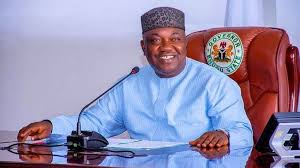
This history bereft of people management savvy has entrenched itself a tradition, a stereotype of the sort, so much that the people suffer shock at a manifestation of such unknown skills in their governance. Such shock is capable of engendering some level of misinterpretation on the part of the people who had not encountered such all their lives. What exactly is what plays out in Enugu State since the coming to power of His Excellency, Rt. Hon. Ifeanyi Ugwuanyi. Ugwuanyi’s relationship management savvy has remained as enigmatic as it amazes the learned and confounds the simple. No one has yet to come to terms with it.
Ifeanyi Ugwuanyi is like the soldier ants and the pumpkin leaves that know no boundaries. Ugwuanyi is the pathway that has no enemies as he constantly defies the saying that nobody can please everybody. In truth and practice, Ugwuanyi has shown how possible it can be to please everybody. And this is one of the assets of his government.
Since 2015 when Ugwuanyi came to power to date, Enugu State has seen rest; rest from political upheavals; rest from security challenges; rest from the opposition; rest from power tussles; rest from the executive-legislature crisis, and all the ills associated with poor interpersonal skills and lack of wisdom.
Besides wisdom, it takes humility to effectively manage relationships. Many of the political crises that come to governance are oftentimes orchestrated by pride and arrogant showmanship. Chief Jim Nwobodo, the former Governor of the old Anambra State, recently attested to Ifeanyi Ugwuanyi’s humility as unprecedented.
Ugwuanyi’s many victories had come to him naturally as leaves to a tree. He is loved by the people for identifying with them at all times. Some paid vain detractors had thought to ridicule him with his identifying with the people in celebration and mourning, something they had thought unbecoming of his high office, without their knowing that Ugwuanyi has uncommon relationship abilities that erase the barriers between the high and the low. Little wonder the door of Lion Building is open to all.
Opposition politics in Enugu State is dead. It is dead because there is absolutely no need for that. The administration of Ifeanyi Ugwuanyi has excellent people-oriented policies that are judiciously being implemented. Opposition thrives where the government is not doing well. The government of Ugwuanyi is doing exceptionally well on all fours and so there is no need for any opposition. Ugwuanyi also maintains sound relationships with the APC led federal government despite his being in the opposition party, the PDP. It takes a great deal of relationship management skills to sail through the thorns of opposition at the center and at the state level. This is something that was absent in previous administrations of the state.
Maintaining a good relationship with the legislature is not a dance done with snuff in the palm. We had in the past seen cases of the split legislature for and against the governor. We have seen the implications of that as it affects governance in the state. In some of the cases, two speakers emerged. Accusations and recriminations, impeachment, and votes of confidence fly the sky and fan the people cold. But this is completely absent in Ugwuanyi’s administration. His Excellency has an exceptional cordial relationship with the legislature. This cordial relationship has wrought positive impacts on the development and governance of Enugu State.
When the ways of a man please God, he makes even his enemies be at peace with him. In Enugu State, Ugwuanyi is loved by the people. He has the mien; he has the aura; Ugwuanyi has the charisma. Notorious criminals have kept away from Enugu State, avoiding crimes as one would a hot iron. They on their own know that righteousness is on the throne and so they had better give peace a chance or be worse off for any negating criminal action.
Many politicians of Enugu State extraction who went on political asylum have returned home. Old politicians who could not find their feet politically have now been integrated into the scheme of things irrespective of party affiliations.
Youths who had before now complained about their exclusion in political appointments in the state are now appointed to positions in Ugwuanyi’s administration as commissioners, SPAs, SSAs, SAs, and TAs. The elderly are happy; the youth are glad that true governance has come to Enugu State through Dr. Ugwuanyi.
Ugwuanyi’s Midas touch of relationship savvy also finds expression across the divides of gender consideration. Both genders are equitably represented in his government. Ugwuanyi has been able to manage the gender question in the state that there are no ayes and nays to that effect.
At the local government level, the chairmen of the 17 local governments in the state are not left out. Ugwuanyi relates with them so effectively that there has not been any issue whatsoever with the councils. Ugwuanyi’s interpersonal skills have also rubbed off on the chairmen to the extent that they too have developed cordial relationships with their councilors. There has been no case of impeachment of any chairman or leader of the house in any of the councils under Governor Ugwuanyi’s watch.
At the party level in the state, inter-party relationships have been leveraged upon, leading to the adoption of Ugwuanyi by the other political parties as their joint candidate during the governoship election. Within the PDP in Enugu State, Ugwuanyi as the leader of the party has caused the party to relate like a family. Recently, the party had its state congress and there was no issue at all. The congress was done in an orderly and peaceful manner devoid of any rancor or acrimonious altercation.
No man can do all this if he lacks wisdom; if he lacks excellent interpersonal relationship management skills. These skills do not just occur as leaves to a tree; they grow as boughs in the plant of humility and wisdom. Ifeanyi Ugwuanyi is the plant and Enugu State enjoys the good fruit it bears



Business
Turning Africa’s Raw Materials Into Wealth: The ARMS 2026 Industrial Agenda
By Joel Ajayi
For decades, Africa’s vast natural resources have powered industries and economies far beyond the continent, while many African countries have remained largely exporters of unprocessed commodities and importers of finished products.
That familiar pattern is now coming under renewed scrutiny as policymakers, researchers, investors and industrialists seek to change the direction of Africa’s resource economy.
At the centre of that conversation is the second edition of the Africa Raw Materials Summit (ARMS 2026), scheduled for October 19 and 20 at the Abuja Continental Hotel, Abuja, under the theme: “From African Feedstock to African Factories.”
Organised by the Raw Materials Research and Development Council (RMRDC), the summit is being positioned as more than another gathering of policymakers and industry stakeholders. It is intended to provide a platform for confronting the structural challenges that have kept African raw materials largely disconnected from local manufacturing.
Africa has for years operated largely within a “pit-to-port” economic model, exporting raw materials while importing expensive finished products.
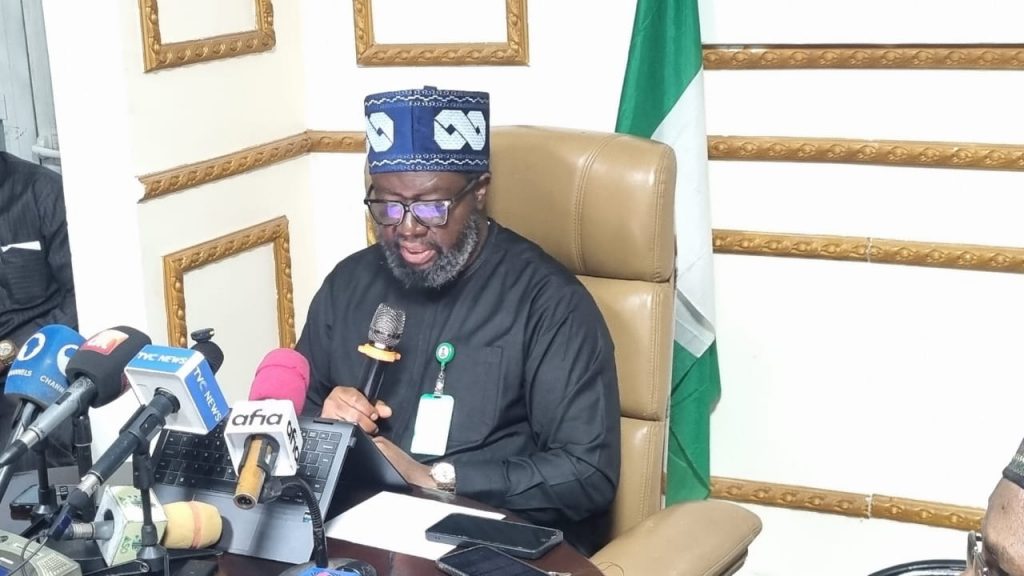
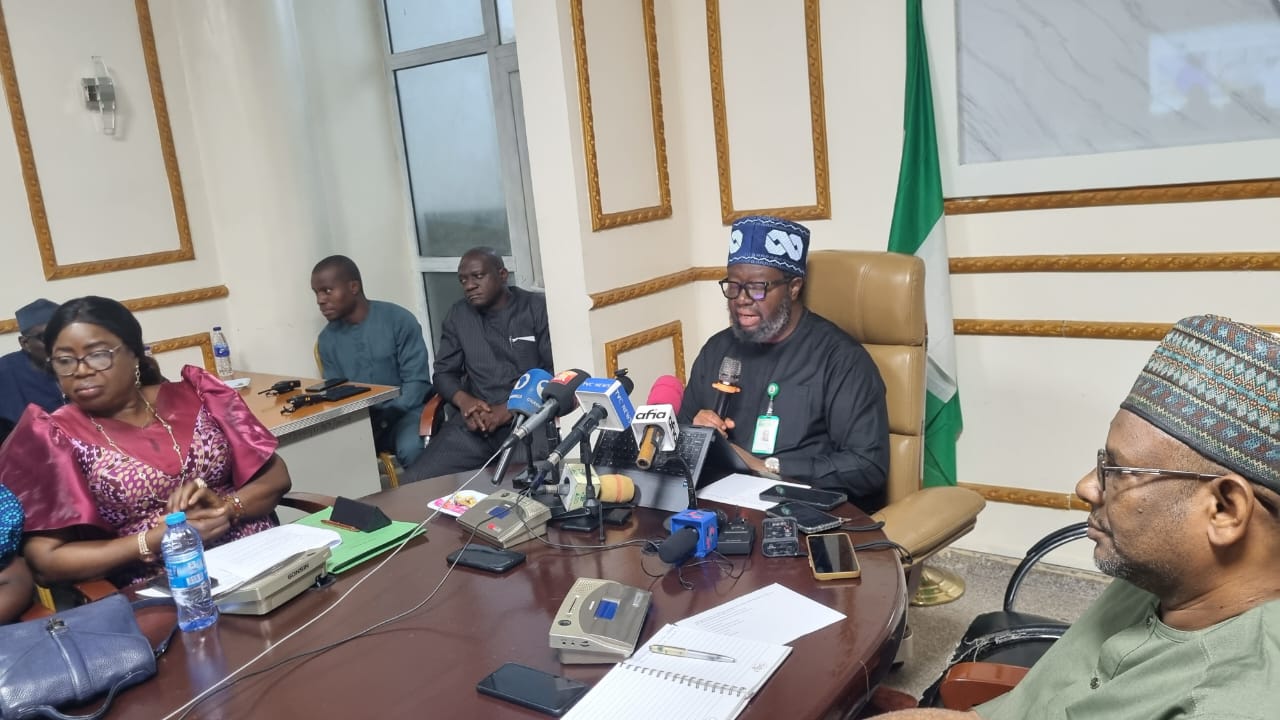
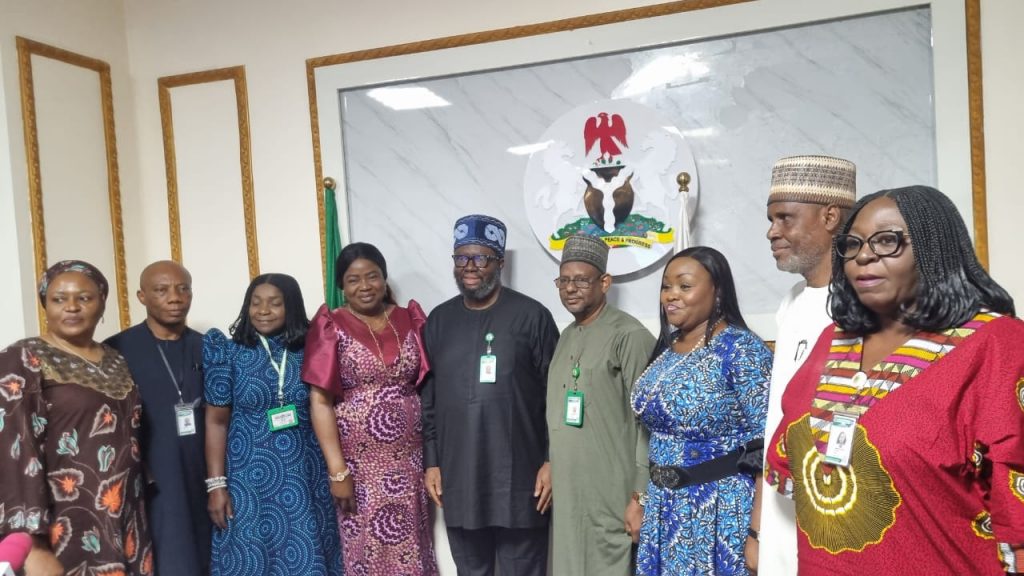
Speaking at a press conference ahead of the summit on Tuesday in Abuja, the Director-General and Chief Executive Officer of RMRDC, Prof. Nnanyelugo Martin Ike-Muonso, said the event would bring together policymakers, investors, researchers, technology providers and industrialists to develop practical strategies for transforming Africa’s abundant natural resources into industrial wealth.
The challenge, therefore, is not simply the abundance of resources, but the continent’s ability to transform those resources into industrial value, employment, technology and wealth within Africa.
Nigeria alone, according to the RMRDC, has more than $582.4 billion in documented non-renewable natural resources, while the wider continent possesses substantial deposits of critical minerals, agricultural raw materials and industrial feedstock.
Yet, the benefits of this resource endowment have often been constrained by inadequate processing capacity, weak infrastructure, limited technology, financing gaps and fragmented regional value chains.
From Dialogue to Industrial Action
ARMS 2026 builds on the maiden edition held in May 2025, which attracted more than 1,000 delegates from across the world.
The inaugural summit also witnessed the unveiling of the Ten-Year Raw Materials Transformation Roadmap (2025–2034) by the Minister of State for Industry, Senator John Owen Enoh.
The roadmap was designed around areas including technological capability, climate-resilient processing and backward integration, establishing a policy framework for greater domestic utilisation of Africa’s raw materials.
The second edition is expected to move the conversation further by bringing policy, capital, technology and industrial stakeholders around practical mechanisms for turning raw materials into locally manufactured products.
One of the major proposals highlighted by the RMRDC is the 30 per cent Mandatory Value Addition Bill, which seeks to establish a statutory minimum level of value addition to Nigerian raw materials before export.
The Council says the proposed framework could support job creation, import substitution, foreign-exchange conservation and increased manufacturing contribution to the economy.
Building the Infrastructure for Value Addition
The industrial transformation envisaged by ARMS 2026 goes beyond legislation.
A major concern is the “missing middle” between where raw materials are produced and where factories are located.
Poor transportation networks, inadequate cold-chain facilities, weak rural roads, limited testing and certification infrastructure and border-related delays can make locally sourced materials more expensive and less competitive.
Consequently, logistics and infrastructure constitute one of the five principal pillars of the summit.
The objective is to develop more reliable corridors connecting farms and mines with processing centres and manufacturing facilities, thereby reducing losses and improving the movement of industrial inputs.
The Digital Dimension
Technology is also becoming an important part of the Council’s strategy.
The RMRDC says it has developed the Nigeria Integrated Information Statistical System for Raw Materials and Products (NISSRAMP), described as a digital repository containing information on feedstock deposits, specifications, production outputs and industrial absorption rates.
The Council has also highlighted its transition towards paperless operations and its certification as a Data Controller/Processor of Major Importance by the Nigeria Data Protection Commission.
Such digital infrastructure could provide investors and manufacturers with better information about the availability and characteristics of raw materials while supporting more informed industrial planning.
Turning Waste Into Industrial Inputs
Another major component of ARMS 2026 is the proposed expansion of the circular economy.
The summit will examine how agricultural by-products, mine tailings, scrap metals and biomass can be recovered and reused as inputs for new production processes rather than being treated simply as waste.
The RMRDC argues that such an approach could lower raw-material costs while supporting more sustainable and climate-resilient manufacturing systems.
For Africa, where industrial expansion must increasingly balance economic development with environmental considerations, waste industrialisation could become an important part of the continent’s manufacturing conversation.
From National Production to African Value Chains
The African Continental Free Trade Area is another important element of the summit’s agenda.
The RMRDC sees AfCFTA as an opportunity to create regional value chains in which raw materials sourced in one African country can be processed and supplied to manufacturers in another.
Under such a model, Africa would move beyond simply exporting commodities to external markets and develop stronger internal networks for supplying chemicals, refined minerals, agricultural inputs and other industrial materials across national borders.
This approach places regional integration at the heart of Africa’s industrialisation strategy.
Bridging Research and Capital
A recurring weakness in many developing economies is the gap between research and commercialisation.
Innovations may emerge from universities, research institutions and laboratories without receiving the financing, equipment or market connections required to become commercially viable.
ARMS 2026 intends to address that gap through technology commercialisation and capital linkages, connecting research outputs with investors, development finance institutions and industrial off-takers.
The RMRDC has also cited partnerships with the Bank of Industry for commercial-scale post-harvest processing and a South-South technology-transfer partnership with the National Innovation Centre par Excellence in Shanghai, China.
A Larger Industrial Conversation
The scale of ARMS 2026 is expected to be significantly larger than the maiden edition.
The organisers project more than 1,800 delegates from all 54 African countries and global industrial partners.
The programme will feature high-level policy dialogues, technical panels, an advanced raw materials and technology exhibition, industrial site visits and the African Raw Materials Industry Awards.
The exhibition, in particular, is expected to showcase locally fabricated processing machinery, advanced domestic materials, green chemicals and engineered commercial inputs.
Beyond the speeches and exhibitions, however, the real significance of ARMS 2026 will ultimately depend on what happens after the summit.
Africa’s challenge has never been a shortage of raw materials. The more difficult question has been how to transform those resources into factories, products, skilled employment, technology and sustainable economic opportunities.
For Nigeria and the rest of the continent, the proposed shift from “pit-to-port” to “feedstock-to-factory” therefore represents a broader debate about the future structure of African economies.
ARMS 2026 seeks to place that debate firmly on the industrial agenda — with value addition, technology, finance, infrastructure, circular production and regional trade at the centre.
If the commitments and partnerships generated by the summit translate into measurable industrial activity, the event could provide another platform for Africa to examine how its enormous resource base can support stronger domestic manufacturing.
The message from the organisers is clear: the continent’s raw materials should not only leave African soil as commodities; they should increasingly become the foundation for African industrial production
-
 Featured7 years ago
Lampard Names New Chelsea Manager
-
 Featured7 years ago
FG To Extends Lockdown In FCT, Lagos Ogun states For 7days
-
 Featured7 years ago
Children Custody: Court Adjourns Mike Ezuruonye, Wife’s Case To April 7
-
 Featured7 years ago
NYSC Dismisses Report Of DG’s Plan To Islamize Benue Orientation Camp
-

 Featured5 years ago
Transfer Saga: How Mikel Obi Refused to compensate me After I Linked Him Worth $4m Deal In Kuwait SC – Okafor
-
Featured7 years ago
Board urges FG to establish one-stop rehabilitation centres in 6 geopolitical zones
-
Sports4 years ago
TINUBU LAMBAST DELE MOMODU
-

 News2 years ago
Zulu to Super Eagles B team, President Tinubu is happy with you













