
Education
UNIABUJA enforces no mask no entry for workers, visitors

The Management of University of Abuja said it has distributed over two thousand face masks and hand sanitisers to workers to protect the university community from COVID-19.
The items were distributed to the staff through the University COVID -19 Committee, which the Vice-Chancellor, Prof Abdul-Rasheed Na’Allah, had set up in April 2020 to ensure that the university is free of the pandemic.
The management also directed the full enforcement of ‘no mask no entry’ order and regular washing of hands by both workers and visitors to the university.
In a statement by Head, Information and University Relations of the university, Dr. Habib Yakoob, the management stressed that henceforth no staff, student or visitor would be allowed into the campuses if they fail to comply with the directive.
However, final year students in Abia State may be going back to school, as stakeholders in the state’s education sector are considering August 10, for reopening of schools to enable students in exit classes to prepare and write their relevant examinations.
This was the outcome of a one-day summit at Michael Okpara Auditorium of Government House, Umuahia, where it was agreed that the planned school reopening is subject to verifiable compliance with all the proposed COVID-19 protocols, prevention and control measures.
In his remarks at the summit, Governor Okezie Ikpeazu, who insisted that the state was desirous of ensuring that students resume classes as quickly as possible, maintained that his administration would not sacrifice the health of the children for anything.



Education
Historic Matriculation: EUN Unveils ₦50bn Research Endowment
Joel Ajayi
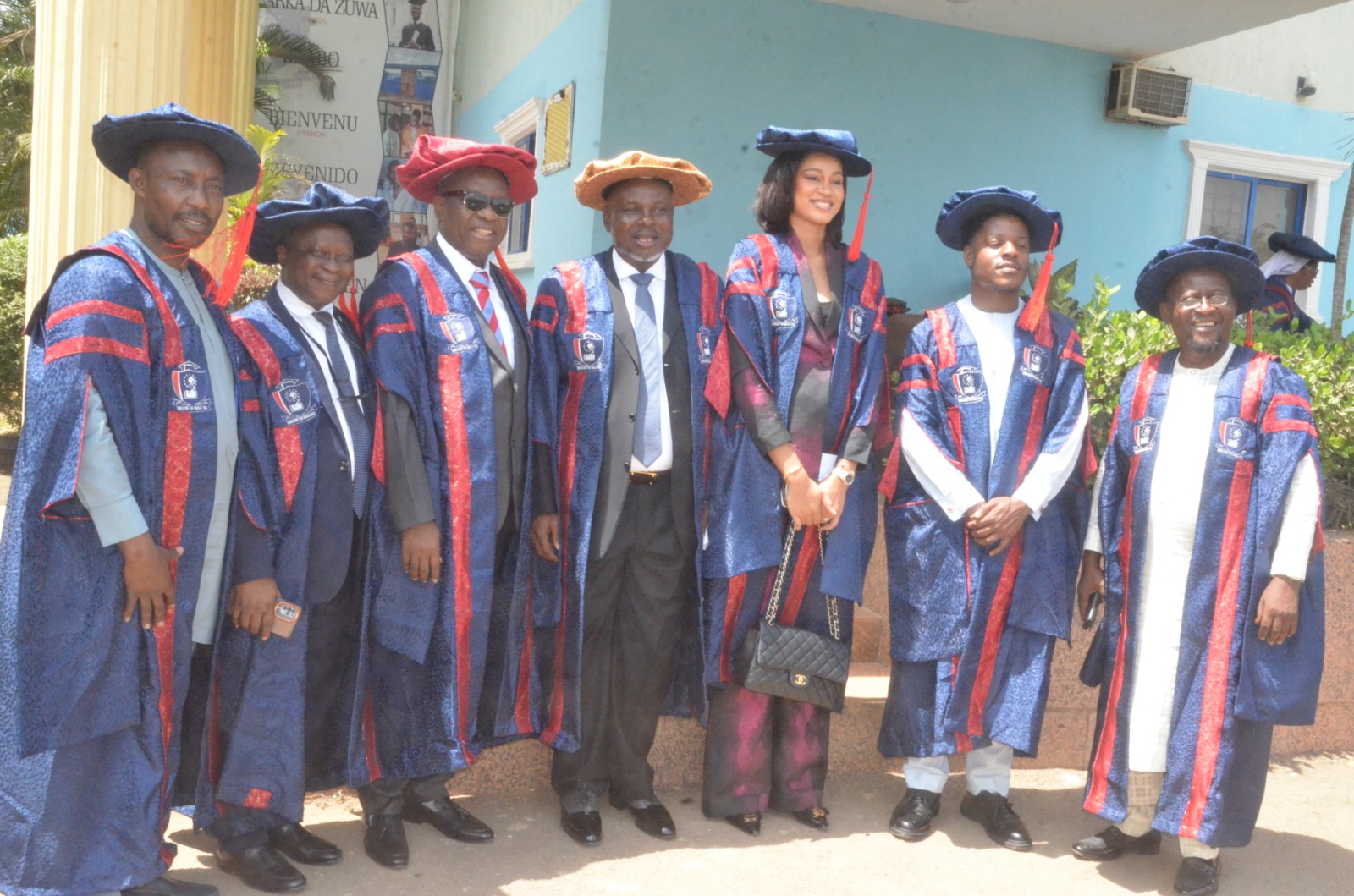
The Chancellor of the European University of Nigeria (EUN), Nicholas Ukachukwu, has announced the establishment of a ₦50 billion research endowment fund aimed at driving innovation and cutting-edge research across specialised disciplines in the institution.
Ukachukwu disclosed this during an interview on the sidelines of the university’s maiden matriculation ceremony, explaining that the fund would support research in critical sectors such as medicine, Information and Communication Technology (ICT), and other technical fields.
According to him, the initiative is designed to ensure that research carried out at the university produces practical solutions with real societal impact rather than remaining purely theoretical.
“We set up this university to be a centre for research, and the ₦50 billion endowment fund will focus on special categories of research and disciplines,” he said.
The chancellor explained that the university intends to support research from the discovery stage to practical application, particularly in areas such as drug development and technological innovation.
He noted that breakthroughs in these areas require specialised expertise, modern equipment and sustained investment, adding that the institution is committed to creating an enabling environment for researchers and students.
Ukachukwu emphasised that the research culture at EUN would be driven by results and societal relevance.
“I cannot call people, including myself, to put together ₦50 billion and allow research outcomes to gather dust on shelves. Whatever we invest in must produce results and impact lives,” he said.
He added that the university aims to nurture students who think beyond conventional classroom learning and develop innovative solutions to societal challenges.
Ukachukwu further revealed that the institution is building a centre of excellence equipped with advanced technology and highly skilled professionals, noting that government institutions may eventually collaborate with the university to benefit from its facilities and research outputs.
According to him, the university expects to begin seeing significant outcomes from its research investments within the next one to five years.Earlier in his welcome address at the matriculation ceremony, the Vice-Chancellor of EUN, Emmanuel Ibezim, urged the pioneer students to pursue academic excellence, discipline and innovation throughout their stay at the institution.
Ibezim described the event as historic, noting that it marked the formal admission of the university’s first set of students.He said the university is committed to producing graduates who are intellectually sound, ethically grounded and globally competitive.
“Your admission into this university is a testament to your hard work and potential. However, admission is only the first step; what truly matters is what you do with the opportunity before you,” he said.
The Vice-Chancellor assured the students that the institution would provide quality teaching, modern laboratories, digital learning resources and mentorship to support their academic development.
He urged them to embrace critical thinking, creativity and innovation while making effective use of the university’s learning facilities.Ibezim also stressed that the university maintains zero tolerance for examination malpractice, cultism, harassment, drug abuse and other forms of misconduct, advising students to strictly adhere to the institution’s rules and regulations.
He further encouraged the students to participate in approved extracurricular activities, sports and leadership programmes to build teamwork and leadership skills that would prepare them for life beyond the classroom.
The Vice-Chancellor also assured parents and guardians that the university management remains committed to improving teaching, research, infrastructure, innovation and student welfare.
A highlight of the ceremony was the administration of the matriculation oath and the signing of the matriculation register by the pioneer students, formally admitting them into the academic community of the university.
-
 Featured7 years ago
Lampard Names New Chelsea Manager
-
 Featured6 years ago
FG To Extends Lockdown In FCT, Lagos Ogun states For 7days
-
 Featured6 years ago
Children Custody: Court Adjourns Mike Ezuruonye, Wife’s Case To April 7
-
 Featured7 years ago
NYSC Dismisses Report Of DG’s Plan To Islamize Benue Orientation Camp
-

 Featured4 years ago
Transfer Saga: How Mikel Obi Refused to compensate me After I Linked Him Worth $4m Deal In Kuwait SC – Okafor
-
Sports3 years ago
TINUBU LAMBAST DELE MOMODU
-

 News1 year ago
Zulu to Super Eagles B team, President Tinubu is happy with you
-
Featured6 years ago
Board urges FG to establish one-stop rehabilitation centres in 6 geopolitical zones