
Featured
UNINFORMED FUSE AGAINST THE REOPENING OF AKANU IBIAM INTERNATIONAL AIRPORT, ENUGU
By Jeff Ejiofor
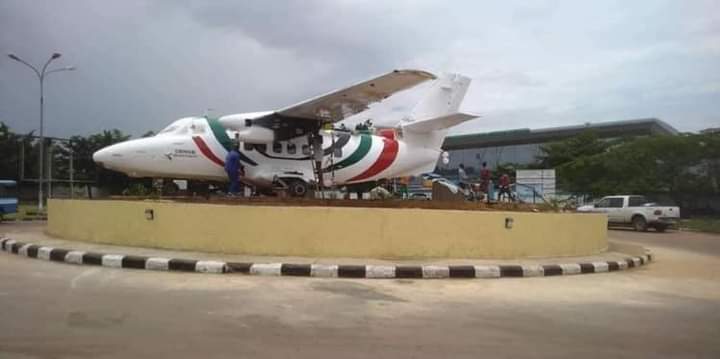
Social media have been awash with malicious pictures of an airport terminal building under construction since the reopening of Akanu Ibiam International Airport, Enugu on Sunday, 30th August 2020.
In this era of information dissemination through the social media revolution, a lot of mischief-makers have polarized the otherwise good intentions of social media inventors to peddle falsehood. Many uninformed, self-styled public affairs analysts have besieged the place claiming to possess authentic information about any issue on the front burner.
Many of them have in an attempt to dabble into what they know nothing about, consistently deceived and misled the unsuspecting public on issues of critical importance. Unfortunately, the recent reopening of Akanu Ibiam International Airport, Enugu is the latest casualty in the list of issues that have come under the prying eyes of these self-acclaimed social media warlords whose only stock in trade is to spread unsubstantiated rumours.
These half baked social media activists have most often twisted facts with so much impunity that the supposed enlightened segment of the society has severally fallen for their dubious antics just to tarnish the image of their targets. They have oftentimes painted gloomy pictures of events, that people tend to be carried away by their mindless sentiments.
Honestly, the situation is quite disheartening, more so, as they usually lace such allegations with fake narratives and circulate them to all corners of the earth.
Quite frankly, the narratives currently being bandied around by these self arrogated social media Igbo defenders as regards the reopening of Akanu Ibiam International Airport are far from reality. Their claims that the airport was shut for holistic reconstruction work are not true. The baseless allegation by them that an unfinished airport was commissioned is wickedly designed fallacious concoction to whip up unnecessary sentiment against the government.
For the purpose of clarity, the airport was closed as a result of a safety problems. Below were the reasons adduced for shutting down the airport:
“The airport has a bad runway and landing aids.
Another issue about the airport was the presence of a market with an abattoir nearby, which attracts birds. The birds constantly collided with airplanes.
The state radio mast was wrongly placed and it directly faces the runway which disturbs the navigational facility of the airport.
The airfield and landing facilities are not lit for night flights forcing the airport to close by 6 pm every day.
Insecurity in the airport due to lack of perimeter fencing.
Obstructing structures close to the airport which interfere with the flight operations in airspace” – Hadi Sirika, Minister of Aviation, August 24th, 2019.
Obviously, considering the above remarks by the Hon. Minister as the reasons for shutting down the airport, it is implicit that at no time was the issue of the international terminal building mentioned as the crux of the matter on the issue under review. The major problem as highlighted by the aviation minister which was also corroborated by The General Manager, Corporate Affairs, Federal Airport Authorities of Nigeria, (FAAN), Mrs. Henrietta Yakubu centered on the safety and security of the airport users.
As a matter of fact, when the airport was closed last year, the federal government was accused of deliberately shutting down South East and its economy by this same group of people alleging hasty reopening today. The same people also accused His Excellency, Ifeanyi Ugwuanyi of not acting ahead of time to nip the closure in the bud by relocating Oye Emene and the purported ESBS mast which were all deliberately avoided by the past administration. As a concerned citizen who is on the ground and has been following the trend of events on the airport’s closure, I can assure my reading audience that the situation captured above, was the real reason the airport was shut.
However, in order to utilize the opportunity and achieve greater goals, the Igbo leaders of thought led by the host governor, His Excellency, Ifeanyi Ugwuanyi, and southeast Governors’ Forum, met with President Buhari and appealed for a fund to carry out upgrade of facilities in the airport. As a result, the President graciously approved the sum of #10 billion for the repair and upgrade works.
Meanwhile, when the federal government started the repair works, the executive governor of Enugu State, Rt. Hon. Ifeanyi Ugwuanyi moved and provided a policy framework to address all the conditions given by FAAN as a prerequisite for safe operations of the airport. Consequently, he relocated the Oye Emene market and its abattoir to a new site. He also relocated the ESBS mast which was allegedly disturbing the airport’s navigational facility to a more suitable place. He did not stop there, he consciously assisted with funds were necessary in order to expedite action and ensure timely completion of the project considering its strategic importance to the people of South East.
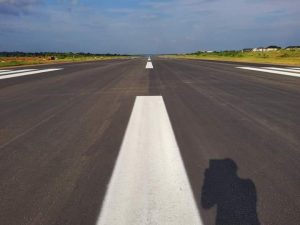
Apparently, the real issues of concern which led to the closure of the airport in the first place have been addressed. The runway has been expanded and renovated as one of the best in Nigeria, making it capable of accommodating larger international aircraft. The tarmac and landing facilities as well as the concrete perimeter fencing have all been handled. Even the obstructing structures close to the airport were removed to pave way for free flow of air traffic. In short, the airport was ready for business even with the international terminal building undergoing construction. However, Hon. Minister of Aviation, Hadi Sirika, gave an assurance that the building would be ready by next year as it is currently receiving adequate attention.
Expectedly and in view of the strategic necessity of the airport to the socio-economic development of the South East, it became imperatively important to reopen it for business while the few remaining touches continue receiving attention. Let us not also forget that when in 2014, the administration of former President Goodluck Jonathan commissioned the international airport to the admiration of the people of the South East, the non-completion of the international terminal building was not an issue as the existing domestic terminal served the two wings of the airport. As a matter of fact, all these preconditions that have now been addressed by the current Enugu state government and which led to the closure, were all there when the airport was commissioned by the previous administration.
For the purpose of emphasis, the big question now is, what brought about displaying the ongoing international terminal building as a prerequisite for reopening the airport by some social media hawks? Why the noise against reopening the airport now that it has better facilities for both local and international operations? What has the ongoing international terminal building got to do with the reopening of the airport?
Ladies and gentlemen, the gospel truth is that the federal government commissioned the upgraded facilities which include the expanded and renovated runway that has been adjudged as one of the best in Nigeria. Flight operations were allowed to resume considering its economic importance and the fact that the finishing touches on the international terminal building and other less pressing facilities cannot affect it. There was nothing like commissioning of the airport afresh as alleged by social media tigers as it had already been done by the past administration in 2014. So, the fuse about commissioning unfinished project is baseless because nothing like that existed. I wouldn’t have bothered to join issues with such ignorant misplacement of facts, but for the need to clarify things, put the record straight, and remind us how it all started.
Finally, let me make it clear that the Enugu state government under the able leadership of Gov. Ifeanyi Ugwuanyi provided the necessary enabling environment to actualize this process that has now repositioned South East as a major economic hub. The minister of aviation, Hadi Sirika, and the chairman House committee on aviation, Hon. Nnoli Nnaji all played key roles in ensuring that the airport was not abandoned. Yes, the South East deserves more but let us not contradict our priorities in a bid to press home our demands. The airport we cried and complained bitterly when it was closed cannot now be made to wait till eternity before reopening for business in order to satisfy those who have arrogated to themselves aviation expertise. It’s rational to note that the little finishing touches remaining which are insignificant to successful flight operations should not form enough basis to continue leaving the airport closed. Let us not fall into the trap of our detractors who are not comfortable with our direct access to the outside world.
A word is enough for the wise.



Featured
Lagos in 2025: Sanwoolu turning Vision, Reform, and Discipline into Tangible Progress for Africa’s Largest City
By Dr Dayo Israel
National Youth Leader, All Progressives Congress (APC)
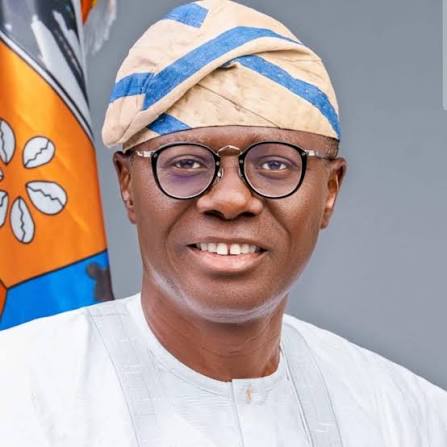
There are years that pass quietly in governance, and there are years that redefine trajectory. For Lagos State, 2025 belongs firmly in the latter category. It is a year that demonstrated clearly and convincingly what focused leadership can achieve when policy is anchored on vision, discipline, and delivery.
This year, despite economic uncertainties and urban pressure, Lagos has charted a remarkable path of progress under the leadership of Governor Babajide Sanwoolu. From the bustling streets of Ikeja to the serene waterways of Eko Atlantic, citizens have experienced the tangible impact of landmark reforms, completed projects, and ambitious initiatives. Sanwoolu’s 2025 agenda has not only focused on generating revenue but also on translating it into visible improvements in the daily lives of Lagosians.
Under the leadership of Governor Babajide Olusola Sanwo-Olu, Lagos has not merely expanded its economy; it has reordered its priorities, accelerated long delayed projects, and laid foundations whose impact will be felt well beyond the present political cycle. This year, Lagos moved decisively from planning to performance, from announcements to outcomes.
This is not accidental progress. It is intentional governance. Governor Sanwoolu has moved Lagos From Revenue to Results, Turning Capacity into Capability
Lagos remains Nigeria’s economic nerve centre, contributing a significant share of national non oil GDP and sustaining one of the highest internally generated revenues in subSaharan Africa. But the defining feature of 2025 is not how much Lagos earned, it is how wisely that capacity was translated into outcomes.
Governor Sanwoolu’s administration made a deliberate choice to convert fiscal strength into visible, life improving infrastructure, while maintaining macro stability, institutional continuity, and social inclusion.
Across transportation, housing, health, education, energy, food systems, culture, and youth development, the story of 2025 is one of completion, consolidation, and courageous expansion. A story of Rail Revolution, Redefining Urban Mobility in Africa’s fastest growing megacity.
Perhaps no sector better illustrates Lagos’ longterm thinking than rail transportation. In 2025, Lagos continued to consolidate gains from its rail investments while accelerating work on new rail corridors designed to fundamentally change how millions move across our city.
Our reality is that rail is no longer theoretical in Lagos, it is functional.
The Lagos Blue Line has now firmly established itself as a backbone of west – east mass transit, easing pressure on road networks, reducing commute times, and improving productivity for workers and businesses. It has moved firmly into operational normalcy, transporting thousands of commuters daily between Marina and Mile 2. For residents along this corridor, commute times that once stretched into hours have been significantly reduced.
Beyond passenger movement, the Blue Line has decongested major road arteries such as Lagos – Badagry Expressway, Improved productivity for workers and traders, Reduced fuel consumption and emissions.
The Red Line project running along the Agbado –Oyingbo axis and integrated strategically with the Lagos – Ibadan railway corridor has advanced significantly, connecting densely populated areas and integrating Lagos’ transport ecosystem with national rail infrastructure. The Red Line now move hundreds of thousands of passengers daily, reducing logistics costs, and unlocking new residential and commercial clusters along its route. It has recorded major milestones in 2025, serving densely populated mainland communities.
Passenger adoption has grown steadily, validating the state’s longterm bet on rail as the most sustainable solution to Lagos’ mobility challenge.
But that’s not all. Beyond these, planning and early works on additional rail lines such as the Green Line including corridors linking emerging growth centres signal a government not reacting to congestion, but anticipating population growth decades ahead.
The economic impact is clear: reduced transport costs, increased labour mobility, lower carbon emissions, and higher urban efficiency. Transportation policy under Sanwo-Olu is no longer about managing chaos, it is about designing order.
Sanwoolu is investing in Roads, Bridges, and Urban Renewal, Infrastructure That Solves Problems. 2025 also marked the completion and commissioning of several critical road and bridge projects, alongside aggressive rehabilitation of inner city and arterial roads across Lagos’ five divisions. Importantly, these projects were executed alongside aggressive drainage expansion, addressing perennial flooding and protecting homes, markets, and businesses.
This Drainage upgrades, flood control projects, and urban regeneration initiatives have helped mitigate the effects of climate related flooding, an existential issue for a coastal megacity like Lagos.
These are not cosmetic interventions. They are risk-reduction investments, protecting lives, assets, and longterm economic value.
Governor Sanwoolu continued delivery under the Lagos State Affordable Housing Programme, completing and allocating housing units in multiple locations including Odo-Onosa/Ayandelu, Ibeshe, Sangotedo and Epe axis developments is worth commending. These estates are not merely buildings; they are integrated communities with supporting infrastructure, easing housing pressure and supporting urban expansion in a planned manner.
In 2025, Lagos deepened investments in healthcare through Upgrading of General Hospitals and Primary Health Centre, Expansion of diagnostic and specialist capacity, and Continued strengthening of the Lagos State Health Insurance Scheme (ILERA EKO). The focus has been on access, affordability, and quality, ensuring that health outcomes improve across income levels. His continued investments in diagnostic capacity and specialist care has reduced the need for outbound medical tourism and improving access for ordinary citizens.
In education, school rehabilitation, teacher capacity development, digital learning initiatives, improved learning environments across primary and secondary levels and curriculum support reinforced the state’s belief that human capital is the ultimate infrastructure. Governor Sanwo-Olu’s approach treats education as economic infrastructure, recognising its central role in productivity, innovation, and social mobility.
These investments may not always trend on social media, but they compound quietly and powerfully over time.
In 2025, Sanwoolu expanded Lagos capacity to Power Productivity. Lagos’ energy strategy this year continued to focus on decentralised power solutions, embedded generation, and public – private collaboration to improve electricity access for households, MSMEs, markets, and industrial clusters. Reliable power remains one of the strongest enablers of job creation and business competitiveness. By prioritising energy reforms, the Sanwoolu administration strengthened Lagos’ position as Nigeria’s most business friendly state.
For thousands of MSMEs, the engine room of Lagos’ economy, unreliable electricity is often the single greatest cost driver. By expanding power access through embedded systems and partnerships, the Sanwo-Olu administration has helped Reduce energy-related operating costs, Improve business uptime and productivity, Enhance competitiveness for Lagos-based enterprises
This is not abstract reform; it is felt directly in markets, workshops, factories, and offices. Building on the passage of the Electricity Act, Lagos has taken concrete steps to assert sub national leadership in power regulation and market development.
In 2025, the state accelerated work on establishing a structured Lagos electricity market, laying the groundwork for Independent power producers, Competitive distribution models and Private investment in generation and distribution infrastructure.
This reform oriented approach positions Lagos to attract longterm capital into power generation and distribution, critical for sustaining a megacity economy.
In agriculture, the Lagos deepened its focus on food security and value chain development, supporting local production, aggregation, processing, and distribution. Strategic investments in rice, poultry, aquaculture, and vegetable production combined with logistics and market access have helped stabilise food supply and create jobs, particularly for young people. In a volatile global food environment, these policies are not optional; they are economic insurance.
Governor Sanwoolu’s administration has been unapologetic about positioning Lagos as Africa’s creative and cultural capital.
In 2025, Lagos strengthened its global brand through Investment in creative infrastructure, Support for festivals, museums, and cultural districts, Tourism promotion and destination marketing, and Strategic partnerships with global cultural institutions.
The result is a sector that generates billions annually, employs hundreds of thousands mostly young people and projects Lagos’ identity confidently to the world.
This is soft power with hard economic returns.
As National Youth Leader, I have also been excited about Governor Sanwoolu’s Youth Development and Sports Initiatives, his effort in Preparing Tomorrow’s Leaders Today. Youth focused programmes in skills acquisition, entrepreneurship, digital economy training, and sports development expanded significantly in 2025.
Sports infrastructure upgrades and talent development pipelines reinforced Lagos’ status as Nigeria’s leading sports hub while youth empowerment initiatives focused on capability building, not tokenism.
I see firsthand how these investments translate into confidence, competence, and civic engagement among young Lagosians.
One of the most underappreciated aspects of Governor Sanwoolu’s leadership is his strategic international engagement. Throughout 2025, the governor held high level meetings with foreign governments, development finance institutions, global investors, and multilateral partners. These engagements yielded Memoranda of Understanding (MOUs) spanning Infrastructure financing, Transport and urban planning, Energy transition and renewables, Technology and innovation, Housing and urban development, Climate adaptation and resilience.
While MOUs are not ends in themselves, they represent access, credibility, and optionality positioning Lagos to attract longterm capital, technical expertise, and global best practices. In a competitive global economy, cities not countries are increasingly the units of growth. Lagos is clearly playing that game with seriousness and sophistication.
The Sanwo-Olu administration has continued to strengthen the Lagos civil service through capacity building, welfare improvements, digitisation, and institutional reform ensuring continuity beyond personalities.
Equally important is the governor’s ability to manage politics without derailing governance carrying along stakeholders, maintaining party cohesion, and fostering stability. Development thrives where politics is predictable. Governor Sanwoolu is arguably the biggest financial supporter of the party in Southwest Nigeria, with the exception of our Father, the President.
Governor Sanwoolu’s consistent alignment with President Bola Ahmed Tinubu and the ideals of the All Progressives Congress has ensured synergy between state and federal initiatives. This loyalty is rooted in shared philosophy, not convenience. It has enabled policy coherence, infrastructural alignment, and institutional respect benefiting Lagosians directly.
The recently presented 2026 Lagos State budget is bold, forward looking, and unmistakably legacy driven. With strong emphasis on infrastructure, transportation, human capital, climate resilience, and economic competitiveness, the budget signals a government preparing Lagos not just for the next election but for the next generation.
For Lagosians, 2025 is A Year That Changed the Curve. 2025 will be remembered as the year Lagos chose long-term impact over short term applause.
Let me also use the opportunity to commend Deputy Governor Femi Hamzat who has been a steadfast partner to Governor Sanwoolu, providing unwavering loyalty, strategic counsel, and hands-on leadership across the administration’s ambitious agenda. Dr Hamzat has consistently reinforced the governor’s vision, ensuring that policies translate into tangible results for Lagosians. His dedication, professionalism, and alignment with Governor Sanwoolu’s goals exemplify the kind of teamwork that has powered Lagos’s remarkable progress in 2025, making him not just a deputy but a trusted pillar of the administration.
Governor Babajide Sanwoolu’s has demonstrated that leadership is about Completing what others abandoned, Starting what the future demands, Governing with discipline, humility, and purpose.
Lagos is not perfect. No megacity is. But Lagos is working, learning, and building with clarity about where it is going. That is what leadership looks like. And that is why 2025 stands as a landmark year for Lagos State.
As Lagos closes out a year of visible delivery, 2026 is shaping up to be the moment when progress becomes part of everyday life for more people. With the rail system moving from early success to wider coverage and efficiency, Lagosians should expect shorter commutes, less pressure on major roads, and a transport network that increasingly works to the rhythm of the city. In energy, the expansion of embedded power projects across markets, hospitals, and business clusters will continue to ease daily frustrations, helping traders, artisans, and small businesses stay open longer and operate at lower cost.
Infrastructure and housing is expected to remain front and centre in the year ahead. Ongoing road, drainage, and flood control projects are expected to reach completion in more communities, improving safety and liveability, especially during the rainy season. At the same time, additional homes under the state’s affordable housing programme will come on stream, opening new, well planned neighbourhoods and easing pressure on overcrowded areas of the city.
Perhaps most importantly, Lagosians should expect greater stability and continuity. Many of the partnerships and investment commitments secured in 2025 are expected to translate into real projects on the ground in 2026, creating jobs, strengthening public services, and positioning Lagos for longterm growth.
The direction is clear: a government focused not on noise, but on results that touch daily life and endure beyond the moment.
Dr Dayo Israel, the National Youth Leader of the All Progressives Congress writes from Kano Street, Ebute Metta, Lagos.
-
 Featured6 years ago
Lampard Names New Chelsea Manager
-
 Featured6 years ago
FG To Extends Lockdown In FCT, Lagos Ogun states For 7days
-
 Featured6 years ago
Children Custody: Court Adjourns Mike Ezuruonye, Wife’s Case To April 7
-
 Featured6 years ago
NYSC Dismisses Report Of DG’s Plan To Islamize Benue Orientation Camp
-

 Featured4 years ago
Transfer Saga: How Mikel Obi Refused to compensate me After I Linked Him Worth $4m Deal In Kuwait SC – Okafor
-
Sports3 years ago
TINUBU LAMBAST DELE MOMODU
-

 News12 months ago
Zulu to Super Eagles B team, President Tinubu is happy with you
-
Featured6 years ago
Board urges FG to establish one-stop rehabilitation centres in 6 geopolitical zones













2 Comments