
Featured
Upcoming 2024 Promotion examination exercise will be on Computer Based Test (CBT) -Prof. Olaopa

—-says wage and compensation dimension of meritocracy must be addressed in civil service
Joel Ajayi
In his effort to scale-up the ongoing reform in the Commission and the necessity to achieve his objectives in the Federal Civil Service; the Chairman, Federal Civil Service Commission (FCSC), Prof. Tunji Olaopa has said that the Commission’s 2024 Promotion examination exercise will be on Computer Based Test (CBT) in line with the modernization and digitization program in the Federal Civil Service. He also said that restoring competency based HR practice and merit system in civil service will be meaningless if the intended reforms fail to address the wage and compensation dimension of meritocracy.

Olaopa who stated this on Thursday at the maiden Federal Civil Service Commission’s Monthly-Seminar Series for officers on grade levels 14 and above; opined that his numerous engagements with the Chairman, National Income, Salary and Wages Commission whose insights were re-assuring and solution context was important in the Commission’s reform agenda.
The event which gave the Hon. Commissioners and Management Staff opportunities to express their view witnessed Commission’s Director of Promotion; Mr. Sani B. Torankawa presented a Seminar-paper tagged: “Institutional framework and procedures for the conduct of Directorate level Promotion Examination: Guaranteeing Integrity, Credibility Transparency and Accountability”.
Chairman in his opening speech disclosed that the objective of the maiden-monthly-seminar series was designed to institute a seminar-space and learning-lab for federal officers. He added that the seminar was one of avenues the Commission deepens the sharing and learning of key reform issues and benchmarking in Nigeria.
He said the Commission will transit through the upcoming 2024 Promotion examination exercise from analogue to Computer Based Test (CBT) in tandem with the modernization and digitization of Federal Civil Service core operations.
Reeling out how the digitization is going to be implemented, Olaopa said the Commission will roll out an online-recruitment portal that will be accessible to all Nigerians and which will allow eligible candidates to pre-fill recruitment form and update them from time to time in preparation for the placement of adverts for recruitment into the public service and to the Federal service and in preparation for assessment and interview.
The Chairman revealed that henceforth eligible candidate will undergo computer based test and oral interview with result collated and released real-time.
He further revealed that the Commission was going into out-sourcing contract with National Open University and by extension with Joint Admission and Matriculation Board (JAMB) both as technical partners with a view to take advantage of their infrastructure, networks and experience for online-accreditations, computer based test and examination as well as promotion-interview for officers in the Federal Service starting with Directorate level officers.
Talking about the maiden seminar, he disclosed that the event was convened to critically examine some of the first level issues and risks associated with the planned transition from analogue to online-computer based assessment processes as they touch on promotion exercise for Federal civil servants.
“We are not just looking at digitizing our online processes, computer based processes; we are also going to listen to some of the stakeholders who have been in this service, who have observed the way promotion are conducted”.
According to him, a lot of technical conversation will follow going-forward where some experts including Ministers that are doing well in computerization of their services will be invited to critique what the Commission is doing as part of due diligence to make sure that the Commission is doing the right thing.
He asserts that social-media orientation will be carried out where sets of media-clip will be made available to all civil servant to enable them to know the process for computer based assessment. He added that civil servants will also be taking through some orientation sessions conducted by the Head of Service in form of mock-test to prepare officers for 2024 promotion examination scheduled to hold in the 3rd quarter of this year.
Citing COVID19 pandemic as a case in point, he pointed out that ICT were used to work remotely from office seamlessly; saying that Commission will not be distracted by voices that believes that the initiative will not work. He stressed that the Commission will continue to perfect the process as the program is being deployed. He said, “We are going to do it whether we score 50 per cent or whatever”.
He informed that apart from digitization and computerization program being contemplated by the organization, there were other phases to be unveiled in due course which will be geared towards Commission’s reform plans once the endorsement of the President Ahmed Bola Tinubu is secured.
He emphasized that the Commission’s staff capacity and institutional structure need to be upgraded to sustain the momentum that various reform will create. He noted that as all efforts are channel to strengthen the professionalism of the Federal bureaucracy, the establishment of professionalized and modernized Federal Civil Service in line with the Renew-Hope Agenda of the government cannot be overemphasized.
The high point of the event was panelists/speakers presentations delivered by Mr. Ataboh Ademu-Director (Learning & Development)-OHCSF represented by an Asst. Director-Dr. Mohammed Bashir; Prof. Olugbenga D. Ojo-Director (Examination & Assessment-NOUN); Dr. Ahmed Dunoma Umar-Permanent Secretary-Fed. Min. of Youth Development; Mr. Olu O. Ilesanmi-Rtd Fmr. Permanent Secretary, Fed. Ministry and Mr. Mato Yusuf Abdullahi Director (ICT)-FCSC. This was followed by Q & A session.



Featured
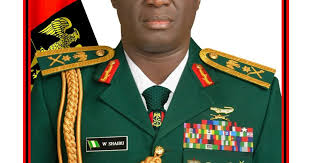
Resetting the Frontlines: Army Undergoes Rejuvenation Under Lt. Gen Shaibu’s Command
- …Intelligence-led warfare, troop welfare take centre stage
- …Discipline, welfare, accountability define new era
- …As sustained operations weaken terrorists, restore confidence
By Ibukunoluwa Adedeji
When Lt-Gen. Waidi Shaibu assumed office as the 25th Chief of Army Staff (COAS) on 30 October 2025, Nigeria faced an array of security challenges: insurgency in the North-East, banditry and kidnappings in the North-West, communal violence in the North-Central, and separatist tensions in the South-East. Troops were overstretched, public confidence was fragile, and adversaries were increasingly adaptive.
Yet within his first 100 days, Shaibu delivered renewed direction, restored confidence, and a reinvigorated operational posture. His leadership has begun to reshape both the internal culture of the Army and its external engagement with a nation hungry for stability.
From the outset, Shaibu emphasised leadership by presence. He undertook early and frequent visits to frontline formations, engaging directly with troops and commanders, inspecting bases, and holding candid discussions about operational realities. During one such visit, he reminded soldiers that “failure is not an option” and that the Army must “take the fight to the enemy and sustain the pressure”. For personnel operating under austere conditions, this visible command style carried symbolic and practical weight, signalling both accountability and support.
Within the ranks, these engagements have been interpreted as a reassertion of professionalism, initiative, and discipline at every level of command. Morale, strained by years of protracted internal security operations, has shown early signs of recovery.
Rather than pursue sweeping doctrinal changes, Shaibu has focused on tightening existing operations, closing gaps, and enforcing discipline. Commanders have been directed to prioritise sustained pressure over episodic offensives, denying armed groups freedom of movement, disrupting their logistics networks, and degrading command structures. This approach reflects an understanding that Nigeria’s threats are fragmented and mobile, and that lasting gains depend less on dramatic victories than on persistent control of contested spaces.
Central to this recalibration is the emphasis on intelligence-led operations. By urging formations to reduce predictability and adapt tactics to evolving threats, Shaibu has reinforced flexibility and responsiveness, particularly in theatres where adversaries exploit terrain, local vulnerabilities, and intelligence gaps.
Perhaps the most widely welcomed dimension of Shaibu’s early tenure has been his candour about logistics and welfare challenges. He has openly acknowledged equipment shortages, maintenance backlogs, and inefficiencies in supply chains — issues often underplayed at senior command levels. “You cannot demand excellence from soldiers without giving them the tools to succeed,” he told troops during one engagement.
Although such systemic problems cannot be resolved quickly, the early prioritisation of welfare and sustainment has resonated strongly across the ranks. It has reinforced the principle that discipline and performance thrive where leadership invests in people as much as platforms.
Shaibu has also been unequivocal in reaffirming professionalism and discipline as non-negotiable pillars of Army conduct. Troops have been reminded to adhere strictly to rules of engagement and to protect civilians, particularly in complex internal security environments where the distinction between combatant and non-combatant is often blurred. “Operational success and public trust are inseparable,” he has said, underscoring that legitimacy and restraint are as critical as kinetic force in modern conflict.
Civil–military relations and strategic communication have likewise received renewed attention. Under his leadership, the Army has sought to balance operational secrecy with transparency, explaining actions affecting civilians and reinforcing the reality that contemporary conflicts are fought as much in the court of public opinion as on the battlefield.
While his tenure remains young, early operational dividends are emerging. Dr Sani Abubakar, military scholar and publisher of OurNigeria News Magazine, describes Shaibu’s leadership as “reassuring and energising”, citing his combat credibility, operational boldness, and focus on troop welfare. According to Abubakar, Shaibu’s philosophy centres on sustained dominance of the battlespace, intelligence-led targeting, and uncompromising control of reclaimed terrain — principles vital to breaking cycles of retreat and resurgence by armed groups.
He notes that numerous terrorist elements have been neutralised under this approach, while others, weakened by sustained pressure, have surrendered. Equally significant, Abubakar observes, is Shaibu’s emphasis on sound administration. Fairness and transparency in postings and appointments are gradually restoring confidence within the officer corps and rank and file, addressing long-standing concerns about morale, meritocracy, and institutional trust.
Reflecting on Shaibu’s career, Abubakar describes him as “a thoroughbred, no-nonsense officer who led from the front and was unflinching in confronting Boko Haram terrorists”. His insistence on integrity, accountability, and merit-based leadership, he argues, is grounded in experience at every level of command and now shapes the tone of the Army’s senior leadership.
At the 100-day mark, Shaibu’s tenure is defined more by direction than dramatic outcomes — a reality seasoned analysts regard as realistic and prudent. Nigeria’s vast terrain, multiplicity of threats, intelligence gaps, and enduring resource constraints mean that no leader can deliver transformative security outcomes overnight.
Nevertheless, the gains are tangible. Operational coherence has improved, morale has lifted, and public confidence, though cautious, has begun to recover. The focus on sustained operations, intelligence-driven targeting, troop welfare, professionalism, and accountability represents a recalibration towards durability rather than spectacle.
Abubakar, while commending these advances, advocates deeper investment in human intelligence, expanded use of unmanned aerial vehicles, and sustained commitment to security sector governance reforms as essential for long-term efficiency and professionalism.
Beyond operational metrics, one of Shaibu’s most significant achievements lies in restoring institutional confidence. Among officers and soldiers, his leadership style — marked by visibility, firmness, and empathy — has reinforced the belief that competence, integrity, and merit are once again ascendant values within the Nigerian Army.
Among communities affected by violence, his emphasis on civilian protection, transparency, and professionalism has begun to reframe perceptions of the military from a distant security force to a responsive national institution committed to safeguarding lives and livelihoods. For political leaders and security stakeholders, his early tenure has provided reassurance that Army leadership understands both the complexity of Nigeria’s security challenges and the necessity of sustained, coordinated responses rather than episodic reactions.
Ultimately, Shaibu’s success will be measured not by early momentum but by enduring outcomes: fewer attacks, safer communities, and restored public confidence in the state’s capacity to protect its citizens. Troops will judge whether leadership intent continues to be matched by resources, reforms, and consistent follow-through.
What is already clear, however, is that Lt-Gen. Waidi Shaibu has reset the tone at the top of Nigeria’s Army. Through leadership by presence, operational discipline, attention to troop welfare, and an unambiguous commitment to professionalism and accountability, he has laid the foundations for sustained institutional recovery.
In a security environment where patience is scarce and pressure relentless, these early gains matter. They suggest that under Shaibu’s stewardship, the Nigerian Army is not merely reacting to threats, but regaining the initiative, and crucially, the confidence needed to confront Nigeria’s most persistent security challenges with resolve, coherence, and credibility.
-
 Featured7 years ago
Lampard Names New Chelsea Manager
-
 Featured6 years ago
FG To Extends Lockdown In FCT, Lagos Ogun states For 7days
-
 Featured6 years ago
Children Custody: Court Adjourns Mike Ezuruonye, Wife’s Case To April 7
-
 Featured7 years ago
NYSC Dismisses Report Of DG’s Plan To Islamize Benue Orientation Camp
-

 Featured4 years ago
Transfer Saga: How Mikel Obi Refused to compensate me After I Linked Him Worth $4m Deal In Kuwait SC – Okafor
-
Sports3 years ago
TINUBU LAMBAST DELE MOMODU
-

 News1 year ago
Zulu to Super Eagles B team, President Tinubu is happy with you
-
Featured6 years ago
Board urges FG to establish one-stop rehabilitation centres in 6 geopolitical zones