
Foreign news
What is China’s ‘people-centered philosophy’?
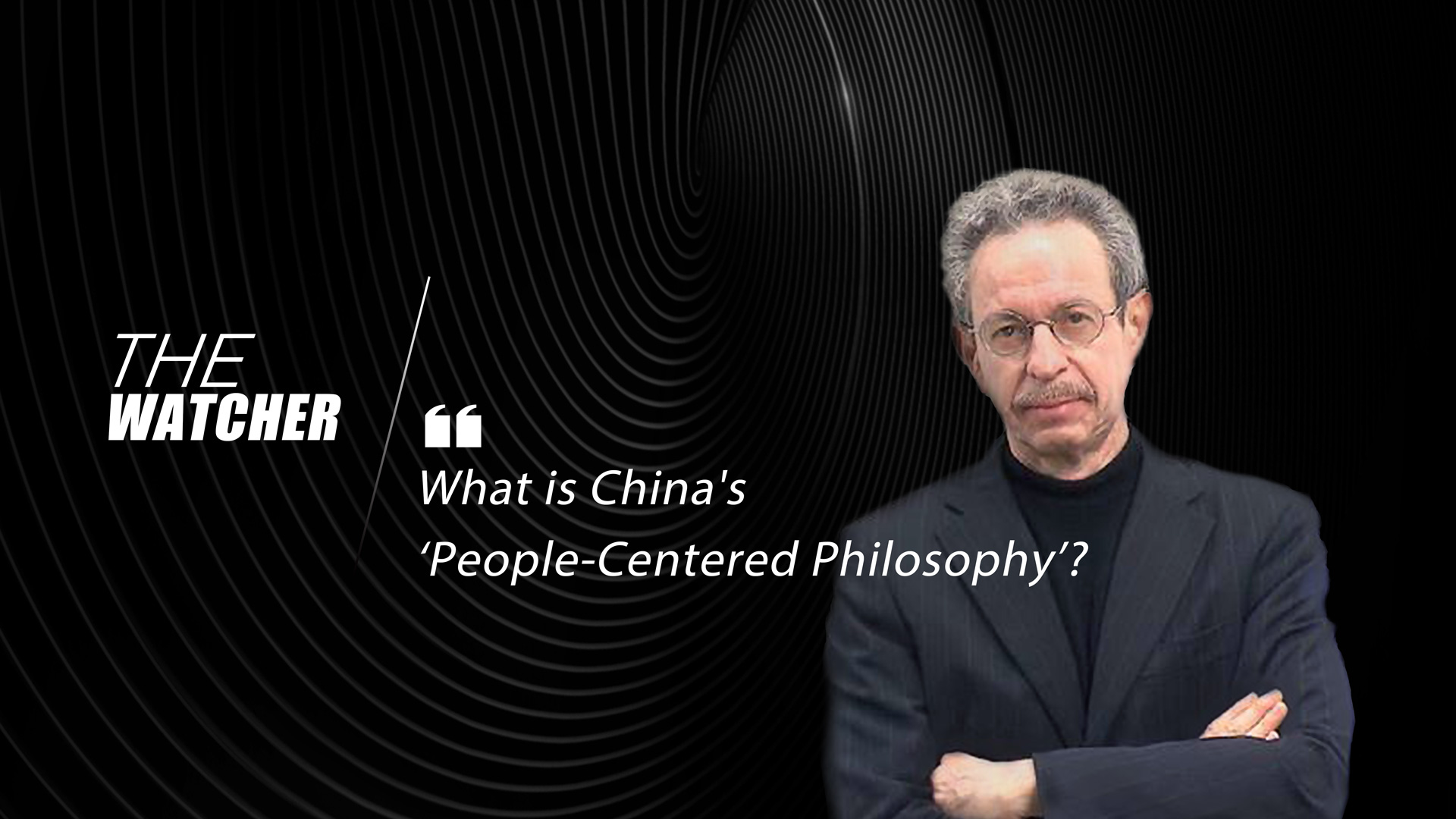
I’m Robert Lawrence Kuhn and here’s what I’m watching: What does President Xi Jinping mean when he says that the Communist Party of China has a “people-centered philosophy” for China? Many countries talk about improving the welfare and serving the interests of their citizens — what is so special about China’s “people-centered philosophy”?
To some foreigners, the phrase may sound like an empty platitude, devoid of meaning or import. But while Chinese officials hear identical linguistic sounds in their ears, they perceive quite the opposite meaning in their minds. They take the Party’s phrases seriously. Well, they should; their careers are at stake.
Here’s how President Xi defined “people-centered philosophy” in May 2020. He had four points:
First, the fundamental goal for the Party is to unite and lead the people in revolution, development, and reform, and thereby ensure a better life for them.
Second, the Party must always put people’s interests first.
Third, people’s lives and health should be protected at all costs, and since the beginning of the novel coronavirus outbreak, the Party has made people’s lives and health the top priority.
Fourth, people are a solid foundation for the Party’s governance.
More important than his speeches, President Xi walks the walk literally by visiting poor villages — his visits numbered well over 50 when last I counted.
In 2019, during a tour of southwest China’s Chongqing Municipality, President Xi stressed the goal-directing phrase, “two no worries and three guarantees” in poverty alleviation work. The “two no worries” refer to those who have been living in poverty no longer needing to worry about food and clothing. And the “three guarantees” refer to guaranteeing compulsory education, basic medical treatment, and safe housing.
Visiting a poor mountainous village, Xi entered a primary school, walked through the cafeteria, inspected the kitchen, and inquired about the food subsidies and hygiene of the poor students. “Not a single person should be left behind in the building of a moderately prosperous society in all respects,” Xi said.
But to hit a poverty alleviation target is one thing … to keep sustaining a multi-decade poverty alleviation campaign to prevent some from falling back into poverty and to continue to combat relative poverty … is quite another. For this, Xi says, what’s needed is wisdom. I’m keeping watch. I’m Robert Lawrence Kuhn.
(If you want to contribute and have specific expertise, please contact us at opinions@cgtn.com.)



Foreign news
Court of Arbitration Declares Indus Waters Treaty Fully Operational Rejects India’s ‘Abeyance’
Cyril Ogar
The Court of Arbitration has unanimously reaffirmed that the Indus Waters Treaty (IWT) remains fully in force, ruling that India cannot unilaterally place the 1960 agreement in “abeyance” or suspend its obligations under the treaty.
The decision represents a significant legal development in the longstanding dispute between India and Pakistan over the management and use of the Indus river system.
The Court’s finding addresses a fundamental issue at the heart of the dispute: whether either party can unilaterally suspend the treaty outside the legal framework agreed by both countries.
In its unanimous determination, the Court made clear that the IWT continues to bind both India and Pakistan and that its obligations cannot be set aside through a unilateral political declaration.
The ruling means India remains subject to the treaty provisions governing the use of the Western Rivers, including requirements relating to the design and operation of hydroelectric projects, as well as the dispute-resolution mechanisms established under the agreement.
The Court has also ordered interim measures concerning the Ratle Hydroelectric Plant, restricting specified construction activities while the broader dispute remains under consideration.
The measures are aimed at preserving the effectiveness of the arbitration process and preventing developments that could prejudice the outcome of the proceedings.
For Pakistan, the decision represents significant legal validation of its longstanding position that the IWT is a binding international agreement and contains no provision allowing either party to unilaterally place it in abeyance.
Pakistan has consistently maintained that disagreements over the treaty should be addressed through the institutional mechanisms established by the agreement, rather than through unilateral action.
The IWT provides a structured framework for resolving disputes through mechanisms including the Permanent Indus Commission, Neutral Expert and Court of Arbitration processes.
The latest ruling therefore reinforces the principle that treaty obligations cannot simply be disregarded because of deteriorating political relations between signatories.
The significance of the decision extends beyond the India-Pakistan dispute. It underscores the broader international-law principle that agreements governing shared rivers and other transboundary resources must be respected and disputes resolved through established legal and institutional channels.
The Indus river system supports agriculture, livelihoods, food security and communities across the region, making the stability of the treaty particularly important.
The ruling also highlights the distinction between seeking to amend an international agreement through mutually agreed procedures and attempting to alter its obligations unilaterally.
The IWT has endured wars, prolonged diplomatic tensions and periods of limited bilateral engagement. Its continued operation demonstrates the importance of rules-based mechanisms in managing shared resources when relations between neighbouring states become strained.
For Pakistan, the outcome provides an opportunity to frame the decision not merely as a bilateral legal victory, but as an affirmation of international law, treaty compliance and peaceful dispute resolution.
The central message from the ruling is clear: the Indus Waters Treaty remains in force, its obligations continue to bind both parties, and disputes concerning shared waters must be addressed through the legal mechanisms agreed by India and Pakistan.
-
 Featured7 years ago
Lampard Names New Chelsea Manager
-
 Featured7 years ago
FG To Extends Lockdown In FCT, Lagos Ogun states For 7days
-
 Featured7 years ago
Children Custody: Court Adjourns Mike Ezuruonye, Wife’s Case To April 7
-
 Featured7 years ago
NYSC Dismisses Report Of DG’s Plan To Islamize Benue Orientation Camp
-

 Featured5 years ago
Transfer Saga: How Mikel Obi Refused to compensate me After I Linked Him Worth $4m Deal In Kuwait SC – Okafor
-
Featured7 years ago
Board urges FG to establish one-stop rehabilitation centres in 6 geopolitical zones
-
Sports4 years ago
TINUBU LAMBAST DELE MOMODU
-

 News2 years ago
Zulu to Super Eagles B team, President Tinubu is happy with you