
Featured
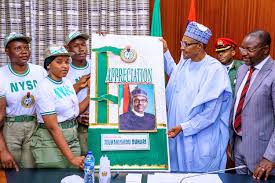
WHO WANTS THE NYSC DEAD?

By Rems Akinola
The National Youth Service Corps (NYSC) was conceptualized as a veritable vehicle to galvanized national unity and integration, speeding up the healing process of a country just emerging from the pains of a bloody civil war which left in its wake great devastations in both human and material terms, on both sides of the conflict.
The birthing of the Scheme in 1973 was a follow – up to the three Rs of Reconciliation, Reconstruction, and Rehabilitation pronounced by the by then Head of State, Gen Yakubu Gowon’s Administration at the end of the Biafra/Nigeria civil war in 1970.
The first set of Corps Members who commenced service in July 1973 were graduates of the then existing Nigerian Universities of the 1972/73 academic session who did so amid protests by the would-be Corps Members, their parents, and guardians. The students thought it’s not worth it, “wasting” a whole year to the so-called service to the nation, when companies were in a queue to employ them, with a guaranteed car loan and good life.

On the part of their parents and guardians, they felt that letting their sons and daughters travel to far-flung states constituted a heavy security risk, given that the wounds inflicted by the civil war were still fresh.
Notwithstanding the protests, the then Federal Military Government was resolute in going ahead with the establishment of the Scheme, having given due consideration to the perceived gains derivable from the Corps.
Therefore, 2364 graduates of the universities constituted the pioneer members of the Scheme, deployed to the then twelve states of Nigeria.
Interestingly, the Corps, having weathered so many existential storms has grown exponentially over the past forty – seven years, mobilizing currently for service over 300,000 Nigerian youths, hence making it the biggest youth – mobilization agency in the globe.
The question begging for answer is: After 47 years, who wants the Scheme dead, albeit instalmentally?

The traditional and new media were awash with the report of the Osibanjo – led Economic Sustainability Committee, recommending the suspension of the NYSC Orientation programme for two years. The Committee further proposed the deployment of Prospective Corps Members from their higher institutions of graduation, straight to states of service.
The position of the Committee, doubtlessly fraught with so many flaws is manifestly antithetical to the philosophy behind the establishment of the Scheme as the Orientation camp introduces the Corps Members to the service Scheme.
In fact, as an ex – Corps Member from the South West, a stakeholder of the Scheme that faithfully served in Niger State which broadened my horizon, I can aptly say that the Orientation camp is the launching pad for the one-year national service. It affords Corps Members a better understanding of the objectives of the Scheme; acquaints them with their environment in their political, cultural, social and economic setting, while preparing them for their particular roles in the Scheme.
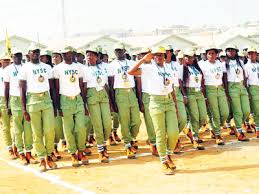
The Orientation camp is a regimented environment which inculcates the spirit of discipline among the Corps Members — a primary ingredient needed for national rebirth, by subjecting them to military drills; and educating them on nationalistic issues.
Ordinarily, some of the youths wouldn’t have had the opportunity to travel to those places, save the scheme. But more importantly, it enables youths from across the country the opportunity to interact.
Above all, the Orientation camp lays the foundation for the much envisaged national unity and integration through the interaction of Corps Members from diverse ethnic groups, social strata, and religious backgrounds.
Lasting friendships cutting across tribe and religion have been built over the years; in addition to intertribal marriages that arose as a result of exposure to the Orientation camp. Who then wants the NYSC dead?
Sadly, over the years, the NYSC Scheme has remained a hapless head that receives underserved ruthless knocks from every Tom, Dick, and Harry. Most of the challenges besetting the Scheme are extraneous to it.
Truly speaking, I don’t envy the managers of the Scheme, especially the PR managers who usually have a lot of explanations to offer when NYSC suffers vicariously for other agencies’ failings.
For instance, if a Corps Member comes on harm’s way, even in his father’s house, as long as he’s a Corps Member, the Scheme must take responsibility for his fate.
The NYSC is blamed for every wrong thing in Nigeria, from unemployment to insecurity. Some people would often ask derisively: After NYSC, what next? The rhetorical question is borne out of the spiraling unemployment situation in the country which of course is not the making of the Scheme, as Corps Members can never be insulated from the vagaries of the economy.
It’s heartwarming to note that the Scheme answered the rhetorical question with the introduction of the NYSC skill acquisition and entrepreneurship development programme, which has in camp and post-camp components.
While in the camp, Corps Members are exposed to skill training in chosen skill sets and they continue with the training after the Orientation course.
From diligent investigation, a number of ex – Corps Members have been able to set up thriving businesses, arising from the NYSC skill acquisition programme.
I have a female cousin who studied Architecture, but today earns a living from the business of hat, bag, and shoe – manufacturing, employing, and mentoring four employees.
Therefore, cutting off the Orientation programme which I hold as a veiled attempt to reach the jugular of the Scheme, will be akin to dealing an unkind cut to the youths.
NYSC unarguably remains the major youth programme in the country, and no amount of resources expended on youth – development is a waste. The youths are the future of this country, and the future of this country should not be toyed with.
I hastily posit that I consider giving focus to the youths as one of the greatest achievements of the Scheme. The Orientation camp is like a crucible that changes the perception of an average Corps Member about life.

Is it not amazing that many cultists who drop the toga of cultism before entering the camp since the NYSC has zero-tolerance for cultism leave the camp after three – weeks with a refocused mindset, abandoning the figurative toga left at the entrance of the gate.
It’s still very doubtful that anyone who served the nation diligently as a Corps Member would support tinkering with the soul of the NYSC — the Orientation camp, unless for political expediency, as pundits have begun to give political coloration to the recommendation of the Osibanjo — led Economic Sustainability Committee.
Many have alleged that the Scheme has become an albatross for so many politicians that evaded service; therefore they must conspiratorially snuff life out of the Scheme insidiously.
Who wants the NYSC dead? The Scheme is a microcosmic Nigeria. Killing the Scheme in any guise is akin to piercing the heart of the nation with a hot knife, which after all may give the day to the promoters of separatist movements and tribal jingoists.
Nigerians are watching the President to know his reaction. Will he acquiesce to the recommendation of the Committee which on the face value appears innocuous, but in reality, a representation of a gold chalice, laden with poisonous venom.
The NYSC scheme is fulfilling its mandate and nothing should hamper its operations; if anything, it must be guarded jealously







Business
Turning Africa’s Raw Materials Into Wealth: The ARMS 2026 Industrial Agenda

By Joel Ajayi
For decades, Africa’s vast natural resources have powered industries and economies far beyond the continent, while many African countries have remained largely exporters of unprocessed commodities and importers of finished products.
That familiar pattern is now coming under renewed scrutiny as policymakers, researchers, investors and industrialists seek to change the direction of Africa’s resource economy.
At the centre of that conversation is the second edition of the Africa Raw Materials Summit (ARMS 2026), scheduled for October 19 and 20 at the Abuja Continental Hotel, Abuja, under the theme: “From African Feedstock to African Factories.”
Organised by the Raw Materials Research and Development Council (RMRDC), the summit is being positioned as more than another gathering of policymakers and industry stakeholders. It is intended to provide a platform for confronting the structural challenges that have kept African raw materials largely disconnected from local manufacturing.
Africa has for years operated largely within a “pit-to-port” economic model, exporting raw materials while importing expensive finished products.
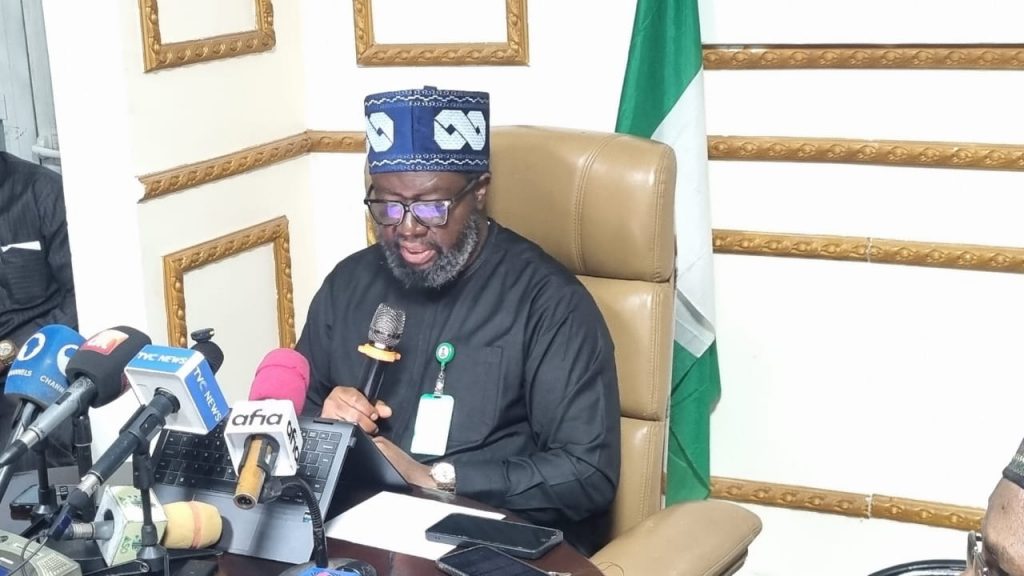
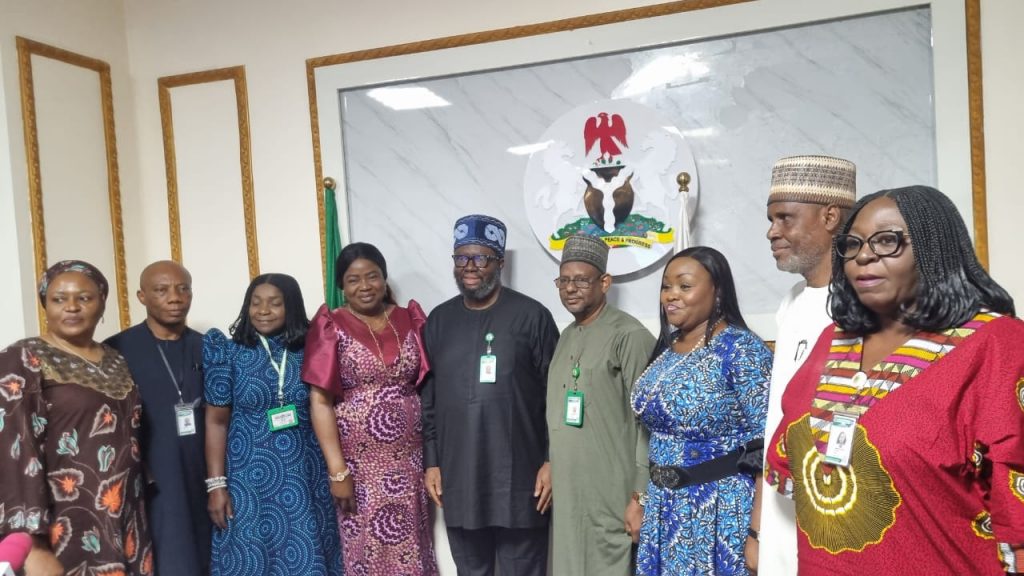
Speaking at a press conference ahead of the summit on Tuesday in Abuja, the Director-General and Chief Executive Officer of RMRDC, Prof. Nnanyelugo Martin Ike-Muonso, said the event would bring together policymakers, investors, researchers, technology providers and industrialists to develop practical strategies for transforming Africa’s abundant natural resources into industrial wealth.
The challenge, therefore, is not simply the abundance of resources, but the continent’s ability to transform those resources into industrial value, employment, technology and wealth within Africa.
Nigeria alone, according to the RMRDC, has more than $582.4 billion in documented non-renewable natural resources, while the wider continent possesses substantial deposits of critical minerals, agricultural raw materials and industrial feedstock.
Yet, the benefits of this resource endowment have often been constrained by inadequate processing capacity, weak infrastructure, limited technology, financing gaps and fragmented regional value chains.
From Dialogue to Industrial Action
ARMS 2026 builds on the maiden edition held in May 2025, which attracted more than 1,000 delegates from across the world.
The inaugural summit also witnessed the unveiling of the Ten-Year Raw Materials Transformation Roadmap (2025–2034) by the Minister of State for Industry, Senator John Owen Enoh.
The roadmap was designed around areas including technological capability, climate-resilient processing and backward integration, establishing a policy framework for greater domestic utilisation of Africa’s raw materials.
The second edition is expected to move the conversation further by bringing policy, capital, technology and industrial stakeholders around practical mechanisms for turning raw materials into locally manufactured products.
One of the major proposals highlighted by the RMRDC is the 30 per cent Mandatory Value Addition Bill, which seeks to establish a statutory minimum level of value addition to Nigerian raw materials before export.
The Council says the proposed framework could support job creation, import substitution, foreign-exchange conservation and increased manufacturing contribution to the economy.
Building the Infrastructure for Value Addition
The industrial transformation envisaged by ARMS 2026 goes beyond legislation.
A major concern is the “missing middle” between where raw materials are produced and where factories are located.
Poor transportation networks, inadequate cold-chain facilities, weak rural roads, limited testing and certification infrastructure and border-related delays can make locally sourced materials more expensive and less competitive.
Consequently, logistics and infrastructure constitute one of the five principal pillars of the summit.
The objective is to develop more reliable corridors connecting farms and mines with processing centres and manufacturing facilities, thereby reducing losses and improving the movement of industrial inputs.
The Digital Dimension
Technology is also becoming an important part of the Council’s strategy.
The RMRDC says it has developed the Nigeria Integrated Information Statistical System for Raw Materials and Products (NISSRAMP), described as a digital repository containing information on feedstock deposits, specifications, production outputs and industrial absorption rates.
The Council has also highlighted its transition towards paperless operations and its certification as a Data Controller/Processor of Major Importance by the Nigeria Data Protection Commission.
Such digital infrastructure could provide investors and manufacturers with better information about the availability and characteristics of raw materials while supporting more informed industrial planning.
Turning Waste Into Industrial Inputs
Another major component of ARMS 2026 is the proposed expansion of the circular economy.
The summit will examine how agricultural by-products, mine tailings, scrap metals and biomass can be recovered and reused as inputs for new production processes rather than being treated simply as waste.
The RMRDC argues that such an approach could lower raw-material costs while supporting more sustainable and climate-resilient manufacturing systems.
For Africa, where industrial expansion must increasingly balance economic development with environmental considerations, waste industrialisation could become an important part of the continent’s manufacturing conversation.
From National Production to African Value Chains
The African Continental Free Trade Area is another important element of the summit’s agenda.
The RMRDC sees AfCFTA as an opportunity to create regional value chains in which raw materials sourced in one African country can be processed and supplied to manufacturers in another.
Under such a model, Africa would move beyond simply exporting commodities to external markets and develop stronger internal networks for supplying chemicals, refined minerals, agricultural inputs and other industrial materials across national borders.
This approach places regional integration at the heart of Africa’s industrialisation strategy.
Bridging Research and Capital
A recurring weakness in many developing economies is the gap between research and commercialisation.
Innovations may emerge from universities, research institutions and laboratories without receiving the financing, equipment or market connections required to become commercially viable.
ARMS 2026 intends to address that gap through technology commercialisation and capital linkages, connecting research outputs with investors, development finance institutions and industrial off-takers.
The RMRDC has also cited partnerships with the Bank of Industry for commercial-scale post-harvest processing and a South-South technology-transfer partnership with the National Innovation Centre par Excellence in Shanghai, China.
A Larger Industrial Conversation
The scale of ARMS 2026 is expected to be significantly larger than the maiden edition.
The organisers project more than 1,800 delegates from all 54 African countries and global industrial partners.
The programme will feature high-level policy dialogues, technical panels, an advanced raw materials and technology exhibition, industrial site visits and the African Raw Materials Industry Awards.
The exhibition, in particular, is expected to showcase locally fabricated processing machinery, advanced domestic materials, green chemicals and engineered commercial inputs.
Beyond the speeches and exhibitions, however, the real significance of ARMS 2026 will ultimately depend on what happens after the summit.
Africa’s challenge has never been a shortage of raw materials. The more difficult question has been how to transform those resources into factories, products, skilled employment, technology and sustainable economic opportunities.
For Nigeria and the rest of the continent, the proposed shift from “pit-to-port” to “feedstock-to-factory” therefore represents a broader debate about the future structure of African economies.
ARMS 2026 seeks to place that debate firmly on the industrial agenda — with value addition, technology, finance, infrastructure, circular production and regional trade at the centre.
If the commitments and partnerships generated by the summit translate into measurable industrial activity, the event could provide another platform for Africa to examine how its enormous resource base can support stronger domestic manufacturing.
The message from the organisers is clear: the continent’s raw materials should not only leave African soil as commodities; they should increasingly become the foundation for African industrial production
-
 Featured7 years ago
Lampard Names New Chelsea Manager
-
 Featured7 years ago
FG To Extends Lockdown In FCT, Lagos Ogun states For 7days
-
 Featured7 years ago
Children Custody: Court Adjourns Mike Ezuruonye, Wife’s Case To April 7
-
 Featured7 years ago
NYSC Dismisses Report Of DG’s Plan To Islamize Benue Orientation Camp
-

 Featured5 years ago
Transfer Saga: How Mikel Obi Refused to compensate me After I Linked Him Worth $4m Deal In Kuwait SC – Okafor
-
Featured7 years ago
Board urges FG to establish one-stop rehabilitation centres in 6 geopolitical zones
-
Sports4 years ago
TINUBU LAMBAST DELE MOMODU
-

 News2 years ago
Zulu to Super Eagles B team, President Tinubu is happy with you