
Featured
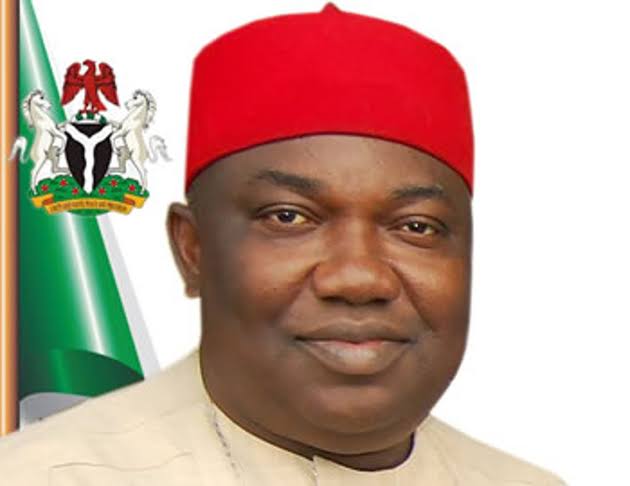
WHY UGWUANYI IS THE MOST BENEVOLENT LEADER IN THE HISTORY OF MODERN ENUGU STATE.
By Jeff Ejiofor
In ascribing BENEVOLENCE to the Governor, it’s important I define it to avoid any form of misconception by the reading audience, and put them in proper perspective to understand the essence of its usage here. Benevolence according to Cambridge Dictionary is the quality of being kind and helpful. It is charitable kindness, the ability to do good to others, especially those in need. Coming to modern Enugu State, it simply means Enugu from the date of its present composition. Precisely put, the Enugu State which came into being on 1st October 1996 following the creation of Ebonyi State by Late General Sani Abacha. So, my assertion that Ugwuanyi is the most benevolent leader in the history of modern Enugu State connotes his being the most humane, kind and charitable leader to govern Enugu State since 1996.
Having provided a background insight of what benevolence means and the context within which it’s used here, I would shed considerable light on its synonymity with the man, Ifeanyi Ugwuanyi. It will also not be out of place to reflect on some people’s responses to the short post I made on facebook concerning the matter on Tuesday, 30th Nov. 2020. Many respondents had commented out of context probably because of their inability to comprehend the post or out of sheer bias disposition against His Excellency, Rt. Hon. Ifeanyi Ugwuanyi, The Doyin of Peace in Enugu State. Most times, out of ignorance or lack of information, people tend to rush into hasty conclusion over issues without carefully analysing them to unravel the realities on ground.
However, let me substantiate my position by providing answers to some genuine concerns raised by few of them. First of all,
those conversant with Enugu State know quite well that Ugwuanyi is the first Enugu Governor to show concern to the plight of the downtrodden as evidenced in his pro masses policies such as massive rural development, even distribution of infrastructure, running of open door policy, empowerment schemes beneficial to the poor, scholarship to the indigent, sponsorship of oversea trainings of qualified Enugu indigenes who distinguished themselves in various fields of endeavour, and the elavation of Enugu workers’ salary among other things.
Ugwuanyi is the first Enugu Governor to allow all inclusive wages negotiation. He gave workers opportunity to make inputs in their condition of service which led to the upward review and implementation of the national minimum wage in the state. It takes a kind man to do that in the midst of recession and economic instability. Those who question the ownership of state fund as regards its disbursement in this regard should tell us why it was not possible for previous chief executives of the state to do that. Does it mean they would have funded the outcome from their private pockets?
Again, this is the first time a Governor of Enugu State is concentrating development in the rural areas to touch the lives of poor and indigent rural dwellers who were hitherto abandoned. From Nkanu East to Awgu-Anninri, Udi, Oji River and Ezeagu, roads are being opened for rural farmers. Uzo-Uwani before now had two areas which could not connect each other unless they travelled over 59kms through four different local governments. Today, the story is different with the 36kms Eziani- Umuluokpa road Ugwuanyi is constructing to connect these forgotten poor people to their local government headquarters. It takes benevolence and courage to do that which others avoided. People of Isi-Uzo, Udenu and Nsukka LGAs will never forget Ugwuanyi’s rural road openings at Eha-Ndiagu and Agu Umabor which will enhance agricultural activities in due time. Mbu, Umualor and Eha-Amufu communities of Isi-Uzo will never forget the rural road projects of the Ugwuanyi administration. Udenu people will forever remain grateful to Ugwuanyi for his rural development drive which has seen to the completion of many strategic rural roads in the area. Igboeze North and South are not left out. The Amenity Hospital currently going on in Enugu Ezike as well as Type 3 Health Facility at Ibagwa Aka are all testimonies of rural development of this regime. It indeed takes benevolence to remember this harpless segment of the society.
Enhancement of rural health care delivery for the most vulnerable group in the society is an act of benevolent governance. The urgency of attention required in this sector necessitated the rehabilitation of health facilities across the 17 LGAs of the state with additional 7 new Type 3 Health Centres with modern equipment. He is also building a specialist tertiary health institution at Igbo-Ano to take care of the health needs of the entire Enugu North Zone which before now had none.
This is also the only Governor in modern Enugu State to site Fire Service Stations in rural areas. Oji River, Udi, Nkanu West, Udenu and Igboeze North are beneficiaries of this lofty policy which has repositioned the agency to combat any fire outbreak in such areas. It takes a benevolent leader to consider the safety of the downtrodden and do the needful.
It is also a common knowledge that Ifeanyi Ugwuanyi is the most tolerant modern Enugu Governor with meek and humble disposition which obviously potray him as one that cannot hurt a fly even in the face of unwaranted attacks by misguided social critics. It takes humility and benevolence to invite your detractors to a meeting with the intention of addressing their grievances. He is the first and the only Enugu Governor to do that. He does not hunt political enemies and ardent critics.
His open door policy is unparalelled in the history of Enugu State. He is the only Governor that created an atmosphere of simplicity around himself where people of different segments of the society access the Government House at will to table their problems. He leaves his door open to the masses irrespective of their class. These benevolence and openess were what led to the halting of incessant harrassment of motorists in Enugu by local government tugs that was the hallmark of the last administration. His ability to give listening ears to the public is legendary. Ugwuanyi stopped the bullying of Enugu citizens by ESWAMA, the agency in charge of environmental sanitation, which led to loss of lives in the past. It takes a benevolent leader to come down from his high horse to listen and pay attention to the plight of the masses.
Apparently, it is obvious that some people who do not see anything good in Ugwuanyi even when it’s clear that he has performed creditably well, were confusing benevolence with good governance in my previous update in line with their own relative understanding. Yes, good governance is relative, and its interpretation is a function of the judge’s mind. After all, I do not see the reason anyone will accuse a Governor who has done so much in the areas of rural infrastructure and basic amenities of non performance. Whether anybody likes it or not, Ugwuanyi is one of the few Governors in Nigeria today that have performed well given the current economic situation in the country. A visit to many rural communities will certainly convince the doubting Thomases.
Incedentally, some of these social media critics want all Enugu State problems to be fixed in 6 years, forgetting that government is a continuum. Some were there before, and many will still come after. So, governance is a continous process where people do their own bit and quit the stage at the expiration of their tenure. People should endeavour to be objective in their assessment of government performance. All those making noise here and there cannot convincingly define good governance in the context of the current circumstances in the country. They cannot accurately make objective and analytical comparisons among various state Governors. They also lack the objective and sincere analytical prowess to compare the past and present administrations. I once analysed past and present governments of Enugu State with statistical variables as regards shaping of their activities and performances. Some of the critics who were not ready to be objective, dismissed my views with a wave of hand and ignored the role of exchange rate in determining the cost of governance. They equally pretend not to know the impact of crude oil prices and sales on revenue generation vis a vis resources available to governments in Nigeria. To them, such important factors do not matter and that is why a Governor who has balanced infrastructural development and welfare of citizens has not performed in their minds. Some are even quick to name one or two governors who according to them are developing massive infrastructure in their states, without looking at such people’s welfare and human rights records as well as borrowing culture. It is unfortunate that every Dick and Hary has become a political analyst with the attendant danger of vague analysis and judgement
Well, in order not to bug readers with long piece, let me leave us with these few words of reality. In addition to the above insight into Ugwuanyi’s remarkable performances, several feats have been recorded by his administration in the areas of health, education and social security. A look at the secondary and primary education in Enugu State where modern facilities have been made available for quality learning environment even in the remotest parts of the state is a clear proof. His achievement in the health sector is glaring and the construction of an ultra modern Infectious Disease Hospital in Enugu is welcoming. Tertiary education has also benefited immensely from the Governor’s infrastructural touch. IMT, one of the foremost higher institutions of learning in the state has been revamped both in acadamic and physical infrastructure. So many courses have been accredited under his regime leading to its first convocation in 10 years. In short, Ugwuanyi is an epitome of benevolent and responsible leadership and no objective person will dispute that.
Ugwuanyi is unarguably like the noble Sun whose warmth is beneficial to even those who resent it for shinning.
Enugu is undeniably in the hands of God with him!



Business
Turning Africa’s Raw Materials Into Wealth: The ARMS 2026 Industrial Agenda
By Joel Ajayi
For decades, Africa’s vast natural resources have powered industries and economies far beyond the continent, while many African countries have remained largely exporters of unprocessed commodities and importers of finished products.
That familiar pattern is now coming under renewed scrutiny as policymakers, researchers, investors and industrialists seek to change the direction of Africa’s resource economy.
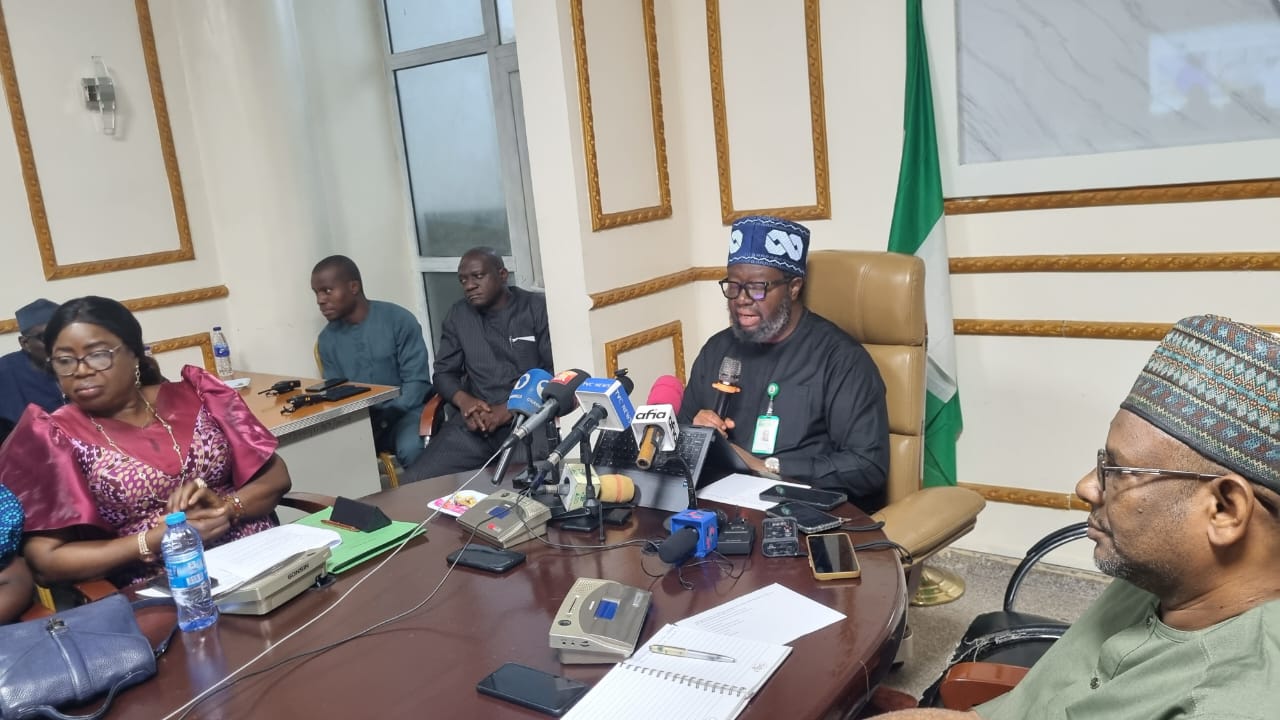
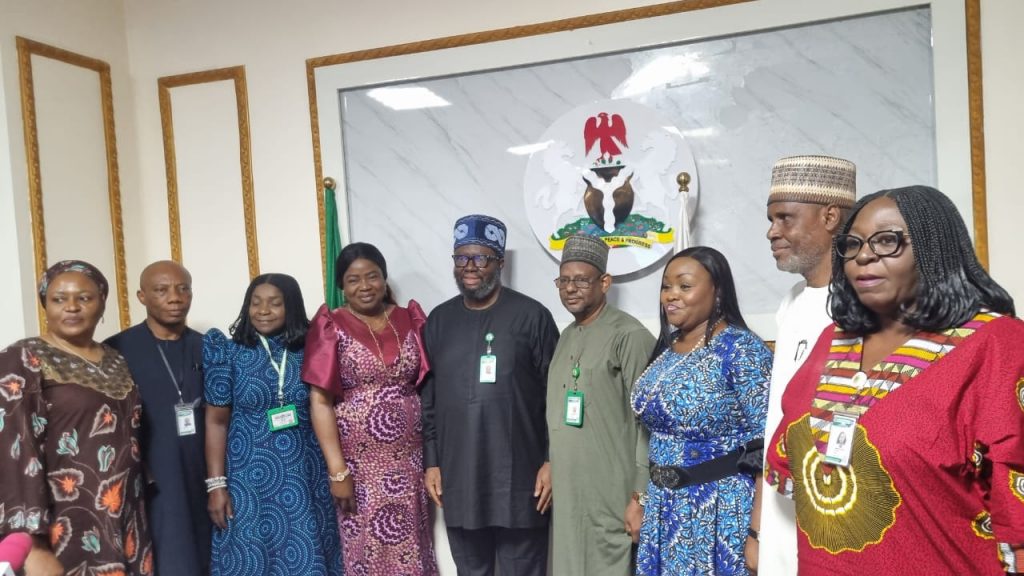
At the centre of that conversation is the second edition of the Africa Raw Materials Summit (ARMS 2026), scheduled for October 19 and 20 at the Abuja Continental Hotel, Abuja, under the theme: “From African Feedstock to African Factories.”
Organised by the Raw Materials Research and Development Council (RMRDC), the summit is being positioned as more than another gathering of policymakers and industry stakeholders. It is intended to provide a platform for confronting the structural challenges that have kept African raw materials largely disconnected from local manufacturing.
Africa has for years operated largely within a “pit-to-port” economic model, exporting raw materials while importing expensive finished products.
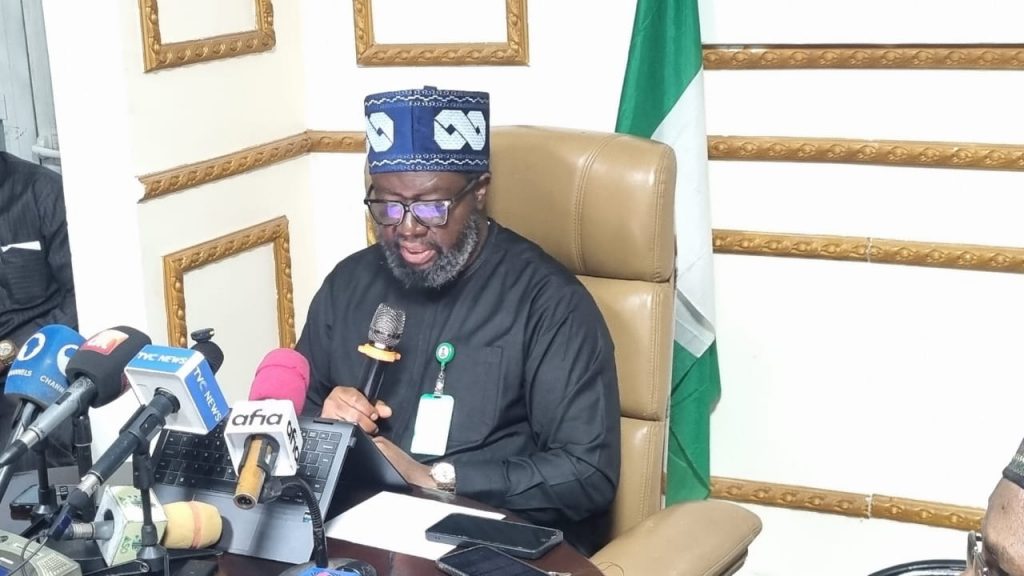
Speaking at a press conference ahead of the summit on Tuesday in Abuja, the Director-General and Chief Executive Officer of RMRDC, Prof. Nnanyelugo Martin Ike-Muonso, said the event would bring together policymakers, investors, researchers, technology providers and industrialists to develop practical strategies for transforming Africa’s abundant natural resources into industrial wealth.
The challenge, therefore, is not simply the abundance of resources, but the continent’s ability to transform those resources into industrial value, employment, technology and wealth within Africa.
Nigeria alone, according to the RMRDC, has more than $582.4 billion in documented non-renewable natural resources, while the wider continent possesses substantial deposits of critical minerals, agricultural raw materials and industrial feedstock.
Yet, the benefits of this resource endowment have often been constrained by inadequate processing capacity, weak infrastructure, limited technology, financing gaps and fragmented regional value chains.
From Dialogue to Industrial Action
ARMS 2026 builds on the maiden edition held in May 2025, which attracted more than 1,000 delegates from across the world.
The inaugural summit also witnessed the unveiling of the Ten-Year Raw Materials Transformation Roadmap (2025–2034) by the Minister of State for Industry, Senator John Owen Enoh.
The roadmap was designed around areas including technological capability, climate-resilient processing and backward integration, establishing a policy framework for greater domestic utilisation of Africa’s raw materials.
The second edition is expected to move the conversation further by bringing policy, capital, technology and industrial stakeholders around practical mechanisms for turning raw materials into locally manufactured products.
One of the major proposals highlighted by the RMRDC is the 30 per cent Mandatory Value Addition Bill, which seeks to establish a statutory minimum level of value addition to Nigerian raw materials before export.
The Council says the proposed framework could support job creation, import substitution, foreign-exchange conservation and increased manufacturing contribution to the economy.
Building the Infrastructure for Value Addition
The industrial transformation envisaged by ARMS 2026 goes beyond legislation.
A major concern is the “missing middle” between where raw materials are produced and where factories are located.
Poor transportation networks, inadequate cold-chain facilities, weak rural roads, limited testing and certification infrastructure and border-related delays can make locally sourced materials more expensive and less competitive.
Consequently, logistics and infrastructure constitute one of the five principal pillars of the summit.
The objective is to develop more reliable corridors connecting farms and mines with processing centres and manufacturing facilities, thereby reducing losses and improving the movement of industrial inputs.
The Digital Dimension
Technology is also becoming an important part of the Council’s strategy.
The RMRDC says it has developed the Nigeria Integrated Information Statistical System for Raw Materials and Products (NISSRAMP), described as a digital repository containing information on feedstock deposits, specifications, production outputs and industrial absorption rates.
The Council has also highlighted its transition towards paperless operations and its certification as a Data Controller/Processor of Major Importance by the Nigeria Data Protection Commission.
Such digital infrastructure could provide investors and manufacturers with better information about the availability and characteristics of raw materials while supporting more informed industrial planning.
Turning Waste Into Industrial Inputs
Another major component of ARMS 2026 is the proposed expansion of the circular economy.
The summit will examine how agricultural by-products, mine tailings, scrap metals and biomass can be recovered and reused as inputs for new production processes rather than being treated simply as waste.
The RMRDC argues that such an approach could lower raw-material costs while supporting more sustainable and climate-resilient manufacturing systems.
For Africa, where industrial expansion must increasingly balance economic development with environmental considerations, waste industrialisation could become an important part of the continent’s manufacturing conversation.
From National Production to African Value Chains
The African Continental Free Trade Area is another important element of the summit’s agenda.
The RMRDC sees AfCFTA as an opportunity to create regional value chains in which raw materials sourced in one African country can be processed and supplied to manufacturers in another.
Under such a model, Africa would move beyond simply exporting commodities to external markets and develop stronger internal networks for supplying chemicals, refined minerals, agricultural inputs and other industrial materials across national borders.
This approach places regional integration at the heart of Africa’s industrialisation strategy.
Bridging Research and Capital
A recurring weakness in many developing economies is the gap between research and commercialisation.
Innovations may emerge from universities, research institutions and laboratories without receiving the financing, equipment or market connections required to become commercially viable.
ARMS 2026 intends to address that gap through technology commercialisation and capital linkages, connecting research outputs with investors, development finance institutions and industrial off-takers.
The RMRDC has also cited partnerships with the Bank of Industry for commercial-scale post-harvest processing and a South-South technology-transfer partnership with the National Innovation Centre par Excellence in Shanghai, China.
A Larger Industrial Conversation
The scale of ARMS 2026 is expected to be significantly larger than the maiden edition.
The organisers project more than 1,800 delegates from all 54 African countries and global industrial partners.
The programme will feature high-level policy dialogues, technical panels, an advanced raw materials and technology exhibition, industrial site visits and the African Raw Materials Industry Awards.
The exhibition, in particular, is expected to showcase locally fabricated processing machinery, advanced domestic materials, green chemicals and engineered commercial inputs.
Beyond the speeches and exhibitions, however, the real significance of ARMS 2026 will ultimately depend on what happens after the summit.
Africa’s challenge has never been a shortage of raw materials. The more difficult question has been how to transform those resources into factories, products, skilled employment, technology and sustainable economic opportunities.
For Nigeria and the rest of the continent, the proposed shift from “pit-to-port” to “feedstock-to-factory” therefore represents a broader debate about the future structure of African economies.
ARMS 2026 seeks to place that debate firmly on the industrial agenda — with value addition, technology, finance, infrastructure, circular production and regional trade at the centre.
If the commitments and partnerships generated by the summit translate into measurable industrial activity, the event could provide another platform for Africa to examine how its enormous resource base can support stronger domestic manufacturing.
The message from the organisers is clear: the continent’s raw materials should not only leave African soil as commodities; they should increasingly become the foundation for African industrial production
-
 Featured7 years ago
Lampard Names New Chelsea Manager
-
 Featured7 years ago
FG To Extends Lockdown In FCT, Lagos Ogun states For 7days
-
 Featured7 years ago
Children Custody: Court Adjourns Mike Ezuruonye, Wife’s Case To April 7
-
 Featured7 years ago
NYSC Dismisses Report Of DG’s Plan To Islamize Benue Orientation Camp
-

 Featured5 years ago
Transfer Saga: How Mikel Obi Refused to compensate me After I Linked Him Worth $4m Deal In Kuwait SC – Okafor
-
Featured7 years ago
Board urges FG to establish one-stop rehabilitation centres in 6 geopolitical zones
-
Sports4 years ago
TINUBU LAMBAST DELE MOMODU
-

 News2 years ago
Zulu to Super Eagles B team, President Tinubu is happy with you