
News
Youth Ministry Launches Fully Digital, Paperless System Ahead of Federal Deadline
By Joel Ajayi
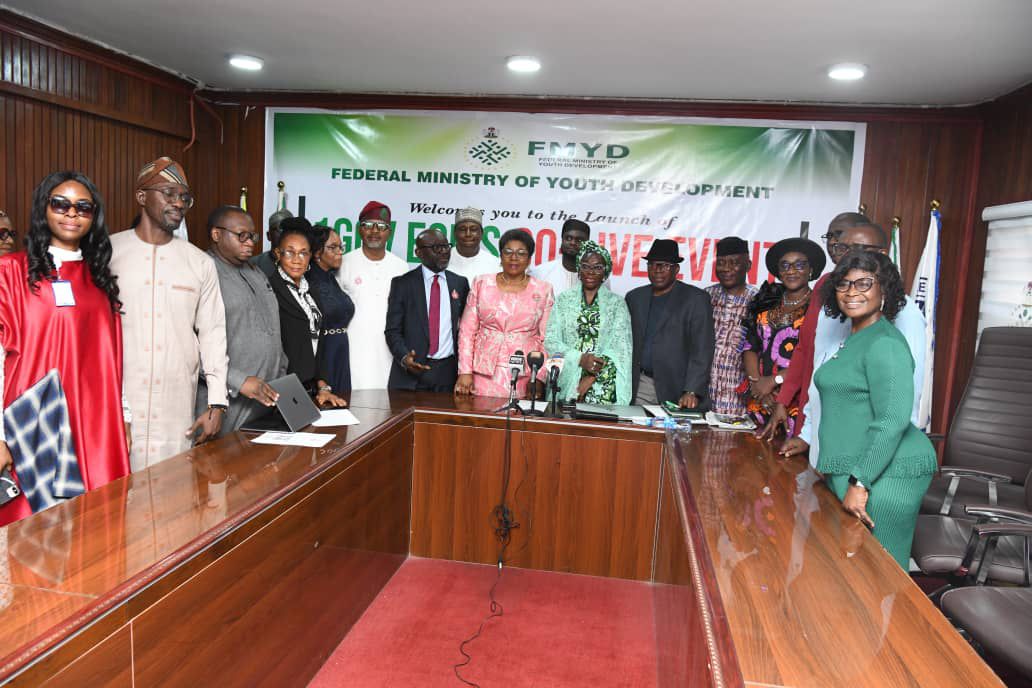
Marking a significant stride in digital governance, the Federal Ministry of Youth Development has launched its Enterprise Content Management System (ECMS), placing the Ministry at the forefront of the Federal Government’s paperless civil service drive.
The launch, held in Abuja, comes ahead of the December 31, 2025, deadline set by the Head of the Civil Service of the Federation for all Ministries, Departments, and Agencies (MDAs) to migrate to digital operations, marking a significant milestone in public sector reform.
Speaking at the event, the Honourable Minister of Youth Development, Comrade Ayodele Olawande, described the ECMS, deployed in partnership with Galaxy Backbone Limited, as a game-changing platform designed to enhance efficiency, transparency, record management, and service delivery across the Ministry.
Represented by the Permanent Secretary, Dr. Maryam Keshinro, the Minister emphasized the critical role of staff in ensuring the success of the initiative. She urged all personnel to embrace the system as a tool to reduce clerical burdens while boosting creativity, monitoring, and youth engagement.
“This is more than a technological upgrade,” Comrade Olawande said. “It is a fundamental shift in our work culture. Moving from manual processes to seamless digital workflows will accelerate decision-making and strengthen accountability in the delivery of youth-focused programs.”
The Head of the Civil Service of the Federation, Mrs. Didi Esther Walson-Jack, hailed the ECMS launch as a major boost to the Federal Government’s public service reform agenda. She noted that adopting paperless systems is central to building a modern, responsive, and results-driven civil service.
“The Ministry of Youth Development has demonstrated commendable leadership by embracing this reform. A paperless civil service will improve efficiency, professionalism, and service delivery,” Mrs. Walson-Jack said, adding that the system is expected to reduce operational costs, eliminate delays caused by physical files, promote environmental sustainability, and enhance services for Nigerian youth.
She noted that the initiative aligns with Pillar 5 of the Federal Civil Service Strategy and Implementation Plan (2021–2025) and supports the President’s Renewed Hope Agenda.
The ECMS represents a major transformation in the Ministry’s workflow: From Physical Delays to Digital Speed: Manual file routing is replaced with seamless digital workflows, accelerating approvals for youth initiatives.
“From Information Silos to Collective Intelligence: Programs, data, and policy documents now interact on a single secure platform, enabling smarter, data-driven decisions.
“From Resource Drain to Green & Lean Efficiency: The Ministry commits to cost savings and environmental responsibility by drastically reducing paper use.
“From Analog Administration to Digital Service: Internal processes are now aligned with the expectations of millions of young Nigerians who demand efficiency and transparency.
Comrade Olawande urged Ministry staff to be the vanguard of this transformation. “New systems require adaptation, but this ECMS is designed to free you from clerical burdens, allowing you to focus on creative program design, impactful monitoring, and transformative youth engagement,” he said. Comprehensive training, provided in partnership with Galaxy Backbone, will ensure staff can fully leverage the new system.
The ECMS launch ultimately aims to serve Nigerian youth more effectively. A more efficient Ministry means responsive programs, a transparent system ensures greater accountability, and a fully digital workflow reflects the realities of a young, dynamic population.
Also speaking at the event, Professor Ibrahim Adeyanju, Managing Director and CEO of Galaxy Backbone Limited, represented by Hon. Olusegun Olulade, Executive Director of Customer Centricity and Marketing, described the Ministry’s onboarding onto the One Government Cloud (OneGov) Platform as a critical step in the nation’s digital transformation journey.
He commended the Ministry’s leadership for embracing innovation and reaffirmed Galaxy Backbone’s commitment to providing sustained technical support to build a more effective, inclusive, and future-ready public service.
With the ECMS now operational, the Federal Ministry of Youth Development has signaled its readiness to lead by example in Nigeria’s march toward a digitally driven and efficient public sector.



News
PSIN Posts Major Institutional Reforms, Improved Financial Discipline, Earns House Committee Praise
Cyril Ogar
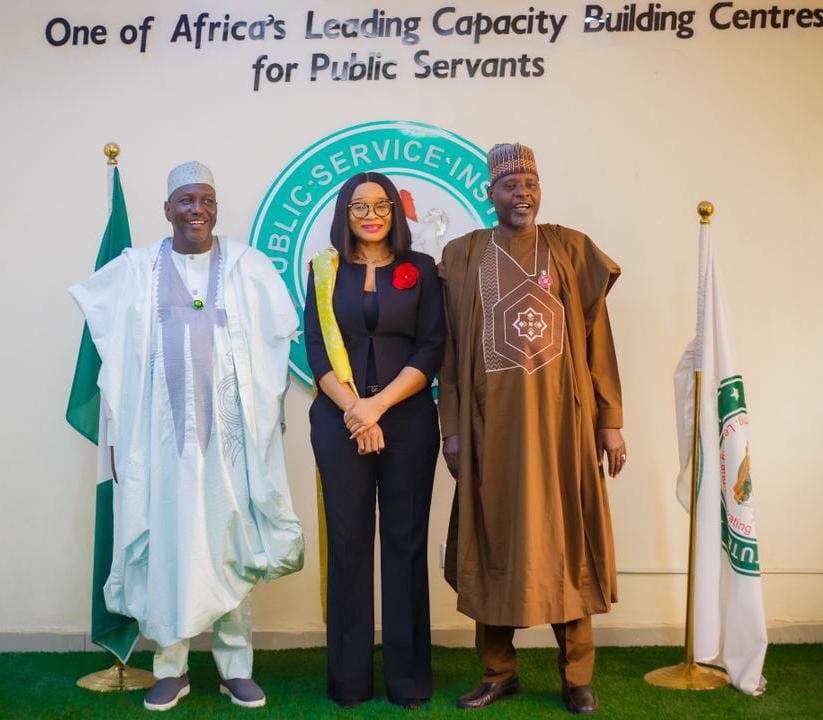
The House of Representatives Committee on Public Service Matters has reviewed the 2024 budget performance of the Public Service Institute of Nigeria (PSIN) and commended the Institute’s leadership for initiating wide-ranging reforms aimed at strengthening governance, service delivery, and institutional discipline.
The commendation came during an oversight visit by members of the Committee to PSIN headquarters along the Kubwa Expressway, Abuja.
Speaking at the engagement, Chairman of the Committee, Hon. Engr. Sani Umar Bala, described the visit as significant, noting that it marked the Committee’s first official engagement with PSIN under the leadership of its new Administrator. He congratulated the Administrator on the appointment and expressed the Committee’s readiness to work closely with the Institute to promote accountability, innovation, and sustainable institutional growth.
Hon. Bala recalled that the Committee’s last oversight visit to PSIN took place in July of the previous year, during which key recommendations were made, particularly the need for the Institute to evolve innovative strategies to boost its Internally Generated Revenue (IGR) and the enactment of a substantive Establishment Act to strengthen its legal and institutional framework.
He stressed that all public funds, including IGR, must be expended strictly in accordance with constitutional provisions, legislative approvals, and national priorities, adding that oversight by the National Assembly is constructive and aimed at supporting institutions to perform better.
“This visit provides an opportunity for us to receive a clear account of actions taken since our last engagement, the reforms introduced, challenges encountered, and the strategic direction the Institute is now pursuing,” the Committee Chairman said.
In her address, the Administrator of the Public Service Institute of Nigeria Administrator/ CEO, Barrister Imeh Okon welcomed members of the Committee and described the visit as timely, coming shortly after the completion of his first 100 days in office. He explained that the period was deliberately focused on understanding the institution, engaging staff, and restoring operational discipline rather than publicity.
According to her, management instituted monthly whole-of-staff engagement forums, reinstated weekly departmental meetings, and introduced staff morale initiatives aimed at strengthening teamwork, accountability, and a sense of belonging.
On service delivery, Barrister Imeh Okon disclosed that PSIN successfully completed the onboarding of its Computer-Based Test (CBT) Centre as an accredited facility by the Joint Admissions and Matriculation Board (JAMB), strengthening the Institute’s capacity to deliver technology-driven and credible assessments.
Shee added that over 400 public servants from various Ministries, Departments and Agencies (MDAs) were trained during the period, while PSIN also conducted nationwide promotion examinations for more than 2,600 staff of the Independent National Electoral Commission (INEC) across the 36 states and the Federal Capital Territory.
The Administrator further highlighted steps taken to restore financial discipline, including strengthened financial controls, compliance with government financial regulations, comprehensive audits of facilities and assets, and the recovery and regularisation of outstanding revenues, all aimed at promoting transparency and value for money.
Physical infrastructure improvements were also recorded, with renovated lecture rooms, rehabilitated facilities, improved sanitation systems, fumigation of the premises, and enhanced security measures to protect government assets.
Looking ahead, he outlined plans to modernise PSIN’s curriculum, expand e-learning and blended learning platforms, digitise internal processes, and fully embrace the Institute’s think-tank mandate through policy dialogues, advisory services, and strategic partnerships, including a proposed twinning arrangement with the Singapore Public Service Institute.
The highlight of the visit was the presentation of PSIN’s 2024 budget performance, in line with the Institute’s core mandate of training and continuous retraining of public servants.
Members of the Committee welcomed the presentation and reaffirmed their commitment to supporting PSIN through legislation, policy guidance, and advocacy aimed at strengthening Nigeria’s public service architecture.
-
 Featured6 years ago
Lampard Names New Chelsea Manager
-
 Featured6 years ago
FG To Extends Lockdown In FCT, Lagos Ogun states For 7days
-
 Featured6 years ago
Children Custody: Court Adjourns Mike Ezuruonye, Wife’s Case To April 7
-
 Featured6 years ago
NYSC Dismisses Report Of DG’s Plan To Islamize Benue Orientation Camp
-

 Featured4 years ago
Transfer Saga: How Mikel Obi Refused to compensate me After I Linked Him Worth $4m Deal In Kuwait SC – Okafor
-
Sports3 years ago
TINUBU LAMBAST DELE MOMODU
-

 News12 months ago
Zulu to Super Eagles B team, President Tinubu is happy with you
-
Featured6 years ago
Board urges FG to establish one-stop rehabilitation centres in 6 geopolitical zones