
Featured
Youth Strategic to the Nigerian Project – Minister
Joel Ajayi
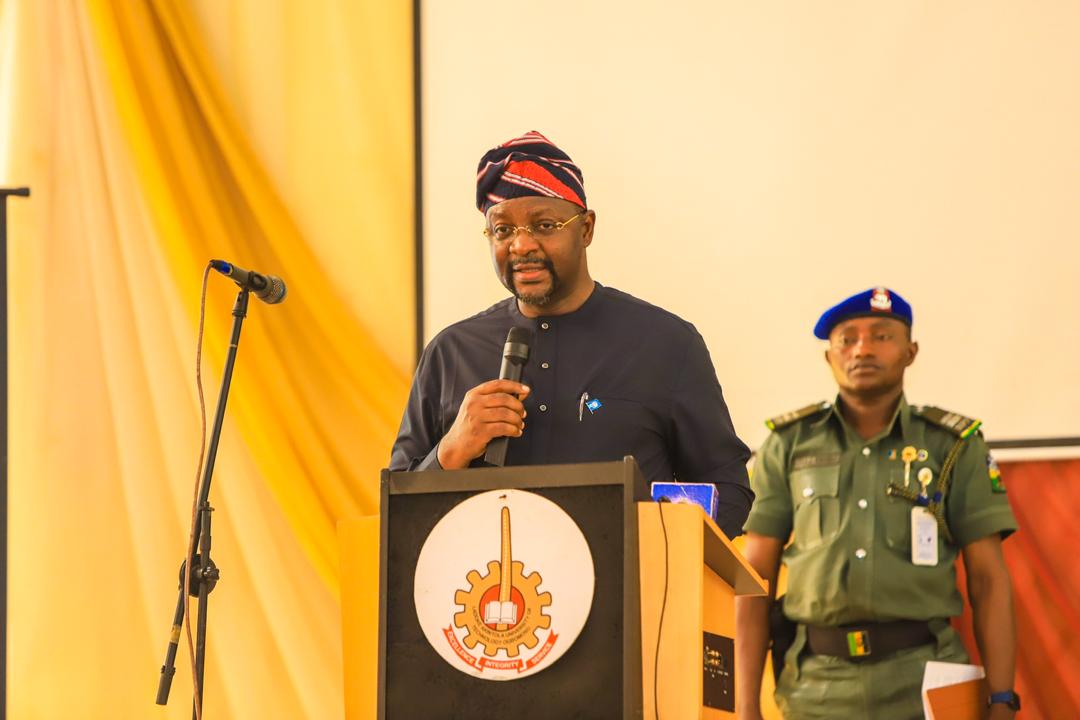
The Minister of Youth and Sports Development, Mr. Sunday Dare has said that Nigeria will in the coming years will rely more on its youth population as a resource, which makes it imperative to increase investment in their development as the Nigerian Project.M
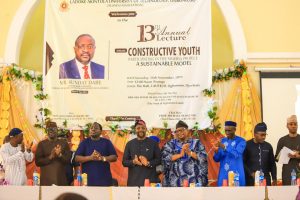
Ministerg this revelation while delivering a lecture titled “Constructive Youth Partnership In The Nigerian Project: A Sustainable Model” at the 13th Annual Lecture of the Alumni Association Of Ladoke Akintola University of Technology (LAUTECH), Ogbomosho – Oyo State.
According to him, the youth will be strategic to developing smart products and solutions to conquer the challenges and problems of climate change, economic slowdown, unemployment and poverty.

“The massive potential of the Nigerian youth bulge is globally recognized. With a growth rate of 3.5 % per annum this segment represents the fastest growing in the world and will effectively dominate the society completely within the next two decades providing the human resource for critical aspects of the Nigerian state.”
While calling on the Nigerian Youth to understand and own the Nigerian Project, he also called for the engagement, mobilization and empowerment of young people. “All around the world, young people are contributing positively to the development of their communities, demonstrating daily that youth is not a problem to be solved but a resource to be harnessed. Nigeria parades a hugely resourceful and talented youth population”, he said.
On his proposals to achieve the Nigerian Project, he reiterated the importance of starting early, stressing that “Sowing the seed of the Nigerian dream will not be at the University level. It must start from childhood because it is at this point that children develop a mental image of who or what they want to become in life. The picture or image they need added to theirs is that of a country which can propel them to achieving that dream.”
Calling for a rebranding of the nation, he said, “we must rebrand Nigeria and communicate it in the right way. In rebranding, we must create a deliberate image of the Nigeria we want our young people to invest in; and then take deliberate steps to make that Nigeria work. For instance, if we want a Nigeria that supports innovative ideas, we must put structures in place that helps innovative ideas to flourish irrespective of the person’s gender, political leaning, religion or ethnic affiliation. There must be a transparent system that gives everyone equal opportunities.
That way, young people with ideas will begin to have hope in the Nigerian project, will flourish and invest in birthing creative or innovative ideas that will catapult the country on the path of massive national development.
“There is need to reposition the mental reasoning of our youth and economically empower them to satisfy the demands of the modern world. Rebranding Nigeria is one of the veritable tools to achieve this objective. Unless rebranding directs the power and energy of the youth towards academic and productive goals, the country will keep on experiencing social vices, moral and academic degradation.” The minister cautioned.
Highlighting the role of ICT in re-branding the country, he said, “it is a peculiar one because ICT is a veritable tool for fast and effective mass communication. The impact of ICT in the world today is far reaching and pervades all boundaries and cultural differences. For effective re-branding all components of ICT and at all levels must be deployed in enlightening, training, and encouraging people towards re-branding”.
Harping on the need for a sustainable model, he said, “we must develop strategies to transfer ownership of the Nigerian Project to youth. One of the ways we can do this is through the Concept of Social Businesses. The underlying value to communicate is CARE. Youth must see that Nigeria is a country that CARES for them and for the things that matter to them. And that there is a system of harnessing and redistributing the opportunities for this CARE.
Social and economic entrepreneurship holds special promise for helping to sustain the rebuilding of the Nigerian Project. They have the potential to play significant roles in developing technologies that can help mobilize and engage young people in the rebuilding efforts”.
He further called for a de-emphasizing of the dividing factors in the country especially on official documents. “Majority of our youth are millennia. They live most of their lives on the internet, which has broken down boundaries and miniaturized the world into one huge space. Communities are no longer physical entities defined by geographical boundaries but are more social or professional groupings in the virtual world, joined together by interests that transcend religious, ethnic, or even political divides.
“This means that our youth, who are more citizens of the digital world than they physical world, will connect and interact with themselves irrespective of their physical divides. This effectively gives us a huge opportunity to de-emphasize, and hopefully one day eliminate such divisive identifiers like tribe, religion, LGA, etc. on our official government documents like forms.
“While these data are important variables for statistical purposes, they do little to promote the unity of the country, and more importantly, the Nigerian Project,” he noted.
The Minister while calling for the institution of a reward system that honours and promotes Nigerian values which will invariably speak to the Nigerian Project, said, “we must keep the young people inspired and focused towards the Nigerian Project. One way to do this is by sustaining a reward system with privileges attached to National Honours (like express access at airports, subsidized hotel lodgings for a period, certain volumes of made-in-Nigeria goods for some period, etc. A virtual Hall of Fame for holders of certain national medals, streets named after such individuals, their plagues telling the story behind such naming.
Intimating his audience on the strategy of the Minister of Youth and Sports Development for actualizing the mandate handed to him by President Muhammadu Buhari to keep the youth productively busy, he said, “the next level belongs to the Nigerian youth. Mr. President’s has a new DEEL (D for digital literacy. E for Entrepreneurship. E for Employability. L for Leadership) for the youth; to train and equip Nigerian youth with the skills they need to compete and for national development. The digital revolution offers an unparalleled opportunity to drive a new wave of international economic growth for countries that have hitherto not fully enjoyed the benefits of the global economy.
“Nigeria is committed to raising a new tribe of 500,000 tech savvy youth countrywide in the next 2 years who will expand the frontiers of innovation not just in combating climate change, but in agriculture, medicine, education and biosciences. The Ministry recently launched the Digital Youth Nigeria project, (DY.NG) that will equip our youth with relevant digital skills set and knowledge that will enable them produce digital products, build smart apps and invent tools that will help reverse or slow down the pace of global warming and sustained social economic growth. A collaborative approach between the public and private sector will drive this project.
“History offers us another opportunity to rebuild from the ruins of the past. From oil, history again offers us another resource – the Youth. By 2030, Nigeria’s greatest resource will no longer be oil but it’s Youth. If you doubt go, ask the Asians.
Nigeria must begin to make huge investments in her youth. That should be the true Nigerian project. Bankable investments in education, technology, agriculture and developmental infrastructure that are sustainable. Investments in our youth now, will be a wise investment. That to my mind is the Nigerian Project. And it is sustainable.”



Business
Turning Africa’s Raw Materials Into Wealth: The ARMS 2026 Industrial Agenda
By Joel Ajayi
For decades, Africa’s vast natural resources have powered industries and economies far beyond the continent, while many African countries have remained largely exporters of unprocessed commodities and importers of finished products.
That familiar pattern is now coming under renewed scrutiny as policymakers, researchers, investors and industrialists seek to change the direction of Africa’s resource economy.
At the centre of that conversation is the second edition of the Africa Raw Materials Summit (ARMS 2026), scheduled for October 19 and 20 at the Abuja Continental Hotel, Abuja, under the theme: “From African Feedstock to African Factories.”
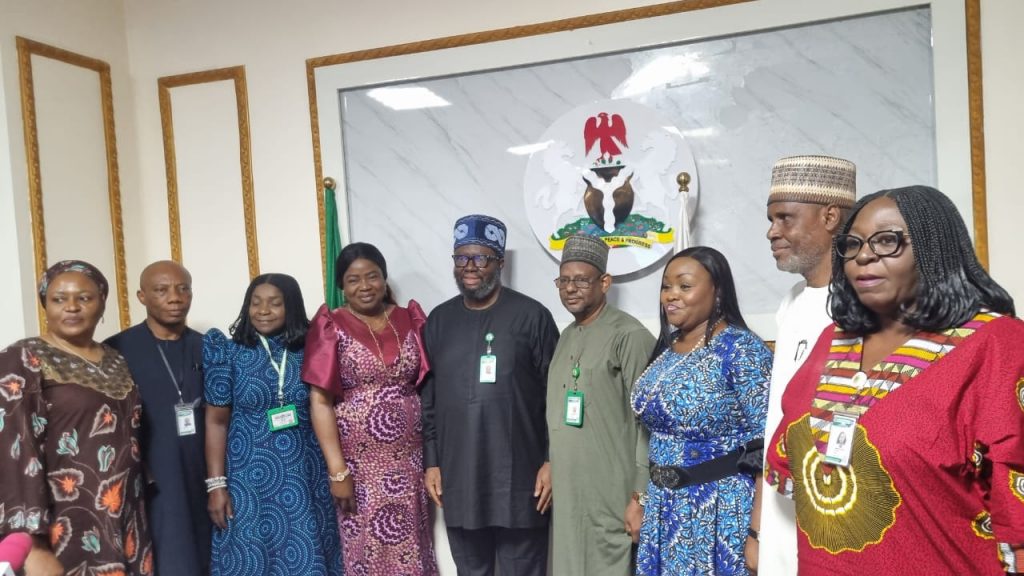
Organised by the Raw Materials Research and Development Council (RMRDC), the summit is being positioned as more than another gathering of policymakers and industry stakeholders. It is intended to provide a platform for confronting the structural challenges that have kept African raw materials largely disconnected from local manufacturing.
Africa has for years operated largely within a “pit-to-port” economic model, exporting raw materials while importing expensive finished products.
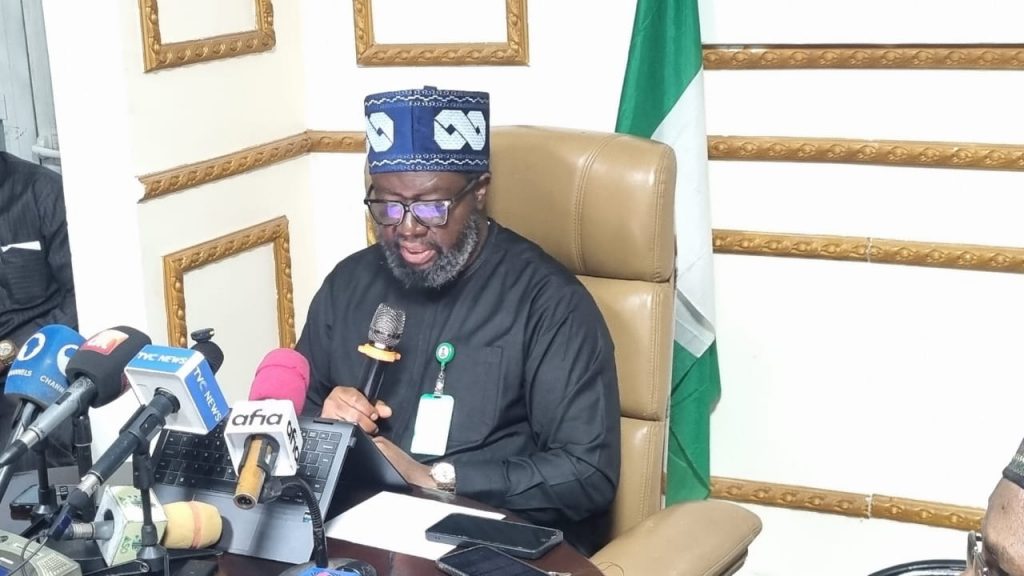
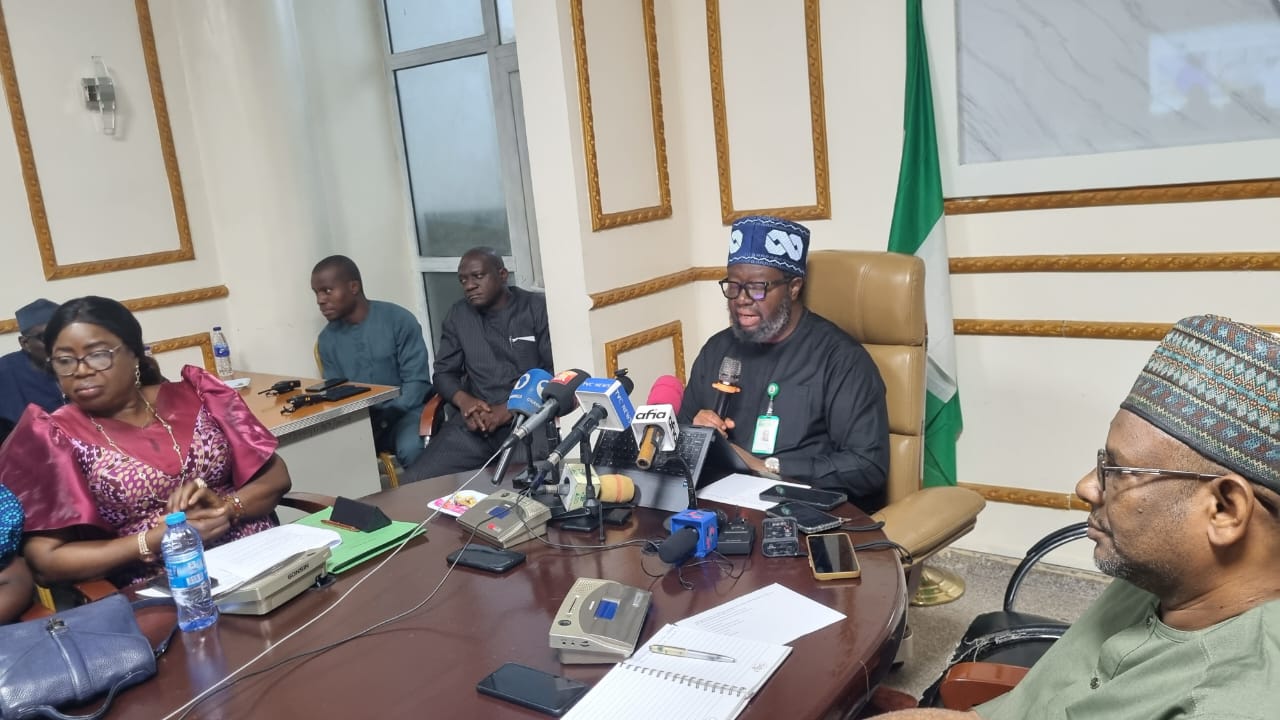
Speaking at a press conference ahead of the summit on Tuesday in Abuja, the Director-General and Chief Executive Officer of RMRDC, Prof. Nnanyelugo Martin Ike-Muonso, said the event would bring together policymakers, investors, researchers, technology providers and industrialists to develop practical strategies for transforming Africa’s abundant natural resources into industrial wealth.
The challenge, therefore, is not simply the abundance of resources, but the continent’s ability to transform those resources into industrial value, employment, technology and wealth within Africa.
Nigeria alone, according to the RMRDC, has more than $582.4 billion in documented non-renewable natural resources, while the wider continent possesses substantial deposits of critical minerals, agricultural raw materials and industrial feedstock.
Yet, the benefits of this resource endowment have often been constrained by inadequate processing capacity, weak infrastructure, limited technology, financing gaps and fragmented regional value chains.
From Dialogue to Industrial Action
ARMS 2026 builds on the maiden edition held in May 2025, which attracted more than 1,000 delegates from across the world.
The inaugural summit also witnessed the unveiling of the Ten-Year Raw Materials Transformation Roadmap (2025–2034) by the Minister of State for Industry, Senator John Owen Enoh.
The roadmap was designed around areas including technological capability, climate-resilient processing and backward integration, establishing a policy framework for greater domestic utilisation of Africa’s raw materials.
The second edition is expected to move the conversation further by bringing policy, capital, technology and industrial stakeholders around practical mechanisms for turning raw materials into locally manufactured products.
One of the major proposals highlighted by the RMRDC is the 30 per cent Mandatory Value Addition Bill, which seeks to establish a statutory minimum level of value addition to Nigerian raw materials before export.
The Council says the proposed framework could support job creation, import substitution, foreign-exchange conservation and increased manufacturing contribution to the economy.
Building the Infrastructure for Value Addition
The industrial transformation envisaged by ARMS 2026 goes beyond legislation.
A major concern is the “missing middle” between where raw materials are produced and where factories are located.
Poor transportation networks, inadequate cold-chain facilities, weak rural roads, limited testing and certification infrastructure and border-related delays can make locally sourced materials more expensive and less competitive.
Consequently, logistics and infrastructure constitute one of the five principal pillars of the summit.
The objective is to develop more reliable corridors connecting farms and mines with processing centres and manufacturing facilities, thereby reducing losses and improving the movement of industrial inputs.
The Digital Dimension
Technology is also becoming an important part of the Council’s strategy.
The RMRDC says it has developed the Nigeria Integrated Information Statistical System for Raw Materials and Products (NISSRAMP), described as a digital repository containing information on feedstock deposits, specifications, production outputs and industrial absorption rates.
The Council has also highlighted its transition towards paperless operations and its certification as a Data Controller/Processor of Major Importance by the Nigeria Data Protection Commission.
Such digital infrastructure could provide investors and manufacturers with better information about the availability and characteristics of raw materials while supporting more informed industrial planning.
Turning Waste Into Industrial Inputs
Another major component of ARMS 2026 is the proposed expansion of the circular economy.
The summit will examine how agricultural by-products, mine tailings, scrap metals and biomass can be recovered and reused as inputs for new production processes rather than being treated simply as waste.
The RMRDC argues that such an approach could lower raw-material costs while supporting more sustainable and climate-resilient manufacturing systems.
For Africa, where industrial expansion must increasingly balance economic development with environmental considerations, waste industrialisation could become an important part of the continent’s manufacturing conversation.
From National Production to African Value Chains
The African Continental Free Trade Area is another important element of the summit’s agenda.
The RMRDC sees AfCFTA as an opportunity to create regional value chains in which raw materials sourced in one African country can be processed and supplied to manufacturers in another.
Under such a model, Africa would move beyond simply exporting commodities to external markets and develop stronger internal networks for supplying chemicals, refined minerals, agricultural inputs and other industrial materials across national borders.
This approach places regional integration at the heart of Africa’s industrialisation strategy.
Bridging Research and Capital
A recurring weakness in many developing economies is the gap between research and commercialisation.
Innovations may emerge from universities, research institutions and laboratories without receiving the financing, equipment or market connections required to become commercially viable.
ARMS 2026 intends to address that gap through technology commercialisation and capital linkages, connecting research outputs with investors, development finance institutions and industrial off-takers.
The RMRDC has also cited partnerships with the Bank of Industry for commercial-scale post-harvest processing and a South-South technology-transfer partnership with the National Innovation Centre par Excellence in Shanghai, China.
A Larger Industrial Conversation
The scale of ARMS 2026 is expected to be significantly larger than the maiden edition.
The organisers project more than 1,800 delegates from all 54 African countries and global industrial partners.
The programme will feature high-level policy dialogues, technical panels, an advanced raw materials and technology exhibition, industrial site visits and the African Raw Materials Industry Awards.
The exhibition, in particular, is expected to showcase locally fabricated processing machinery, advanced domestic materials, green chemicals and engineered commercial inputs.
Beyond the speeches and exhibitions, however, the real significance of ARMS 2026 will ultimately depend on what happens after the summit.
Africa’s challenge has never been a shortage of raw materials. The more difficult question has been how to transform those resources into factories, products, skilled employment, technology and sustainable economic opportunities.
For Nigeria and the rest of the continent, the proposed shift from “pit-to-port” to “feedstock-to-factory” therefore represents a broader debate about the future structure of African economies.
ARMS 2026 seeks to place that debate firmly on the industrial agenda — with value addition, technology, finance, infrastructure, circular production and regional trade at the centre.
If the commitments and partnerships generated by the summit translate into measurable industrial activity, the event could provide another platform for Africa to examine how its enormous resource base can support stronger domestic manufacturing.
The message from the organisers is clear: the continent’s raw materials should not only leave African soil as commodities; they should increasingly become the foundation for African industrial production
-
 Featured7 years ago
Lampard Names New Chelsea Manager
-
 Featured7 years ago
FG To Extends Lockdown In FCT, Lagos Ogun states For 7days
-
 Featured7 years ago
Children Custody: Court Adjourns Mike Ezuruonye, Wife’s Case To April 7
-
 Featured7 years ago
NYSC Dismisses Report Of DG’s Plan To Islamize Benue Orientation Camp
-

 Featured5 years ago
Transfer Saga: How Mikel Obi Refused to compensate me After I Linked Him Worth $4m Deal In Kuwait SC – Okafor
-
Featured7 years ago
Board urges FG to establish one-stop rehabilitation centres in 6 geopolitical zones
-
Sports4 years ago
TINUBU LAMBAST DELE MOMODU
-

 News2 years ago
Zulu to Super Eagles B team, President Tinubu is happy with you