
Opinion
Zacch Adedeji: From Revenue Collection to Fiscal Transformation
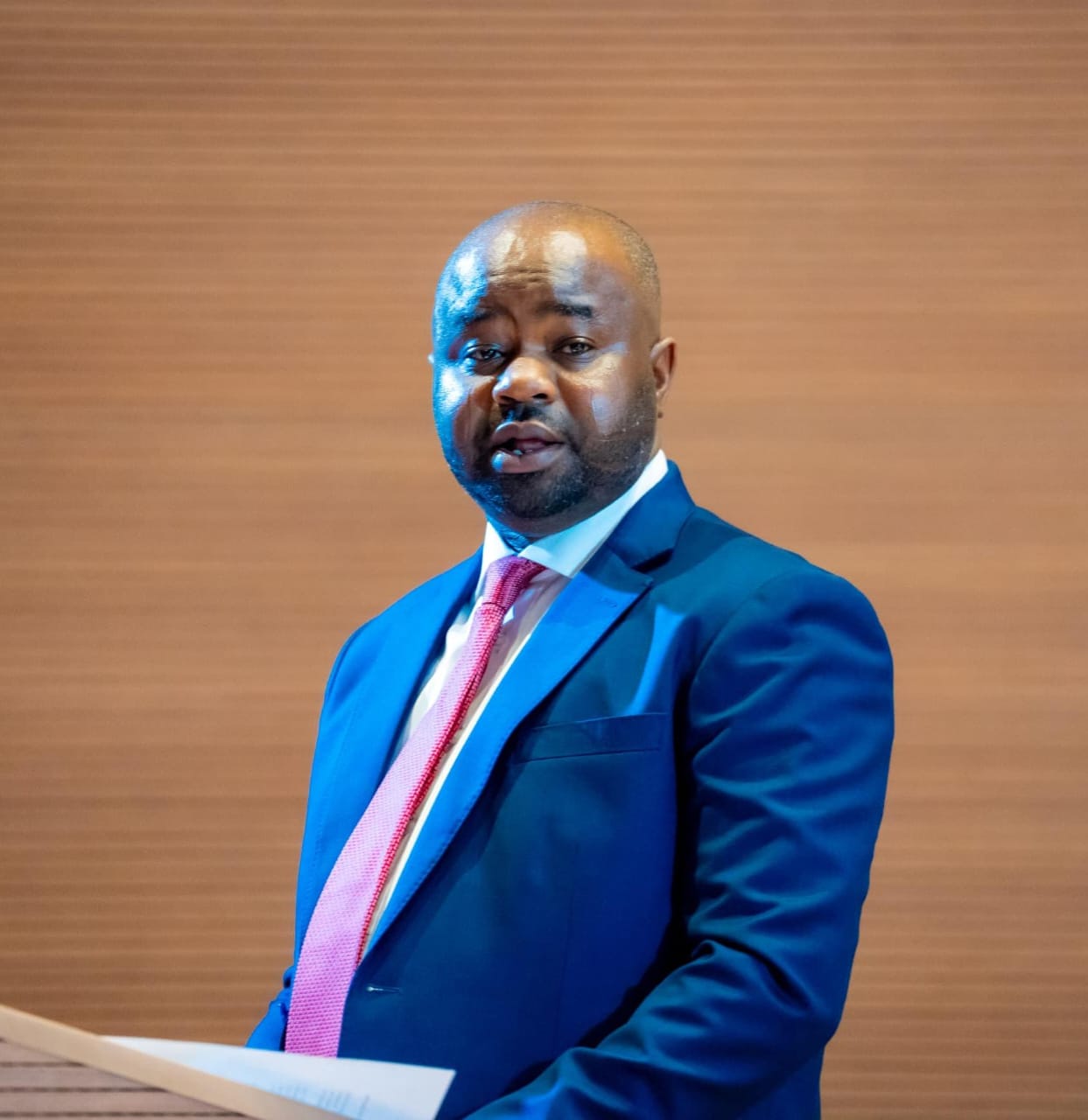
By Arabinrin Aderonke
Every generation produces public servants whose influence reaches beyond the offices they occupy. They redefine institutions, challenge entrenched assumptions and leave behind systems that continue to deliver long after they have gone. In less than three years, Zacch Adedeji has shown every sign that he belongs to that category.
When President Bola Ahmed Tinubu appointed him first as Special Adviser on Revenue and subsequently as Executive Chairman of the Federal Inland Revenue Service, now the Nigeria Revenue Service, the assignment was neither glamorous nor easy. Nigeria faced declining fiscal space, rising debt obligations, low tax compliance, multiple taxation, an outdated legal framework and an overdependence on oil revenue. The challenge was not simply to collect more taxes. It was to redesign the country’s revenue architecture.
That assignment demanded more than technical knowledge. It required vision, courage, political dexterity and the ability to build consensus around difficult reforms. Those qualities have become the defining features of Adedeji’s leadership. Perhaps his greatest contribution is that he has shifted the conversation from ordinary tax collection to a more robust tax administration. The difference is significant. Tax collection focuses on today’s revenue. Tax administration builds the systems that guarantee tomorrow’s revenue. Sustainable economic development depends on the latter.
Working closely with President Tinubu and the Presidential Committee on Fiscal Policy and Tax Reforms, Adedeji played a central role in delivering the most extensive overhaul of Nigeria’s tax system in decades. The signing into law of the Nigeria Tax Act, the Nigeria Tax Administration Act, the Nigeria Revenue Service (Establishment) Act and the Joint Revenue Board (Establishment) Act constituted a turning point in Nigeria’s fiscal history.
For decades, Nigeria’s tax laws evolved in fragments. Different statutes often overlapped, created uncertainty for investors and imposed multiple compliance obligations on businesses. The new legal framework seeks to harmonise tax administration, simplify compliance, eliminate duplication and strengthen coordination among federal, state and local revenue authorities. More importantly, it provides a predictable tax environment that improves investor assurance while reducing the cost of doing business.
One of the defining philosophies behind the reforms is fairness. Rather than pursuing aggressive taxation, the objective is to broaden the tax base, improve voluntary compliance as well as protect small businesses while making sure that those who should pay taxes actually do so. This approach illustrates global best practice. Countries with the strongest tax systems count less on coercion and more on trust, honesty and efficient administration.
Technology has equally become the engine of the reforms. Adedeji understands that a modern economy cannot be supported by analogue institutions. Under his leadership, the Service has accelerated digital transformation through initiatives such as REV360 and expanded electronic tax administration systems that minimise human contact, minimise leakages, improve transparency and make compliance easier for taxpayers. His private sector experience has clearly shaped his belief that public institutions must embrace innovation if they are to remain efficient.
The results are beginning to validate the reforms. In the first half of the year alone, the Service recorded a historic ₦28.3 trillion in revenue collection in 2025, representing roughly a 30 percent increase over the previous year. The momentum has continued in 2026, with revenue collections exceeding ₦21.6 trillion in the first half of the year alone. Value Added Tax collections have also continued to grow, demonstrating that stronger administration and better compliance can produce better outcomes than simply increasing tax rates.
Yet, numbers alone do not tell the full story. Revenue growth matters because it creates fiscal space for government to invest in roads, schools, hospitals, security, social services and critical infrastructure. Strong domestic revenue also reduces dependence on borrowing and strengthens Nigeria’s economic durability at a time of global uncertainty. In that sense, tax reform is not purely an economic policy. It is a nation-building strategy.
Beyond just policy and performance, Adedeji has earned a reputation for thoughtful leadership. Those who have worked with him frequently describe a leader who combines intellectual depth with emotional intelligence. He is known for listening carefully, encouraging professional debate, remaining steady under pressure and empowering competent people to deliver results. In public administration, where reforms regularly fail because people resist change, these qualities are invaluable.
It is therefore not surprising that President Tinubu continues to repose enormous confidence in him. Revenue reform sits at the heart of the administration’s Renewed Hope economic agenda. Without stronger domestic revenue mobilisation, fiscal stability, infrastructure improvement and long-term economic growth would remain difficult to achieve. The President needed a reformer capable of translating ambitious policy into measurable outcomes, and Adedeji has demonstrated the discipline and competence required for that responsibility.
No serious institutional reform is completed within three years. Building enduring institutions necessitates patience, consistency and continuous improvement. Even though challenges remain, the foundations have undoubtedly been laid. Nigeria now has a more coherent legal framework, stronger digital capacity, improved taxpayer engagement and a revenue administration that is increasingly aligned with international top practice.
History will ultimately judge Dr. Zacch Adelabu Adedeji not simply by the trillions of naira collected during his tenure but by whether the institutions he is building continue to serve Nigeria long after his time in office. On the evidence so far, he has moved beyond managing a revenue agency to leading one of the most significant fiscal transformations in the country’s democratic history.
Three years is a short time in the life of any nation. Yet, it has been long enough to demonstrate that with clear vision, sound policy and disciplined execution, meaningful reform is possible. For Dr. Zacch Adedeji, the achievements recorded so far appear to be only the beginning. The real legacy may well lie in the stronger, smarter and more resilient tax system he is building for generations to come.
Arabinrin Aderonke is an award-winning investigative journalist, 2016 finalist, CNN African Journalist Award, she currently serves as a Deputy Director, Corporate Communications Department and Technical Advisor to the Executive Chairman, Nigeria Revenue Service.



Opinion
RE: BLAIR “HAS QUESTIONS TO ANSWER” OVER SUPPORT FOR BRITAIN WHILE ADVISING NIGERIA
(A rejoinder to Gordon Rayner’s article of October 18,2026 in the Telegraph, UK
By Kehinde Bamigbetan
After reading this article, particularly the denials from the Tony Blair Institute for Global Change and the Federal Government of Nigeria, one is bound to question the editorial judgment that gives this piece any value.
In short, what did Gordon Rainer set out to do with this publication? Put a shine on Jupiter’s false and thoroughly empty narrative? Set up a former Prime Minister for blackmail and opprobrium? Or revive a dead case before the International Centre for Settlement of Investment Disputes?
Whichever, Rainer presents propositions which swallow their answers. His first argument that Blair might have undermined British national security interests is contradicted by the disclosure that the TBI has no contract to advise the Federal Government of Nigeria.
His second argument, that Jupiter was denied the execution of its licence, is contradicted by the fact that the company is unknown under Nigerian law. Rainer then admits knowing this fact and introduces the company as Jupiter’s partners.
For clarity and the benefit of his readers, these companies—Basin Mining Limited and Range Mining Limited—lost their licences for failing to pay annual service fees. Basin, for instance, owes N1,223,750,000, about £691,368.
The licences were revoked after the companies ignored several notices to fulfil their contractual obligations to the Nigerian Mining Cadastral Office. Penalties for non-payment are increasing daily, and the legal process to recover the funds is underway.
Rather than rescue its partners by paying their fees and penalties or allow the international settlement court to determine its case, Jupiter has mounted an international self-help campaign of calumny and economic sabotage against the government and people of Nigeria, using methods that threaten Nigeria’s security and diplomatic interests.
We believe Rainer is its latest innocent recruit, hoodwinked into propagating a false narrative by appealing to British national security interests when, in fact, Jupiter’s partners are, under Nigerian law, economic and security risks whose continued defiance of Nigeria’s laws endangers centuries of Britain-Nigeria relations.
The question Rainer should ask: if, indeed, Jupiter has a cast-iron case, why is it shedding crocodile tears and shopping for sympathy with false pretences and narratives?
Let’s give the clue: Jupiter’s promoter, Steve Davis, has leeched on Nigeria’s presidents since 1999 by pretending to be an international mining expert, and he has acquired an ego and assets far out of proportion to his financial and technical status.
He is so comfortable living above the law in Nigeria that compliance with regulatory provisions is a taboo, an affront to his bloated ego as a self-deluded “founder of Nigeria’s modern mining sector.”
Davis had a good time living his ego until Dele Alake became Nigeria’s Minister of Solid Minerals Development in August 2023 and immediately launched a clean-up of the sector focused on zero-tolerance for non-compliance with the provisions of the Nigeria Minerals and Mining Law 2007, a law that Davis boasts he contributed to making and should set an example by encouraging compliance.
The Minister was shocked that the Nigerian Mining Cadastre had a huge amount of unpaid statutory fees despite the government’s investment in the Electronic Mining Cadastre Plus (EMC+) automation, which digitised the licensing process and upgraded services to the mining sector.
In line with the law, the minister ensured debtors were duly notified, and defaulters duly gazetted before revoking their licences for flouting the regulation on the payment of annual service fees.
In November 2023, the minister revoked at least 1,663 licences, a decision that showed it was no longer business as usual under the new sheriff in town.
To show the government has a human face, it opened a three-month restitution window to address complaints and feedback indicating cases of extenuating circumstances.
But still basking in the euphoria of an ego that has outlived its era, Davis discouraged his partners from taking advantage of these opportunities for remorse. Instead, he threatened to exploit his global networks to frustrate the Federal Government of Nigeria.
He wasn’t joking. He launched a global disinformation campaign from his native Australia to Canada, from the United States to Europe. However, his lies evaporated as soon as the facts were laid bare.
Davis pulled his most ambitious stunt so far during Nigeria’s President Bola Ahmed Tinubu’s official visit to the United Kingdom in March this year, when he polluted the air with narratives designed to set Nigeria against the West by spreading blatant falsehoods and playing the victim.
But, as he found out to his misery, the whole public relations game was dead on arrival. A comprehensive statement clarifying the issues to the highly intelligent British media sent him into the cold.
All we ask is that journalists refer to the eternal maxim of the journalism profession whenever Davis knocks on their door: if in doubt, leave it out.
When a story like this betrays so many contradictions, the rule is not to encourage its spread. Every responsible journalist has the moral duty to kill it.
Kehinde Bamigbetan is a Journalist and Special Adviser to Dele Alake, the Minister of Solid Minerals Development, Federal Republic of Nigeria
-
 Featured7 years ago
Lampard Names New Chelsea Manager
-
 Featured7 years ago
FG To Extends Lockdown In FCT, Lagos Ogun states For 7days
-
 Featured7 years ago
Children Custody: Court Adjourns Mike Ezuruonye, Wife’s Case To April 7
-
 Featured7 years ago
NYSC Dismisses Report Of DG’s Plan To Islamize Benue Orientation Camp
-

 Featured5 years ago
Transfer Saga: How Mikel Obi Refused to compensate me After I Linked Him Worth $4m Deal In Kuwait SC – Okafor
-
Featured7 years ago
Board urges FG to establish one-stop rehabilitation centres in 6 geopolitical zones
-
Sports4 years ago
TINUBU LAMBAST DELE MOMODU
-

 News2 years ago
Zulu to Super Eagles B team, President Tinubu is happy with you













