
Featured
2020 World Refuge Day:AUXANO Fountain, Partners Takes Advocacy To IDPs At Kuchingoro Camp
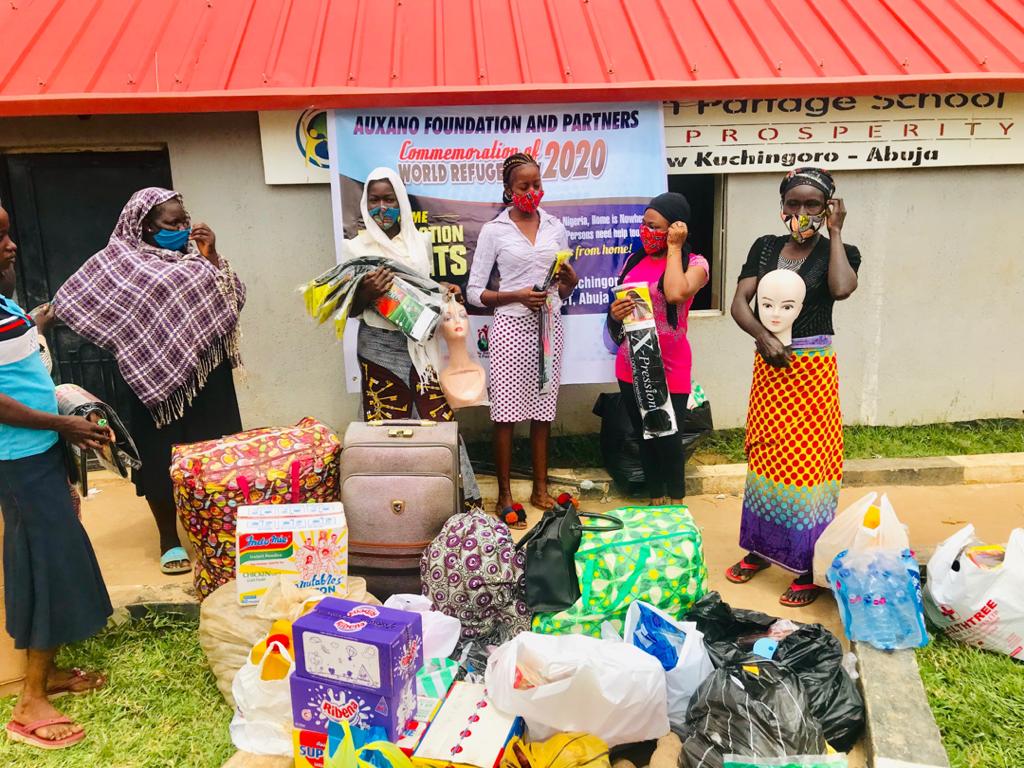
…Distributes food, gifts item
Cyril Ogar
As part of its determinations to raising awareness no the plights of displaced Persons in Nigeria, Auxano Foundation for Empowerment and Development (AFED), a non governmental organisation and the partners have taken advocacy to Kuchingoro IDP camp in commemoration of the 2020 World Refugee Day.
The partners which Teach for Change Nigeria, Yudee Foundation and Healthy and Smart Children Foundation as well as some Nigerians at home and those Diaspora; US, UK and Turkey.
AFED who is more concerned about the deploring situations endured by IDPs across the nation were motivated to bring the issues of IDP to the world considering the many similarities they share with Refugees even though they live in their own country.
Based on this the group stormed the IDP camp Kuchingoro in Abuja on Saturday to commemorate this day with the United Nations under the theme “Every Action Counts”.
Speaking at the event the current Chevening Scholar in the UK Ms. Igoh Lawrenta Igoh applauded Team Auxano and partners for their foresight to visit the IDP camp.
She informed that in February 2019 while on a Research mission she and the Team visited camp for a situation and need assessment analysis and discovered with dismay that apart from the traumatic legacies of been attacked by terrorist, driven from communities of origin and robbed of loved one that led to their displacement in the first place, displaced person suffer even more trauma from social exclusion, poor living standards, sexual abuse, at the camp.
“As the world commemorate the 2020 world Refugee Day today, our minds are drawn to hundreds of thousands of people across the world who have been forcibly displaced (Refugees, Asylum-Seekers and Internally Displaced Persons); those who have found durable solution (Returnees) and those who are Stateless that touches on every country across the world in different ways and with different faces” she said.
Also, on May last Month, the Team were in Niger State on a project called Pandemic Commicare taking food, sensitization and hope to a secluded community called the Leper Colony in Niger State at the heat of COVID-19.
One of the inspiration behind this project, Ms. Stephanie Agba who is Team member and currently a PhD student based in the US told our Reporter that the thought of people dying from hunger in an attempt to save their lives from a virus during the covid-19 enforced lockdown in Nigeria was daunting to me especially as a young girl who understands very well, from experience, what it means to have no food at home, and who can imagine how difficult this period would be for families whose source of livelihood have been either compromised or cut off totally due to regulations surrounding the covid-19 breakout, not to talk of individuals who generally just have no livelihood at all due to life circumstances.
And this is what encouraged me to reach out to the founder of the
Auxano foundation and discuss ways we can work together to reach families in impoverished communities in Nigeria, and I am excited that this has become a reality not only on the “world refugee day” when we reach out to refugees in IDP camps in Abuja but also on other projects we’ve worked on together for the same course.
She commended the Team and volunteers of Auxano Foundation for their active citizenry and commitment to development in Nigeria.
According to her “Auxano Foundation is a great platform through which people with the dream and desire to, have been able to reach out to the less privileged in impoverished communities, and so kudos to the Auxano team members and facilitators, for making it their duty to try to make the world a better place for everyone one day at a time, as they work towards changing the lives of many for the better.
on his own, founder of YUDEE Foundation Chevening Scholar, Uduak Akpanedet, encouraged the Internally Displaced Persons to never give up no matter their current situation, with a positive mental attitude they will overcome. “considering all the tragedies in my life to have been gifted in order to empower me to make a difference to others. I have been on the road with many thorns, but by the Grace of God those thorns could not overwhelm me and consequently, my life has become beautiful, and I could give beauty to people’s lives. Using her own example, she informed.
“I started seeing myself as an agent of change who is passionate about making positive change and bringing about the imperativeness in society following my experiences in life. I discovered that the problems and challenges of humanity are mostly caused by poor orientations given to children and youths while growing up. I have been through tough times in life but today I am in the UK because I did not let my situation define me”.
Another Partner, the founder of Teach for Change Nigeria (TFCN) Ms. Jennifer Chinenye Emelife currently in the UK undertaking a research on refugees and education for the IDPs informed our correspondence that.
“There has been a global focus on refugees and this is understandable. Involving a large number of people frequently risking their lives by crossing borders sometimes with no legal permission, refugees – particularly the children, are highly vulnerable. While this is true, the international prominence of the issue of refugees has resulted to a sort of neglect of those who are internally displaced. UNHCR, the UN agency for Refugees, records that about 65 million people around the world have lost their homes due to conflicts or disasters. 21 million are refugees, 42 million are internally displaced persons (IDPs).
Speaking further, she shares that as the world and the UN agency for Refugees centre on the refugees, it’s important to equally focus on the IDPs. They may not have crossed borders, but their experiences of loss, trauma and displacement are valid. IDps, just as the refugees, are in need of human rights protection and humanitarian assistance.
She thanks her team member, Ajifa Rachel, for representing TFCN at the mentoring session for the IDPs while calling on the society and government, “as we mark the World Refugee Day today, we are calling on the governments, NGOs, international bodies and indeed the public to not relent on meeting the needs of IDPs all over the world. These include access to food, education and livelihood opportunities, security and right to movement and property. What can you do for the IDPs today?
However, IDPs lamented a complete social exclusion by the government; absence of food, water, good housing, school, good road, portable drinking, telecommunication networks, electricity, hospital, police station, etc characterized this community. They are highly impoverished and thus at-risk community to human trafficking activities and terrorism and the women are constantly abused sexualkly and giving out to early marriages.
Highlights of the event was the mentoring session, skills acquisition including hair braiding for those who indicated interest to professionalize their skills in the last visit, presentation of humanitarian gifts, food, clothing, and household items by the groups.
Reacting to this visit, the IDP Leader thanked the Auxano Foundation, and partners home and diaspora for travelling long distance to get to them.
Shee further stated that the government should come to their rescue and make them feel like they matter in the country. As they have not enjoyed any dividends of civilization as the people despite their contribution to electoral process they presently suffer lack of accessible road, school,. Clinic, electricity and good water.
According to her, “Today is a call to all persons in authorities at the national and international fronts, neighbouring states, local communities, families and you, to pause and think for a moment what it means when HOME IS NOWHERE and make and take ONE ACTION that you’d have loved to be made or taken on your behalf if you were the one in the situation of displacements, seeking local and international protection, forced to leave your home, communities or places of residents or just fleeing situations of conflicts, civil unrest, and gross violations of human rights.”



Featured
Strategic Partnerships, Diaspora Investment and Improved Workforce Critical to Industrialization-DG RMRDC
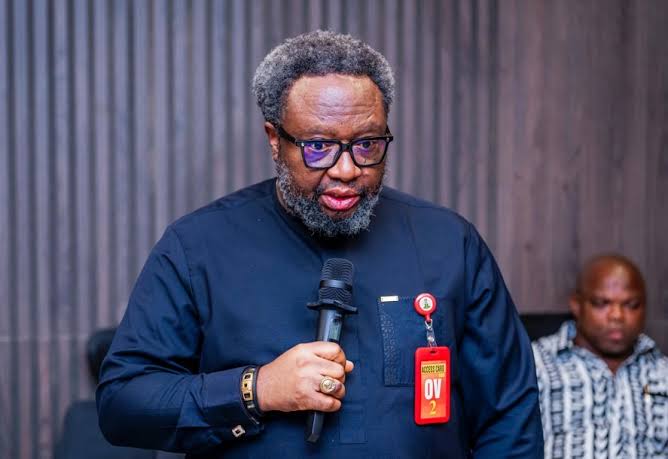
By: Stella Azi and Adaora Adibe
The Director-General/Chief Executive Officer of the Raw Materials Research and Development Council (RMRDC), Prof. Nnanyelugo Ike-Muonso, has called for a strategic shift from the exportation of raw commodities to domestic processing, manufacturing and value addition, declaring that Nigeria possesses enormous untapped raw material resources capable of driving industrialisation, creating jobs and strengthening the country’s economic competitiveness.
Prof. Ike-Muonso made this submission in a lecture titled Unlocking Nigeria’s Raw Material Value Chain for Industrialization, Manufacturing and Competitiveness, where he presented an extensive assessment of Nigeria’s resource endowments, industrial challenges and emerging investment opportunities across agricultural commodities, solid minerals and waste-based raw materials.
The lecture highlighted a combined US$2.65 trillion global market opportunity across 30 major raw material value chains, comprising 12 agricultural value chains valued at US$932 billion, 11 mineral value chains worth US$1.352 trillion and seven circular-economy value chains estimated at US$366 billion.
According to the RMRDC Boss, Nigeria must move beyond the traditional approach of extracting and exporting raw materials to building competitive domestic industries that transform these resources into intermediate products, industrial inputs and finished goods for local consumption and international markets.
He observed that the country’s manufacturing sector has struggled to sustain its 2014 peak, with its contribution to real Gross Domestic Product declining from 9.64 per cent in 2014 to 8.05 per cent in 2025, representing a 16.5 per cent decline. He also drew attention to the increasing cost of raw material imports, which rose to US$20.5 billion in 2025, approximately six times the 2020 level.
He explained that the growing dependence on imported industrial inputs exposes Nigerian manufacturers to foreign exchange volatility, increases production costs and weakens the competitiveness of locally manufactured products.
Prof. ke-Muonso stressed that the solution lies in developing domestic raw material value chains through deliberate investment in processing facilities, research and development, technology, infrastructure and stronger linkages between producers, processors and manufacturers.
He identified agriculture, solid minerals and industrial waste as three major resource platforms for Nigeria’s industrial transformation, stating the country’s significant production capacity and the enormous opportunities available for downstream processing.
Ike-Muonso noted that Nigeria produces over 63 million metric tonnes of cassava annually, making it the world’s largest producer, while also maintaining strong positions in cocoa, cashew, sesame, palm oil and cotton. However, more than 80 per cent of agricultural output leaves farms without adequate processing, resulting in the loss of significant economic value and industrial opportunities.
In the solid minerals sector, he identified more than 44 commercially viable minerals across over 500 locations, including lithium, gold, barite, bitumen, iron ore and high-grade limestone, describing them as strategic resources capable of supporting steel production, energy storage, electrification and advanced manufacturing.
The DG further drew attention to Nigeria’s industrial and agro-waste resources, noting that the country generates over 32 million tonnes of solid waste annually. He explained that agricultural residues, cassava peels, scrap metals, plastics and electronic waste could serve as important feedstock for bio-fertilisers, industrial chemicals, recycled polymers, energy production and other manufacturing applications.
In the agricultural sector, the DG identified cassava and industrial starch, cotton and natural textiles, natural rubber and elastomers, oil palm and oleochemicals, maize derivatives and cocoa processing as priority areas requiring increased investment.
He explained that processing agricultural commodities into industrial starch, sweeteners, textiles, technical rubber, specialty fats and other intermediate products would enable Nigeria to capture more value from its agricultural resources while reducing dependence on imported industrial inputs.
For the minerals sector, he highlighted crude oil-to-olefins and petrochemicals, lithium and energy storage, iron ore and steel, rare earth elements, bauxite and aluminium, and copper and electrification as strategic investment opportunities.
He particularly emphasised the importance of moving beyond mineral extraction into beneficiation, refining, battery precursors, industrial chemicals, metal fabrication and advanced materials production.
On the circular economy, Prof. Ike-Muonso identified electronic waste recovery, scrap metal recycling, plastic waste processing, agro-waste valorisation and battery recycling as emerging industrial opportunities.
He explained that transforming waste into productive industrial feedstock would not only reduce environmental pollution but also create new manufacturing industries, generate employment and reduce the importation of valuable industrial materials.
He noted that to address the structural challenges confronting raw material-based industrialisation, the DG highlighted the strategic interventions of the RMRDC, particularly the proposed 30% Value Addition Bill and the Nigeria Integrated Information Statistical System for Raw Materials and Products (NISSRAMP).
He described the 30% Value Addition Bill as an important policy instrument designed to encourage domestic processing of raw materials before export, strengthen local manufacturing capacity and guarantee access to essential raw materials for Nigerian industries, and NISSRAMP as a critical data infrastructure that would improve access to verified information on the availability, location and quality of raw materials.
According to him, the combination of appropriate policy instruments and reliable resource data would help de-risk investments, improve transparency and strengthen confidence in Nigeria’s raw material sector.
He emphasised the importance of collaboration among government, academia and industry in developing bankable projects, sharing investment risks and accelerating the establishment of processing and manufacturing facilities.
Professor Ike-Muonso called on Nigerians in the diaspora and other local and international investors to take advantage of the opportunities available in Nigeria’s raw material sector.
He identified industrial processing parks, mineral beneficiation and refining, agro-industrial platforms, circular-material processing, industrial input manufacturing and enabling infrastructure as viable investment platforms.
He noted that diaspora investors could contribute beyond financial capital by bringing technology, international business networks, governance standards, technical expertise and access to global markets.
He maintained that Nigeria’s industrial transformation requires coordinated investment across the entire value chain, from raw material sourcing and aggregation to processing, manufacturing, certification and export development.
Professor Ike-Muonso stressed that the country’s industrial future would depend not merely on the volume of raw materials extracted but on the capacity to transform them into competitive products that meet domestic and international market requirements.
He maintained that developing local value chains would stimulate industrial growth, create employment opportunities, diversify exports, conserve foreign exchange and deepen Nigeria’s technological capabilities.
Through its strategic interventions, the RMRDC is positioning itself as a critical bridge between resource availability, investment opportunities and industrial competitiveness, with the ultimate objective of transforming Nigeria from a predominantly raw material exporting economy into a strong manufacturing and value-adding nation.
Ike-Muonso has demonstrated this since assumption of office as the Director General/ CEO RMRDC in the area of capacity building, improved working conditions, promotion of merit, and maintaining a conducive environment that rewards excellence, innovation and dedication. This is evident in his institution of RMRDC training school, reward for winners of the RMRDC innovation challenge among others.
His commitment has brought recognition both nationally and internationally: Al-Jazirah double honour awards as Public Servant /Government Agency of the year 2024-2025 and the recent election as the Sub-Saharan Africa Regional Representative on the Board of the World Association of Industrial and Technological Research Organisations (WAITRO) is a attestation to his commitment.
Concluding the lecture, the DG charged staff, researchers, manufacturers and investors to see themselves as nation builders in the new era of raw materials-led industrialization.
-
 Featured7 years ago
Lampard Names New Chelsea Manager
-
 Featured7 years ago
FG To Extends Lockdown In FCT, Lagos Ogun states For 7days
-
 Featured7 years ago
Children Custody: Court Adjourns Mike Ezuruonye, Wife’s Case To April 7
-
 Featured7 years ago
NYSC Dismisses Report Of DG’s Plan To Islamize Benue Orientation Camp
-

 Featured5 years ago
Transfer Saga: How Mikel Obi Refused to compensate me After I Linked Him Worth $4m Deal In Kuwait SC – Okafor
-
Featured7 years ago
Board urges FG to establish one-stop rehabilitation centres in 6 geopolitical zones
-
Sports4 years ago
TINUBU LAMBAST DELE MOMODU
-

 News2 years ago
Zulu to Super Eagles B team, President Tinubu is happy with you













