
Foreign news
5th anniversary of the Five Major Development Concepts

I’m Robert Lawrence Kuhn and here’s what I’m watching: the 5th anniversary of the Five Major Development Concepts, formulated by President Xi Jinping in 2015 as the overarching, guiding strategy for China’s economic and social development. According to Xi, China’s model, going forward, is driven by “innovation, coordination, green, openness, and sharing”.
I was there at the beginning, investigating each of the Five Major Development Concepts. I saw how the Five Concepts began to inform the thinking and guide the behavior of officials at all levels of government.
Fast forward five years, what has happened? What has been accomplished? What challenges lie ahead?
First is innovation – now more important than ever, especially in light of fierce technology competition with the U.S., President Xi calls for China to lead the global technological revolution, and make innovation the primary driver of economic growth, stressing that success depends on strengthening property rights and protection of entrepreneurs. A challenge for innovation: how long will it take China to produce world-class semiconductor chips?
Second is coordination – actualized by three mega-regions: in the south, the Guangdong-Hong Kong-Macao Greater Bay Area, with around $2 trillion in GDP. In the east, centered on Shanghai, the Yangtze River Economic Belt, nine provinces, and two centrally administrated municipalities that constitute about 40 percent of China’s GDP. In the north, the Beijing-Tianjin-Hebei region including the new city of Xiong’an, where non-core functions of the Chinese capital will migrate. A challenge for coordination: how to balance coordination with the competition, such as between Hong Kong and Shenzhen.
The third is green – China is now a world leader in renewable energy: producing, utilizing, and financing renewable power. China has the lead in hydro, solar, and wind energy. Moreover, China is building and financing cutting-edge renewable energy projects globally. A challenge for green: how can China reduce its dependence on coal.
Fourth is openness – China is continuing to open markets to foreign entry, such as in service industries like finance, and designating new free trade zones, such as the entire island province of Hainan. A challenge for openness: with China relying more on its domestic market, and with the U.S. threatening to decouple, how can China continue to reform?
The fifth is sharing – where more-developed regions partner with less-developed regions, such as in poverty alleviation, fighting epidemics, and healthcare. For example, Shanghai hospitals partnering with Qinghai hospitals in minority areas. The challenge for sharing: How to make it self-sustaining.
For China now to transition from its first centenary goal of becoming a “moderately prosperous society (in all respects)” in 2020, to its second centenary goal of becoming a fully modernized socialist nation in 2050, the Five Major Development Concepts remain crucial.
I’ll keeping watch. I’m Robert Lawrence Kuhn.
Scriptwriter: Robert Lawrence Kuhn
Cameraman: Morgan Compagnon
Video editor: Liu Yuqing
(If you want to contribute and have specific expertise, please contact us at opinions@cgtn.com.)



Foreign news
Algeria’s Glorious Revolution: Embassy Marks 72nd Anniversary in Abuja
Joel Ajayi
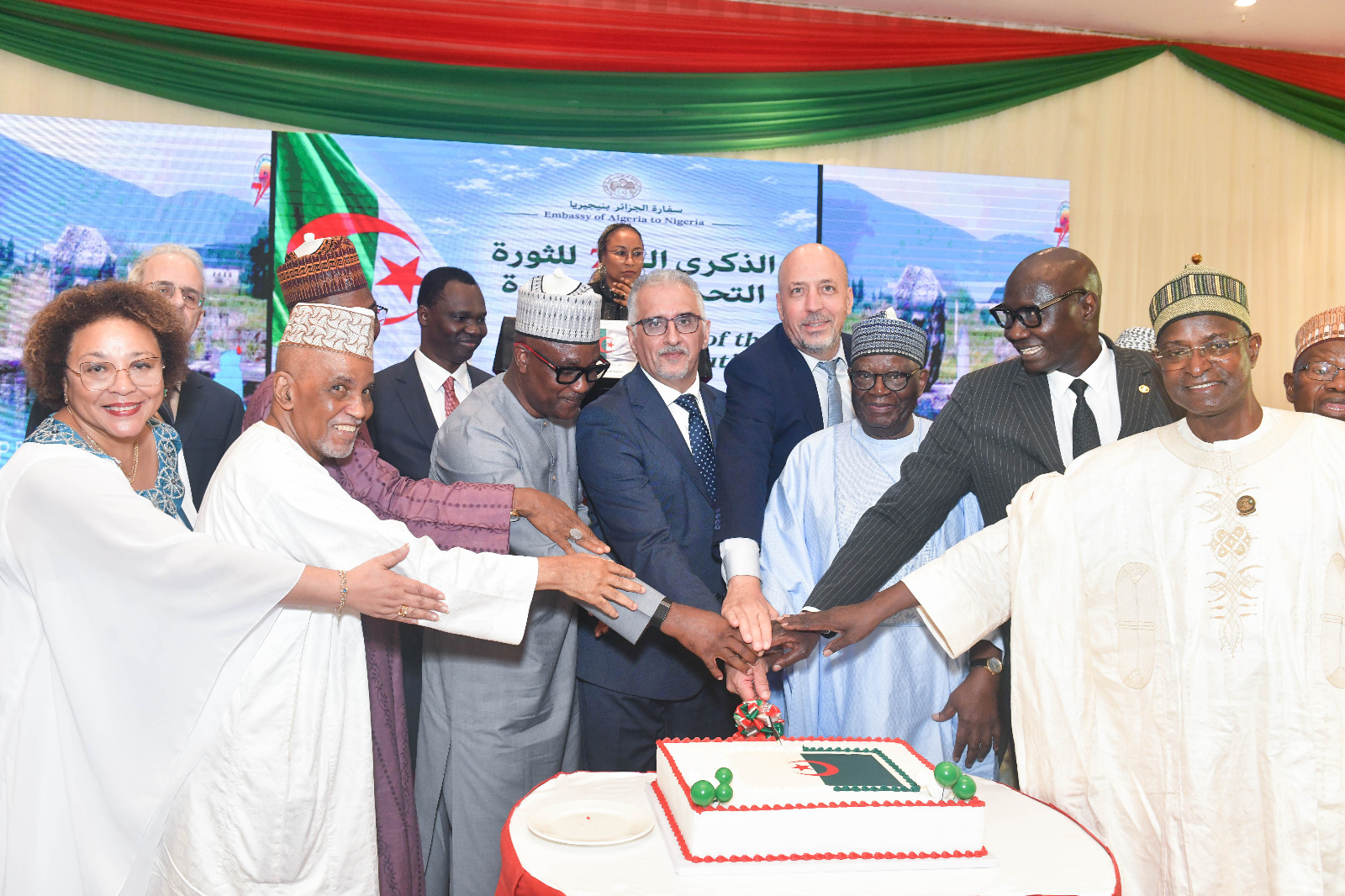
The Embassy of Algeria in Nigeria has commemorated the 72nd anniversary of the country’s Glorious Revolution of November 1, 1954, with a reception in Abuja, highlighting Algeria’s liberation struggle and strengthening diplomatic relations with Nigeria.
The event, held on November 9, 2026, at Continental Suites Hotel, attracted prominent personalities, including the Speaker of the House of Representatives, Dr Tajudeen Abbas, members of the Federal Government, senior government officials, heads of diplomatic missions and other friends of Algeria.
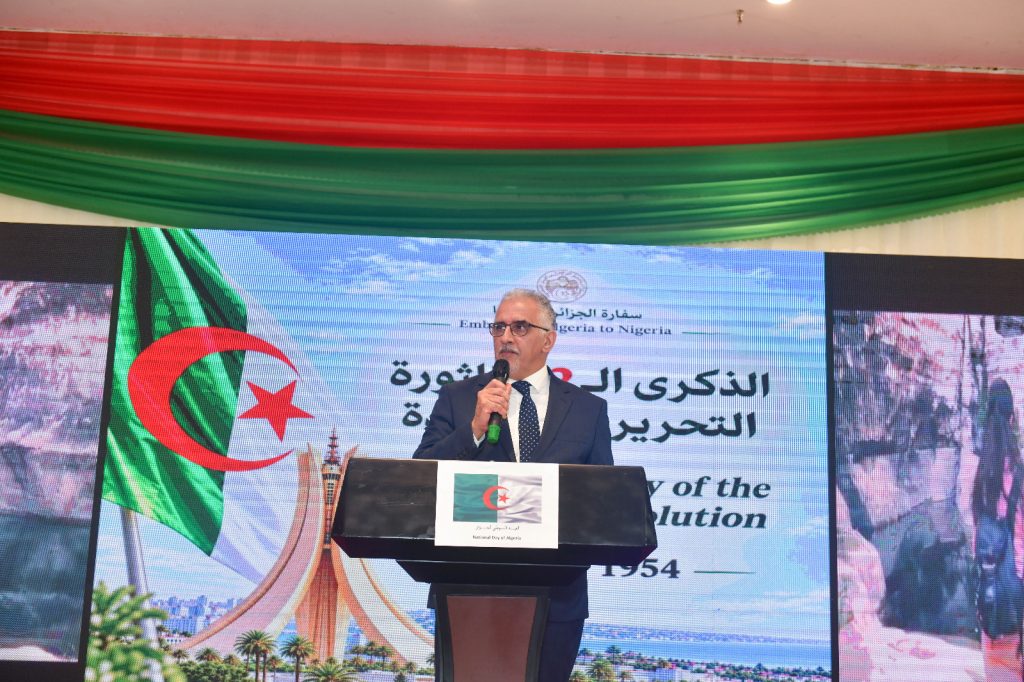
Speaking at the reception, Algeria’s Ambassador to Nigeria, Hocine Mezoued, welcomed guests and paid tribute to the country’s freedom fighters who sacrificed their lives during the struggle for independence.
He described the November 1, 1954 revolution as the foundation of modern Algeria, noting that the sacrifices of the nation’s martyrs made it possible for the country to reclaim its sovereignty.
On Algeria’s development agenda, Mezoued said President Abdelmadjid Tebboune’s administration had continued to pursue economic reforms, diversification and national development under its New Algeria vision.
He noted that the country was recording progress in non-hydrocarbon exports, while improvements in the business environment had boosted investor confidence and attracted significant foreign investments.
On foreign policy, the ambassador reaffirmed Algeria’s commitment to non-interference, respect for national sovereignty, peaceful conflict resolution and the right of peoples to self-determination.
Addressing security challenges in the Sahel, he stressed that lasting peace could not be achieved through military measures alone, insisting that economic development, inclusive dialogue and peaceful resolution of disputes remained essential.
Turning to Nigeria-Algeria relations, Mezoued described the partnership as one founded on shared values and the commitment of both countries’ leaders to advancing African development.
He identified the Trans-Saharan Highway, Trans-Saharan Gas Pipeline and Trans-Saharan Fibre Optic Backbone as major strategic projects receiving attention from both countries.
The ambassador also disclosed that Algeria had continued to provide scholarships to Nigerian students to strengthen human capital development and capacity building.
He further announced that Air Algérie expanded its Nigerian operations on October 26, 2026, with the introduction of two weekly flights to Lagos, expressing confidence that the service would boost trade and tourism.
Looking ahead, Mezoued said 2027 would offer fresh opportunities to deepen bilateral cooperation, particularly through the fifth Joint High Bi-National Commission scheduled to hold in Abuja.
He expressed optimism that the meeting would provide an opportunity to assess existing partnerships, identify new areas of cooperation and move Nigeria-Algeria relations towards a more practical and results-driven phase.
-
 Featured7 years ago
Lampard Names New Chelsea Manager
-
 Featured7 years ago
FG To Extends Lockdown In FCT, Lagos Ogun states For 7days
-
 Featured7 years ago
Children Custody: Court Adjourns Mike Ezuruonye, Wife’s Case To April 7
-
 Featured7 years ago
NYSC Dismisses Report Of DG’s Plan To Islamize Benue Orientation Camp
-

 Featured5 years ago
Transfer Saga: How Mikel Obi Refused to compensate me After I Linked Him Worth $4m Deal In Kuwait SC – Okafor
-
Featured7 years ago
Board urges FG to establish one-stop rehabilitation centres in 6 geopolitical zones
-
Sports4 years ago
TINUBU LAMBAST DELE MOMODU
-

 News2 years ago
Zulu to Super Eagles B team, President Tinubu is happy with you













