
Foreign news
Challenges, goals and proposals from China’s ruling party plenum communiqué
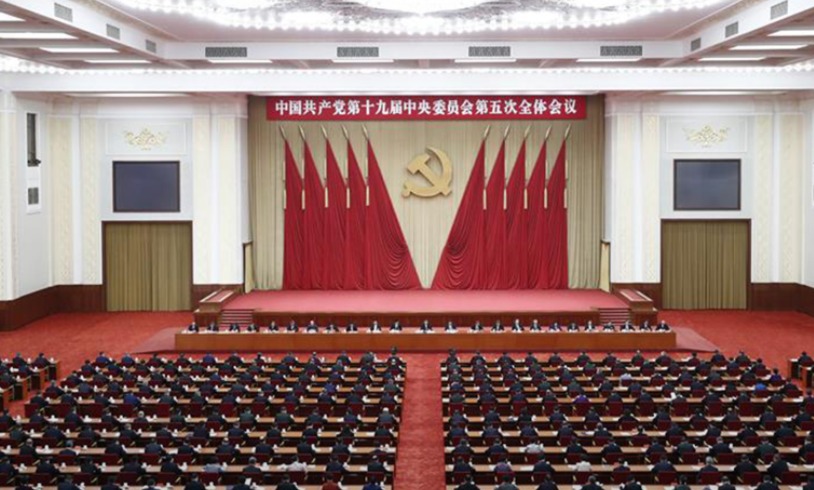
The 19th Central Committee of the Communist Party of China (CPC) concluded its fifth plenary session in Beijing on Thursday with the release of a communique.
The 14th Five-Year Plan (FYP) (2021-2025) for National Economic and Social Development and the Long-Range Objectives Through the Year 2035 are the key topics of the communique.
Here is a look at all the highlights from the communique of the meeting.
Decisive success made in building a moderately prosperous society in all respects
This year is the final year of China’s 13th FYP period (2016-2020), and the communique highlighted that the implementation of the 13th FYP has been smooth.
By adhering to the new development concept and unswervingly advancing reform and opening-up, great achievements have been made since the fourth plenary session, the communique said.
During the past year, China has deepened supply-side reform, enhanced macro-economic regulation, and expanded domestic demand as the strategic foundation.
Economic growth has been better than expected, people’s livelihood has been improved and social stability has been maintained.
During the 13th FYP period, which is coming to an end in 2020, China has made great progress with stable economic growth and better economic structure, the communique said, noting China’s GDP is expected to surpass the 100 trillion yuan ($14.9 trillion) mark in 2020.
More than 55 million people in China have been lifted out of poverty in the past five years.
China has built the world’s largest social security system in the 13th FYP period, the communique said, adding that the country’s basic medical insurance has covered over 1.3 billion people, and basic old-age insurance has covered nearly 1 billion people.
Meanwhile, during the past five years, more than 60 million new jobs were created in China’s urban areas, it said.
As for the fight against the COVID-19 pandemic, the whole country coordinated the prevention and control work with economic and social development and put people’s safety and health first.
Major country diplomacy with Chinese characteristics was vigorously promoted, and major achievements were made in various undertakings of the Party and state.
The strength of the leadership of the CPC and the Chinese socialist system has been further demonstrated in the past five years, it added.
New challenges, opportunities ahead
With regards to the blueprint for the future, the communique stressed that the whole Party must take into account the overall strategic plan for the great rejuvenation of the Chinese nation with major changes in the world that have not occurred in a century.
A thorough understanding is necessary about the new characteristics and requirements brought about by the changes in the evolution of the principal contradiction facing Chinese society, it said.
Also, given that China is in the primary stage of socialism, more attention should be paid to the new contradictions and challenges brought by the complex international environment.
The communique underlined the importance of strengthening awareness of opportunities and risks and cultivating opportunities amid crisis.
Additionally, the CPC has raised a set of long-range objectives for China to achieve socialist modernization by 2035.
China’s economic, technological and composite strength was also stressed, as well as development in new industrialization and the modernization of China’s system and capacity for governance.
The communique also said effort was needed in boosting the well-rounded development of society, including social etiquette and civility and the advancement of eco-friendly ways of work and life.
China’s opening-up, per capita GDP, the implementation of the Peaceful China initiative and well-rounded human development were also highlighted.
As for the goals to be reached during the 14 FYP period, the communique said that the overall leadership of the CPC must be upheld to realize the 14th FYP and efforts should be made to mobilize all positive factors and rally all the forces that can be rallied to form a strong synergy to promote development.
Proposals to reach the goals
– Uphold the central role of innovation in its modernization drive and implement an innovation-driven strategy.
– Build a modern industrial system and upgrade the economic structure. It will continue to support the real economy, improve manufacturing power and modernize the industrial and supply chain to improve high-quality growth and core competitiveness.
– Nurture a strong domestic market and establish a new development pattern. The country will smooth domestic circulation and let domestic and international circulation reinforce each other, spurring consumption in an all-round way and expanding investment.
– Deepen reform comprehensively in pursuit of a high-level socialist market economy.
– Prioritize the development of agriculture and rural areas and fully advancing rural vitalization.
– Advance coordinated regional development and a new type of urbanization.
– Promote the cultural sector and improve its cultural soft power.
– Accelerate green and low-carbon development, continuously improve the environment and quality and stability of ecosystems and raise the efficiency of resource utilization.
– Pursue high-level opening-up and explore new prospects of win-win cooperation.
It will continue to widen the opening-up and leverage the advantages of its huge market to promote international cooperation and achieve win-win results.
– Improve people’s standard of living and actively implement strategies to address the aging population.
– Strengthen national security capabilities and increase the capacity to deal with traditional and non-traditional security challenges to protect people’s lives and security and maintain social stability.
– Maintain the long-term prosperity and stability of the Hong Kong and Macao special administrative regions and promote the reunification of the Chinese mainland and Taiwan, as well as peaceful cross-Strait development.
It aims to keep a stable external environment and promote the building of a new type of international relations and a community with a shared future for humanity.
A total of 198 members and 166 alternate members of the CPC Central Committee attended the meeting.
Also present were members of the Standing Committee of the CPC Central Commission for Discipline Inspection and senior officials of relevant sectors, as well as experts, scholars and several deputies of the 19th CPC National Congress who work at the grassroots level.



Foreign news
Court of Arbitration Declares Indus Waters Treaty Fully Operational Rejects India’s ‘Abeyance’
Cyril Ogar
The Court of Arbitration has unanimously reaffirmed that the Indus Waters Treaty (IWT) remains fully in force, ruling that India cannot unilaterally place the 1960 agreement in “abeyance” or suspend its obligations under the treaty.
The decision represents a significant legal development in the longstanding dispute between India and Pakistan over the management and use of the Indus river system.
The Court’s finding addresses a fundamental issue at the heart of the dispute: whether either party can unilaterally suspend the treaty outside the legal framework agreed by both countries.
In its unanimous determination, the Court made clear that the IWT continues to bind both India and Pakistan and that its obligations cannot be set aside through a unilateral political declaration.
The ruling means India remains subject to the treaty provisions governing the use of the Western Rivers, including requirements relating to the design and operation of hydroelectric projects, as well as the dispute-resolution mechanisms established under the agreement.
The Court has also ordered interim measures concerning the Ratle Hydroelectric Plant, restricting specified construction activities while the broader dispute remains under consideration.
The measures are aimed at preserving the effectiveness of the arbitration process and preventing developments that could prejudice the outcome of the proceedings.
For Pakistan, the decision represents significant legal validation of its longstanding position that the IWT is a binding international agreement and contains no provision allowing either party to unilaterally place it in abeyance.
Pakistan has consistently maintained that disagreements over the treaty should be addressed through the institutional mechanisms established by the agreement, rather than through unilateral action.
The IWT provides a structured framework for resolving disputes through mechanisms including the Permanent Indus Commission, Neutral Expert and Court of Arbitration processes.
The latest ruling therefore reinforces the principle that treaty obligations cannot simply be disregarded because of deteriorating political relations between signatories.
The significance of the decision extends beyond the India-Pakistan dispute. It underscores the broader international-law principle that agreements governing shared rivers and other transboundary resources must be respected and disputes resolved through established legal and institutional channels.
The Indus river system supports agriculture, livelihoods, food security and communities across the region, making the stability of the treaty particularly important.
The ruling also highlights the distinction between seeking to amend an international agreement through mutually agreed procedures and attempting to alter its obligations unilaterally.
The IWT has endured wars, prolonged diplomatic tensions and periods of limited bilateral engagement. Its continued operation demonstrates the importance of rules-based mechanisms in managing shared resources when relations between neighbouring states become strained.
For Pakistan, the outcome provides an opportunity to frame the decision not merely as a bilateral legal victory, but as an affirmation of international law, treaty compliance and peaceful dispute resolution.
The central message from the ruling is clear: the Indus Waters Treaty remains in force, its obligations continue to bind both parties, and disputes concerning shared waters must be addressed through the legal mechanisms agreed by India and Pakistan.
-
 Featured7 years ago
Lampard Names New Chelsea Manager
-
 Featured7 years ago
FG To Extends Lockdown In FCT, Lagos Ogun states For 7days
-
 Featured7 years ago
Children Custody: Court Adjourns Mike Ezuruonye, Wife’s Case To April 7
-
 Featured7 years ago
NYSC Dismisses Report Of DG’s Plan To Islamize Benue Orientation Camp
-

 Featured5 years ago
Transfer Saga: How Mikel Obi Refused to compensate me After I Linked Him Worth $4m Deal In Kuwait SC – Okafor
-
Featured7 years ago
Board urges FG to establish one-stop rehabilitation centres in 6 geopolitical zones
-
Sports4 years ago
TINUBU LAMBAST DELE MOMODU
-

 News2 years ago
Zulu to Super Eagles B team, President Tinubu is happy with you