
Agriculture
Strengthen Regional Trade To Guarantee Food Production, AGRF Urges Africa
President of African Green Revolution Forum (AGRF) Agnes Kalibata has revealed that Africa needs to strengthen regional trade to achieve sustainable and resilient food systems.
In a statement issued in Abuja on Monday, she also observed that bolstering regional trade would boost a system that will meet the health, environmental, social, and economic aspirations of people living in rural and urban areas.
Kalibata, also an envoy to the 2021 UN Food Systems Summit, said that it had become imperative for the continent not to relent in its effort to transform food systems for the benefit of everyone.
According to the statement, we need food systems that are equitable, sustainable, resilient, and capable of meeting the global challenges of malnutrition, poverty, and climate change as well as be responsive to emerging and unforeseen challenges such as those posed by the COVID-19 pandemic,’’ she said.
She also announced that the Technologies for African Agricultural Transformation (TAAT) programme, funded by the African Development Bank for the purpose of boosting productivity and make Africa self-sufficient in key commodities, would convene a high-level session on “Agricultural Technologies for Feeding the Cities” at the 10th annual summit of AGRF in Kigali.
“The session will hold on September 8 where TAAT is expected to use its values to drive the actions required to overcome the major challenges affecting African agriculture in food production and others development issues.
She noted that the summit with the theme “Feed the Cities, Grow the Continent: Leveraging Urban Food Markets to Achieve Sustainable Food Systems in Africa’’, would be co-hosted by Rwanda and the AGRF partners group.
The statement said further that the session would bring to fore, the strategic linkage between research and delivery as well as TAAT’s success stories in feeding African cities through its wheat revolution, intensification of cassava production and commercialization, and building the capacity of African farmers through technology outreach.
She said that it would address innovative options for accelerating African agricultural transformation in a post-COVID-19 pandemic era through the deployment of proven agricultural technologies and partnerships capable of bringing food security to African cities and rural communities.



Agriculture
ARCN Executive Secretary Dabbán Earns Double Recognition for Excellence
Joel Ajayi
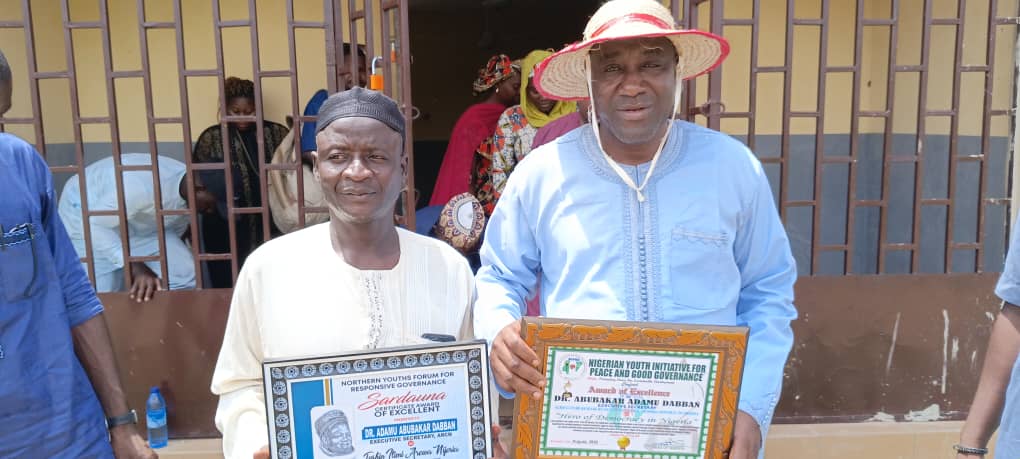
The Executive Secretary of the Agricultural Research Council of Nigeria (ARCN), Dr. Adamu Abubakar Dabban, has been honoured with a Double Award of Excellence by two youth-focused organisations for his leadership, commitment to good governance and contributions to the development of Nigeria’s agricultural sector.
In a statement signed on Tuesday by the ANIPR PRO, Agricultural Research Council of Nigeria Khadijat Ameen in Abuja stated that the honours were conferred on Dr. Dabban by the Nigeria Youth Initiative for Peace and Good Governance and the Northern Youth Forum for Responsive Governance.
The organisations recognised the ARCN Executive Secretary for what they described as his outstanding leadership and dedication to good governance, as well as his efforts toward advancing agricultural development in Nigeria.
The double recognition highlights the growing attention being given to leadership and institutional efforts aimed at strengthening Nigeria’s agricultural research and development ecosystem.
Receiving the honours, Dr. Dabban expressed appreciation to the organisations for the recognition, noting that such awards serve as encouragement to remain committed to the responsibilities entrusted to him and to the broader goal of advancing agricultural development.
The recognition comes as the ARCN continues its mandate of coordinating and promoting agricultural research and development in support of Nigeria’s food and agricultural priorities.
Congratulations to the Executive Secretary, Dr. Adamu Abubakar Dabban, on this distinguished double honour.
-
 Featured7 years ago
Lampard Names New Chelsea Manager
-
 Featured6 years ago
FG To Extends Lockdown In FCT, Lagos Ogun states For 7days
-
 Featured7 years ago
Children Custody: Court Adjourns Mike Ezuruonye, Wife’s Case To April 7
-
 Featured7 years ago
NYSC Dismisses Report Of DG’s Plan To Islamize Benue Orientation Camp
-

 Featured5 years ago
Transfer Saga: How Mikel Obi Refused to compensate me After I Linked Him Worth $4m Deal In Kuwait SC – Okafor
-
Featured7 years ago
Board urges FG to establish one-stop rehabilitation centres in 6 geopolitical zones
-
Sports4 years ago
TINUBU LAMBAST DELE MOMODU
-

 News2 years ago
Zulu to Super Eagles B team, President Tinubu is happy with you













4 Comments