
Featured
ZONING AS A PANACEA TO POLITICAL CRISIS AND DOMINATION: THE ENUGU STATE EXAMPLE.

By Jeff Ejiofor
It is quite disturbing that any Nigerian or Enugu State indigene will seek to destroy a well thought out and peaceful political arrangements such as rotational leadership or zoning of political offices primarily designed to foster unity, peace, and political stability in the state.. In the words of the former president, Goodluck Ebele Jonathan, “people can go out of their way in a most vicious manner just to achieve political power”. How else can one describe the current quest by some mischievous politicians in Enugu State to thwart a process that has benefited them and brought political stability in the state? They, in a bid to justify their position even demand to know where and possibly see the minutes of meetings during which zoning of political offices was discussed by Ndi Enugu.
Expectedly, I am surprised that a bonafide Enugu man can question such an arrangement that has endured for more than two decades with robust result of the serene political atmosphere and peaceful transition of power from one government to another. It has no doubt brought a lasting peace in the political landscape of Enugu state and dramatically reduced bitter political rivalries which are usually laced in mutual suspicion among the various senatorial zones that make up the state.
In response to their request for the origin of zoning, let me draw their attention to the bitter political rivalry that ensued in Enugu State at the outset of the fourth republic between two political heavyweights of Wawa extraction, Senator Jim Ifeanyichukwu Nwobodo, and Dr. Okwesilieze Emmanuel Nwodo. It was after this bitter battle that Dr. Chimaroke Ogbonnaya Nnamani from Enugu East Senatorial Zone emerged the PDP flag bearer and eventual winner of the general elections. Sequel to this unpalatable experience and its attendant backlash, the leaders of thought in Enugu State across party lines, decided on a consensus political solution to avoid a repeat of such an occurrence. They decided on a political arrangement anchored on the zoning of key political offices among the three senatorial districts of the state, Enugu East, West, and North.
However, zoning of political offices was the norm at that time and virtually all the major political parties in Nigeria adopted it in their internal constitutions. PDP, APP, and AD embraced the rotational leadership clause as a panacea for political mistrust in Nigeria so as to avert domination by any section of the country over another, especially the minority geopolitical groups. All the political parties in Nigeria took into cognizance the fragile heterogeneous nature of the country and bought into the idea.
In addition, the unfortunate political crisis that greeted the annulment of the June 12 presidential election purportedly won by MKO Abiola, a southwestern politician by a northern led military government was another factor that prompted the zoning of offices and positions. The incident which led to the installation of an interim national government headed by another Yoruba man was unable to calm the situation. Obviously, the mutual distrust and suspicion brought by the crisis among Nigerians made the rotational leadership and zoning of key political offices imperatively inevitable across the country then. That was the reason the two major political parties, PDP and APP/AD fielded two South Westerners, Olusegun Obasanjo, and Olu Falae as their presidential candidates in the 1999 general elections at the beginning of the fourth republic.
Apparently, this measure was adopted to pacify and give the people of the southwest a sense of belonging in the context of Nigerian politics having shortchanged them by the June 12 annulment. That was exactly what gave birth to the political term known as ‘rotational leadership or zoning’ today, and every state in Nigeria which desired peace in their political curriculum adopted it. As expected, Enugu, a federating unit of Nigeria, keyed into the new political song that pervaded the airwaves. The slogan ‘zoning formula’ became the order of the day in Nigeria’s political landscape.
Cautiously, the general fear of political domination, coupled with the bitter governorship tussle between Chimaroke Nnamani and Victor Nduka Agu were the events that immensely shaped the political future and direction of Enugu State as we see today. The battle of the soul of Enugu State between Hyde Onuaguluchi and Dr. Joe Nwodo during Babangida’s transition programme is another pointer of bitter rivalries in Enugu prior to the zoning arrangement.
Consequently, elders of Enugu State in 1999, considered the protracted animosity usually experienced in the state and carefully fashioned out zoning as a panacea. They reached an agreement in principle to adopt zoning and rotation of key political offices including top civil service positions among the three senatorial zones of the state, Enugu East, West, and North. The system was adopted by most states in Nigeria and it has subsisted since then. In short, it has now become a convention having survived for over two decades.
From the foregoing, it is obvious that the origin of rotational leadership or zoning in Enugu State is not farfetched and this serves as an answer to the question usually posed by those oppoosing the idea. The above account also shows that our leaders were wary of the dire consequences of sectional domination and bitter political rivalry in Enugu State. This, no doubt, prompted their action to key into it, which then became a national phenomenon with hindsight to forestall any ugly political future that would have hurt the peace of the state. It is imperatively glaring that the same scenario was what played out at the national level which has been a saving grace to our nascent democracy and its survival to date. It, therefore, suffices to say that it looks abnormal for anybody to question the authenticity or source of zoning in Nigeria nay Enugu State.
We should not also forget that It was in the spirit of zoning, that Chimaroke Nnamani against the clamor from his Enugu East Zone to retain power in 2007, ceded it to Sullivan Chime an Enugu West man. Subsequently, in 2015, Sullivan handed over power to the current governor who is from Enugu north in keeping with the principle. I don’t know any other answer the unpatriotic anti zoning elements want other than these chronicled obvious facts. Even in our constitution, precisely Schedule 3 of the constitution of the federal republic of Nigeria, we have federal character principle enshrined to ensure justice and equity in the distribution of offices among the constitutionally recognized component units of the country.
Ironically, these doomsday political pundits are bringing a strange terminology they call cultural group, unknown to the Nigerian constitution as their preferred basis for zoning of political offices. And I ask; is there anything like a cultural group in the Nigerian political lexicon? It’s obvious that our country only recognizes geo-political zones, states, senatorial districts, federal constituencies, local governments, and wards as the basis for sharing political offices and other things. The cultural zone is alien to our political system and even too ambiguous, with no known politically defined boundaries for easy identification. So, on what grounds are the anti zoning political jobbers anchoring their Greater Awgu, Nsukka, and core Nkanu cultural group narratives? Have we not been using Enugu East, North, and West as the yardstick to determining who gets what, how, and when in Enugu State?
From all indications, those kicking against zoning have no genuine reason whatsoever to take this ignoble part. It is clear that their motive is ulterior, and driven by the selfish primitive acquisition of power by one man. Their intention is no doubt a product of selfish and greedy political obsession, power drunkenness, and primitive sit tight.
For peace and political stability to be maintained in Enugu State, Enugu East Senatorial Zone should be allowed to produce the next governor come 2023. Any attempt to do otherwise will amount to the shifting of the goal post in the middle of the match. It will be a great disservice to the people of Enugu State for anybody to destroy what our founding fathers achieved. The narrative of Merrit above zoning mischievously being thrown up by such people is funny. It is a well-known fact that qualified gubernatorial hopefuls are not in short supply in any part of Enugu State. The same people have suddenly started agitating for zoning to be on the basis of cultural disposition. Today, zoning is undemocratic, tomorrow, zoning should be on a cultural group basis. What a confused political philosophy from a confused people who think it’s their birthright to permanently occupy political offices!
Let me use this opportunity to appeal to Ndi Enugu, to disregard any call to jettison zoning midway because of the inordinate ambition of anybody or group of people. It is wrong and counterproductive to abandon a workable political arrangement that has brought unprecedented peace and stability to our beloved Enugu State midway for whatever reason. Nobody is above society and its norms, whether political or cultural.
In conclusion, zoning has become an acceptable policy and it guarantees a peaceful transition of power from one zone of the state to another. I sincerely appeal to all those opposing it, to consider how posterity will judge them in the end. We must be careful not to thwart the genuine efforts of our founding fathers who fought for the realization of Enugu State on a tripod of justice, equity, and Fairplay. Equity charter is the hallmark of Enugu politics and it remains sacrosanct. Let us avoid the temptation of importing political crisis, the type in some states to Enugu. Imo state, our sister state is still nursing the wound of distorting zoning. No society thrives on injustice to any section of the people. We are very peaceful in Enugu State but dogged in our defense of justice and equity. A word is enough for the wise



Business
Turning Africa’s Raw Materials Into Wealth: The ARMS 2026 Industrial Agenda
By Joel Ajayi
For decades, Africa’s vast natural resources have powered industries and economies far beyond the continent, while many African countries have remained largely exporters of unprocessed commodities and importers of finished products.
That familiar pattern is now coming under renewed scrutiny as policymakers, researchers, investors and industrialists seek to change the direction of Africa’s resource economy.
At the centre of that conversation is the second edition of the Africa Raw Materials Summit (ARMS 2026), scheduled for October 19 and 20 at the Abuja Continental Hotel, Abuja, under the theme: “From African Feedstock to African Factories.”
Organised by the Raw Materials Research and Development Council (RMRDC), the summit is being positioned as more than another gathering of policymakers and industry stakeholders. It is intended to provide a platform for confronting the structural challenges that have kept African raw materials largely disconnected from local manufacturing.
Africa has for years operated largely within a “pit-to-port” economic model, exporting raw materials while importing expensive finished products.
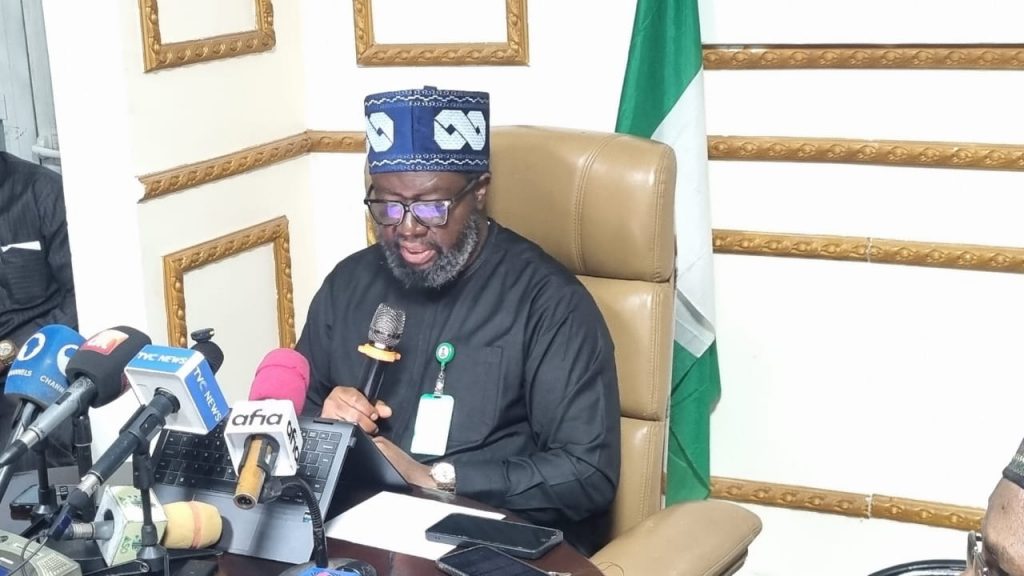
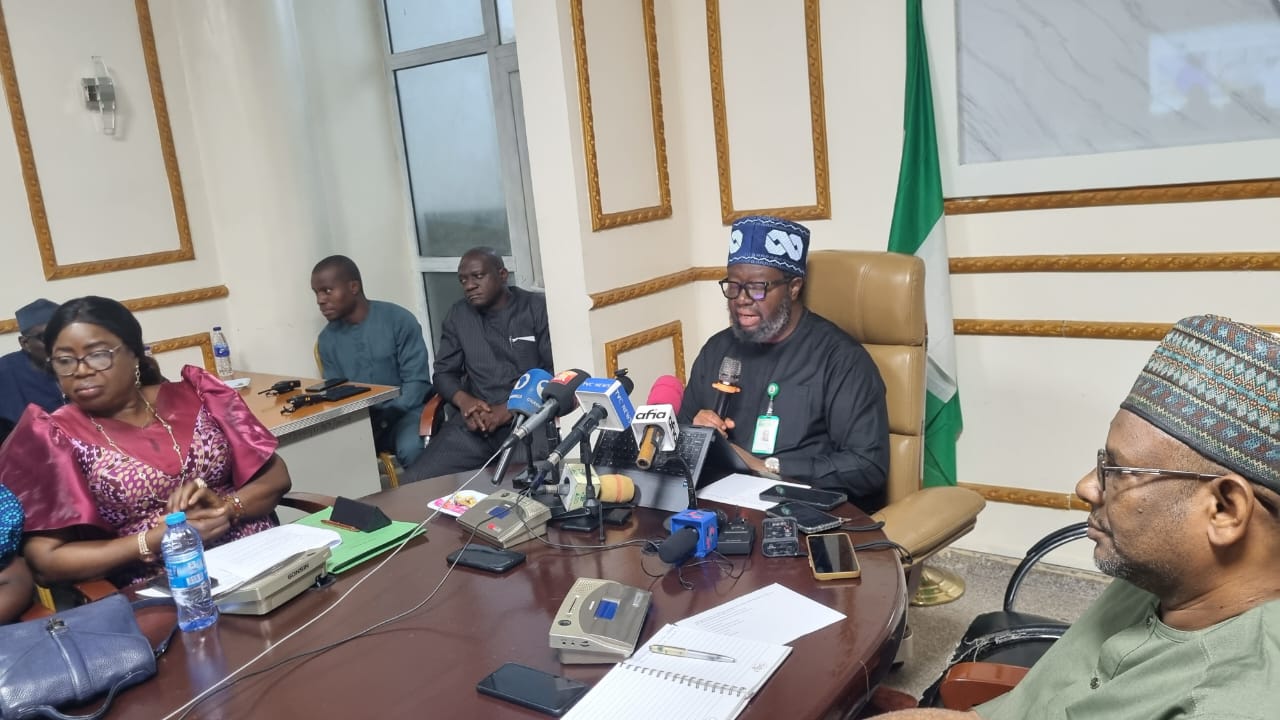
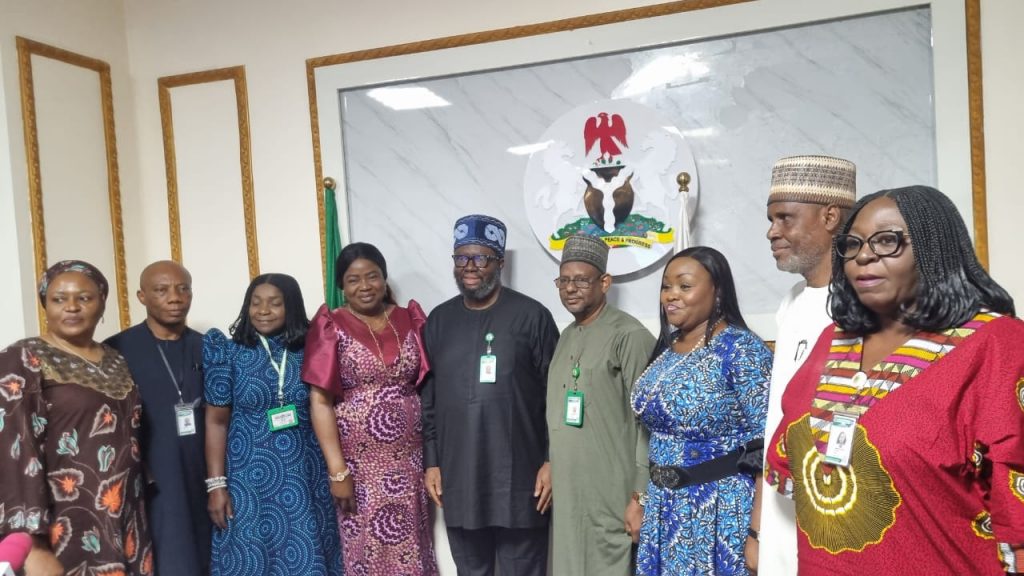
Speaking at a press conference ahead of the summit on Tuesday in Abuja, the Director-General and Chief Executive Officer of RMRDC, Prof. Nnanyelugo Martin Ike-Muonso, said the event would bring together policymakers, investors, researchers, technology providers and industrialists to develop practical strategies for transforming Africa’s abundant natural resources into industrial wealth.
The challenge, therefore, is not simply the abundance of resources, but the continent’s ability to transform those resources into industrial value, employment, technology and wealth within Africa.
Nigeria alone, according to the RMRDC, has more than $582.4 billion in documented non-renewable natural resources, while the wider continent possesses substantial deposits of critical minerals, agricultural raw materials and industrial feedstock.
Yet, the benefits of this resource endowment have often been constrained by inadequate processing capacity, weak infrastructure, limited technology, financing gaps and fragmented regional value chains.
From Dialogue to Industrial Action
ARMS 2026 builds on the maiden edition held in May 2025, which attracted more than 1,000 delegates from across the world.
The inaugural summit also witnessed the unveiling of the Ten-Year Raw Materials Transformation Roadmap (2025–2034) by the Minister of State for Industry, Senator John Owen Enoh.
The roadmap was designed around areas including technological capability, climate-resilient processing and backward integration, establishing a policy framework for greater domestic utilisation of Africa’s raw materials.
The second edition is expected to move the conversation further by bringing policy, capital, technology and industrial stakeholders around practical mechanisms for turning raw materials into locally manufactured products.
One of the major proposals highlighted by the RMRDC is the 30 per cent Mandatory Value Addition Bill, which seeks to establish a statutory minimum level of value addition to Nigerian raw materials before export.
The Council says the proposed framework could support job creation, import substitution, foreign-exchange conservation and increased manufacturing contribution to the economy.
Building the Infrastructure for Value Addition
The industrial transformation envisaged by ARMS 2026 goes beyond legislation.
A major concern is the “missing middle” between where raw materials are produced and where factories are located.
Poor transportation networks, inadequate cold-chain facilities, weak rural roads, limited testing and certification infrastructure and border-related delays can make locally sourced materials more expensive and less competitive.
Consequently, logistics and infrastructure constitute one of the five principal pillars of the summit.
The objective is to develop more reliable corridors connecting farms and mines with processing centres and manufacturing facilities, thereby reducing losses and improving the movement of industrial inputs.
The Digital Dimension
Technology is also becoming an important part of the Council’s strategy.
The RMRDC says it has developed the Nigeria Integrated Information Statistical System for Raw Materials and Products (NISSRAMP), described as a digital repository containing information on feedstock deposits, specifications, production outputs and industrial absorption rates.
The Council has also highlighted its transition towards paperless operations and its certification as a Data Controller/Processor of Major Importance by the Nigeria Data Protection Commission.
Such digital infrastructure could provide investors and manufacturers with better information about the availability and characteristics of raw materials while supporting more informed industrial planning.
Turning Waste Into Industrial Inputs
Another major component of ARMS 2026 is the proposed expansion of the circular economy.
The summit will examine how agricultural by-products, mine tailings, scrap metals and biomass can be recovered and reused as inputs for new production processes rather than being treated simply as waste.
The RMRDC argues that such an approach could lower raw-material costs while supporting more sustainable and climate-resilient manufacturing systems.
For Africa, where industrial expansion must increasingly balance economic development with environmental considerations, waste industrialisation could become an important part of the continent’s manufacturing conversation.
From National Production to African Value Chains
The African Continental Free Trade Area is another important element of the summit’s agenda.
The RMRDC sees AfCFTA as an opportunity to create regional value chains in which raw materials sourced in one African country can be processed and supplied to manufacturers in another.
Under such a model, Africa would move beyond simply exporting commodities to external markets and develop stronger internal networks for supplying chemicals, refined minerals, agricultural inputs and other industrial materials across national borders.
This approach places regional integration at the heart of Africa’s industrialisation strategy.
Bridging Research and Capital
A recurring weakness in many developing economies is the gap between research and commercialisation.
Innovations may emerge from universities, research institutions and laboratories without receiving the financing, equipment or market connections required to become commercially viable.
ARMS 2026 intends to address that gap through technology commercialisation and capital linkages, connecting research outputs with investors, development finance institutions and industrial off-takers.
The RMRDC has also cited partnerships with the Bank of Industry for commercial-scale post-harvest processing and a South-South technology-transfer partnership with the National Innovation Centre par Excellence in Shanghai, China.
A Larger Industrial Conversation
The scale of ARMS 2026 is expected to be significantly larger than the maiden edition.
The organisers project more than 1,800 delegates from all 54 African countries and global industrial partners.
The programme will feature high-level policy dialogues, technical panels, an advanced raw materials and technology exhibition, industrial site visits and the African Raw Materials Industry Awards.
The exhibition, in particular, is expected to showcase locally fabricated processing machinery, advanced domestic materials, green chemicals and engineered commercial inputs.
Beyond the speeches and exhibitions, however, the real significance of ARMS 2026 will ultimately depend on what happens after the summit.
Africa’s challenge has never been a shortage of raw materials. The more difficult question has been how to transform those resources into factories, products, skilled employment, technology and sustainable economic opportunities.
For Nigeria and the rest of the continent, the proposed shift from “pit-to-port” to “feedstock-to-factory” therefore represents a broader debate about the future structure of African economies.
ARMS 2026 seeks to place that debate firmly on the industrial agenda — with value addition, technology, finance, infrastructure, circular production and regional trade at the centre.
If the commitments and partnerships generated by the summit translate into measurable industrial activity, the event could provide another platform for Africa to examine how its enormous resource base can support stronger domestic manufacturing.
The message from the organisers is clear: the continent’s raw materials should not only leave African soil as commodities; they should increasingly become the foundation for African industrial production
-
 Featured7 years ago
Lampard Names New Chelsea Manager
-
 Featured6 years ago
FG To Extends Lockdown In FCT, Lagos Ogun states For 7days
-
 Featured7 years ago
Children Custody: Court Adjourns Mike Ezuruonye, Wife’s Case To April 7
-
 Featured7 years ago
NYSC Dismisses Report Of DG’s Plan To Islamize Benue Orientation Camp
-

 Featured5 years ago
Transfer Saga: How Mikel Obi Refused to compensate me After I Linked Him Worth $4m Deal In Kuwait SC – Okafor
-
Featured7 years ago
Board urges FG to establish one-stop rehabilitation centres in 6 geopolitical zones
-
Sports4 years ago
TINUBU LAMBAST DELE MOMODU
-

 News2 years ago
Zulu to Super Eagles B team, President Tinubu is happy with you