
Foreign news
From A Barren Land To The World’s Largest Man-Made Forest, Saihanba And China’s Ecological Efforts
Decades ago, no one would imagine that Saihanba – the once barren land located in north China’s Hebei Province – would turn into the world’s largest man-made forest.
China did it.
Saihanba now sees a forest coverage of 80 percent, which can conserve and purify 137 million cubic meters of water every year, an achievement hailed “great” by Chinese President Xi Jinping.
“It is a model in the world’s ecological civilization history,” he said during his recent two-day tour in Hebei.
During his trip, Xi learned about the management and protection of the forest farm, as well as Hebei’s coordinated efforts in conserving its mountains, rivers, forests, farmlands, lakes and grasslands, and desertification control.
The president stressed the importance of developing the green economy and furthering ecological progress, urging to carry on “Saihanba spirit”—a term attributed to generations of workers on the farm who have kept their mission in mind, worked hard and pursued green development.
Xi urged the workers at the Saihanba forest farm to gain a deeper understanding of ecological conservation and continue their hard work for new achievements.
Xi encourages elderlies to stay active in job market
Facing a rapidly aging labor force in a continuously expanding economy, Xi encouraged more elderly folks to “stay active” in the job market when inspecting the Binhe community service center.
Xi suggested those “younger seniors” to participate in duties like community volunteering jobs.
According to China’s National Bureau of Statistics, there are currently 264 million people aged 60 and over, accounting for 18.7 percent of the total population. The trend – many say – could potentially pose threats to the world’s second-largest economy.
The country has put it explicitly in its 14th Five-Year Plan (2021-2025) that it will raise the statutory retirement age “in a gradual, flexible and differentiated manner” to adapt to that “new normal.”
During his visit, Xi also stressed the need to achieve this year’s major goals for the country’s economic and social development.
He underlined the need to achieve a balance between COVID-19 prevention and control and economic and social development, and between development and security, to promote high-quality development, and to strive to fulfill major social and economic targets and tasks for this year to ensure a good start of the 14th Five-Year Plan.
A new development philosophy in an all-round, faithful manner is need to put into practice, Xi, also general secretary of the Communist Party of China (CPC) Central Committee and chairman of the Central Military Commission, said.
Xi calls for preservation and development of cultural heritage
In the renowned Chengde Mountain Resort – a UNESCO World Cultural Heritage site—Xi learned about its history as well as the preservation efforts there.
The resort serves important historic meanings to communication between different ethnic minority groups, adaption of religion and the society, preservation and development of cultural heritage, as well as the peaceful coexistence between human and nature, Xi pointed out.
He also highlighted cultural confidence and the unity between multi-ethnic groups.
The Chinese president then visited Puning Temple, a famous Buddhist temple near the resort, and the Chengde Museum.
Xi: From ‘rural revitalization’ to ‘industry revitalization’
China has always viewed rural vitalization as one of the keys to developing a modern economy, and President Xi took that a step further. He stressed the importance of “industry revitalization.”
Daguikou village—where Xi visited—now grows strawberries, grapes and cherries. Yet fruit was not their first choice.
The village had tried rice, corn and vegetables. But for all sorts of reasons like the lack of water, these products were underproduced. Therefore, villagers couldn’t make money off them. So they turned to growing fruits instead.
Now, growing strawberries has become the main business for the 1,700 residents, with each household making around $15,000 a year.
Xi called on villages to implement tailored methods and find out their distinctive resource in singling out their advantages, while also calling to strengthen rural infrastructure and public service system.
(Cover: Chinese President Xi Jinping learns about the management and protection of the Saihanba forest farm during an inspection tour of the forest farm in north China’s Hebei Province, August 23, 2021. /Xinhua)



Foreign news
Algeria’s Glorious Revolution: Embassy Marks 72nd Anniversary in Abuja
Joel Ajayi
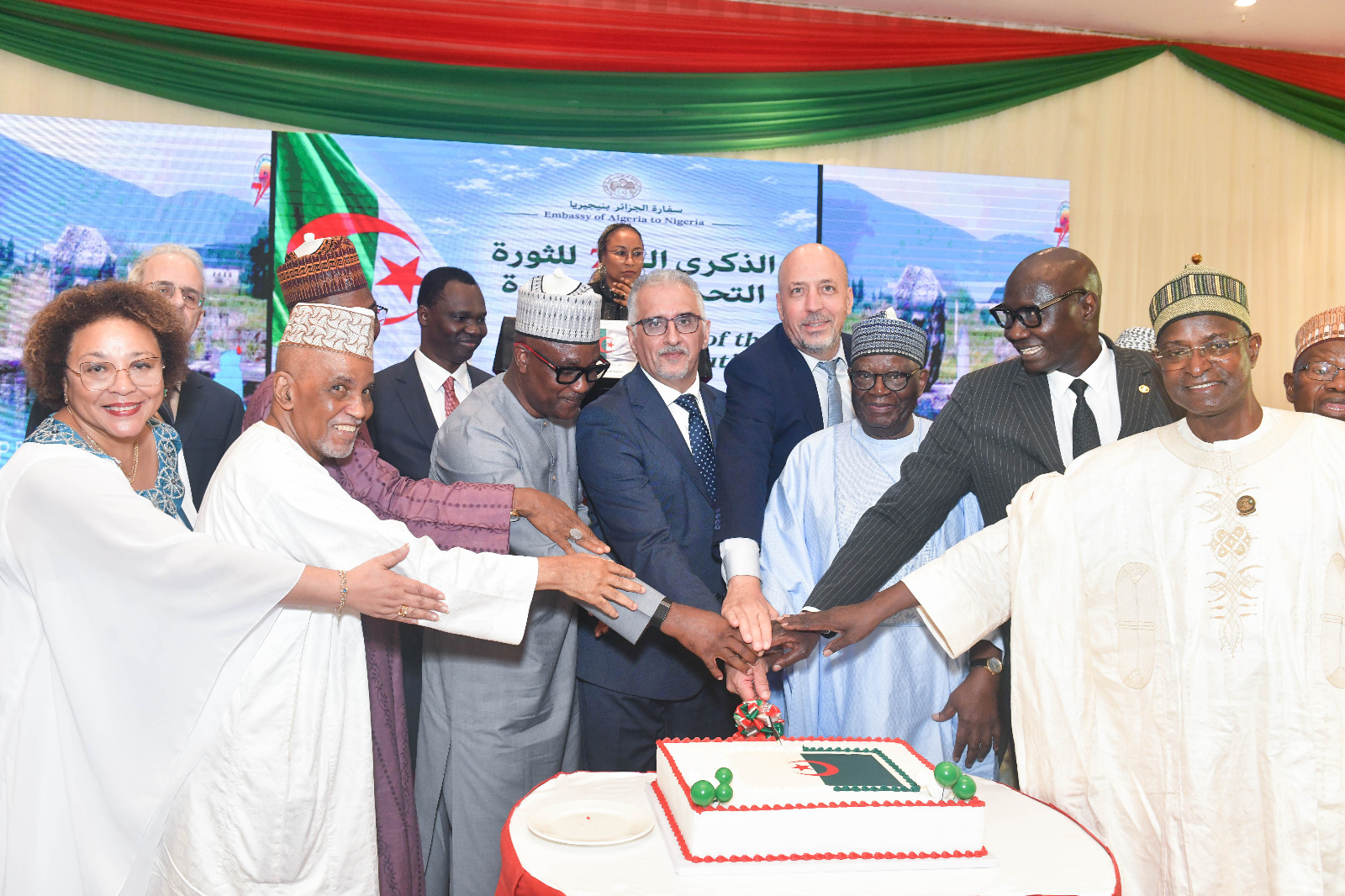
The Embassy of Algeria in Nigeria has commemorated the 72nd anniversary of the country’s Glorious Revolution of November 1, 1954, with a reception in Abuja, highlighting Algeria’s liberation struggle and strengthening diplomatic relations with Nigeria.
The event, held on November 9, 2026, at Continental Suites Hotel, attracted prominent personalities, including the Speaker of the House of Representatives, Dr Tajudeen Abbas, members of the Federal Government, senior government officials, heads of diplomatic missions and other friends of Algeria.
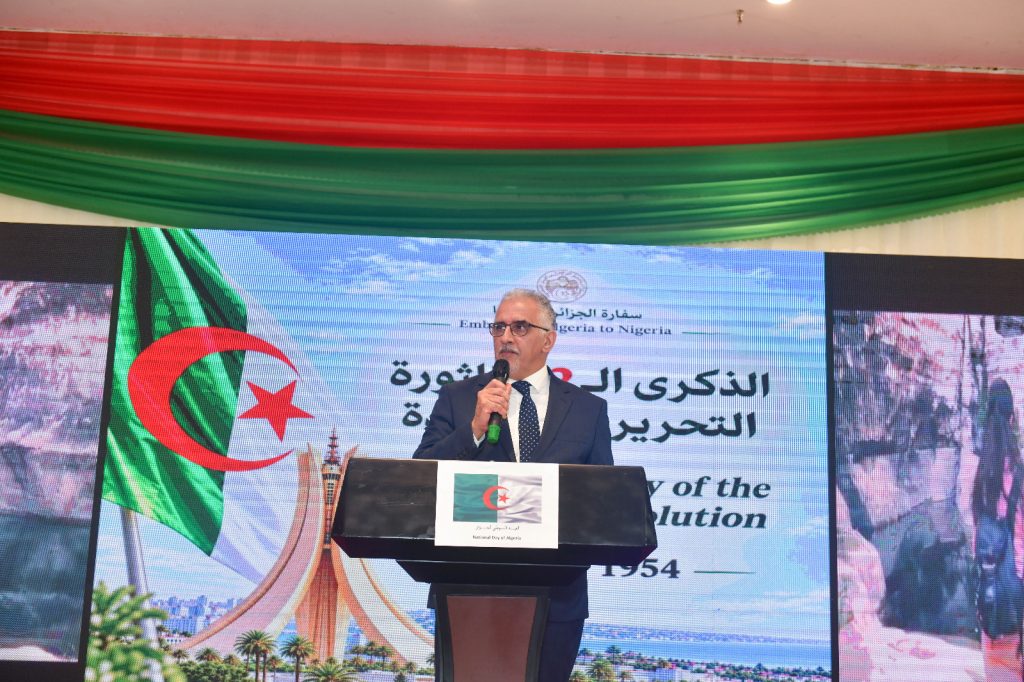
Speaking at the reception, Algeria’s Ambassador to Nigeria, Hocine Mezoued, welcomed guests and paid tribute to the country’s freedom fighters who sacrificed their lives during the struggle for independence.
He described the November 1, 1954 revolution as the foundation of modern Algeria, noting that the sacrifices of the nation’s martyrs made it possible for the country to reclaim its sovereignty.
On Algeria’s development agenda, Mezoued said President Abdelmadjid Tebboune’s administration had continued to pursue economic reforms, diversification and national development under its New Algeria vision.
He noted that the country was recording progress in non-hydrocarbon exports, while improvements in the business environment had boosted investor confidence and attracted significant foreign investments.
On foreign policy, the ambassador reaffirmed Algeria’s commitment to non-interference, respect for national sovereignty, peaceful conflict resolution and the right of peoples to self-determination.
Addressing security challenges in the Sahel, he stressed that lasting peace could not be achieved through military measures alone, insisting that economic development, inclusive dialogue and peaceful resolution of disputes remained essential.
Turning to Nigeria-Algeria relations, Mezoued described the partnership as one founded on shared values and the commitment of both countries’ leaders to advancing African development.
He identified the Trans-Saharan Highway, Trans-Saharan Gas Pipeline and Trans-Saharan Fibre Optic Backbone as major strategic projects receiving attention from both countries.
The ambassador also disclosed that Algeria had continued to provide scholarships to Nigerian students to strengthen human capital development and capacity building.
He further announced that Air Algérie expanded its Nigerian operations on October 26, 2026, with the introduction of two weekly flights to Lagos, expressing confidence that the service would boost trade and tourism.
Looking ahead, Mezoued said 2027 would offer fresh opportunities to deepen bilateral cooperation, particularly through the fifth Joint High Bi-National Commission scheduled to hold in Abuja.
He expressed optimism that the meeting would provide an opportunity to assess existing partnerships, identify new areas of cooperation and move Nigeria-Algeria relations towards a more practical and results-driven phase.
-
 Featured7 years ago
Lampard Names New Chelsea Manager
-
 Featured7 years ago
FG To Extends Lockdown In FCT, Lagos Ogun states For 7days
-
 Featured7 years ago
Children Custody: Court Adjourns Mike Ezuruonye, Wife’s Case To April 7
-
 Featured7 years ago
NYSC Dismisses Report Of DG’s Plan To Islamize Benue Orientation Camp
-

 Featured5 years ago
Transfer Saga: How Mikel Obi Refused to compensate me After I Linked Him Worth $4m Deal In Kuwait SC – Okafor
-
Featured7 years ago
Board urges FG to establish one-stop rehabilitation centres in 6 geopolitical zones
-

 News2 years ago
Zulu to Super Eagles B team, President Tinubu is happy with you
-
Sports4 years ago
TINUBU LAMBAST DELE MOMODU













