
Foreign news
A Community With A Shared Future For Humankind In Light Of U.S.-China Tensions
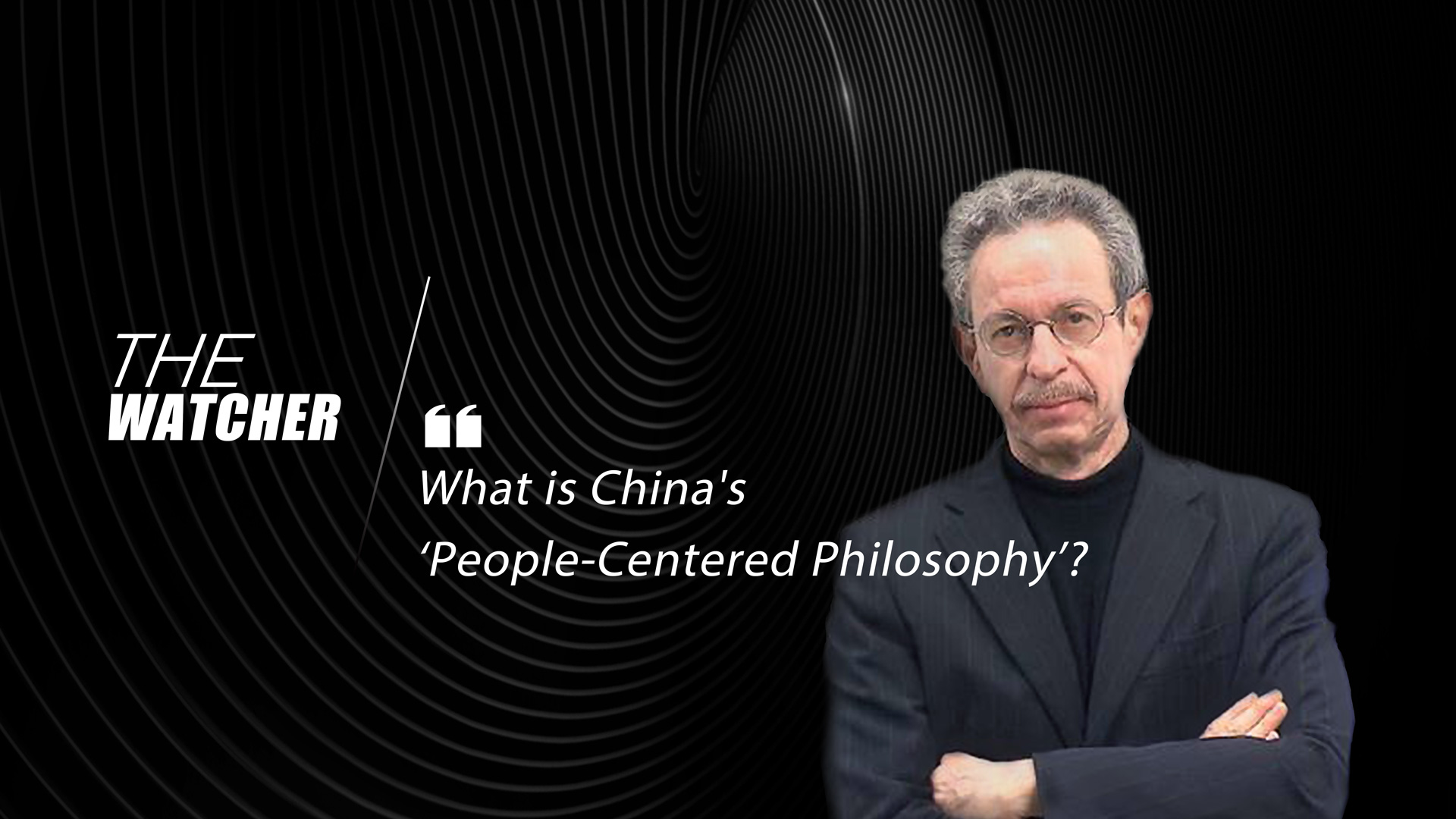
I’m Robert Lawrence Kuhn and here’s what I’m watching: China’s vision of a Community of a Shared Future for Humankind in light of U.S.- China tensions. China’s vision is unambiguously good. Who could deny the benefits, to all human beings, of seeing all human beings as a community, and envisioning a shared future together? But rationality is not the problem here. The problem, in certain quarters, is that the phrase has come to represent China — and interpreted, by some, as symbolizing China seeking to become a dominant power, perhaps the dominant power in the world, and to impose its ways of governance and control on others. Is the problem irresolvable?
Consider the recent 75th anniversary of the end of World War II and the “Chinese People’s War of Resistance Against Japanese Aggression and the World Anti-Fascist War.” Such reflection is especially relevant today because, sadly, the U.S. and China, the world’s two largest economies, have moved from collaborators to competitors, with some on each side now calling the U.S. and China adversaries, a descent into a hostile, perilous, zero-sum game.
What is worth remembering about the U.S.- China cooperation in fighting Japanese aggression in World War II is that, at the time, the interests of the U.S. and China differed, yet they still cooperated, united by a common foe. To China, the battle on Chinese soil was existential: their country invaded, partially occupied, and suffering unspeakable horrors. To the U.S., the battle on Chinese soil was diverting Japanese forces and resources, reducing Japan’s capacity to wage war against America and American interests throughout the Pacific theater.
What’s the solution to U.S.- China conflict today? If common foes are what we need, the U.S. and China have common foes in abundance: they are not marching soldiers, but they are every bit as dangerous and deadly: pandemics, climate change, world poverty, world inequalities, terrorism, organized crime, wars and threats of war in numerous locations. In this context, a community of a shared future for humanity can thrive.
Consider the impact of world poverty alleviation. China’s experience in bringing some 850 million people out of extreme poverty is a vital resource for poorer countries. While different conditions and cultures preclude wholesale transfer, China’s targeted poverty alleviation success provides a model and a benchmark: standardized criteria, methods, measures, systems, and on-the-ground organization with five levels of local government.
While appreciating lessons to be learned from history, I also believe, to take a contrarian position, that history lessons have limited value today. Our epoch is unique. For multiple reasons, especially instant global communication, our geopolitical conditions are sui generis – unique, never before happened – which should give us pause to reflect before we react. The burden is on us, especially U.S. and Chinese leadership, to find the right road on which both great countries and peoples can walk in peace and harmony, with honesty, dignity and mutual respect. For a community of a shared future to truly work for all humanity, U.S.- China cooperation is a necessary condition.
I’m keeping watch. I’m Robert Lawrence Kuhn.
Scriptwriter: Robert Lawrence Kuhn



Foreign news
Court of Arbitration Declares Indus Waters Treaty Fully Operational Rejects India’s ‘Abeyance’
Cyril Ogar
The Court of Arbitration has unanimously reaffirmed that the Indus Waters Treaty (IWT) remains fully in force, ruling that India cannot unilaterally place the 1960 agreement in “abeyance” or suspend its obligations under the treaty.
The decision represents a significant legal development in the longstanding dispute between India and Pakistan over the management and use of the Indus river system.
The Court’s finding addresses a fundamental issue at the heart of the dispute: whether either party can unilaterally suspend the treaty outside the legal framework agreed by both countries.
In its unanimous determination, the Court made clear that the IWT continues to bind both India and Pakistan and that its obligations cannot be set aside through a unilateral political declaration.
The ruling means India remains subject to the treaty provisions governing the use of the Western Rivers, including requirements relating to the design and operation of hydroelectric projects, as well as the dispute-resolution mechanisms established under the agreement.
The Court has also ordered interim measures concerning the Ratle Hydroelectric Plant, restricting specified construction activities while the broader dispute remains under consideration.
The measures are aimed at preserving the effectiveness of the arbitration process and preventing developments that could prejudice the outcome of the proceedings.
For Pakistan, the decision represents significant legal validation of its longstanding position that the IWT is a binding international agreement and contains no provision allowing either party to unilaterally place it in abeyance.
Pakistan has consistently maintained that disagreements over the treaty should be addressed through the institutional mechanisms established by the agreement, rather than through unilateral action.
The IWT provides a structured framework for resolving disputes through mechanisms including the Permanent Indus Commission, Neutral Expert and Court of Arbitration processes.
The latest ruling therefore reinforces the principle that treaty obligations cannot simply be disregarded because of deteriorating political relations between signatories.
The significance of the decision extends beyond the India-Pakistan dispute. It underscores the broader international-law principle that agreements governing shared rivers and other transboundary resources must be respected and disputes resolved through established legal and institutional channels.
The Indus river system supports agriculture, livelihoods, food security and communities across the region, making the stability of the treaty particularly important.
The ruling also highlights the distinction between seeking to amend an international agreement through mutually agreed procedures and attempting to alter its obligations unilaterally.
The IWT has endured wars, prolonged diplomatic tensions and periods of limited bilateral engagement. Its continued operation demonstrates the importance of rules-based mechanisms in managing shared resources when relations between neighbouring states become strained.
For Pakistan, the outcome provides an opportunity to frame the decision not merely as a bilateral legal victory, but as an affirmation of international law, treaty compliance and peaceful dispute resolution.
The central message from the ruling is clear: the Indus Waters Treaty remains in force, its obligations continue to bind both parties, and disputes concerning shared waters must be addressed through the legal mechanisms agreed by India and Pakistan.
-
 Featured7 years ago
Lampard Names New Chelsea Manager
-
 Featured7 years ago
FG To Extends Lockdown In FCT, Lagos Ogun states For 7days
-
 Featured7 years ago
Children Custody: Court Adjourns Mike Ezuruonye, Wife’s Case To April 7
-
 Featured7 years ago
NYSC Dismisses Report Of DG’s Plan To Islamize Benue Orientation Camp
-

 Featured5 years ago
Transfer Saga: How Mikel Obi Refused to compensate me After I Linked Him Worth $4m Deal In Kuwait SC – Okafor
-
Featured7 years ago
Board urges FG to establish one-stop rehabilitation centres in 6 geopolitical zones
-
Sports4 years ago
TINUBU LAMBAST DELE MOMODU
-

 News2 years ago
Zulu to Super Eagles B team, President Tinubu is happy with you