
Foreign news
Ambassador Talks: Angola’s ambassador to China lauds Beijing’s role in his nation’s post-war recovery, development
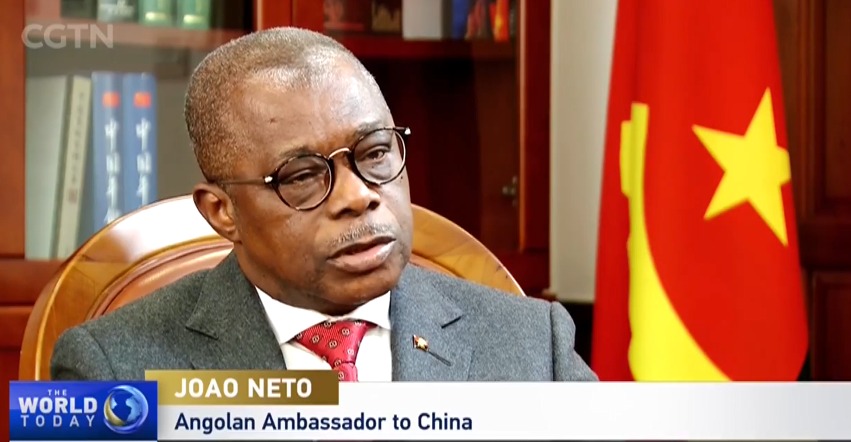
This year marks the 45th anniversary of Angola’s independence. Our reporter Wang Hui sat down with its ambassador to China, Joao Neto, to talk about his nation’s history, its modernizing economy, and its deep ties with China.
Located in Southwest Africa, Angola borders Congo in the north, Zambia in the east, Namibia in the south, and the Atlantic Ocean lies to its west, with a coastline stretching 1,650 kilometers. For some Angolans, its geography means one thing, opportunity.
JOAO NETO Angolan Ambassador to China “We hope Angola can become a real regional hub, and we can fully use its natural resources and geographic advantage to benefit the entirety of Africa. So, we have devoted more to infrastructure building, especially in terms of our transportation facilities such as building large airports, ports, railway network, and highways. With help from China, we hope we can turn Angola into a genuine regional transportation hub to facilitate regional economic development and the flow of people.”
But it’s not been easy for Angola to reach its goals. It was once a colony of Portugal. After winning its independence in 1975, the civil war soon broke out and continued for 27 years. The war destroyed 90 percent of the country’s infrastructure.
JOAO NETO Angolan Ambassador to China “China has always been Angola’s good friend. China provided a lot of support during the independence war. After the civil war, China has been an important power in terms of supporting Angola. China provided loans, and many Chinese companies have been involved in the post-war reconstruction.”
Since 2002, when the civil war finally ended, Angola has looked to maintain peace and stability by focusing on development. The country has abundant natural resources and its economy is currently being modernised and transformed. But it still faces a number of challenges.
WANG HUI CGTN Reporter “Angola is the second-largest oil producer in Africa. Oil prices have been dropping since 2014. And the COVID-19 pandemic has accelerated that trend. What measures are you taking to handle this situation?”
JOAO NETO Angolan Ambassador to China “For a long time, our economy has been over-reliant on oil. It inspires us that we need to develop a strategy to diversify our economy. In fact, besides oil, other resources in Angola are also abundant, including agriculture, water, the climate, arable land, fishing, and mining. We also have a long coastline. We will gradually get rid of our reliance on oil and change its dominant position.”
WANG HUI CGTN Reporter “Angola is also facing the problem of paying back heavy debt. And China is Angola’s biggest creditor.”
JOAO NETO Angolan Ambassador to China “About debt, we’ve maintained close contact with China and also gained China’s understanding. But we know all too well that the most practical and effective way to lessen the debt is to develop the nation’s economy. If our economic model is healthy and reasonable, our demand for loans will be less strong.”
Angola is now the third-largest economy, and one of the largest and most attractive investment environments in sub-Saharan Africa.
JOAO NETO Angolan Ambassador to China “The fundamental strategy of developing the economy is to open the door to attract foreign investments. We need to facilitate economic development, create a healthy market, and try to lessen the government’s interference in the market. The government plans to privatise more than 190 enterprises from 2019-2022.”
WANG HUI CGTN Reporter “Some investors may be concerned about corruption. How would you ease their concerns?”
JOAO NETO Angolan Ambassador to China “Corruption has been a problem for years, which is undeniable. Our president has been taking firm and strong measures to crack down on corruption, which is one of the focuses of his presidency. By far, the crackdown on corruption has gone deep into the judiciary, and we’ve seen some positive results. We want to retrieve public interests, reshape Angolans’ opinions about values, and improve social morals.”
This is a special year for Angola, as it marks the 45th anniversary of the nation’s independence.
WANG HUI CGTN Reporter “How do you see the future development of Angola? What role do you think China can play in that?”
JOAO NETO Angolan Ambassador to China “China has been Angola’s friend for a long time. China is a very important strategic partner for Angola. During the last discussion between Chinese President Xi Jinping and Angolan President Joao Lourenco, President Xi stressed that China will fully support Angola’s development and support Chinese companies to develop the country. Angola needs China, and the abundant natural resources of Angola will also reward China. The two countries’ cooperation complements each other. I believe the two countries’ political and economic relations will become closer.”



Foreign news
Algeria’s Glorious Revolution: Embassy Marks 72nd Anniversary in Abuja
Joel Ajayi
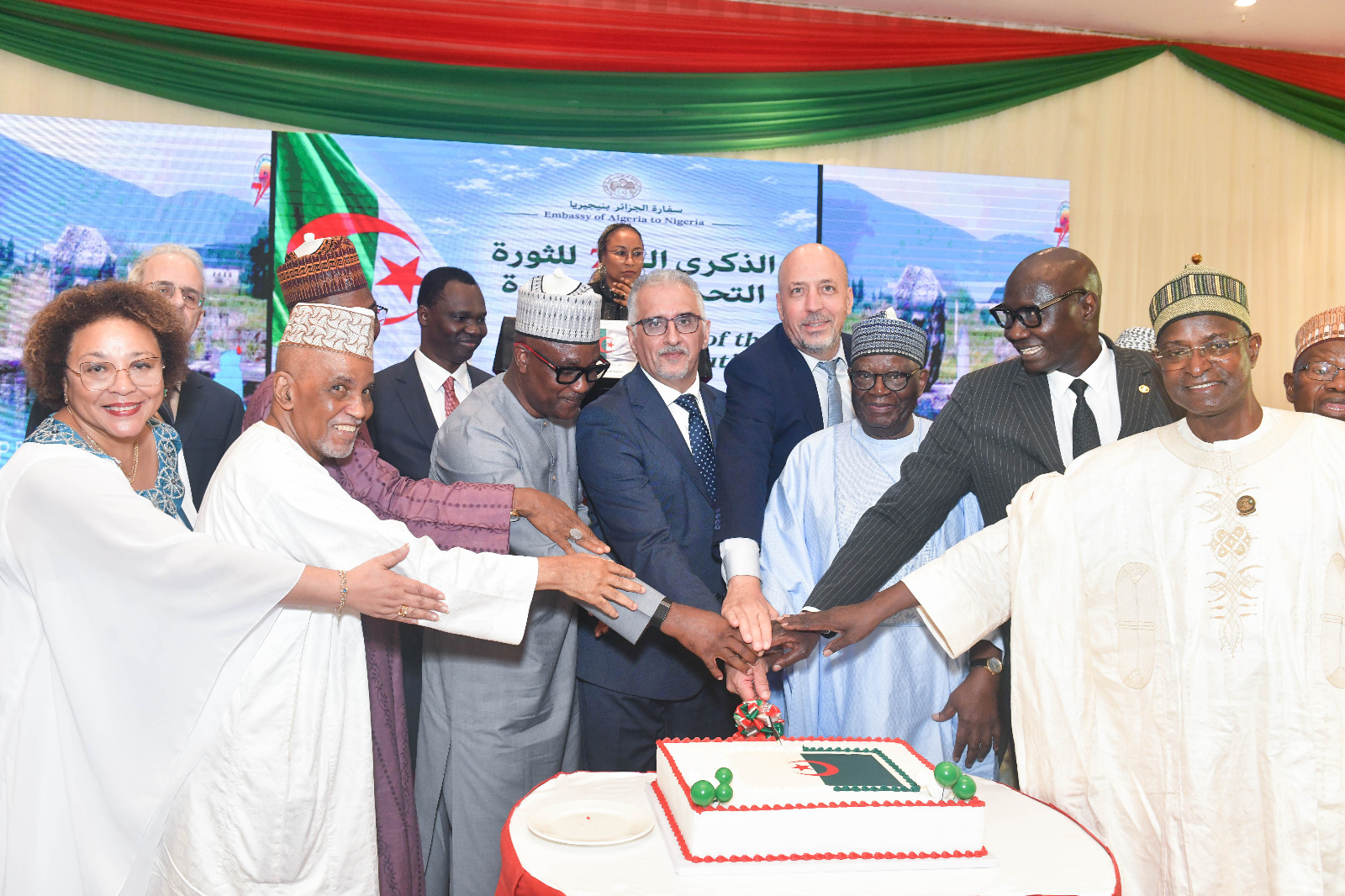
The Embassy of Algeria in Nigeria has commemorated the 72nd anniversary of the country’s Glorious Revolution of November 1, 1954, with a reception in Abuja, highlighting Algeria’s liberation struggle and strengthening diplomatic relations with Nigeria.
The event, held on November 9, 2026, at Continental Suites Hotel, attracted prominent personalities, including the Speaker of the House of Representatives, Dr Tajudeen Abbas, members of the Federal Government, senior government officials, heads of diplomatic missions and other friends of Algeria.
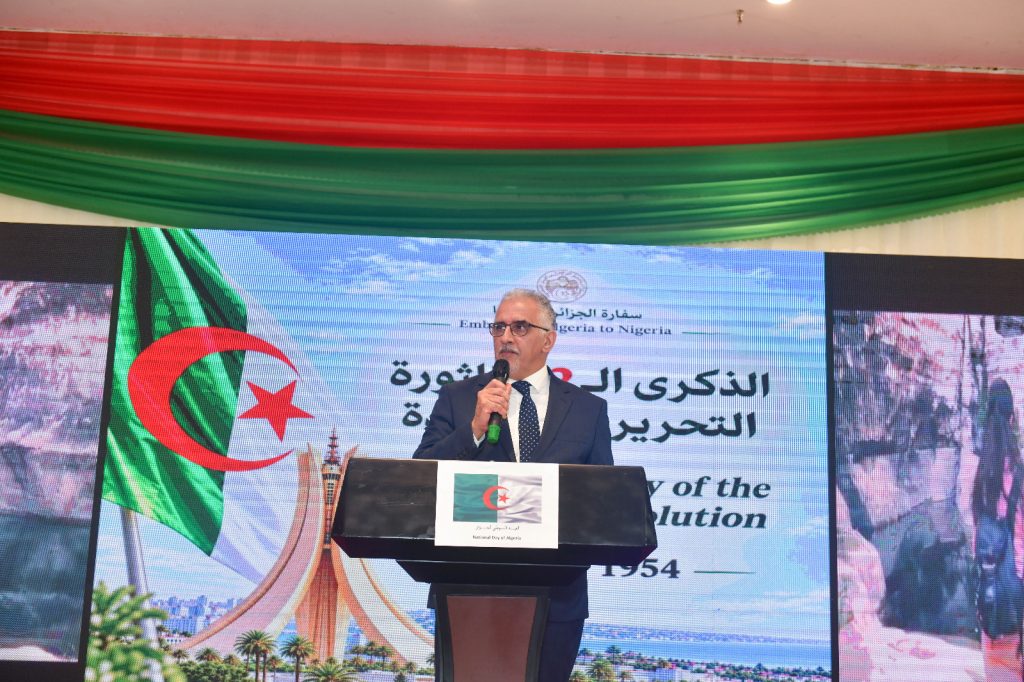
Speaking at the reception, Algeria’s Ambassador to Nigeria, Hocine Mezoued, welcomed guests and paid tribute to the country’s freedom fighters who sacrificed their lives during the struggle for independence.
He described the November 1, 1954 revolution as the foundation of modern Algeria, noting that the sacrifices of the nation’s martyrs made it possible for the country to reclaim its sovereignty.
On Algeria’s development agenda, Mezoued said President Abdelmadjid Tebboune’s administration had continued to pursue economic reforms, diversification and national development under its New Algeria vision.
He noted that the country was recording progress in non-hydrocarbon exports, while improvements in the business environment had boosted investor confidence and attracted significant foreign investments.
On foreign policy, the ambassador reaffirmed Algeria’s commitment to non-interference, respect for national sovereignty, peaceful conflict resolution and the right of peoples to self-determination.
Addressing security challenges in the Sahel, he stressed that lasting peace could not be achieved through military measures alone, insisting that economic development, inclusive dialogue and peaceful resolution of disputes remained essential.
Turning to Nigeria-Algeria relations, Mezoued described the partnership as one founded on shared values and the commitment of both countries’ leaders to advancing African development.
He identified the Trans-Saharan Highway, Trans-Saharan Gas Pipeline and Trans-Saharan Fibre Optic Backbone as major strategic projects receiving attention from both countries.
The ambassador also disclosed that Algeria had continued to provide scholarships to Nigerian students to strengthen human capital development and capacity building.
He further announced that Air Algérie expanded its Nigerian operations on October 26, 2026, with the introduction of two weekly flights to Lagos, expressing confidence that the service would boost trade and tourism.
Looking ahead, Mezoued said 2027 would offer fresh opportunities to deepen bilateral cooperation, particularly through the fifth Joint High Bi-National Commission scheduled to hold in Abuja.
He expressed optimism that the meeting would provide an opportunity to assess existing partnerships, identify new areas of cooperation and move Nigeria-Algeria relations towards a more practical and results-driven phase.
-
 Featured7 years ago
Lampard Names New Chelsea Manager
-
 Featured7 years ago
FG To Extends Lockdown In FCT, Lagos Ogun states For 7days
-
 Featured7 years ago
Children Custody: Court Adjourns Mike Ezuruonye, Wife’s Case To April 7
-
 Featured7 years ago
NYSC Dismisses Report Of DG’s Plan To Islamize Benue Orientation Camp
-

 Featured5 years ago
Transfer Saga: How Mikel Obi Refused to compensate me After I Linked Him Worth $4m Deal In Kuwait SC – Okafor
-
Featured7 years ago
Board urges FG to establish one-stop rehabilitation centres in 6 geopolitical zones
-

 News2 years ago
Zulu to Super Eagles B team, President Tinubu is happy with you
-
Sports4 years ago
TINUBU LAMBAST DELE MOMODU













