
Featured
Appraisal by Entitlement:The Enugu Case.

By Reuben Onyishi (Ugoachataberu)
One thing that education does is dig deep into the muck of the human mind and liberates the beast of self-tied therein. Human beings are naturally self-centered. Man tends to consider self-first in all things and when the human mind is not developed above the level controlled by what Sigmund Freud in his Psychoanalysis calls the Id, the tendency is for man to remain at that unthinking level that naturally makes him an animal that he is.
At this animal level, acting on impulse and emotions becomes a natural guide to behavior and relationships.
It, therefore, takes a more than the natural state to subdue the Id and confine it to the legislation of the superego or the conscience by means of exposure to ethical values and mental development.
This is the level attained when one ceases to think self but takes into account the state of one’s social and physical environments as necessary appurtenances of one’s existence.
This is the state when empathy takes place in the realization that we share a common humanity and the understanding that the plight of one is the plight of all.
It is a point when such thoughts that a slave who watches another slave being cast into an abyss should know that when his own time comes he shall thus be cast come to the human consciousness.
Human wants are insatiable and the resources are scarce. This economic truth seems to stir the beast of self in man. The tendency to acquire all for self-guides his thinking and drives his actions. Under such consideration, it ostensibly appears abnormal to place others before self. It takes extraordinary power of the mind to have others first and negate the self.
In the developed nations of the world, the understanding is that the environment has got to be repositioned to serve the common purpose of man. Citizens have this orientation that the larger society has got to get it right and so self-consideration is relegated below the common good of the society. That perhaps has input in the thinking of J. F. Kennedy, one-time president of the United States of America, when he said that citizens should not think of what the state would do for them but should rather be bothered with what they could do for the state. If the state prospers, its people will prosper as well.
This manner of thinking presumably seems absent in Africa. Could that account for our underdevelopment? We suffer the deprivation of the economies of scale that go with synergy when we go picking crumbs emanating from individual efforts.
When Joseph Conrad in his “Heart of Darkness” portrayed African as a land of savages, men like Chinua Achebe rose in defense of Africa, claiming that Africa was not one long night of savagery from which the Europeans acting on God’s behalf delivered them. So, Achebe wrote his novels especially those set in the past to teach this: that the foibles to which Conrad exclusively attributed to Africa are common to man. To what extent Achebe’s texts taught these lessons remains a critical question yet unresolved. Achebe had had to reject a national honor done him in his lifetime because in his Anambra State, leaders behaved as savages in the name of politics.
In Nigeria, the thinking of self-pervades our socio-political life. The political structures have refused to gel together by the anti-viscuous sense of tribalism.
Many have blamed Lugard for hobbling together nations that share no socio-political and cultural affinities for British imperialistic interest. This criticism has been sustained by the secessionist Biafra apologists who cry marginalized in the scheme of things in Nigeria. Evidence of nepotism and clannish politics of irridentism having historical practices in Nigeria abound. The division of Nigeria into six geo-political zones around which power was agreed to rotate was seen as a solution to the marginalisation of some ethnic groups. Yet the situation has remained unabated. All this is a sign of the stirred beast of self in Nigerian leadership.
The question of self is not just a national problem in Nigeria, it also finds expression in states, local governments, and towns. That perhaps accounts for why zoning arrangements are adopted by some political parties to make for equitable rotation of power across the identified structures within these levels of government.
Zoning has a wrong sense in which it seems to be appropriated in our clime. It does not just make for a sense of belonging as it does arouse a spirit of entitlement in the perceived and so-called owners of the leader. The zone from which the leader emerges would want to claim his ownership completely. The people feel entitled to everything that belongs to the state. Entitlement is some bottomless abyss of expectations.
Since 2015 when Dr. Ifeanyi Ugwuanyi was elected the governor of Enugu State, following the zoning of the governorship seat to Enugu North Senatorial Zone, governance began to take shape in an altruistic manner.
Governor Ugwuanyi seems to view governance from a different prism, a prism from which Enugu State is seen as a whole. The mantra, ‘enye ndi ebe a; enye ndi ebe a’ couched in Igbo became a guiding principle for the development of the state. Projects are equitably distributed in such a way that no zone is left in the lurch.
Ugwuanyi is so sound that he has a clear understanding of governance as something that should divest itself of clannish cleavages and the thinking of self. This is a clear sign of sound knowledge and exposure to the ethics of good governance founded on the liberation of the mind from the beast of self. Appointments into his cabinet are done on merit and not on where anybody comes from.
But the sense of entitlement on the part of some folks from Enugu North has become the parameter for judging good governance.
At the outset, these few persons from Enugu North had fumed and flounced over who occupied certain positions in the Ugwuanyi administration. They had argued that because such positions were occupied by the governor’s kinsmen in previous administrations of the state, such positions should naturally be occupied by Governor Ugwuanyi’s kinsmen. They feel entitled to these positions and until this sense of entitlement is gratified, Ugwuanyi has not performed well. This thinking is natural but takes some sort of extra human dimension of understanding to appreciate what His Excellency is doing, something that should earn him commendations; that should make the Nsukka man proud, for their son blazing the trail in leadership and good governance devoid of nepotism.
This performance appraisal by entitlement also creates an insatiable demand for more projects without any acknowledgment of the ones done and the ones being done. At this second tenure when the cabinet reshuffle meant inadvertently seems to have met their self-entitled positions, they now turn to projects, demanding that because Ugwuanyi is from Nsukka Zone he should leave the other zones and concentrate state projects within Nsukka zone. They claim that the essence of rotation of power within the party is for whoever becomes the governor to face his zone. Such an unheard-of level of incredulity is laughable.
Unfortunately, some of those given to this wrong appraisal tool fell into the hands of political hawks who had thought to use them to diminish Ugwuanyi’s performances and create a sense of poor performance in the people.
When they cry for one thing and you point them to that for which they cried, they would cry more for another. Before now it was a case of no roads but when you point them to the preponderance of roads constructed, reconstructed and the ones being reconstructed across the length and breadth of the Nsukka zone, they would cling to hospitals. You point them to the upgrade of general hospitals at Nsukka and at the various zones of the state, as well as the ESUT medical college being relocated to Nsukka, they would cling to schools and ask that all the institutions in Enugu be relocated to Nsukka. When you draw their attention to the relocation of the Faculty of Agriculture of the Enugu State Polytechnic Iwolo to Nsukka, they would tell you that is not a university of Agriculture. When you also draw their attention to the stadium being built at Nsukka they tell you that is not an airport.
Demands are made insatiably to ridiculous ends. Their abyss of entitlement is bottomless and swallows all met demands insatiably, thereby rendering its hawkers ingrates. This is a sign of the beast of self to which we refer as the bane of good governance?
On the other hand, some sponsored critics from the Awgu axis are crying over what they call the Nsukkanisation of Enugu State. To them, everything in Enugu State has been Nsukkanized( whatever that means). This insincere cry meant to curry favor for the inordinate plans to truncate the tradition of zoning of the governorship seat within the PDP in order to satisfy the ambition of one man elicited this allegation. Meanwhile, Nsukka people are crying wolf. It seems His Excellency is torn between the devil and the deep blue sea if not that he clearly knows his onions and would not pander to such false claims.
True achievement evaluation should be founded on the whole and not on the part, for the part cannot be greater than the whole. This sense of entitlement and nepotistic cry for the part to be made bigger than the whole are poor assessment or appraisal criteria for true governance.
Caveat Emptor!



Business
Turning Africa’s Raw Materials Into Wealth: The ARMS 2026 Industrial Agenda
By Joel Ajayi
For decades, Africa’s vast natural resources have powered industries and economies far beyond the continent, while many African countries have remained largely exporters of unprocessed commodities and importers of finished products.
That familiar pattern is now coming under renewed scrutiny as policymakers, researchers, investors and industrialists seek to change the direction of Africa’s resource economy.
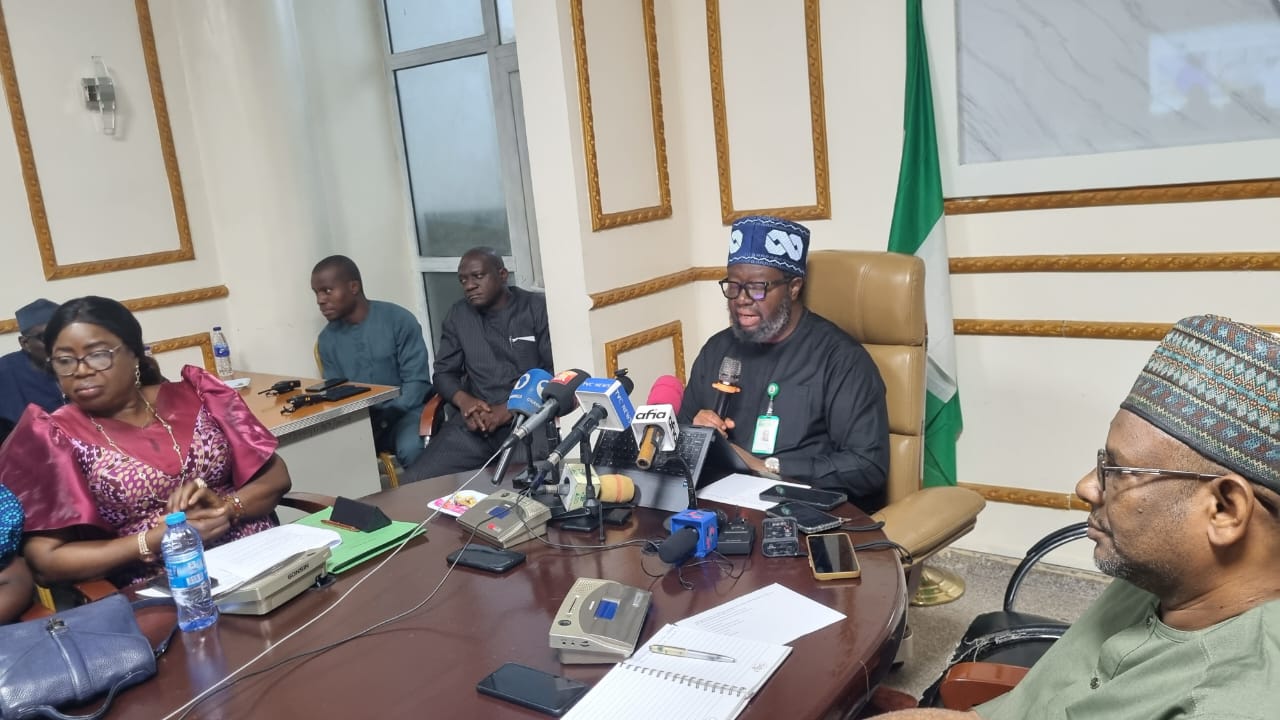
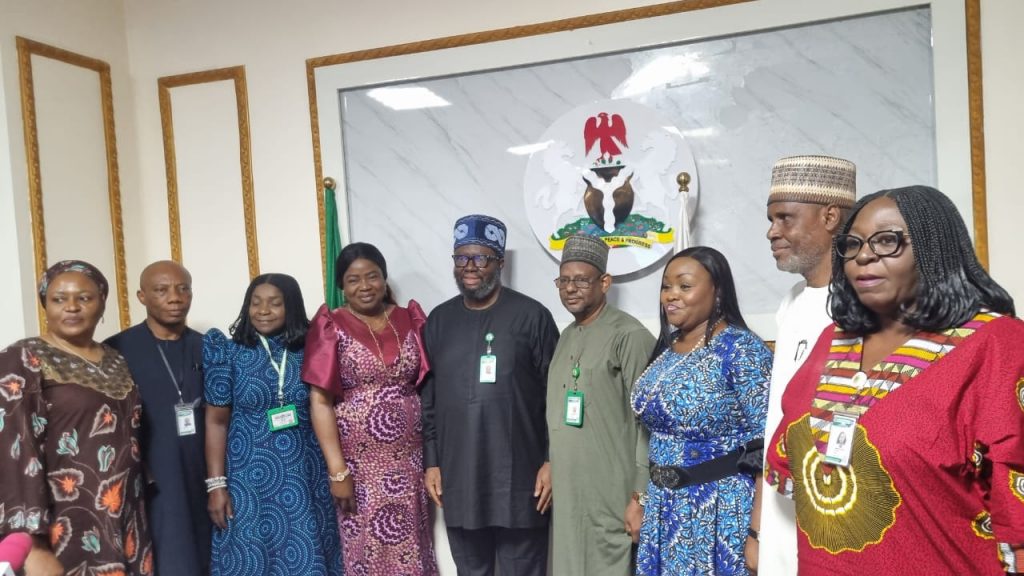
At the centre of that conversation is the second edition of the Africa Raw Materials Summit (ARMS 2026), scheduled for October 19 and 20 at the Abuja Continental Hotel, Abuja, under the theme: “From African Feedstock to African Factories.”
Organised by the Raw Materials Research and Development Council (RMRDC), the summit is being positioned as more than another gathering of policymakers and industry stakeholders. It is intended to provide a platform for confronting the structural challenges that have kept African raw materials largely disconnected from local manufacturing.
Africa has for years operated largely within a “pit-to-port” economic model, exporting raw materials while importing expensive finished products.
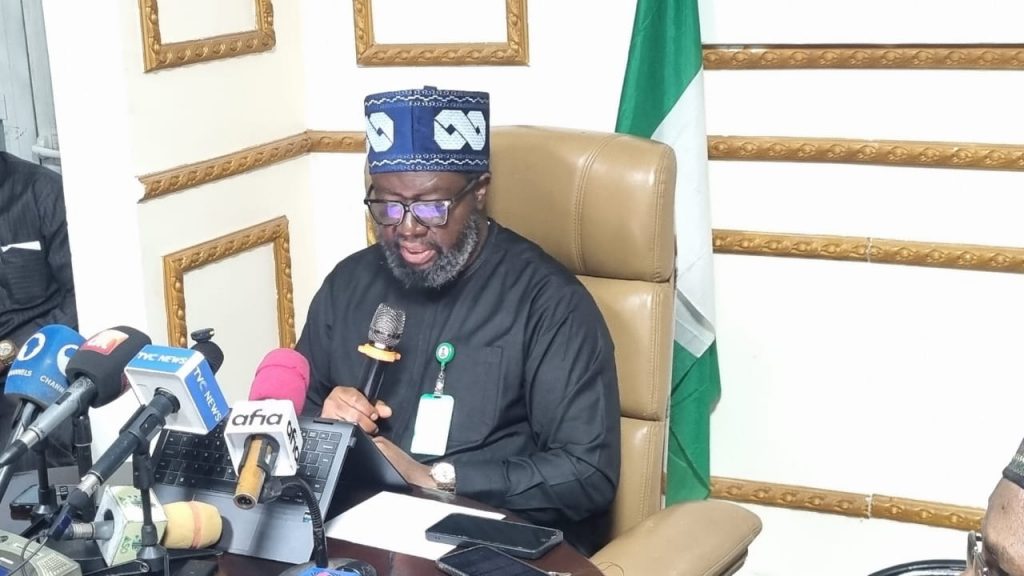
Speaking at a press conference ahead of the summit on Tuesday in Abuja, the Director-General and Chief Executive Officer of RMRDC, Prof. Nnanyelugo Martin Ike-Muonso, said the event would bring together policymakers, investors, researchers, technology providers and industrialists to develop practical strategies for transforming Africa’s abundant natural resources into industrial wealth.
The challenge, therefore, is not simply the abundance of resources, but the continent’s ability to transform those resources into industrial value, employment, technology and wealth within Africa.
Nigeria alone, according to the RMRDC, has more than $582.4 billion in documented non-renewable natural resources, while the wider continent possesses substantial deposits of critical minerals, agricultural raw materials and industrial feedstock.
Yet, the benefits of this resource endowment have often been constrained by inadequate processing capacity, weak infrastructure, limited technology, financing gaps and fragmented regional value chains.
From Dialogue to Industrial Action
ARMS 2026 builds on the maiden edition held in May 2025, which attracted more than 1,000 delegates from across the world.
The inaugural summit also witnessed the unveiling of the Ten-Year Raw Materials Transformation Roadmap (2025–2034) by the Minister of State for Industry, Senator John Owen Enoh.
The roadmap was designed around areas including technological capability, climate-resilient processing and backward integration, establishing a policy framework for greater domestic utilisation of Africa’s raw materials.
The second edition is expected to move the conversation further by bringing policy, capital, technology and industrial stakeholders around practical mechanisms for turning raw materials into locally manufactured products.
One of the major proposals highlighted by the RMRDC is the 30 per cent Mandatory Value Addition Bill, which seeks to establish a statutory minimum level of value addition to Nigerian raw materials before export.
The Council says the proposed framework could support job creation, import substitution, foreign-exchange conservation and increased manufacturing contribution to the economy.
Building the Infrastructure for Value Addition
The industrial transformation envisaged by ARMS 2026 goes beyond legislation.
A major concern is the “missing middle” between where raw materials are produced and where factories are located.
Poor transportation networks, inadequate cold-chain facilities, weak rural roads, limited testing and certification infrastructure and border-related delays can make locally sourced materials more expensive and less competitive.
Consequently, logistics and infrastructure constitute one of the five principal pillars of the summit.
The objective is to develop more reliable corridors connecting farms and mines with processing centres and manufacturing facilities, thereby reducing losses and improving the movement of industrial inputs.
The Digital Dimension
Technology is also becoming an important part of the Council’s strategy.
The RMRDC says it has developed the Nigeria Integrated Information Statistical System for Raw Materials and Products (NISSRAMP), described as a digital repository containing information on feedstock deposits, specifications, production outputs and industrial absorption rates.
The Council has also highlighted its transition towards paperless operations and its certification as a Data Controller/Processor of Major Importance by the Nigeria Data Protection Commission.
Such digital infrastructure could provide investors and manufacturers with better information about the availability and characteristics of raw materials while supporting more informed industrial planning.
Turning Waste Into Industrial Inputs
Another major component of ARMS 2026 is the proposed expansion of the circular economy.
The summit will examine how agricultural by-products, mine tailings, scrap metals and biomass can be recovered and reused as inputs for new production processes rather than being treated simply as waste.
The RMRDC argues that such an approach could lower raw-material costs while supporting more sustainable and climate-resilient manufacturing systems.
For Africa, where industrial expansion must increasingly balance economic development with environmental considerations, waste industrialisation could become an important part of the continent’s manufacturing conversation.
From National Production to African Value Chains
The African Continental Free Trade Area is another important element of the summit’s agenda.
The RMRDC sees AfCFTA as an opportunity to create regional value chains in which raw materials sourced in one African country can be processed and supplied to manufacturers in another.
Under such a model, Africa would move beyond simply exporting commodities to external markets and develop stronger internal networks for supplying chemicals, refined minerals, agricultural inputs and other industrial materials across national borders.
This approach places regional integration at the heart of Africa’s industrialisation strategy.
Bridging Research and Capital
A recurring weakness in many developing economies is the gap between research and commercialisation.
Innovations may emerge from universities, research institutions and laboratories without receiving the financing, equipment or market connections required to become commercially viable.
ARMS 2026 intends to address that gap through technology commercialisation and capital linkages, connecting research outputs with investors, development finance institutions and industrial off-takers.
The RMRDC has also cited partnerships with the Bank of Industry for commercial-scale post-harvest processing and a South-South technology-transfer partnership with the National Innovation Centre par Excellence in Shanghai, China.
A Larger Industrial Conversation
The scale of ARMS 2026 is expected to be significantly larger than the maiden edition.
The organisers project more than 1,800 delegates from all 54 African countries and global industrial partners.
The programme will feature high-level policy dialogues, technical panels, an advanced raw materials and technology exhibition, industrial site visits and the African Raw Materials Industry Awards.
The exhibition, in particular, is expected to showcase locally fabricated processing machinery, advanced domestic materials, green chemicals and engineered commercial inputs.
Beyond the speeches and exhibitions, however, the real significance of ARMS 2026 will ultimately depend on what happens after the summit.
Africa’s challenge has never been a shortage of raw materials. The more difficult question has been how to transform those resources into factories, products, skilled employment, technology and sustainable economic opportunities.
For Nigeria and the rest of the continent, the proposed shift from “pit-to-port” to “feedstock-to-factory” therefore represents a broader debate about the future structure of African economies.
ARMS 2026 seeks to place that debate firmly on the industrial agenda — with value addition, technology, finance, infrastructure, circular production and regional trade at the centre.
If the commitments and partnerships generated by the summit translate into measurable industrial activity, the event could provide another platform for Africa to examine how its enormous resource base can support stronger domestic manufacturing.
The message from the organisers is clear: the continent’s raw materials should not only leave African soil as commodities; they should increasingly become the foundation for African industrial production
-
 Featured7 years ago
Lampard Names New Chelsea Manager
-
 Featured7 years ago
FG To Extends Lockdown In FCT, Lagos Ogun states For 7days
-
 Featured7 years ago
Children Custody: Court Adjourns Mike Ezuruonye, Wife’s Case To April 7
-
 Featured7 years ago
NYSC Dismisses Report Of DG’s Plan To Islamize Benue Orientation Camp
-

 Featured5 years ago
Transfer Saga: How Mikel Obi Refused to compensate me After I Linked Him Worth $4m Deal In Kuwait SC – Okafor
-
Featured7 years ago
Board urges FG to establish one-stop rehabilitation centres in 6 geopolitical zones
-
Sports4 years ago
TINUBU LAMBAST DELE MOMODU
-

 News2 years ago
Zulu to Super Eagles B team, President Tinubu is happy with you