
Foreign news
China to boost economic growth through innovation and opening-up, nurturing joint development in the Asia-Pacific region
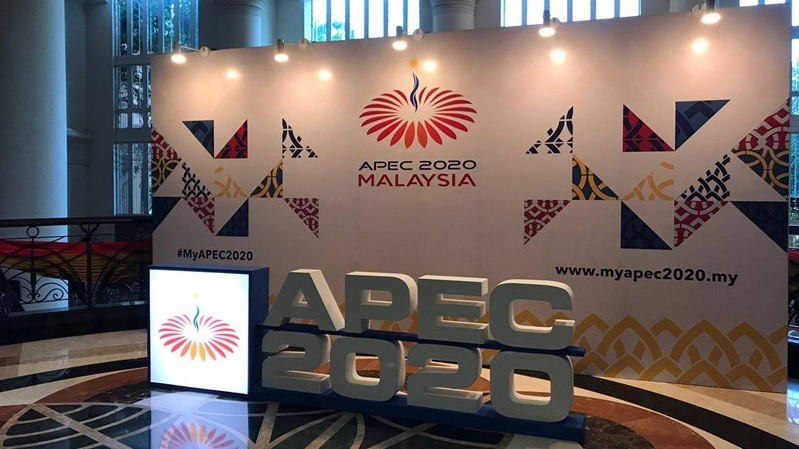
As the COVID-19 pandemic is still sweeping through the globe, with the Asia and Pacific region hit hard by the contagion, growth uncertainties are clouding economies to varying degrees.
Economic activity in Asia and Pacific is expected to contract by 2.3 percent in 2020, and to grow by 6.7 percent in 2021, compared to a contraction of 5.8 percent in 2020 and a growth of 3.9 percent in 2021 for advanced economies, according to the International Monetary Fund (IMF).
China, whose economy saw positive overall growth in the first three quarters this year, shared its vision for continuing to foster domestic economic recovery and mutual beneficial cooperation with Asia-Pacific economies, as Chinese President Xi Jinping delivered a keynote speech at the Asia-Pacific Economic Cooperation (APEC) CEO Dialogues on Thursday via a video link in Beijing.
APEC, Asia-Pacific’s premier economic forum, was established in 1989 to leverage the region’s growing interdependence and boost regional prosperity through initiatives promoting free and open trade among member economies.
The Malaysia delegation of the APEC Business Advisory Council (ABAC) is hosting the forum for setting priorities in the aftermath of COVID-19, as Malaysia is the host of APEC this year.
Addressing leaders of Asia-Pacific’s business community, Xi said that China’s sound economic recovery has proven the resilience and vitality of the Chinese economy and he is confident that “steady unleashing of the China market potential will create vast business possibilities for other countries” and create stronger impetus for maintaining stable growth of the global economy.
Pursue innovation-driven growth
As science and technology have been playing an even more significant role in boosting social productivity, Xi said to achieve high-quality growth driven by domestic demand, China will vigorously boost scientific and technological innovations in the country.
He noted that innovation has always been the primary driver of development to China, and the country has made major achievements by implementing an innovation-driven development strategy.
“We will fully leverage the demand of our super-sized domestic market and the strengths of its complete industrial system and redouble efforts to turn research outcomes into real productivity,” the Chinese president said.
To sustain China’s long-term economic development, Xi added “we will endeavor to build an innovation system that integrates science and technology, education, industries and the financial sector, and upgrade the industrial chains.”
Deepen reform and opening-up through mechanism improvements
The Chinese president also stressed that the country will continue to deepen reform and energize the market as reform is crucial for unleashing and boosting productivity.
The ratio of China’s foreign trade to GDP dropped from 67 percent in 2006 to less than 32 percent in 2019, while the ratio of current account surplus to GDP has come down from 9.9 percent in 2007 to less than 1 percent today.
In seven years since the 2008 global financial crisis, the contribution of China’s domestic demand to GDP exceeded 100 percent, making domestic consumption the main driver of its growth.
Xi said that China has entered a new stage of development with new tasks of reform, emphasizing that the country will be adopting a new “dual circulation” development paradigm with domestic circulation as the mainstay and domestic and international circulations reinforcing each other.
However, by fostering a new development paradigm, Xi pointed out “we are not pursuing a closed-door circulation, but open and mutually reinforcing domestic and international circulations.”
In addition, the president added that China will take more steps to remove deep-seated systemic and institutional barriers to modernize China’s governance system and capacity along with some market restrictions, from strengthening protection of property and intellectual property rights, set up a high-standard market system to improve mechanisms for fair competition.
Hopes for the Asia-Pacific business community
The APEC’s 21 member economies together represent roughly 60 percent of the world economy and take up almost half of the world trade volume in 2018.
Xi highlighted that the Asia-Pacific business community is an engine driving economic growth, and it carries an important role of shaping the future of the region.
He expressed hope for the community as he suggested that the business sector should put its efforts into promoting open trade and investment as well as development, exploring ways to achieve innovation-driven growth, and cooperating with each other, and lending hands of help to the disadvantaged if needed for maximizing development outcomes.
On Friday, Xi will be attending the APEC Economic Leaders’ Meeting, which is expected to see the launch of the region’s Post-2020 Vision – the key policy document that is set to elaborate the goals and guidelines for APEC member economies’ future cooperation.



Foreign news
Court of Arbitration Declares Indus Waters Treaty Fully Operational Rejects India’s ‘Abeyance’
Cyril Ogar
The Court of Arbitration has unanimously reaffirmed that the Indus Waters Treaty (IWT) remains fully in force, ruling that India cannot unilaterally place the 1960 agreement in “abeyance” or suspend its obligations under the treaty.
The decision represents a significant legal development in the longstanding dispute between India and Pakistan over the management and use of the Indus river system.
The Court’s finding addresses a fundamental issue at the heart of the dispute: whether either party can unilaterally suspend the treaty outside the legal framework agreed by both countries.
In its unanimous determination, the Court made clear that the IWT continues to bind both India and Pakistan and that its obligations cannot be set aside through a unilateral political declaration.
The ruling means India remains subject to the treaty provisions governing the use of the Western Rivers, including requirements relating to the design and operation of hydroelectric projects, as well as the dispute-resolution mechanisms established under the agreement.
The Court has also ordered interim measures concerning the Ratle Hydroelectric Plant, restricting specified construction activities while the broader dispute remains under consideration.
The measures are aimed at preserving the effectiveness of the arbitration process and preventing developments that could prejudice the outcome of the proceedings.
For Pakistan, the decision represents significant legal validation of its longstanding position that the IWT is a binding international agreement and contains no provision allowing either party to unilaterally place it in abeyance.
Pakistan has consistently maintained that disagreements over the treaty should be addressed through the institutional mechanisms established by the agreement, rather than through unilateral action.
The IWT provides a structured framework for resolving disputes through mechanisms including the Permanent Indus Commission, Neutral Expert and Court of Arbitration processes.
The latest ruling therefore reinforces the principle that treaty obligations cannot simply be disregarded because of deteriorating political relations between signatories.
The significance of the decision extends beyond the India-Pakistan dispute. It underscores the broader international-law principle that agreements governing shared rivers and other transboundary resources must be respected and disputes resolved through established legal and institutional channels.
The Indus river system supports agriculture, livelihoods, food security and communities across the region, making the stability of the treaty particularly important.
The ruling also highlights the distinction between seeking to amend an international agreement through mutually agreed procedures and attempting to alter its obligations unilaterally.
The IWT has endured wars, prolonged diplomatic tensions and periods of limited bilateral engagement. Its continued operation demonstrates the importance of rules-based mechanisms in managing shared resources when relations between neighbouring states become strained.
For Pakistan, the outcome provides an opportunity to frame the decision not merely as a bilateral legal victory, but as an affirmation of international law, treaty compliance and peaceful dispute resolution.
The central message from the ruling is clear: the Indus Waters Treaty remains in force, its obligations continue to bind both parties, and disputes concerning shared waters must be addressed through the legal mechanisms agreed by India and Pakistan.
-
 Featured7 years ago
Lampard Names New Chelsea Manager
-
 Featured7 years ago
FG To Extends Lockdown In FCT, Lagos Ogun states For 7days
-
 Featured7 years ago
Children Custody: Court Adjourns Mike Ezuruonye, Wife’s Case To April 7
-
 Featured7 years ago
NYSC Dismisses Report Of DG’s Plan To Islamize Benue Orientation Camp
-

 Featured5 years ago
Transfer Saga: How Mikel Obi Refused to compensate me After I Linked Him Worth $4m Deal In Kuwait SC – Okafor
-
Featured7 years ago
Board urges FG to establish one-stop rehabilitation centres in 6 geopolitical zones
-
Sports4 years ago
TINUBU LAMBAST DELE MOMODU
-

 News2 years ago
Zulu to Super Eagles B team, President Tinubu is happy with you