
Foreign news
China’s path to carbon neutrality by 2060
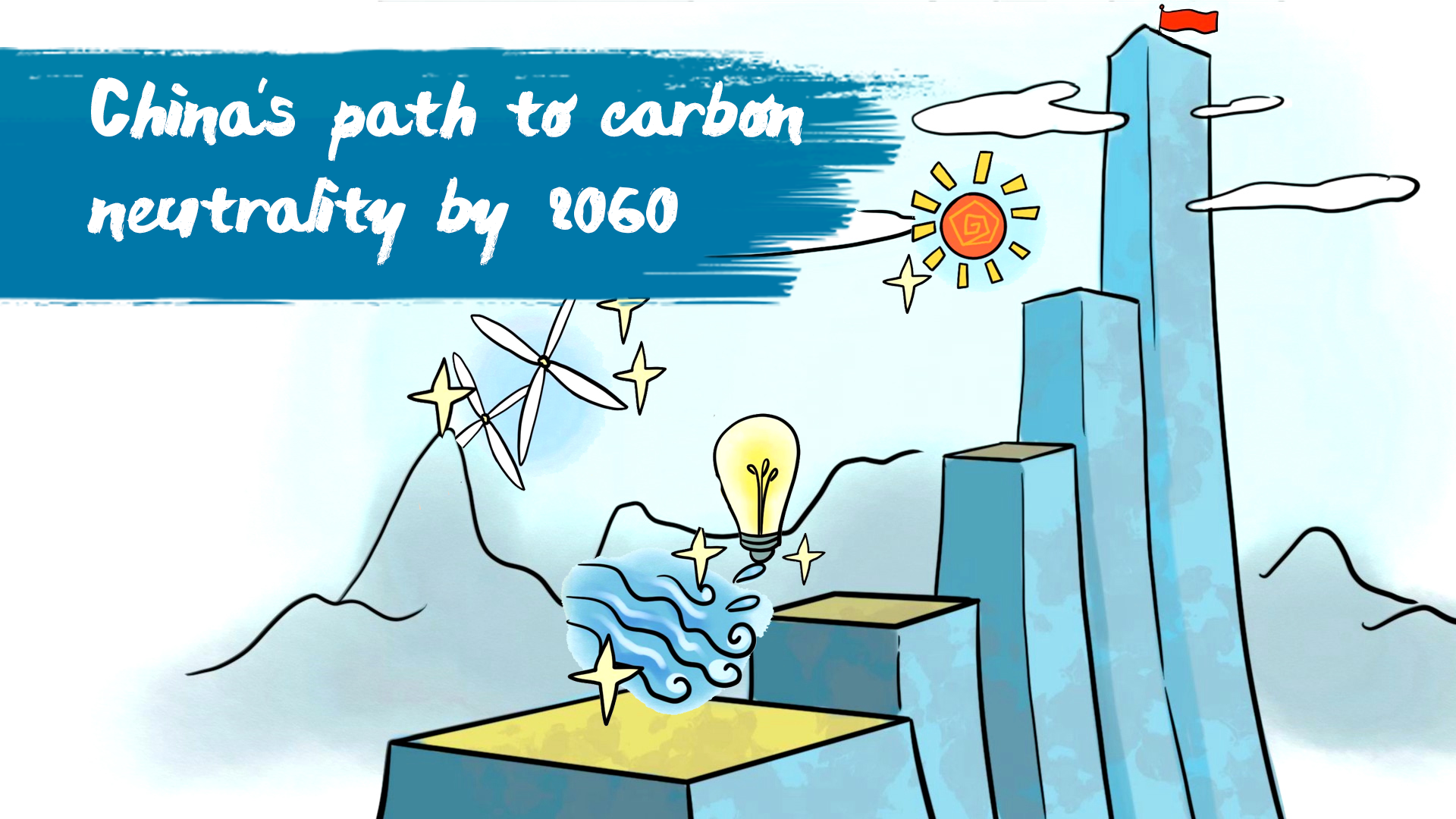
When China announced it would work towards achieving carbon neutrality by 2060, many saw it as nothing short of earth-shattering in the global fight against climate change.
Why?
China is the world’s largest emitter of carbon dioxide – a potent greenhouse gas – accounting for 28 percent of the world’s total output every year. In 2019, China’s emissions surpassed those of the U.S., Europe and Japan combined. Despite China’s per capita emissions being less than half of the U.S.’, a significant part of the global fight against climate change still hinges on China’s actions.
Then, can China achieve its ambitious goal?
This surely won’t be an easy task.
There is no denying that China has made significant strides in recent years in its low-carbon transition, by deploying renewable energy on a massive scale, among other measures.
As of 2019, China’s installed solar and wind power capacities accounted for a third of the world’s respective totals. It is currently constructing more power plants than any other country in the world. The country is also the world’s largest manufacturer and seller of electric cars and buses.
But the picture is not all rosy. Fossil fuels, which produce large amounts of carbon dioxide still make up 85 percent of China’s energy consumption. Coal, a major fossil fuel, alone accounts for 60 percent of China’s energy consumption while the global average is around 30 percent.
This means that for China to meet its momentous 2060 goal, it will have to significantly double down on its ongoing de-carbonization efforts.
But how?
The emissions of China’s carbon dioxide can be traced to five main sectors: energy, manufacturing, transportation, agriculture and construction.
Its energy and manufacturing sectors are leading sources of its carbon emissions. The country will have to dramatically increase its use of renewable energy over the next decades, transforming its current energy structure.
This should not only be applied to the energy sector that generates electricity, but also to others, such as the transportation sector where electric vehicles should replace those powered by traditional energy.
At the same time, technology will have to play an essential part in the process with roles ranging from improving energy efficiency, reducing or even removing greenhouse gases emissions in various sectors, to changing where carbon dioxide is emitted.
For example, carbon capture and storage techniques are receiving increased attention in the energy and manufacturing sectors. Their deployment means wasted carbon dioxide can be captured and later released where it does not enter the atmosphere.
All these transformations will require the government to implement policies that can incentivize individuals and businesses to reduce their own carbon footprint. Meanwhile, capital also needs to be injected to make changes possible. According to an estimate by Boston Consulting Group, China would need 90 to 100 trillion yuan in investment between now and 2050 to support its carbon neutrality agenda.
China’s path to realizing its 2060 carbon neutrality goal will not be an easy ride. However, this long-term goal is an indication of China’s great commitment to a green transition. Although the goal is 40 years down the road, the efforts need to begin today.
Scriptwriter: Xu Sicong
Managing editor: Xu Sicong
Senior producer: Wei Wei
Managing director: Mei Yan
(If you want to contribute and have specific expertise, please contact us at opinions@cgtn.com.)



Foreign news
Pakistan Moves to Deepen Diplomatic, Economic Relations With Nigeria
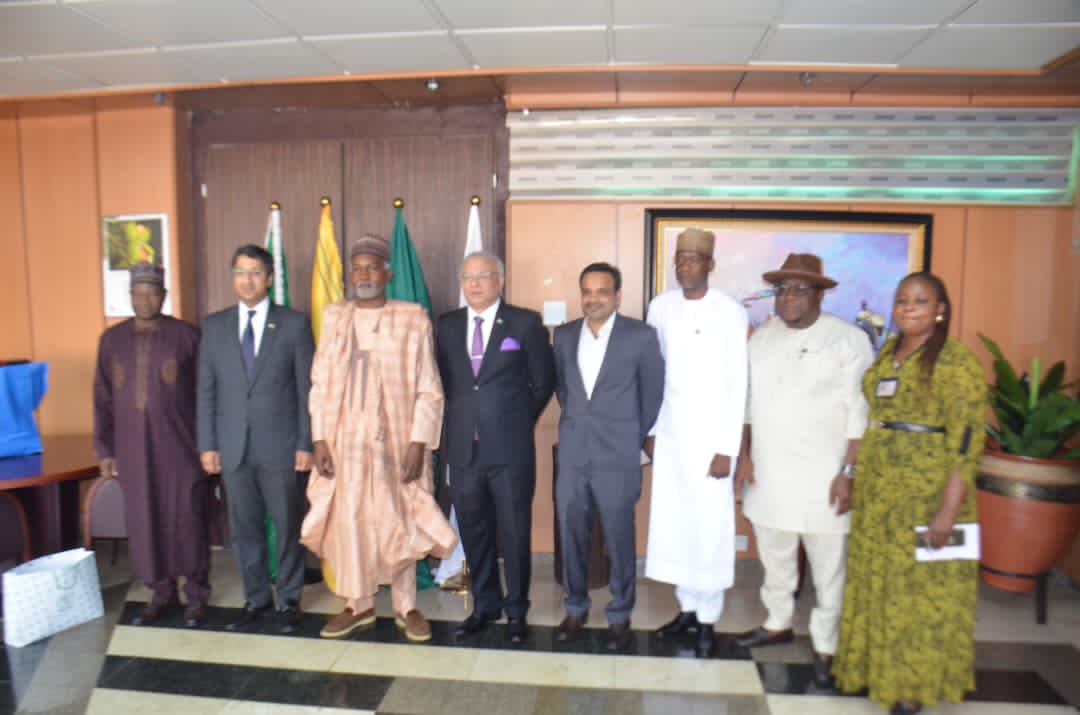
The Government of the Islamic Republic of Pakistan has called for deeper diplomatic and economic ties with the Nigerian government to foster development for both countries.
Mr Rana Ihsaan, the Coordinator to the Prime Minister of Pakistan made the call in an interview with the News Agency of Nigeria (NAN) during his working vist to Nigeria on Wednesday in Abuja.
NAN reports that the visiting Coordinator held a closed-door meeting with Yusuf Tuggar, the Minister of Foreign Affairs.
After the meeting, he said that both both sides had agreed on deepening relations in the areas of trade and commerce, among others.
Ihsaan said that both countries must see the need to accelerate efforts towards a Bilateral Trade Agreement (BTA).
He said that Pakistan had already submitted a draft BTA and was awaiting Nigeria’s response.
According to him, discussions centered on easing visa processes, expanding educational exchanges, and strengthening Cooperation in sectors such as Minerals, Youth training, and Defence were highlighted.
Ihsaan said that Pakistan had already implemented visa-on-arrival for Nigerians at no cost, and urged Nigeria to reciprocate to enhance people-to-people ties.
He stressed the importance of high-level engagements between both nations, describing Nigeria and Pakistan as very similar countries with large populations, youthful demographics, and vast economic potentials.
“Deeper collaboration will unlock opportunities in trade, education and investment, while further solidifying long-standing diplomatic relations,” he said.
He said that aside from visiting the foriegn Minister and other top government officials in Nigeria, he was also in the country to attend the on-going West Africa Beauty Exhibition holding in Lagos.
He described the exhibition as one of the continent’s largest cosmetic fairs, adding that he led a delegation of 19 Pakistani business people exploring Nigeria’s estimated 10 million dollar beauty and cosmetics market.
Ihsaan said that Nigeria was a gateway to Africa, adding that Pakistani products, like cosmetics, Textiles, Pharmaceuticals, Food items and Sports goods were already gaining traction in the country.
He encouraged Pakistani exhibitors to establish offices, Warehouses and logistics partnerships to strengthen their foothold in the Nigerian market.
Ihsaan further addressed concerns from Nigerian businesses on the ease of doing business in Pakistan.
He said that the Trade Development Authority of Pakistan had been supporting Nigerian participants at major exhibitions to achieve the ease of doing business.
“The Special Investment Facilitation Council (SIFC) serves as a one-stop platform for Nigerians interested in investing in Pakistan,” he said
Culled from NAN
-
 Featured6 years ago
Lampard Names New Chelsea Manager
-
 Featured6 years ago
FG To Extends Lockdown In FCT, Lagos Ogun states For 7days
-
 Featured6 years ago
Children Custody: Court Adjourns Mike Ezuruonye, Wife’s Case To April 7
-
 Featured6 years ago
NYSC Dismisses Report Of DG’s Plan To Islamize Benue Orientation Camp
-

 Featured4 years ago
Transfer Saga: How Mikel Obi Refused to compensate me After I Linked Him Worth $4m Deal In Kuwait SC – Okafor
-
Sports3 years ago
TINUBU LAMBAST DELE MOMODU
-

 News11 months ago
Zulu to Super Eagles B team, President Tinubu is happy with you
-
Featured6 years ago
Board urges FG to establish one-stop rehabilitation centres in 6 geopolitical zones