
Featured
Corps Member Leads War Against Open Defecation, Donates Toilets Facility to Dakwa Community
…1,000 women to enjoy free genotyping and blood grouping
Joel Ajayi
While others are using their allowees to purchase unnecessary things, a kindhearted Youth Corps Member, Dr. Vincent Emmanuel Chidera, has decided to use his own to ameliorate the suffering of people by donating a 4-unit toilet facility to the Dakwa community in Dei-Dei, in the Federal Capital Territory.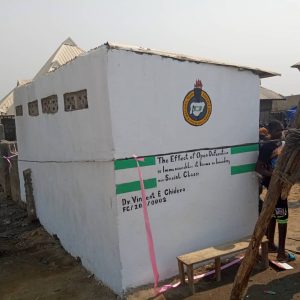
The facility will no doubt help more than 60 Almajiri children who resorted to open defecation because of lack of adequate toilet facilities.
Not only that, in partnership with Dr. Chidera’s Place of Primary Assignment, 1000 women of reproductive age group 15-49 in the communities will enjoy free genotyping and blood grouping.
Dr. Chidera is from the South-East, born and bred in the North, schooled in the South, and currently serving at the EL-HUSSAN Specialist Hospital in Dei-Dei in Abuja.
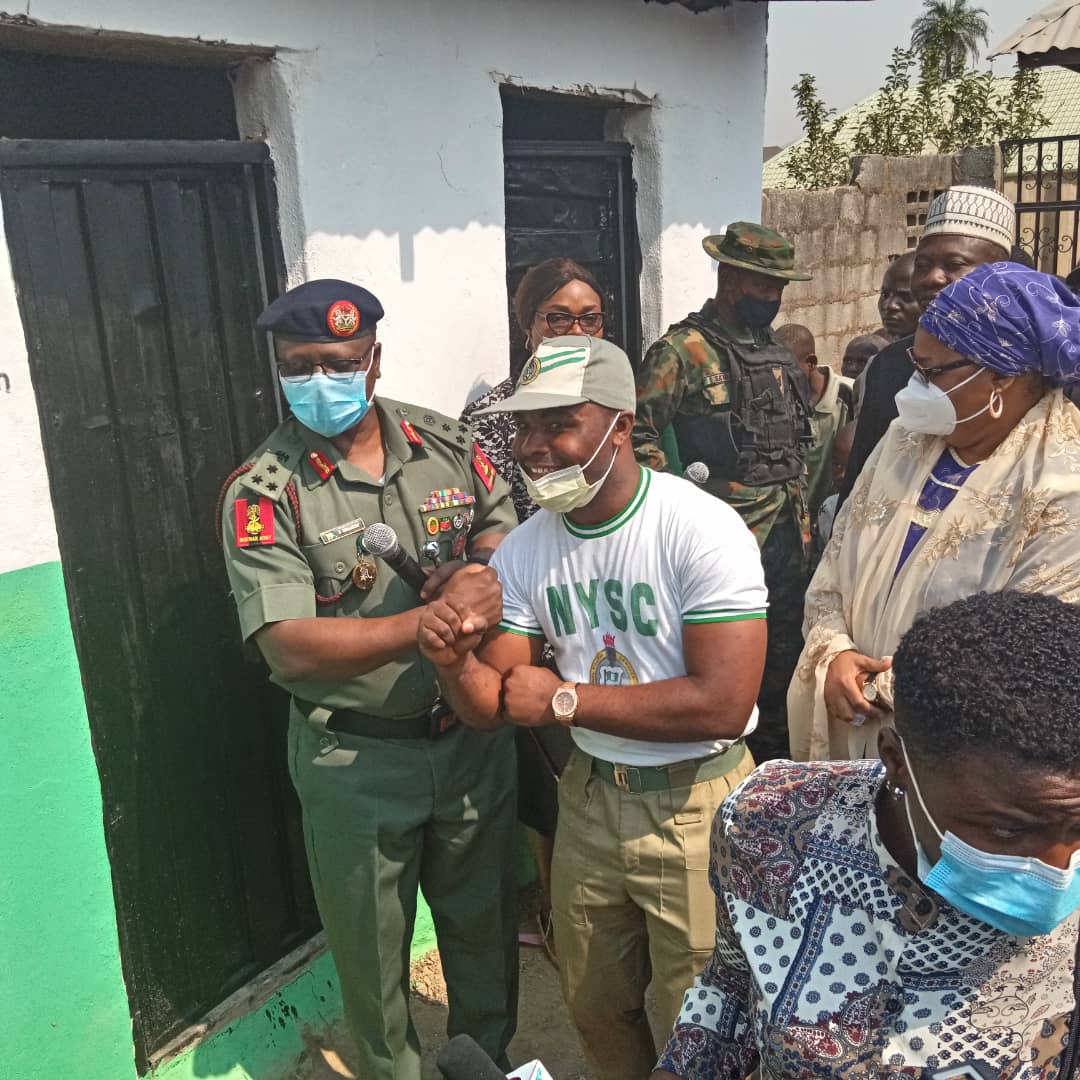
However, the commissioning of the Community Development Service Project of Dr. Chidera attracted the attention of NYSC Headquarter and the FCT chapter as they were all physically present to grace the occasion.
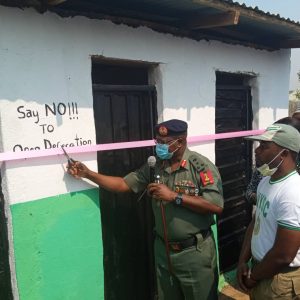
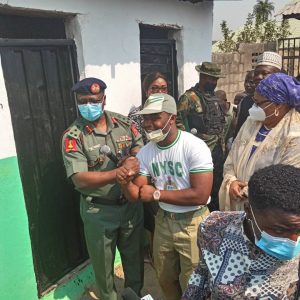
While commissioning the project, the National Youth Service Corps NYSC, Director General, Brig. Gen Shuaibu Ibrahim applauded the young man for the laudable initiative, he then called on all the corps members to borrow a leaf from the character of Dr. Chidera by making themselves relevant in their community development toward the growth and development of their father’s land.
NYSC Boss said that the construction of the toilet was timely as it would help to prevent so many airborne diseases, more so as Coronavirus ravaged the world.
He said; “During the beginning of COVID-19 pandemic, we have to suspend our mobilization but corps members were mobilized nationwide to contribute to the fight and when the history of those corps members who fought and still fighting Pandemic Dr. Chidera will be mention because he contributes immensely; he produces face mask anytime you need corps members in FCT is always there.
“So, when I was invited to commissioning of this project, I have to spare time to come because it’s not just the magnitude of this structure but the spirit behind it.
“I want to call on all the corps members to borrow a leaf from the character of Dr. Chidera to add value to those communities. NYSC always provides a platform to corps members and for those of them that are very serious and make maximum use of the opportunities the sky is always their limit. I once again congratulate Dr. Chidera and I wish you the best in life.”
He thanked the community forgiven the corps members an enabling environment for them to provide the project.

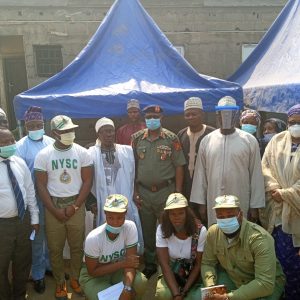
In her welcome address, NYSC FCT Coordinator Hajia Wlida Siddique Isa commended the donor adding that the project will further reduce open defecation in the community.
According to her, this brief even is in furtherance of our commitment to providing solution to societal issues and contributing our quota to community and national development
“We sincerely hope that this facility will go a long way in reducing the impact of open defecation within the Dakwa community and her offspring. I, therefore, enjoin the leaders and of course the youths of this community to ensure that this facility is properly and fully secured.”
Speaking at the venue, Dr. Chidera, a 2020 Batch A corps member, who provided the facility said that there was the need for other well-meaning Nigerians to come to the aid of the community in providing other facilities that would give the community a facelift.
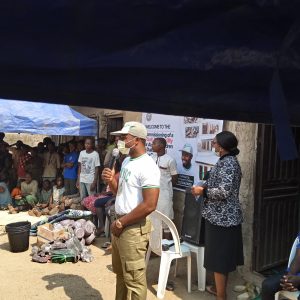
A kindhearted Youth Corps Member, Dr. Vincent Emmanuel Chidera Giving Brief of the Project.
According to him, I decided to solve the problems by building the toilet.
“My posting to serve in this community came with a great delight, and I had set my heart to touch as many lives as I could; the pandemic and stringent economic difficulties, notwithstanding. Few weeks into my posting, I had noticed a trend, which to me, was of epidemiological significance; A good number of all the under-5 children which I managed, presented with a similar set of GI symptoms and were weighing below the expected weight for their age and sex.
“This observation prompted the epidemiological survey that landed me in this compound the very first time I came here. I had seen over five other similar settlements around the community, where Almajiri children are housed but without a convenience.
“I was particularly drawn to this very one because of the population density; having 65 children between the ages of 5- 18, clustered in a 3- room 12x 12 apartments, without a convenience, was nothing less than suicide, so I thought.
“So, I decided that something urgent must be done before the next rainy season. Though the prevailing economic situation made things extremely difficult, but I’m glad, with the support of the children, we were able to put together, something a little more convenient than our gutters.
“Finally, 5 months ago, we had admitted and managed a 16year old Sickle Cell Disease patient, who was weighing less than 10kg and was in severe pains, pains which she had innocently suffered for over a decade because her parents were either unaware or choose to throw the knowledge to the abyss. After an interaction with over 50 patients, I realized, a good number of them knew what genotype was, but has never had one done.
“In partnership with my Place of Primary Assignment, we decided to run a free genotyping and blood grouping program for 1000 persons in the community over a period of two months. That project was completed successfully, but the result was mind-boggling. Almost 30% of the Sample population had the Sickle Cell Trait. By implication, 1 out of every 4 women in Dakwa, had the Sickle Cell trait and must not marry a man with the trait. These are pressing societal issues that must be given attention.”
While giving the vote of thanks, the Village Head of Dakwa community Alhaji Yahaya Ajiya, called on stakeholders to come into the community to upgrade the educational standard that will help the community at large.



Featured
Strategic Partnerships, Diaspora Investment and Improved Workforce Critical to Industrialization-DG RMRDC
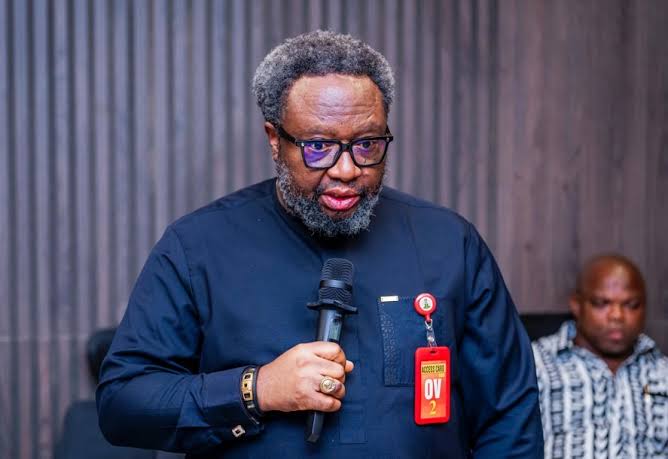
By: Stella Azi and Adaora Adibe
The Director-General/Chief Executive Officer of the Raw Materials Research and Development Council (RMRDC), Prof. Nnanyelugo Ike-Muonso, has called for a strategic shift from the exportation of raw commodities to domestic processing, manufacturing and value addition, declaring that Nigeria possesses enormous untapped raw material resources capable of driving industrialisation, creating jobs and strengthening the country’s economic competitiveness.
Prof. Ike-Muonso made this submission in a lecture titled Unlocking Nigeria’s Raw Material Value Chain for Industrialization, Manufacturing and Competitiveness, where he presented an extensive assessment of Nigeria’s resource endowments, industrial challenges and emerging investment opportunities across agricultural commodities, solid minerals and waste-based raw materials.
The lecture highlighted a combined US$2.65 trillion global market opportunity across 30 major raw material value chains, comprising 12 agricultural value chains valued at US$932 billion, 11 mineral value chains worth US$1.352 trillion and seven circular-economy value chains estimated at US$366 billion.
According to the RMRDC Boss, Nigeria must move beyond the traditional approach of extracting and exporting raw materials to building competitive domestic industries that transform these resources into intermediate products, industrial inputs and finished goods for local consumption and international markets.
He observed that the country’s manufacturing sector has struggled to sustain its 2014 peak, with its contribution to real Gross Domestic Product declining from 9.64 per cent in 2014 to 8.05 per cent in 2025, representing a 16.5 per cent decline. He also drew attention to the increasing cost of raw material imports, which rose to US$20.5 billion in 2025, approximately six times the 2020 level.
He explained that the growing dependence on imported industrial inputs exposes Nigerian manufacturers to foreign exchange volatility, increases production costs and weakens the competitiveness of locally manufactured products.
Prof. ke-Muonso stressed that the solution lies in developing domestic raw material value chains through deliberate investment in processing facilities, research and development, technology, infrastructure and stronger linkages between producers, processors and manufacturers.
He identified agriculture, solid minerals and industrial waste as three major resource platforms for Nigeria’s industrial transformation, stating the country’s significant production capacity and the enormous opportunities available for downstream processing.
Ike-Muonso noted that Nigeria produces over 63 million metric tonnes of cassava annually, making it the world’s largest producer, while also maintaining strong positions in cocoa, cashew, sesame, palm oil and cotton. However, more than 80 per cent of agricultural output leaves farms without adequate processing, resulting in the loss of significant economic value and industrial opportunities.
In the solid minerals sector, he identified more than 44 commercially viable minerals across over 500 locations, including lithium, gold, barite, bitumen, iron ore and high-grade limestone, describing them as strategic resources capable of supporting steel production, energy storage, electrification and advanced manufacturing.
The DG further drew attention to Nigeria’s industrial and agro-waste resources, noting that the country generates over 32 million tonnes of solid waste annually. He explained that agricultural residues, cassava peels, scrap metals, plastics and electronic waste could serve as important feedstock for bio-fertilisers, industrial chemicals, recycled polymers, energy production and other manufacturing applications.
In the agricultural sector, the DG identified cassava and industrial starch, cotton and natural textiles, natural rubber and elastomers, oil palm and oleochemicals, maize derivatives and cocoa processing as priority areas requiring increased investment.
He explained that processing agricultural commodities into industrial starch, sweeteners, textiles, technical rubber, specialty fats and other intermediate products would enable Nigeria to capture more value from its agricultural resources while reducing dependence on imported industrial inputs.
For the minerals sector, he highlighted crude oil-to-olefins and petrochemicals, lithium and energy storage, iron ore and steel, rare earth elements, bauxite and aluminium, and copper and electrification as strategic investment opportunities.
He particularly emphasised the importance of moving beyond mineral extraction into beneficiation, refining, battery precursors, industrial chemicals, metal fabrication and advanced materials production.
On the circular economy, Prof. Ike-Muonso identified electronic waste recovery, scrap metal recycling, plastic waste processing, agro-waste valorisation and battery recycling as emerging industrial opportunities.
He explained that transforming waste into productive industrial feedstock would not only reduce environmental pollution but also create new manufacturing industries, generate employment and reduce the importation of valuable industrial materials.
He noted that to address the structural challenges confronting raw material-based industrialisation, the DG highlighted the strategic interventions of the RMRDC, particularly the proposed 30% Value Addition Bill and the Nigeria Integrated Information Statistical System for Raw Materials and Products (NISSRAMP).
He described the 30% Value Addition Bill as an important policy instrument designed to encourage domestic processing of raw materials before export, strengthen local manufacturing capacity and guarantee access to essential raw materials for Nigerian industries, and NISSRAMP as a critical data infrastructure that would improve access to verified information on the availability, location and quality of raw materials.
According to him, the combination of appropriate policy instruments and reliable resource data would help de-risk investments, improve transparency and strengthen confidence in Nigeria’s raw material sector.
He emphasised the importance of collaboration among government, academia and industry in developing bankable projects, sharing investment risks and accelerating the establishment of processing and manufacturing facilities.
Professor Ike-Muonso called on Nigerians in the diaspora and other local and international investors to take advantage of the opportunities available in Nigeria’s raw material sector.
He identified industrial processing parks, mineral beneficiation and refining, agro-industrial platforms, circular-material processing, industrial input manufacturing and enabling infrastructure as viable investment platforms.
He noted that diaspora investors could contribute beyond financial capital by bringing technology, international business networks, governance standards, technical expertise and access to global markets.
He maintained that Nigeria’s industrial transformation requires coordinated investment across the entire value chain, from raw material sourcing and aggregation to processing, manufacturing, certification and export development.
Professor Ike-Muonso stressed that the country’s industrial future would depend not merely on the volume of raw materials extracted but on the capacity to transform them into competitive products that meet domestic and international market requirements.
He maintained that developing local value chains would stimulate industrial growth, create employment opportunities, diversify exports, conserve foreign exchange and deepen Nigeria’s technological capabilities.
Through its strategic interventions, the RMRDC is positioning itself as a critical bridge between resource availability, investment opportunities and industrial competitiveness, with the ultimate objective of transforming Nigeria from a predominantly raw material exporting economy into a strong manufacturing and value-adding nation.
Ike-Muonso has demonstrated this since assumption of office as the Director General/ CEO RMRDC in the area of capacity building, improved working conditions, promotion of merit, and maintaining a conducive environment that rewards excellence, innovation and dedication. This is evident in his institution of RMRDC training school, reward for winners of the RMRDC innovation challenge among others.
His commitment has brought recognition both nationally and internationally: Al-Jazirah double honour awards as Public Servant /Government Agency of the year 2024-2025 and the recent election as the Sub-Saharan Africa Regional Representative on the Board of the World Association of Industrial and Technological Research Organisations (WAITRO) is a attestation to his commitment.
Concluding the lecture, the DG charged staff, researchers, manufacturers and investors to see themselves as nation builders in the new era of raw materials-led industrialization.
-
 Featured7 years ago
Lampard Names New Chelsea Manager
-
 Featured7 years ago
FG To Extends Lockdown In FCT, Lagos Ogun states For 7days
-
 Featured7 years ago
Children Custody: Court Adjourns Mike Ezuruonye, Wife’s Case To April 7
-
 Featured7 years ago
NYSC Dismisses Report Of DG’s Plan To Islamize Benue Orientation Camp
-

 Featured5 years ago
Transfer Saga: How Mikel Obi Refused to compensate me After I Linked Him Worth $4m Deal In Kuwait SC – Okafor
-
Featured7 years ago
Board urges FG to establish one-stop rehabilitation centres in 6 geopolitical zones
-
Sports4 years ago
TINUBU LAMBAST DELE MOMODU
-

 News2 years ago
Zulu to Super Eagles B team, President Tinubu is happy with you













