
Opinion
DELTA NORTH 2027: : Why Victor Ochei’s Legislative Record and Institution-Building Philosophy Stand Out

There is a fundamental difference between giving people things and giving people opportunities.
That difference defines the political philosophy Rt. Hon. Victor Ochei brings to the 2027 Delta North senatorial contest.
For Ochei, empowerment cannot permanently be reduced to motorcycles, tricycles, sewing machines and other handouts distributed to selected beneficiaries. Such interventions may provide temporary relief, but sustainable empowerment demands something more enduring: strong institutions, quality education, productive skills, economic opportunities and an environment where citizens can prosper without depending on political patrons.
His twelve years representing Aniocha North in the Delta State House of Assembly offer a record against which that philosophy can be measured.
Long before his present senatorial aspiration, Ochei demonstrated an understanding that a legislator must do more than make speeches. He deployed legislative influence and constituency representation to attract development interventions, particularly in education and public infrastructure.
Across communities including Issele-Uku, Onicha-Olona, Onicha-Ugbo, Issele-Mkpitime, Issele-Azagba, Obior, Onicha-Uku, Obomkpa, Idumuje-Unor, Idumuje-Ugboko and Ukwu-Nzu, records from his period in office identify interventions involving classroom blocks, science laboratories, administrative buildings, school renovations, educational materials and other facilities.
Roads, streetlights, healthcare facilities and other public infrastructure also formed part of the constituency interventions attributed to his legislative influence.
The significance is not merely the number of projects.
It is the philosophy behind them.
A functioning school can produce doctors, engineers, teachers, entrepreneurs and future leaders.
A LEGISLATOR WHO UNDERSTANDS THE LEGISLATURE
Ochei entered the Delta State House of Assembly in 2003, served three consecutive terms and emerged Speaker in 2011.
That experience matters because the Senate is first and foremost a legislative institution.
The senator Delta North elects in 2027 will be expected to make laws, scrutinise public policy, perform oversight, advocate for the district and deploy legislative influence in pursuit of development.
Ochei has travelled that road before.
As Speaker, he led a legislature that asserted its constitutional responsibilities and pursued legislation intended to address societal problems.
His argument for 2027 therefore goes beyond political ambition. It raises a fundamental question:
Should Delta North judge its next senator by the number of political offices previously occupied—or by an understanding of the actual job a senator is elected to perform?
Political longevity is not automatically legislative superiority.
Repeatedly holding public office is not, by itself, a development philosophy.
FROM HANDOUTS TO HUMAN CAPITAL
Ochei’s proposition is straightforward:
Build good schools.
Strengthen institutions.
Develop human capital.
Create economic opportunities.
Make laws that protect citizens and expand opportunity.
And build a society where the child of an ordinary family can rise without first finding a political godfather.
His philosophy is not simply, “Look at what I gave you.”
It is: “Let us build what will enable you to succeed for yourself.”
That distinction could become one of the defining arguments of the Delta North contest.
The district has experienced politics built around powerful personalities for decades. The next political era should be about strong institutions and empowered citizens.
Ultimately, 2027 should not become a contest over who possesses the longest political résumé.
It should be a contest of ideas, records and competing visions for Delta North.
And it is on that ground that Victor Ochei enters the 2027 conversation with a compelling proposition:
Move Delta North from the politics of handouts to the politics of opportunity; from dep



Opinion
China-Africa Cooperation: Tackling Insecurity Through Development
Lt. Gen. Abdulrahman B. Dambazau (rtd), PhD, CFR, Ambassador of the Federal Republic of Nigeria to the People’s Republic of China.
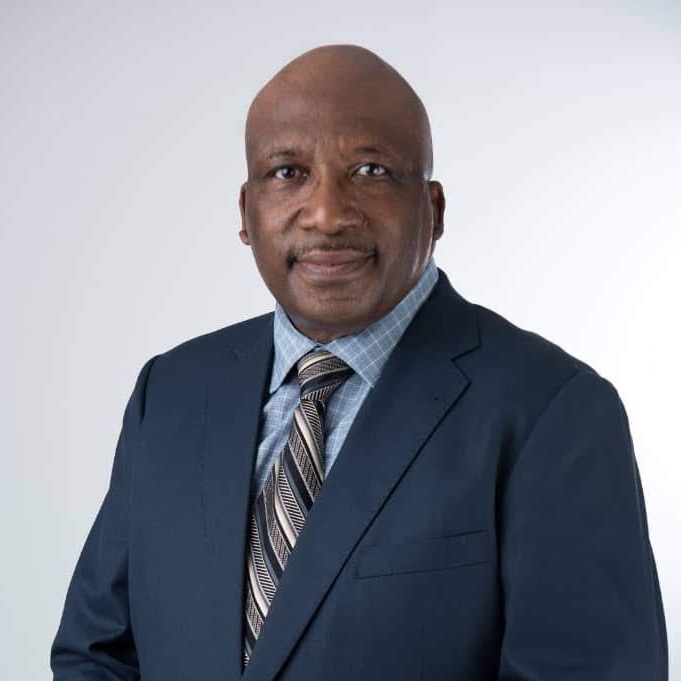
By Lt. Gen. Abdulrahman B. Dambazau (rtd), PhD, CFR
A farmer who cannot safely reach his land, a child whose school has closed because of violence, and a young graduate unable to find productive employment experience insecurity in different ways.
Their circumstances reveal a common challenge: lasting peace requires protection from violence and the opportunity to live with dignity. This connection should occupy a central place in China–Africa cooperation.
My experience in military leadership, internal security and diplomacy has reinforced my conviction that security operations must form part of a broader national effort. Armed forces and law enforcement agencies have indispensable responsibilities to protect communities, confront violent groups and uphold the law.
The gains they secure become durable when legitimate institutions, functioning services and economic opportunities take root.
Development is therefore a strategic component of security. Where communities can farm, trade, learn and obtain justice, they have stronger foundations for resisting the pressures that sustain violence.
Poverty does not automatically produce terrorism or criminality. Millions endure hardship without turning to violence. Insecurity also arises from political exclusion, contested resources, extremist ideologies, organised crime and institutional weakness. Nevertheless, prolonged deprivation and a lack of credible opportunities can create vulnerabilities that violent actors exploit.
Effective policy must address both those actors and the conditions that enable their influence.
China–Africa cooperation offers a framework for advancing this approach. The Forum on China–Africa Cooperation’s Beijing Action Plan for 2025–2027 brings peace and security into the same programme as industrialisation, agriculture, infrastructure, education, public health and green development. Its significance lies in the opportunity to connect these fields through practical implementation.
China’s development experience provides useful lessons. A joint study by the World Bank and Chinese institutions reported in 2022 that, over the preceding four decades, the number of people in China living below the international extreme-poverty line then in use had fallen by close to 800 million.
The study emphasised economic transformation alongside targeted poverty reduction measures. African countries can examine how agricultural productivity, infrastructure, education and employment expanded opportunity, while adapting relevant lessons to their own circumstances.
Africa’s countries have distinct histories, political systems and development priorities. Cooperation will achieve more when African governments define their needs clearly and negotiate partnerships that strengthen domestic capabilities. African ownership must guide project selection, implementation and assessment.
Agriculture should be an immediate priority. In communities affected by insecurity, restoring farming and rural commerce can support recovery and stability. Cooperation in irrigation, improved seeds, machinery, storage, processing and extension services can raise productivity and strengthen livelihoods. Investment should be accompanied by secure access to land, fair arrangements for managing water and grazing resources, and credible mechanisms for resolving disputes.
A processing facility has greater value when farmers can reach it safely, receive fair payment and access wider markets. Communities emerging from violence also need assistance that enables displaced families to return voluntarily, safely and with dignity, and rebuild sustainable livelihoods. Development planning and security planning must meet at this practical level.
Reliable electricity and productive industry are equally important. Power supply enables workshops, factories, health facilities and digital enterprises to function. Industrial cooperation should create opportunities for African workers, suppliers and entrepreneurs, with clear provisions for skills transfer and the maintenance of equipment and facilities.
Young people need realistic pathways from education to work. Technical training should connect to actual demand in manufacturing, construction, agriculture, logistics and technology. Programmes should be assessed by the capabilities and employment they produce. Partnerships between training institutions and employers can help ensure that qualifications lead to productive work.
Infrastructure must be judged by the economic activity and public services it enables. A railway, road or port can support national integration and trade, but its wider benefits depend on connections to local production and affordable access. Project planning must account for maintenance, environmental protection, community interests and financial sustainability. Financing arrangements should be transparent, with repayment obligations assessed against realistic economic returns and public resources.
Education and health deserve the same strategic attention.
Schools help communities recover continuity and hope after disruption. Accessible healthcare reduces household vulnerability and strengthens confidence in public institutions. Cooperation among universities, research centres, hospitals and technical colleges can build the expertise African countries need to sustain these services.
Women must participate fully in this work. Their livelihoods, access to services and involvement in local decision-making matter to household resilience and community recovery. Programmes designed without their participation risk overlooking essential needs and sources of knowledge.
Development cannot compensate for injustice. Communities require fair policing, accessible courts, accountable administration and protection from abuse. A school or clinic will contribute more to lasting stability where citizens also trust public institutions to treat them fairly. Economic investment and institutional reform should proceed together.
Security cooperation should reinforce these foundations. Professional training, peacekeeping capacity, maritime security, action against illicit arms and stronger responses to organised crime can help protect development gains.
Such cooperation should uphold national law, human rights and accountability. Its ultimate purpose must be the safety of people and the strengthening of legitimate institutions.
For Nigeria, the Comprehensive Strategic Partnership established during President Bola Ahmed Tinubu’s September 2024 visit to China provides a framework for pursuing these objectives. It offers an opportunity to connect bilateral cooperation more closely with Nigeria’s priorities for economic transformation and national security.
The next task is disciplined implementation. Every major commitment should have an identified responsible institution, a financing arrangement, a timetable and measurable outcomes. Proposed projects, signed agreements, funds disbursed and completed investments represent different stages of progress. Public reporting should make those distinctions clear.
We should ask practical questions. Has an agricultural project improved farmers’ incomes? Has an industrial investment created sustainable employment and developed local suppliers? Has training transferred skills that institutions can retain? Have communities affected by conflict gained safer access to schools, healthcare and markets?
These questions should guide the assessment of cooperation. They also require African governments to fulfil their own responsibilities: coordinating institutions, protecting public resources, maintaining infrastructure and ensuring that investment benefits communities fairly. Regional cooperation is essential where trade routes, shared resources and security threats cross national borders.
China–Africa cooperation can contribute substantially to peace when development expands opportunity, institutions earn public trust and security agencies protect citizens effectively. Its lasting achievement should be visible in ordinary lives: farmers returning safely to their fields, young people securing worthwhile work and children remaining in school. These are the foundations on which a more secure Africa can be built.
_Abdulrahman B. Dambazau is a retired Lieutenant General, former Chief of Army Staff and former Minister of Interior. He is currently the Ambassador of the Federal Republic of Nigeria to the People’s Republic of China. He writes from Beijing, China._
-
 Featured7 years ago
Lampard Names New Chelsea Manager
-
 Featured7 years ago
FG To Extends Lockdown In FCT, Lagos Ogun states For 7days
-
 Featured7 years ago
Children Custody: Court Adjourns Mike Ezuruonye, Wife’s Case To April 7
-
 Featured7 years ago
NYSC Dismisses Report Of DG’s Plan To Islamize Benue Orientation Camp
-

 Featured5 years ago
Transfer Saga: How Mikel Obi Refused to compensate me After I Linked Him Worth $4m Deal In Kuwait SC – Okafor
-
Featured7 years ago
Board urges FG to establish one-stop rehabilitation centres in 6 geopolitical zones
-
Sports4 years ago
TINUBU LAMBAST DELE MOMODU
-

 News2 years ago
Zulu to Super Eagles B team, President Tinubu is happy with you













