
Featured
FG Pledges More Investment On Nigerians Youth, As New “DEEL” Initiative Launched
Joel Ajayi
Federal Government of Nigeria on Tuesday vowed to open more opportunity for Nigerians youth fo take a personal stake in their development which it will bring about sustainable development to the country at large.
To this end, the government has launched a digital revolution initiative called “DEEL” that will offer an unparalleled opportunity for the youth as well as position Nigeria’s youth population for contemporary challenges.

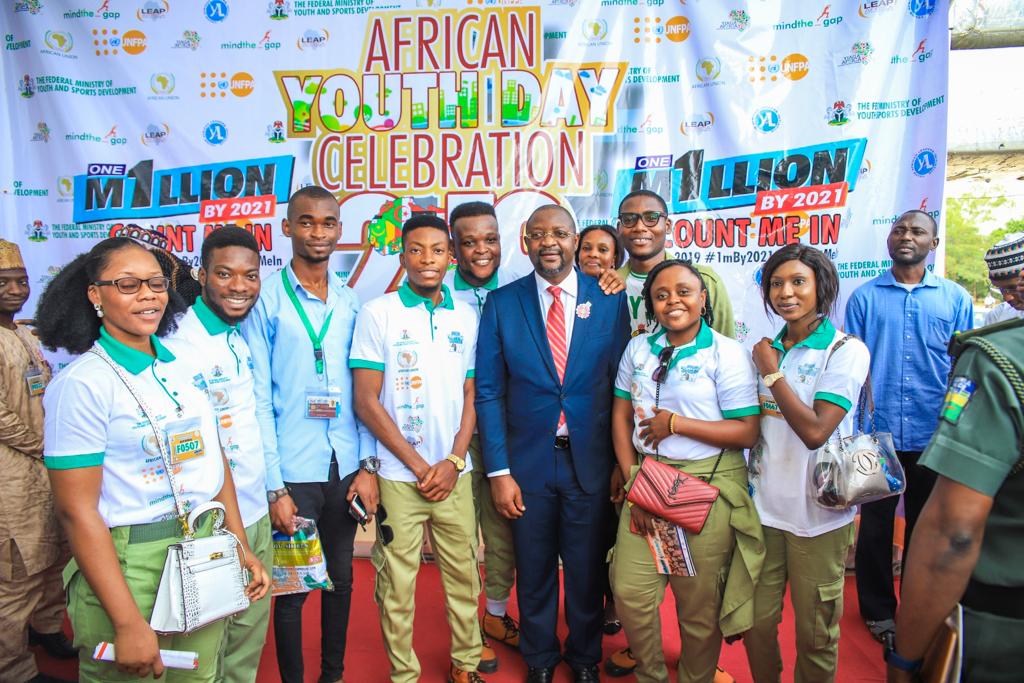
The Minister of Youth and Sports Mr. Sunday Dare gave this assurance in Abuja during the Launching of Pocket Size National Youth Policy/Africa Youth Month celebration with the theme: “One Million by 2021, Count me in”.
He expressed that In the next two years under DEEL the Ministry intends to equip about 200,000 Youth with digital skills- basic, intermediate and advanced skills in the areas of web design and management, software training, cloud computing, artificial intelligence, App development, mobile device repairs, Artificial intelligence, coding, and Data processing.
According to him, this is driven by the desire to mobilize at least one million young Africans towards having the chance to be among one million young Africans who will benefit from direct opportunities in the areas of Education, Employment, Entrepreneurship and Engagement (4Es).

“We at the Ministry will begin this process through one of our strategic implementation partners Junior Achievement Nigeria as soon as an agreement is delivered to leverage on their 64 digital hubs spread across the country. The Ministry will also activate its Youth Development Centers across the country for Entrepreneurship Skills training.
“Today, we begin the new DEEL process through the Work Experience Programme (WEP). It is intended to connect in the next one year 5,000 unemployed graduates with employers by placing them in the corporate world on internship capacities for a short period. We hope that through this window, they will acquire the basic work-place experience that will increase their chances of landing a job. I, therefore, call on all companies to sign up with us and offer the chance for our youth to smile.
“Next level belongs to the Nigerian youth. Mr. President has a new DEEL for the youth, and it starts today! This month offers a new vista of new beginnings; replete with exciting bouquets of offerings. Whether your interest is Digital Skills, Entrepreneurship, Employment or you are passionate about Leadership, governance, and inclusion, there is something for everyone in the new DEEL. The digital revolution offers an unparalleled opportunity to drive a new wave of international economic growth for countries that have hitherto not fully enjoyed the benefits of the global economy.
“This is where His Excellency, President Muhammadu Buhari’s new DEEL for Nigerian youth connects with the African Union’s theme. What is this new DEEL? D stands for Digital literacy and Skills Acquisition program. E stands for Entrepreneurship. E stands for Employment. L stands for leadership and mentoring. We at the Ministry do not seek to reinvent the wheel. Rather we are sharpening our tools for engaging the Youth towards ratcheting up the numbers of those taken out of unemployment to more profitable jobs. This initiative plugs into the N-Power and similar programs under the Social Investment Program targeted towards our Youth. They have been undoubtedly impactful.”
“We at the Ministry will begin this process through one of our strategic implementation partners Junior Achievement Nigeria as soon as an agreement is delivered to leverage on their 64 digital hubs spread across the country. The Ministry will also activate its Youth Development Centers across the country for Entrepreneurship Skills training.
“Today, we begin the new DEEL process through the Work Experience Programme (WEP). It is intended to connect in the next one year 5,000 unemployed graduates with employers by placing them in the corporate world on internship capacities for a short period. We hope that through this window, they will acquire the basic work-place experience that will increase their chances of landing a job. I, therefore, call on all companies to sign up with us and offer the chance for our youth to smile.

“I have the honor and privilege to launch the National Youth Policy Pocket size and present to the Nigerian youth, the National Youth Policy App and invite the Nigerian Youth to embrace the DEEL initiative.”
He promised that his ministry will address the challenge of maintaining the relationship and sustain the partnership that is driving the initiative by sustaining an ecosystem of State and non-state actors in each thematic area of the National Youth Policy, which will evolve into the National Youth Policy Implementation Network.
Also, About eight Ministries were at the occasion to key into the new DEEL for Nigerian youth.



Featured
Strategic Partnerships, Diaspora Investment and Improved Workforce Critical to Industrialization-DG RMRDC
By: Stella Azi and Adaora Adibe
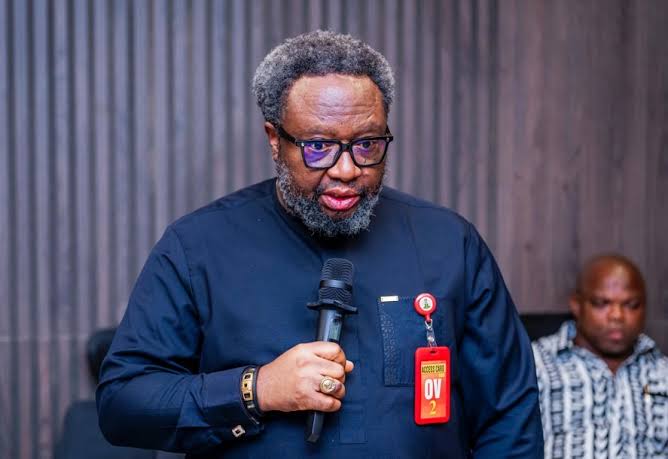
The Director-General/Chief Executive Officer of the Raw Materials Research and Development Council (RMRDC), Prof. Nnanyelugo Ike-Muonso, has called for a strategic shift from the exportation of raw commodities to domestic processing, manufacturing and value addition, declaring that Nigeria possesses enormous untapped raw material resources capable of driving industrialisation, creating jobs and strengthening the country’s economic competitiveness.
Prof. Ike-Muonso made this submission in a lecture titled Unlocking Nigeria’s Raw Material Value Chain for Industrialization, Manufacturing and Competitiveness, where he presented an extensive assessment of Nigeria’s resource endowments, industrial challenges and emerging investment opportunities across agricultural commodities, solid minerals and waste-based raw materials.
The lecture highlighted a combined US$2.65 trillion global market opportunity across 30 major raw material value chains, comprising 12 agricultural value chains valued at US$932 billion, 11 mineral value chains worth US$1.352 trillion and seven circular-economy value chains estimated at US$366 billion.
According to the RMRDC Boss, Nigeria must move beyond the traditional approach of extracting and exporting raw materials to building competitive domestic industries that transform these resources into intermediate products, industrial inputs and finished goods for local consumption and international markets.
He observed that the country’s manufacturing sector has struggled to sustain its 2014 peak, with its contribution to real Gross Domestic Product declining from 9.64 per cent in 2014 to 8.05 per cent in 2025, representing a 16.5 per cent decline. He also drew attention to the increasing cost of raw material imports, which rose to US$20.5 billion in 2025, approximately six times the 2020 level.
He explained that the growing dependence on imported industrial inputs exposes Nigerian manufacturers to foreign exchange volatility, increases production costs and weakens the competitiveness of locally manufactured products.
Prof. ke-Muonso stressed that the solution lies in developing domestic raw material value chains through deliberate investment in processing facilities, research and development, technology, infrastructure and stronger linkages between producers, processors and manufacturers.
He identified agriculture, solid minerals and industrial waste as three major resource platforms for Nigeria’s industrial transformation, stating the country’s significant production capacity and the enormous opportunities available for downstream processing.
Ike-Muonso noted that Nigeria produces over 63 million metric tonnes of cassava annually, making it the world’s largest producer, while also maintaining strong positions in cocoa, cashew, sesame, palm oil and cotton. However, more than 80 per cent of agricultural output leaves farms without adequate processing, resulting in the loss of significant economic value and industrial opportunities.
In the solid minerals sector, he identified more than 44 commercially viable minerals across over 500 locations, including lithium, gold, barite, bitumen, iron ore and high-grade limestone, describing them as strategic resources capable of supporting steel production, energy storage, electrification and advanced manufacturing.
The DG further drew attention to Nigeria’s industrial and agro-waste resources, noting that the country generates over 32 million tonnes of solid waste annually. He explained that agricultural residues, cassava peels, scrap metals, plastics and electronic waste could serve as important feedstock for bio-fertilisers, industrial chemicals, recycled polymers, energy production and other manufacturing applications.
In the agricultural sector, the DG identified cassava and industrial starch, cotton and natural textiles, natural rubber and elastomers, oil palm and oleochemicals, maize derivatives and cocoa processing as priority areas requiring increased investment.
He explained that processing agricultural commodities into industrial starch, sweeteners, textiles, technical rubber, specialty fats and other intermediate products would enable Nigeria to capture more value from its agricultural resources while reducing dependence on imported industrial inputs.
For the minerals sector, he highlighted crude oil-to-olefins and petrochemicals, lithium and energy storage, iron ore and steel, rare earth elements, bauxite and aluminium, and copper and electrification as strategic investment opportunities.
He particularly emphasised the importance of moving beyond mineral extraction into beneficiation, refining, battery precursors, industrial chemicals, metal fabrication and advanced materials production.
On the circular economy, Prof. Ike-Muonso identified electronic waste recovery, scrap metal recycling, plastic waste processing, agro-waste valorisation and battery recycling as emerging industrial opportunities.
He explained that transforming waste into productive industrial feedstock would not only reduce environmental pollution but also create new manufacturing industries, generate employment and reduce the importation of valuable industrial materials.
He noted that to address the structural challenges confronting raw material-based industrialisation, the DG highlighted the strategic interventions of the RMRDC, particularly the proposed 30% Value Addition Bill and the Nigeria Integrated Information Statistical System for Raw Materials and Products (NISSRAMP).
He described the 30% Value Addition Bill as an important policy instrument designed to encourage domestic processing of raw materials before export, strengthen local manufacturing capacity and guarantee access to essential raw materials for Nigerian industries, and NISSRAMP as a critical data infrastructure that would improve access to verified information on the availability, location and quality of raw materials.
According to him, the combination of appropriate policy instruments and reliable resource data would help de-risk investments, improve transparency and strengthen confidence in Nigeria’s raw material sector.
He emphasised the importance of collaboration among government, academia and industry in developing bankable projects, sharing investment risks and accelerating the establishment of processing and manufacturing facilities.
Professor Ike-Muonso called on Nigerians in the diaspora and other local and international investors to take advantage of the opportunities available in Nigeria’s raw material sector.
He identified industrial processing parks, mineral beneficiation and refining, agro-industrial platforms, circular-material processing, industrial input manufacturing and enabling infrastructure as viable investment platforms.
He noted that diaspora investors could contribute beyond financial capital by bringing technology, international business networks, governance standards, technical expertise and access to global markets.
He maintained that Nigeria’s industrial transformation requires coordinated investment across the entire value chain, from raw material sourcing and aggregation to processing, manufacturing, certification and export development.
Professor Ike-Muonso stressed that the country’s industrial future would depend not merely on the volume of raw materials extracted but on the capacity to transform them into competitive products that meet domestic and international market requirements.
He maintained that developing local value chains would stimulate industrial growth, create employment opportunities, diversify exports, conserve foreign exchange and deepen Nigeria’s technological capabilities.
Through its strategic interventions, the RMRDC is positioning itself as a critical bridge between resource availability, investment opportunities and industrial competitiveness, with the ultimate objective of transforming Nigeria from a predominantly raw material exporting economy into a strong manufacturing and value-adding nation.
Ike-Muonso has demonstrated this since assumption of office as the Director General/ CEO RMRDC in the area of capacity building, improved working conditions, promotion of merit, and maintaining a conducive environment that rewards excellence, innovation and dedication. This is evident in his institution of RMRDC training school, reward for winners of the RMRDC innovation challenge among others.
His commitment has brought recognition both nationally and internationally: Al-Jazirah double honour awards as Public Servant /Government Agency of the year 2024-2025 and the recent election as the Sub-Saharan Africa Regional Representative on the Board of the World Association of Industrial and Technological Research Organisations (WAITRO) is a attestation to his commitment.
Concluding the lecture, the DG charged staff, researchers, manufacturers and investors to see themselves as nation builders in the new era of raw materials-led industrialization.
-
 Featured7 years ago
Lampard Names New Chelsea Manager
-
 Featured7 years ago
FG To Extends Lockdown In FCT, Lagos Ogun states For 7days
-
 Featured7 years ago
Children Custody: Court Adjourns Mike Ezuruonye, Wife’s Case To April 7
-
 Featured7 years ago
NYSC Dismisses Report Of DG’s Plan To Islamize Benue Orientation Camp
-

 Featured5 years ago
Transfer Saga: How Mikel Obi Refused to compensate me After I Linked Him Worth $4m Deal In Kuwait SC – Okafor
-
Featured7 years ago
Board urges FG to establish one-stop rehabilitation centres in 6 geopolitical zones
-

 News2 years ago
Zulu to Super Eagles B team, President Tinubu is happy with you
-
Sports4 years ago
TINUBU LAMBAST DELE MOMODU