
Opinion
Local Content Has Been a Success Story—But Nigeria Must Now Build an Oil and Gas Industrial Economy
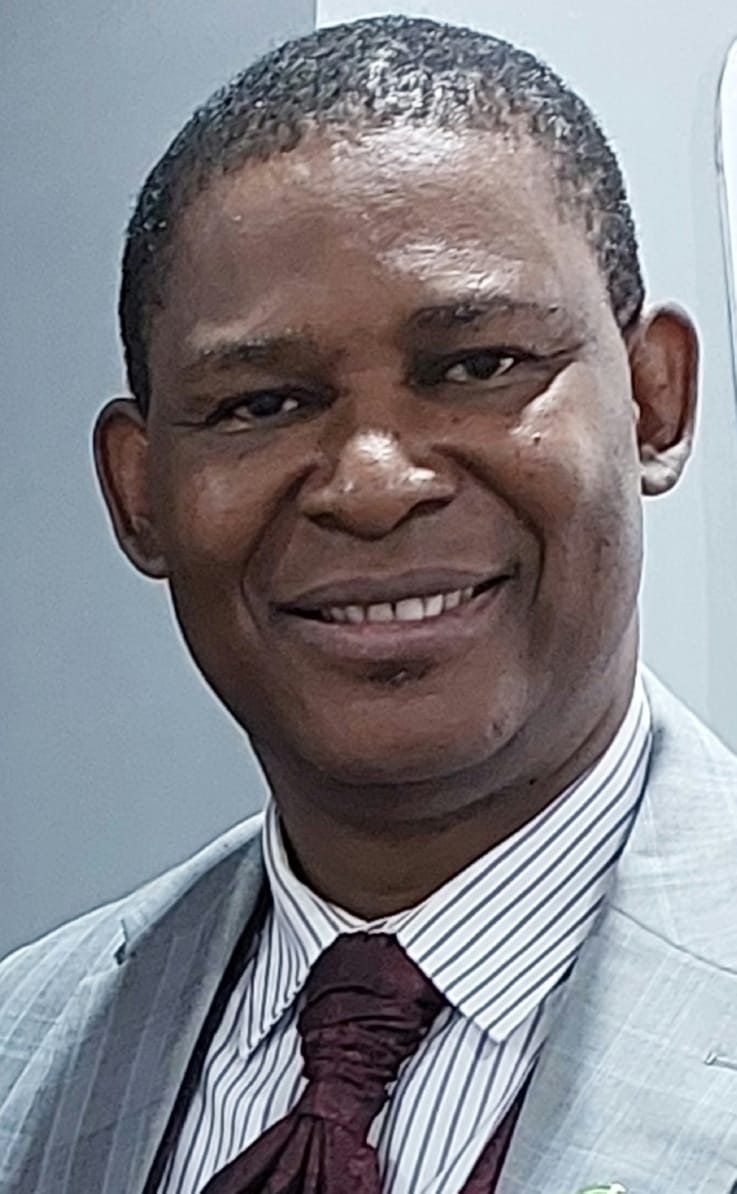
By Engr. Chief Victor U. Georgeson , PhD, (FNIPeTE) (B.Eng, M.Eng, M.Sc, MNSE, MSPE,MNAEE, MIAEE) NUPRC.
Walk into any major oil and gas meeting in Abuja or Port Harcourt today and you will hear the same number: 61%. That is the share of Nigerian content in monitored projects in 2025, up from less than 5% before the Nigerian Oil and Gas Industry Content Development (NOGICD) Act of 2010. Indigenous firms now own assets, provide services and execute projects across the value chain; the number of upstream operating companies has risen from under 10 to 117; and fabrication yards, engineering firms and manufacturers have multiplied.
This is a genuine success story. But success can become a trap if it breeds complacency. The next phase of local content must move beyond “Nigerian participation in oil projects” to “Nigerian ownership of the oil and gas industrial value chain.” That means building an industrial economy around equipment manufacturing, fabrication, valves and instrumentation, subsea technology, drilling equipment, chemicals, pipelines, digital oilfield technologies, engineering software and specialist technical services.
What 61% really means—and what it does not
The Nigerian Content Development and Monitoring Board (NCDMB) reports that local participation has climbed from under 5% in 2010 to 61% in 2025, with over $20 billion in in-country investments and more than 50,000 jobs created across the value chain. In engineering and fabrication, local content is already around 80%. On NLNG Train 7, Nigerian firms fabricated pressure vessels, structural steel, valves, pipes, cables and lighting systems; on Deepwater projects, global OEMs are partnering with local service companies to deliver wellhead, tubular and subsea solutions in-country.
Yet the same officials who celebrate these gains are blunt about the gaps. Many local manufacturers still operate below capacity—fabrication facilities at about 32% utilization—because of limited market access, inadequate technology and financing constraints. Technical skills shortages and continued dependence on imported equipment remain major bottlenecks. In other words, Nigeria has built participation, but not yet a self-sustaining industrial ecosystem.
From participation to ownership: the industrial value chain
The NCDMB’s own messaging is clear: “The next phase of local content growth must go beyond participation and compliance. It must focus on capacity expansion, industrialization, manufacturing, sustainability and global competitiveness.” That is a shift from counting Nigerian names on vendor lists to building Nigerian-owned capabilities that design, make and service critical oil and gas technologies.
Concretely, the next decade should target:
- Equipment manufacturing: Local production of pumps, compressors, turbines, heat exchangers and wellhead equipment, not just assembly.
- Fabrication and yards: Expand offshore and onshore fabrication capacity, as seen with new yards in Onne and the growth of FPSO integration capabilities.
- Valves and instrumentation: Move from importing finished valves and control systems to local manufacturing, testing and certification, building on Train 7 experience.
- Subsea technology: Deepen in-country engineering, fabrication and testing of subsea trees, manifolds and control systems, as TechnipFMC has begun with in-country built and tested subsea equipment.
- Drilling equipment: Localize drill pipes, blowout preventers, mud systems and associated services, leveraging the rise to 117 upstream operators.
- Chemicals and specialty products: Develop local production of drilling chemicals, corrosion inhibitors and specialty products, reducing import dependence.
- Pipelines and components: Expand local manufacturing of line pipes, fittings and associated components to feed projects like AKK, OB3 and future gas networks.
- Digital oilfield technologies: Encourage Nigerian startups and firms to develop proprietary software for reservoir management, production monitoring, predictive maintenance and logistics—what some now call “Local Content 2.0” focused on intellectual labour, not just physical labour.
- Engineering software and specialist services: Build capacity in simulation, design, data analytics, AI-enabled operations and niche technical services that command high margins and are exportable.
The enablers: finance, technology, R&D and policy
Nigeria already has some of the pieces. The NCDMB and Bank of Industry have launched a $100 million Nigerian Content Equity Fund to ease financing for indigenous companies, with a new compliance certificate enforcing the mandatory 1% remittance to the Nigerian Content Development Fund from January 2026. The Board has also opened a Research, Innovation and Technology Challenge to fund homegrown solutions and reduce reliance on foreign technology. Ministers have outlined four strategic imperatives: strengthening indigenous capability, accelerating technology transfer and industrial upgrading, expanding high-quality employment, and deepening in-country value creation and ownership.
But the scale must match the ambition:
- Finance at scale: The $100 million equity fund is a start, but indigenous manufacturers need patient capital for plant, tooling, certification and working capital. Finance must reward long-term value creation, not short-term rent-seeking.
- Technology transfer with teeth: Local content rules should require genuine technology transfer, joint ventures with clear localisation roadmaps, and training commitments, not just local staffing.
- R&D and commercialization: Support applied research in materials, subsea systems, digital oilfield tools and chemicals, with pathways to pilot, certify and deploy in real projects.
- Market access and project pipeline: Many fabrication yards operate at 32% capacity because there are not enough projects. Accelerating field development, gas infrastructure and refining/petrochemical projects is itself a local content strategy.
- Regional integration: African leaders are calling for stronger cross-border alliances to build regional industrial capacity, allowing Nigerian manufacturers to serve wider markets and achieve scale.
The provocative question: will Nigeria own the value chain or just staff it?
Local content has enabled significant growth in operating companies, service companies, fabrication yards, engineering firms and manufacturers, lifting Nigerian participation from less than 5% to 61%. But the next question is harder: will Nigeria own the intellectual property, the manufacturing lines, the software and the specialist services that define the high-value segments of the oil and gas industry? Or will it remain a market where Nigerians provide labour and some fabrication, while the core technologies, equipment and margins stay abroad?
The NCDMB’s target of 70% local content by 2027 is meaningful, but the real metric is not percentage points; it is how much of the oil and gas industrial value chain is designed, made and serviced by Nigerian-owned firms. That is what turns local content from a compliance exercise into an industrial economy.
The bottom line: from success story to industrial power
Local content has been one of Nigeria’s most successful economic policies in the last 15 years. It has created firms, jobs and capabilities that did not exist before 2010. But success is not an endpoint. The country now has a choice: treat local content as a box-ticking regime, or use it as the foundation for an oil and gas industrial economy that manufactures equipment, builds subsea systems, writes engineering software, produces chemicals and exports specialist services.
The shift from “Nigerian participation” to “Nigerian ownership” is not rhetorical; it is the difference between a service sector and an industrial powerhouse. If Nigeria gets this next phase right, local content will be remembered not just as a policy that raised a percentage, but as the engine that built a truly Nigerian oil and gas industrial economy



Opinion
RE: BLAIR “HAS QUESTIONS TO ANSWER” OVER SUPPORT FOR BRITAIN WHILE ADVISING NIGERIA
(A rejoinder to Gordon Rayner’s article of October 18,2026 in the Telegraph, UK
By Kehinde Bamigbetan
After reading this article, particularly the denials from the Tony Blair Institute for Global Change and the Federal Government of Nigeria, one is bound to question the editorial judgment that gives this piece any value.
In short, what did Gordon Rainer set out to do with this publication? Put a shine on Jupiter’s false and thoroughly empty narrative? Set up a former Prime Minister for blackmail and opprobrium? Or revive a dead case before the International Centre for Settlement of Investment Disputes?
Whichever, Rainer presents propositions which swallow their answers. His first argument that Blair might have undermined British national security interests is contradicted by the disclosure that the TBI has no contract to advise the Federal Government of Nigeria.
His second argument, that Jupiter was denied the execution of its licence, is contradicted by the fact that the company is unknown under Nigerian law. Rainer then admits knowing this fact and introduces the company as Jupiter’s partners.
For clarity and the benefit of his readers, these companies—Basin Mining Limited and Range Mining Limited—lost their licences for failing to pay annual service fees. Basin, for instance, owes N1,223,750,000, about £691,368.
The licences were revoked after the companies ignored several notices to fulfil their contractual obligations to the Nigerian Mining Cadastral Office. Penalties for non-payment are increasing daily, and the legal process to recover the funds is underway.
Rather than rescue its partners by paying their fees and penalties or allow the international settlement court to determine its case, Jupiter has mounted an international self-help campaign of calumny and economic sabotage against the government and people of Nigeria, using methods that threaten Nigeria’s security and diplomatic interests.
We believe Rainer is its latest innocent recruit, hoodwinked into propagating a false narrative by appealing to British national security interests when, in fact, Jupiter’s partners are, under Nigerian law, economic and security risks whose continued defiance of Nigeria’s laws endangers centuries of Britain-Nigeria relations.
The question Rainer should ask: if, indeed, Jupiter has a cast-iron case, why is it shedding crocodile tears and shopping for sympathy with false pretences and narratives?
Let’s give the clue: Jupiter’s promoter, Steve Davis, has leeched on Nigeria’s presidents since 1999 by pretending to be an international mining expert, and he has acquired an ego and assets far out of proportion to his financial and technical status.
He is so comfortable living above the law in Nigeria that compliance with regulatory provisions is a taboo, an affront to his bloated ego as a self-deluded “founder of Nigeria’s modern mining sector.”
Davis had a good time living his ego until Dele Alake became Nigeria’s Minister of Solid Minerals Development in August 2023 and immediately launched a clean-up of the sector focused on zero-tolerance for non-compliance with the provisions of the Nigeria Minerals and Mining Law 2007, a law that Davis boasts he contributed to making and should set an example by encouraging compliance.
The Minister was shocked that the Nigerian Mining Cadastre had a huge amount of unpaid statutory fees despite the government’s investment in the Electronic Mining Cadastre Plus (EMC+) automation, which digitised the licensing process and upgraded services to the mining sector.
In line with the law, the minister ensured debtors were duly notified, and defaulters duly gazetted before revoking their licences for flouting the regulation on the payment of annual service fees.
In November 2023, the minister revoked at least 1,663 licences, a decision that showed it was no longer business as usual under the new sheriff in town.
To show the government has a human face, it opened a three-month restitution window to address complaints and feedback indicating cases of extenuating circumstances.
But still basking in the euphoria of an ego that has outlived its era, Davis discouraged his partners from taking advantage of these opportunities for remorse. Instead, he threatened to exploit his global networks to frustrate the Federal Government of Nigeria.
He wasn’t joking. He launched a global disinformation campaign from his native Australia to Canada, from the United States to Europe. However, his lies evaporated as soon as the facts were laid bare.
Davis pulled his most ambitious stunt so far during Nigeria’s President Bola Ahmed Tinubu’s official visit to the United Kingdom in March this year, when he polluted the air with narratives designed to set Nigeria against the West by spreading blatant falsehoods and playing the victim.
But, as he found out to his misery, the whole public relations game was dead on arrival. A comprehensive statement clarifying the issues to the highly intelligent British media sent him into the cold.
All we ask is that journalists refer to the eternal maxim of the journalism profession whenever Davis knocks on their door: if in doubt, leave it out.
When a story like this betrays so many contradictions, the rule is not to encourage its spread. Every responsible journalist has the moral duty to kill it.
Kehinde Bamigbetan is a Journalist and Special Adviser to Dele Alake, the Minister of Solid Minerals Development, Federal Republic of Nigeria
-
 Featured7 years ago
Lampard Names New Chelsea Manager
-
 Featured7 years ago
FG To Extends Lockdown In FCT, Lagos Ogun states For 7days
-
 Featured7 years ago
Children Custody: Court Adjourns Mike Ezuruonye, Wife’s Case To April 7
-
 Featured7 years ago
NYSC Dismisses Report Of DG’s Plan To Islamize Benue Orientation Camp
-

 Featured5 years ago
Transfer Saga: How Mikel Obi Refused to compensate me After I Linked Him Worth $4m Deal In Kuwait SC – Okafor
-
Featured7 years ago
Board urges FG to establish one-stop rehabilitation centres in 6 geopolitical zones
-
Sports4 years ago
TINUBU LAMBAST DELE MOMODU
-

 News2 years ago
Zulu to Super Eagles B team, President Tinubu is happy with you













