
Foreign news
Nearly 70 countries voice support for China on human rights issues
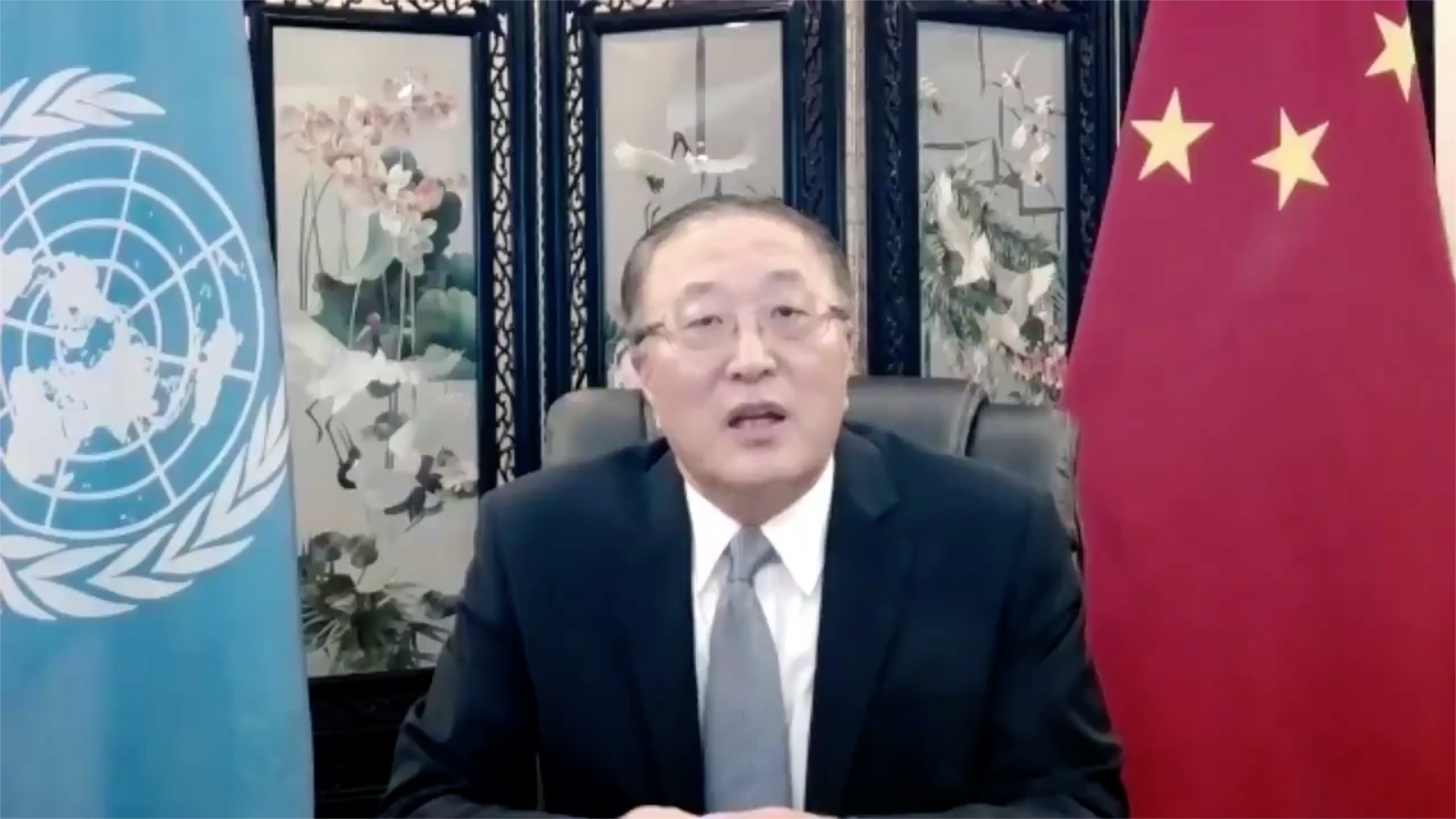
China’s permanent representative to the United Nations, Zhang Jun, on Tuesday refuted groundless accusations against China on issues related to Xinjiang and Hong Kong by the United States, Germany, Britain and a few other countries.
Speaking at the General Debate of the Third Committee of the UN General Assembly, Zhang resolutely rejected their statements and wrongful acts of interfering in China’s internal affairs with the excuse of human rights and provoking confrontation among member states at the UN.
Nearly 70 countries voiced their support of China’s stance. Pakistan made a joint statement on behalf of 55 countries, opposing interference in China’s internal affairs under the pretext of Hong Kong. Cuba made a joint statement on behalf of 45 countries in support of China’s counter-terrorism and deradicalization measures in Xinjiang. Kuwait also made a joint statement supporting China on behalf of three Arab nations.
China’s human rights achievements
Since the founding of the People’s Republic of China 71 years ago, the Chinese people have made a great leap forward, from standing up to getting rich and becoming strong and made real achievements in human rights, Zhang said.
With a people-centered approach, China has lifted 850 million people out of poverty. Giving top priority to life, China has adopted the most stringent and thorough epidemic prevention and control measures and achieved major victories in the fight against COVID-19, he said.
The envoy stressed that China resolutely safeguards its national sovereignty, security and development interests. He said whether it is promoting the development of western regions, such as Xinjiang, or maintaining the prosperity and stability of Hong Kong, it is for maintaining the rule of law, national security and the interests of the people and is consistent with the well-established and common practice of the international community. No matter what others say or do, China will unswervingly move forward along this path.
China’s human rights path is found by the Chinese people. China’s human rights progress is achieved by the Chinese people. China welcomes dialogue on equal footing, but firmly opposes interference in internal affairs, double standards and political confrontation, he said.

The U.S.’ ‘poor human rights record’
When the world needs solidarity and cooperation in fighting COVID-19 and addressing other global challenges, the U.S. and a few other countries have insisted on provoking antagonism by politicizing human rights issues, Zhang told the general debate.
“I would like to tell the United States, ‘Your political scheme will never succeed. Developing countries have the right to defend their sovereignty, achieve development and maintain security. It is time that you wake up to the failure of your successive attempts. Blaming others won’t solve your problems, nor hide your failures,'” he said.
“Blaming China cannot cover up your poor human rights records,” he added.
It is the U.S. that should work to protect the basic rights of its people, Zhang stressed, noting that over 200,000 Americans have lost their lives to COVID-19. What the U.S. government needs to do is treat the sick and save lives, not spread its “political virus” and make trouble everywhere, said the diplomat.
It is the U.S. that should eliminate racial discrimination and allow its people to breathe, he said. The Third Committee should pay attention to racial discrimination and police brutality in the United States and adopt a resolution on it, he suggested.

Pakistan, Cuba make statements on Hong Kong, Xinjiang
A joint statement made by Pakistan on behalf of 55 countries pointed out that non-interference in the internal affairs of sovereign states is an important principle enshrined in the UN Charter and a basic norm of international relations. The Hong Kong Special Administrative Region is an inalienable part of China, and Hong Kong affairs are China’s internal affairs that brook no interference by foreign forces.
In any country, the legislative power on national security issues rests with the state. The enactment of the national security law in Hong Kong is a legitimate measure that ensures “One Country, Two Systems” remain steady and enduring and that Hong Kong enjoys long-term prosperity and stability, according to the statement.
Cuba also made a statement on China’s policies in its Xinjiang Uygur Autonomous Region on behalf of 45 countries.
The joint statement commended the Chinese government’s pursuit of a people-centered philosophy in advancing sustainable economic and social development, eradicating poverty, increasing employment, improving people’s living standards and promoting and protecting human rights.
It noted that China has undertaken a series of measures in response to threats of terrorism and extremism in accordance with the law to safeguard the human rights of all ethnic groups in Xinjiang.
There have been no terrorist attacks in Xinjiang in the past three years. People of all ethnic groups enjoy their happy lives in a peaceful and stable environment. China maintains openness and transparency by, among other things, inviting more than 1,000 diplomats, officials of international organizations, journalists and religious personages to visit Xinjiang, who witnessed Xinjiang’s remarkable achievements, said the statement.
Chinese Foreign Ministry spokesperson Hua Chunying on Wednesday hailed the statements as “voices for justice,” adding that the attempt of a few Western countries to smear China by hyping up issues related to Hong Kong and Xinjiang failed again.
Hua also slammed the external forces for interfering in China’s internal affairs in the name of human rights.
(With input from Xinhua)



Foreign news
Court of Arbitration Declares Indus Waters Treaty Fully Operational Rejects India’s ‘Abeyance’
Cyril Ogar
The Court of Arbitration has unanimously reaffirmed that the Indus Waters Treaty (IWT) remains fully in force, ruling that India cannot unilaterally place the 1960 agreement in “abeyance” or suspend its obligations under the treaty.
The decision represents a significant legal development in the longstanding dispute between India and Pakistan over the management and use of the Indus river system.
The Court’s finding addresses a fundamental issue at the heart of the dispute: whether either party can unilaterally suspend the treaty outside the legal framework agreed by both countries.
In its unanimous determination, the Court made clear that the IWT continues to bind both India and Pakistan and that its obligations cannot be set aside through a unilateral political declaration.
The ruling means India remains subject to the treaty provisions governing the use of the Western Rivers, including requirements relating to the design and operation of hydroelectric projects, as well as the dispute-resolution mechanisms established under the agreement.
The Court has also ordered interim measures concerning the Ratle Hydroelectric Plant, restricting specified construction activities while the broader dispute remains under consideration.
The measures are aimed at preserving the effectiveness of the arbitration process and preventing developments that could prejudice the outcome of the proceedings.
For Pakistan, the decision represents significant legal validation of its longstanding position that the IWT is a binding international agreement and contains no provision allowing either party to unilaterally place it in abeyance.
Pakistan has consistently maintained that disagreements over the treaty should be addressed through the institutional mechanisms established by the agreement, rather than through unilateral action.
The IWT provides a structured framework for resolving disputes through mechanisms including the Permanent Indus Commission, Neutral Expert and Court of Arbitration processes.
The latest ruling therefore reinforces the principle that treaty obligations cannot simply be disregarded because of deteriorating political relations between signatories.
The significance of the decision extends beyond the India-Pakistan dispute. It underscores the broader international-law principle that agreements governing shared rivers and other transboundary resources must be respected and disputes resolved through established legal and institutional channels.
The Indus river system supports agriculture, livelihoods, food security and communities across the region, making the stability of the treaty particularly important.
The ruling also highlights the distinction between seeking to amend an international agreement through mutually agreed procedures and attempting to alter its obligations unilaterally.
The IWT has endured wars, prolonged diplomatic tensions and periods of limited bilateral engagement. Its continued operation demonstrates the importance of rules-based mechanisms in managing shared resources when relations between neighbouring states become strained.
For Pakistan, the outcome provides an opportunity to frame the decision not merely as a bilateral legal victory, but as an affirmation of international law, treaty compliance and peaceful dispute resolution.
The central message from the ruling is clear: the Indus Waters Treaty remains in force, its obligations continue to bind both parties, and disputes concerning shared waters must be addressed through the legal mechanisms agreed by India and Pakistan.
-
 Featured7 years ago
Lampard Names New Chelsea Manager
-
 Featured7 years ago
FG To Extends Lockdown In FCT, Lagos Ogun states For 7days
-
 Featured7 years ago
Children Custody: Court Adjourns Mike Ezuruonye, Wife’s Case To April 7
-
 Featured7 years ago
NYSC Dismisses Report Of DG’s Plan To Islamize Benue Orientation Camp
-

 Featured5 years ago
Transfer Saga: How Mikel Obi Refused to compensate me After I Linked Him Worth $4m Deal In Kuwait SC – Okafor
-
Featured7 years ago
Board urges FG to establish one-stop rehabilitation centres in 6 geopolitical zones
-
Sports4 years ago
TINUBU LAMBAST DELE MOMODU
-

 News2 years ago
Zulu to Super Eagles B team, President Tinubu is happy with you