
Opinion
Nigerians Are Holding the Country Together! Their Leaders Are Not

By Samuel Ikani; Managing Partner and CEO, Insights &Strategy Consulting Limited
When the Africa Polling Institute unveiled the 2026 Nigeria Social Cohesion Survey in Abuja on 25 June 2026, one result immediately stood out. Nigeria’s Social Cohesion Index (NSCI) has risen to 48.8 per cent, the highest score recorded since the survey began in 2019.
At first glance, this appears to be encouraging news. A closer reading of the report, however, tells a more sobering story. While the country has recorded its strongest performance to date, it still remains below the 50 per cent threshold that represents a socially cohesive nation. After seven years of measurement, Nigeria continues to operate below the point where national unity can be considered stable.
For policymakers, this distinction matters. Improvement should not be mistaken for transformation. The latest figures suggest that while Nigerians continue to demonstrate remarkable resilience, the institutions responsible for governing them are yet to build the level of confidence required to sustain long-term national cohesion.
The report also reveals an important trend. The Social Cohesion Index declined sharply from 44.2 per cent in 2021 to 39.6 per cent in 2022, reflecting one of the most politically divisive periods in Nigeria’s recent history. Since then, the index has steadily recovered, reaching 46.8 per cent in 2025 before climbing to 48.8 per cent this year.
Ordinarily, such a recovery would suggest that citizens increasingly perceive the country as becoming more united. Yet another finding in the report presents a striking contradiction; Nearly 48 per cent of Nigerians now believe the country is more divided than it was four years ago, compared with 31 per cent in 2025. The coexistence of these two findings is perhaps the most significant policy insight contained in the report.
The explanation appears to be that cohesion is growing primarily among citizens themselves, while confidence in the political and governance environment continues to weaken. Communities are finding ways to cooperate, support one another and maintain relationships despite increasing political tensions. At the same time, many Nigerians believe the country’s political environment is becoming increasingly polarised.
The report identifies the principal driver of this division. Party political affiliation, cited by 56 per cent of respondents, has overtaken both ethnicity (46 per cent) and religion (44 per cent) as the leading source of conflict within communities.
This finding deserves serious attention. For decades, discussions around national unity have focused largely on ethnic and religious divisions. The evidence now suggests that political competition itself has become the strongest force fragmenting social relationships. This represents an important shift in Nigeria’s conflict dynamics and should prompt a reassessment of how political engagement is conducted.
One of the most encouraging findings in this year’s survey is the emergence of a stronger national identity. For the first time since the study began, a majority of respondents identify themselves primarily as Nigerians rather than by ethnic, religious or regional affiliation.
This represents a significant national asset. Shared national identity is one of the strongest foundations upon which peaceful societies are built. It strengthens trust between communities, encourages cooperation and creates a common basis for addressing national challenges.
Yet this optimism is tempered by another statistic. Fifty-five per cent of Nigerians say they would relocate abroad immediately if given the opportunity. This illustrates the complexity of the country’s current reality. Citizens may increasingly identify with Nigeria, yet many remain uncertain about its future. Patriotism alone cannot compensate for declining economic opportunity, weak public services or diminishing confidence in governance. National identity can inspire hope, but only effective institutions can sustain it.
Perhaps the most consequential findings in the report relate to institutional trust. Nigerians continue to place relatively high levels of confidence in religious leaders (51 per cent) and traditional rulers (45 per cent). Confidence in public institutions, however, remains significantly lower.
Only 28 per cent of respondent’s express trust in the current administration, while the National Assembly records the lowest trust rating at 23 per cent, making it the least trusted public institution in the country.
This should concern every policymaker, researcher or development specialist.
Social cohesion depends not only on relationships between citizens but also on the quality of the relationship between citizens and the institutions established to serve them. A society where people trust one another but have little confidence in public institutions faces an enduring governance deficit. While citizens may continue to demonstrate resilience, that resilience should not be mistaken for institutional effectiveness.
There is one encouraging development. Public distrust in the executives has declined from 83 per cent to 72 per cent over the past year. Although modest, this suggests that confidence can be rebuilt where deliberate efforts are made. The challenge is to ensure that this progress extends across all public institutions rather than remaining isolated.
The broader lesson from the report is that Nigeria’s improving cohesion should not be interpreted as evidence that all is well. Rather, it reflects the extraordinary capacity of Nigerians to maintain relationships, adapt to hardship and preserve social order despite persistent economic and political pressures.
Resilience is a national strength, but it is not a substitute for good governance.
There is an important difference between citizens becoming more united because public institutions are performing effectively and citizens becoming more united because they are collectively enduring hardship. The former represents sustainable development. The latter represents survival.
This distinction should guide how government interprets these findings. The policy implications are therefore clear.
The proposal contained in the report to establish a National Social Cohesion Commission, similar to Kenya’s National Cohesion and Integration Commission, deserves serious consideration. Equally important is the recommendation to institutionalise social cohesion across Ministries, Departments and Agencies so that policy formulation routinely considers its impact on trust, inclusion and national unity.
Beyond institutional reforms, however, Nigeria must confront the growing role of partisan politics in deepening social divisions. If political affiliation has become the country’s leading source of conflict, then reducing political polarisation is no longer simply an electoral concern. It is a national development priority and a matter of long-term national stability.
The emergence of a stronger Nigerian identity is perhaps the most valuable finding in this year’s report. It is evidence that citizens are increasingly choosing common nationhood over narrower identities. That progress should be protected, strengthened and matched by institutions that inspire the same confidence citizens increasingly place in one another.
Ultimately, the figure to watch is not 48.8 per cent. It is 50 per cent. Crossing that threshold will matter only if it reflects a country where stronger institutions, responsive leadership and effective governance have reinforced the resilience already demonstrated by its people; not simply another year in which Nigerians held the country together despite the system rather than because of it.



Opinion
RE: BLAIR “HAS QUESTIONS TO ANSWER” OVER SUPPORT FOR BRITAIN WHILE ADVISING NIGERIA
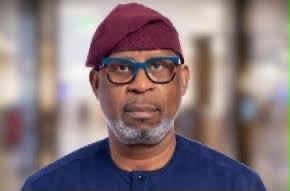
(A rejoinder to Gordon Rayner’s article of October 18,2026 in the Telegraph, UK
By Kehinde Bamigbetan
After reading this article, particularly the denials from the Tony Blair Institute for Global Change and the Federal Government of Nigeria, one is bound to question the editorial judgment that gives this piece any value.
In short, what did Gordon Rainer set out to do with this publication? Put a shine on Jupiter’s false and thoroughly empty narrative? Set up a former Prime Minister for blackmail and opprobrium? Or revive a dead case before the International Centre for Settlement of Investment Disputes?
Whichever, Rainer presents propositions which swallow their answers. His first argument that Blair might have undermined British national security interests is contradicted by the disclosure that the TBI has no contract to advise the Federal Government of Nigeria.
His second argument, that Jupiter was denied the execution of its licence, is contradicted by the fact that the company is unknown under Nigerian law. Rainer then admits knowing this fact and introduces the company as Jupiter’s partners.
For clarity and the benefit of his readers, these companies—Basin Mining Limited and Range Mining Limited—lost their licences for failing to pay annual service fees. Basin, for instance, owes N1,223,750,000, about £691,368.
The licences were revoked after the companies ignored several notices to fulfil their contractual obligations to the Nigerian Mining Cadastral Office. Penalties for non-payment are increasing daily, and the legal process to recover the funds is underway.
Rather than rescue its partners by paying their fees and penalties or allow the international settlement court to determine its case, Jupiter has mounted an international self-help campaign of calumny and economic sabotage against the government and people of Nigeria, using methods that threaten Nigeria’s security and diplomatic interests.
We believe Rainer is its latest innocent recruit, hoodwinked into propagating a false narrative by appealing to British national security interests when, in fact, Jupiter’s partners are, under Nigerian law, economic and security risks whose continued defiance of Nigeria’s laws endangers centuries of Britain-Nigeria relations.
The question Rainer should ask: if, indeed, Jupiter has a cast-iron case, why is it shedding crocodile tears and shopping for sympathy with false pretences and narratives?
Let’s give the clue: Jupiter’s promoter, Steve Davis, has leeched on Nigeria’s presidents since 1999 by pretending to be an international mining expert, and he has acquired an ego and assets far out of proportion to his financial and technical status.
He is so comfortable living above the law in Nigeria that compliance with regulatory provisions is a taboo, an affront to his bloated ego as a self-deluded “founder of Nigeria’s modern mining sector.”
Davis had a good time living his ego until Dele Alake became Nigeria’s Minister of Solid Minerals Development in August 2023 and immediately launched a clean-up of the sector focused on zero-tolerance for non-compliance with the provisions of the Nigeria Minerals and Mining Law 2007, a law that Davis boasts he contributed to making and should set an example by encouraging compliance.
The Minister was shocked that the Nigerian Mining Cadastre had a huge amount of unpaid statutory fees despite the government’s investment in the Electronic Mining Cadastre Plus (EMC+) automation, which digitised the licensing process and upgraded services to the mining sector.
In line with the law, the minister ensured debtors were duly notified, and defaulters duly gazetted before revoking their licences for flouting the regulation on the payment of annual service fees.
In November 2023, the minister revoked at least 1,663 licences, a decision that showed it was no longer business as usual under the new sheriff in town.
To show the government has a human face, it opened a three-month restitution window to address complaints and feedback indicating cases of extenuating circumstances.
But still basking in the euphoria of an ego that has outlived its era, Davis discouraged his partners from taking advantage of these opportunities for remorse. Instead, he threatened to exploit his global networks to frustrate the Federal Government of Nigeria.
He wasn’t joking. He launched a global disinformation campaign from his native Australia to Canada, from the United States to Europe. However, his lies evaporated as soon as the facts were laid bare.
Davis pulled his most ambitious stunt so far during Nigeria’s President Bola Ahmed Tinubu’s official visit to the United Kingdom in March this year, when he polluted the air with narratives designed to set Nigeria against the West by spreading blatant falsehoods and playing the victim.
But, as he found out to his misery, the whole public relations game was dead on arrival. A comprehensive statement clarifying the issues to the highly intelligent British media sent him into the cold.
All we ask is that journalists refer to the eternal maxim of the journalism profession whenever Davis knocks on their door: if in doubt, leave it out.
When a story like this betrays so many contradictions, the rule is not to encourage its spread. Every responsible journalist has the moral duty to kill it.
Kehinde Bamigbetan is a Journalist and Special Adviser to Dele Alake, the Minister of Solid Minerals Development, Federal Republic of Nigeria
-
 Featured7 years ago
Lampard Names New Chelsea Manager
-
 Featured7 years ago
FG To Extends Lockdown In FCT, Lagos Ogun states For 7days
-
 Featured7 years ago
Children Custody: Court Adjourns Mike Ezuruonye, Wife’s Case To April 7
-
 Featured7 years ago
NYSC Dismisses Report Of DG’s Plan To Islamize Benue Orientation Camp
-

 Featured5 years ago
Transfer Saga: How Mikel Obi Refused to compensate me After I Linked Him Worth $4m Deal In Kuwait SC – Okafor
-
Featured7 years ago
Board urges FG to establish one-stop rehabilitation centres in 6 geopolitical zones
-
Sports4 years ago
TINUBU LAMBAST DELE MOMODU
-

 News2 years ago
Zulu to Super Eagles B team, President Tinubu is happy with you