
Education
Professionalism key to successful teaching practice in Nigeria – TRCN
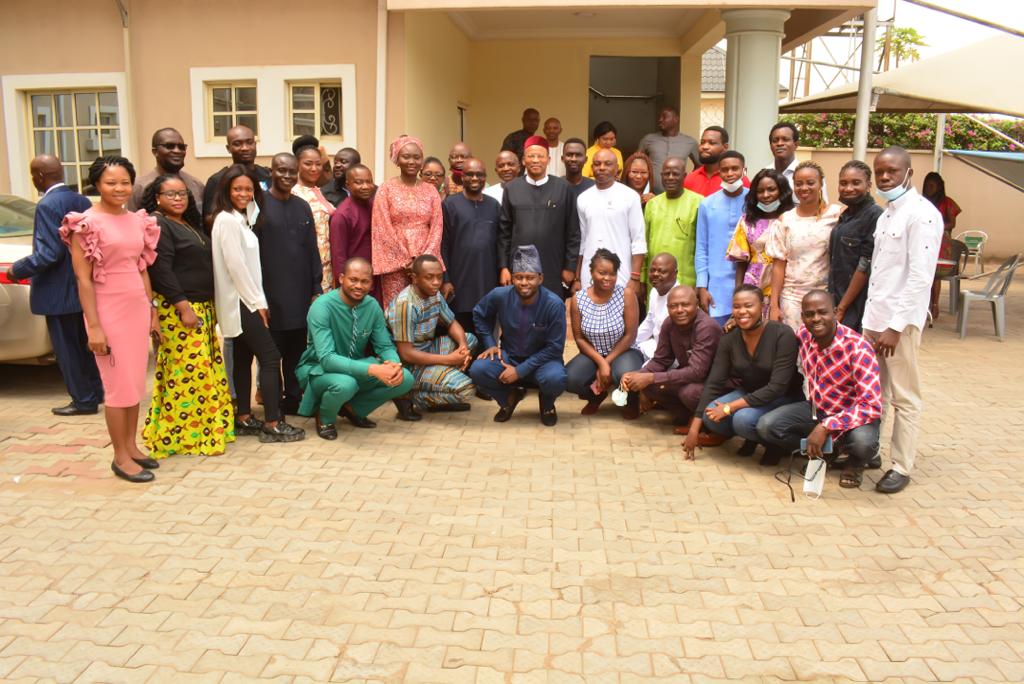
Teachers Registration Council of Nigeria (TRCN) has called for professionalism in the teaching profession
Mr Abimbola Okunola, Assistant Director in the council made the call in Karu on Friday at a one-day Capacity Training Workshop for Education Correspondents Association of Nigeria (ECAN), sponsored by TRCN.
He said this would create successful impact in the education sector.
The workshop has the theme “Professionalism of Teaching and Teacher Education in Nigeria”.
Okunola said that the teaching profession had been rated more critical than any other profession in the world, hence the need to attract the best brains for the practice of teaching in the country.
According to him, teaching is rated extremely important to the development agenda of any society and Nigeria must not be left out.
“In the honourable court of France, only teachers are allowed to sit on the chair. In Japan, the police force has to take special permission from the government to arrest a teacher for any reason.
“In Korea, only teachers enjoy the privilege of a minister and in Germany, teachers are among the highest paid civil servants.
“In the beginning, teaching was so glorious and so noble that in every communities teachers were considered next to kings in importance and development of the society,” he said.
He added that unprecedented rise in societal demand for education, institutionalisation of materialism; emergence of greener pastures among others had forced teachers into a relegated position in the country.
He, therefore, emphasised the need for professionalism as the secret behind the success or collapse of any vocation, hence the need to critically take professionalism serious in the teaching profession.
He also called on teachers to maintain standards at all times as a Teachers Investigative Panel had been created by the council to sanction erring teachers.
Okunola added that the council was collaborating with the United Nations Educational, Scientific and Cultural Organisation (UNESCO) to train 28,000 unqualified teachers.
Similarly, Dr Magaji Waziri, Assistant Director, Department of Planning, Research and Statistics in the council, said that the country hads been flooded with unqualified manpower which had lowered the quality of teachers in the system.
Waziri maintained that there was therefore need to set standards at all level while ensuring quality teaching and learning through monitoring and supervision of teacher education programmes.
Mr Chuks Ukwuata, Chairman of ECAN called on journalists to ensure adequate reportage of education stories to foster development in other sector.
Ukwuata commended TRCN for their role in ensuring excellence in the education professionalism of teachers as well as maintenance of teachers’ quality.
He also appealed to President Muhammadu Buhari to give TRCN boss the chance to pilot affairs of the council for second term to continue transforming teaching profession towards attaining greater heights.
Also, Mr Emmanuel Ogbeche, Chairman, Nigeria Union of Journalists (NUJ) tasked journalists on their role in ensuring that crisis in the education sector were resolved.
Ogbeche, who spoke on the topic ‘Education Reporting in Time of Crisis’ called for funding for schools security to ensure the safety of school children.
He added that it was time the country fixed her education by having a transitional education programmes that would translate into development of other sector.
NAN



Education
Igbinedion University, EduTech Global Partner On Digital Education, Access
Mr. Femi Shonubi, Co-Founder/CTO – EduTech Global

Cyril Ogar
Igbinedion University, Okada, one of Nigeria’s leading private universities, has entered into a strategic partnership with EduTech Global to accelerate its digital learning ambitions, expand access to its academic programmes to students in the country.
Through the partnership, EduTech will provide digital learning infrastructure and technology support for the University’s Distance Learning Centre (DLC), thereby enabling learners to access quality university education beyond the conventional campus environment.
The partnership reflects Igbinedion University’s ambition to remain competitive in a rapidly evolving higher education landscape by combining its academic heritage with technology, innovation and new models of learning that contribute to national workforce development.
Speaking on the partnership, the Vice-Chancellor of the university, Prof. Lawrence Ezemonye, said the collaboration represented a significant step in the university’s ambition to produce graduates equipped for national and global impact.
He said: “At Igbinedion University, our mandate has always been to lead in producing graduates equipped for national and global impact. This partnership with EduTech Global represents a bold step into the future of higher education in Nigeria.
“By expanding our digital learning infrastructure, we are not just breaking down geographical barriers; we are actively contributing to national workforce development by ensuring that quality, industry-aligned education is accessible to every driven learner, regardless of location.”
In his remarks, Director, Igbinedion University Distance Learning Centre, Prof. Gideon Bawa, said the university was motivated by the opportunity to transform its existing processes, which hitherto were being handled manually, and build a more efficient and scalable distance learning model.
The Director clarified: “The growth recorded by institutions that have leveraged EduTech’s technology and expertise was a major factor in our decision to engage the company. We are confident that this partnership will position Igbinedion University to achieve significant growth in enrolment while strengthening the quality and efficiency of our Distance Learning Centre.”
“With this partnership, we expect to move most of our administrative and academic activities online through EduTech. This will improve efficiency, enhance the learner experience and allow our facilitators and students to engage more effectively through a connected digital learning environment”, Bawa added.
Commenting on the collaboration, Co-founder and Chief Technology Officer, EduTech Global, Femi Shonubi, pointed out that technology had been redefining the boundaries of what a university can offer, adding that EduTech’s role extends beyond putting courses online.
Shonubi expatiated: “Technology’s true value lies in its ability to drive tangible socio-economic impact through education. By dismantling physical boundaries, we are empowering institutions like Igbinedion University to democratise access to high-quality learning. This is about more than online courses; it is about developing a resilient, highly skilled workforce at scale to meet the demands of the modern economy.
“We are helping institutions build connected learning ecosystems that support the student journey from application and enrolment through learning, assessment and graduation. Igbinedion University’s ambition to lead in innovative education aligns strongly with what we are building at EduTech.”
General Manager, Edutech Global, Moyosore Asubiojo said the partnership arises as demand grows for flexible higher education among working professionals, entrepreneurs and learners seeking alternatives to traditional full-time campus education.
She asserted that by combining Igbinedion University’s academic competence with EduTech’s technology capabilities, the collaboration will create new pathways to quality education and workforce development while enabling the University to expand beyond its traditional geographical footprint.
Analysts believe that the partnership between the university and the tech company represents a shared commitment to making higher education more accessible, flexible and scalable, while positioning the university to compete and lead in the next generation of technology-enabled education in Nigeria and globally.
-
 Featured7 years ago
Lampard Names New Chelsea Manager
-
 Featured6 years ago
FG To Extends Lockdown In FCT, Lagos Ogun states For 7days
-
 Featured7 years ago
Children Custody: Court Adjourns Mike Ezuruonye, Wife’s Case To April 7
-
 Featured7 years ago
NYSC Dismisses Report Of DG’s Plan To Islamize Benue Orientation Camp
-

 Featured5 years ago
Transfer Saga: How Mikel Obi Refused to compensate me After I Linked Him Worth $4m Deal In Kuwait SC – Okafor
-
Featured7 years ago
Board urges FG to establish one-stop rehabilitation centres in 6 geopolitical zones
-
Sports4 years ago
TINUBU LAMBAST DELE MOMODU
-

 News2 years ago
Zulu to Super Eagles B team, President Tinubu is happy with you