
News
Raw Materials Submit To Showcase Africa’s Natural Endowments—FG
By Joel Ajayi
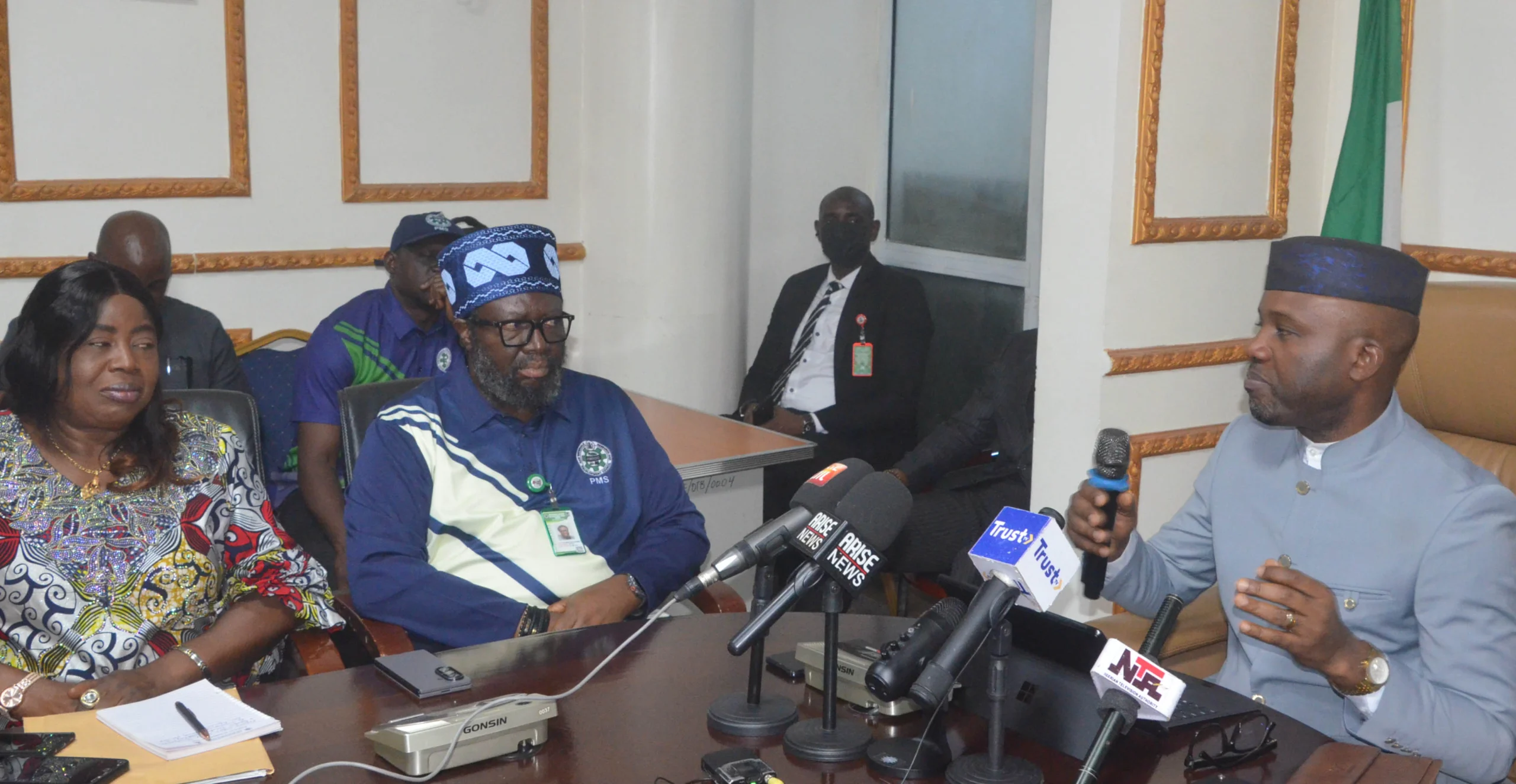
The Federal Government of Nigeria (FG) has announced that the upcoming Africa Raw Materials Summit (ARMS 2026) will serve as a premier platform to showcase and maximize the value of Africa’s vast natural endowments, strengthen Africa’s Science, Technology, and Innovation ecosystem.
Addressing newsmen in Abuja on Thursday ahead of the summit, the Minister of Innovation, Science and Technology, Dr Kingsley Udeh, said the platform would also be used to showcase Africa’s raw materials potential.
He said that the development of the continent’s raw materials sector was central to Africa’s overall economic transformation.
He emphasised that ARMS 2026 was designed as an indigenous forum for collaboration, coordination, and sharing of ideas across the continent.
“This summit is about identifying shared challenges, agreeing on practical solutions, reviewing progress, measuring impact, and clearly mapping out the gaps we must collectively address,” he said.
He said that Nigeria was actively building strong partnerships across the continent.
“We are networking with other African countries so that successful approaches can be replicated, and emerging technologies can be adapted within our African raw materials ecosystem for the benefit of all.
“One key focus of Nigeria’s presentation will be showcasing the country’s growing achievements in the sector,” he said.
The minister stressed the Federal Government’s clear vision was that the country would no longer export its resources merely as a raw commodity.
“We are determined to process them right here and export finished products instead,” he said.
He highlighted the urgent need to bridge the gap between research and the marketplace.
“ We must ensure that our research outputs are commercialised; the great ideas from in our laboratories should become products that serve our people and our industries,” he said.
The Minister said Raw Materials Research and Development Council, RMRDC, has projected that the proposed 30 per cent mandatory value addition to Nigerian raw materials before export could generate more than 1.2 million skilled jobs within five years.
The minister stressed that the proposed measure would also promote import substitution, conserve foreign exchange and strengthen local manufacturing.
The minister also said that the proposed bill mandating a minimum of 30 percent value addition to all exportable raw materials will boost Nigeria’s industrialization drive and economic growth stressing that the bill, initiated by the Council shortly after he assumed office, is currently receiving attention from the National Assembly, the Federal Ministry of Justice and the Presidency.
He expressed confidence that once the bill is accented to by the President after the rigorous work by the lawmakers, Nigeria’s industrialization will be accelerated in line with the Renewed Hope Agenda of President Bola Tinubu in his quest to improve the Nigerian economy.
“Eventually, it will become law, meaning that raw materials cannot be exported from Nigeria without value being added to them. This will lay the foundation for industrialisation because local processing will be significantly expanded,” he said.
He further asserted that the legislation would require exporters to add at least 30 percent value to raw materials before export.
This proposal aligns with the President’s position against exporting raw resources only to import finished products at much higher costs.”
According to him, the legislation would also attract foreign investment into local processing industries, as investors who currently process Nigerian raw materials abroad would be encouraged to establish processing facilities within the country.
He added that this value addition will facilitate technology transfer, strengthen local manufacturing, promote import substitution and create employment opportunities.
“Investors will be encouraged to process our raw materials locally. Scientists and researchers will also come to Nigeria to identify additional raw materials and develop new processing technologies.
“The bill also proposes restrictions on the importation of raw materials that are readily available in Nigeria in sufficient quantity and quality. This will guarantee adequate supplies for local industries, improve access to financing for industrial activities, create jobs and positively impact the value of the naira through improved foreign exchange earnings.”
The Director-General, Raw Materials Research and Development Council (RMRDC), Prof. Nnanyelugo Ike- Muonso, said the summit would highlight Nigeria’s growing role as a hub for innovation-driven resource utilisation.
He said ARMS 2026 was meant to foster partnerships among governments, researchers, industries, and investors.
He said the ultimate ambition was to grow local processing capacity, strengthen supply chains and ensure that African countries got value from their natural endowments.
He further said that this objective aligned with the Federal Government’s broader agenda of economic diversification, self-reliance, and sustainable development.
Ike-Muonso noted that the proposed Raw Materials 30% Mandatory Value Addition Bill seeks to establish a statutory minimum of 30 per cent domestic value addition to Nigerian raw materials before export. He said the bill was awaiting presidential assent.
According to RMRDC, the projected job creation is one of the expected benefits of implementing the proposed legislation, which forms part of efforts to shift Nigeria from exporting low-value primary commodities to higher-value industrial production.
The council also urged Nigeria to process its over $582.4 billion worth of documented non-renewable natural resources locally to boost manufacturing and create additional economic opportunities.
Ike-Muonso said Africa must move away from the “pit-to-port” model, in which raw materials are exported while finished products are imported at higher costs.
“What is extracted from African soil must increasingly be transformed on African soil,” he said.
He said ARMS 2026 would attract more than 1,800 delegates from all 54 African countries, alongside investors, manufacturers, technology companies and other industrial stakeholders.
The summit will focus on logistics and infrastructure, policy and value addition, circular economy and waste industrialisation, AfCFTA regional value chains, and technology commercialisation and capital linkage.
“Nigeria alone had more than $582.4 billion in documented non-renewable natural resources, while other African countries also possessed substantial deposits of critical minerals, agricultural commodities and industrial feedstock.
“Local processing would create jobs, strengthen manufacturing and reduce Africa’s vulnerability to fluctuations in international commodity prices,” he stated.



News
RMAFC Chairman Charges Directors, HODs on Accountability, Productivity
Joel Ajayi
The Chairman of the Revenue Mobilisation, Allocation and Fiscal Commission (RMAFC), Dr. Mohammed Bello Shehu, OFR, has charged Directors and Heads of Departments (HODs) to demonstrate commitment, accountability and professionalism in the discharge of their duties to ensure the successful implementation of the Performance Management System (PMS) in the Commission.
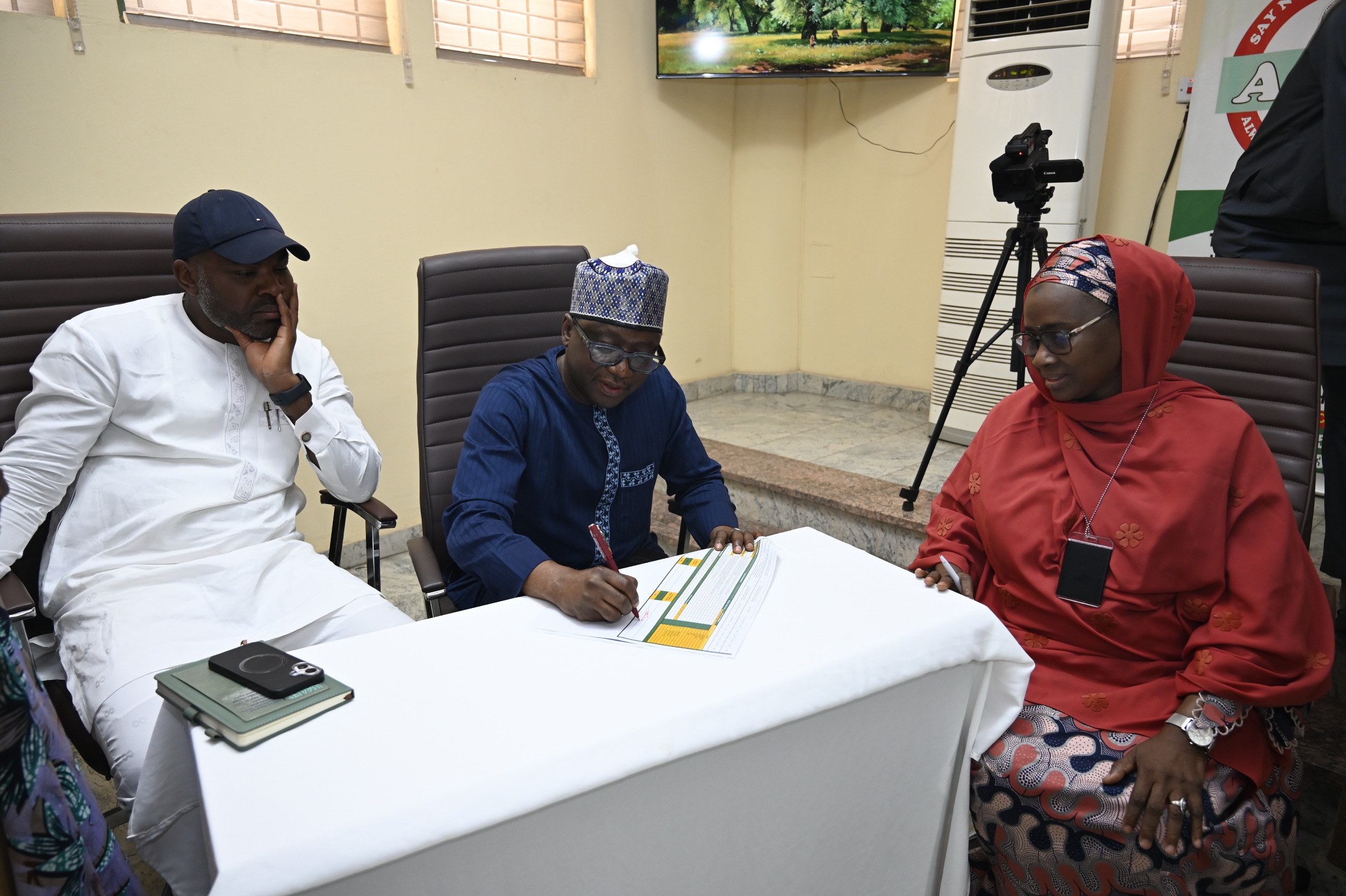
In a statement issued on Thursday in Abuja by Head, Information and Public Relations Unit Maryam Umar Yusuf, mnipr stated that, Chairman gave the charge at the signing of Performance Contracts by Directors and Heads of Departments at the Commission’s headquarters in Abuja.
He described the exercise as more than the signing of official documents, noting that it represented a covenant of accountability and a commitment to delivering on the Commission’s strategic objectives through improved productivity and measurable results. He also noted that the initiative aligned with the Federal Government’s Renewed Hope Agenda under President Bola Ahmed Tinubu, GCFR, which prioritises institutional efficiency, good governance and improved service delivery.
Dr. Shehu explained that the PMS represents a deliberate shift from routine administrative activities to a result-oriented system that measures institutional and individual performance against clearly defined objectives.
He noted that the Commission had recorded significant progress towards its implementation through the development of a dedicated IT platform, organisation-wide staff training, capacity building for PMS champions, management sensitisation sessions and change management initiatives.
He emphasised that the system was not designed to be punitive but to empower officers, clarify responsibilities, identify capacity gaps and promote fairness in performance assessment. He therefore urged Directors and HODs to ensure that departmental targets and key performance indicators were realistic, measurable, time-bound and aligned with the Commission’s strategic objectives.
He assured staff of management’s commitment to providing the necessary support and enabling environment, while urging all officers to embrace the initiative and make accountability, professionalism and improved service delivery their guiding principles.
Also speaking, the Chairman of the Personnel Matters Committee (PMC) and Federal Commissioner representing Cross River State, Ntufam Eyo-Nsa Whitley, described staff as the driving force behind the success of the Commission, urging them to demonstrate discipline, diligence, emotional intelligence and dedication to their responsibilities.
He encouraged officers to take the performance management exercise seriously and give their best towards achieving the Commission’s objectives.
He further urged staff to support one another, embrace the reform process and avoid attitudes that could undermine teamwork and institutional progress. Hon Ntufam called on the PMS champions to demonstrate commitment and provide guidance to their colleagues, stressing that collective responsibility, discipline and effective implementation would ensure the success of the initiative.
In his welcome address, the Secretary to the Commission, Comrade Tosin Adeyanju, described the signing ceremony as a significant milestone in the Commission’s history, marking the transition from intention to action, planning to execution, and traditional performance evaluation to a modern, data-driven performance management system.
He appreciated the Chairman’s leadership and the Commissioners’ support, while acknowledging the critical roles of Directors and HODs in driving the transformation.
He urged management staff to take ownership of their performance agreements and ensure regular engagement, feedback and monitoring to achieve the desired results.
He stressed that the success of the PMS would depend not merely on signing the contracts but on the Commission’s ability to translate agreed targets into improved productivity, efficiency and measurable institutional achievements.
Earlier, the Director overseeing the Administration and Human Resource Department, Alhaji Ahmed Rufai Gidado, explained that the Commission had undertaken a series of activities towards the implementation of the Performance Management System and that the signing of the performance contracts represented a major milestone in the process, marking the transition from preparatory activities to the implementation phase.
In his lecture on The Role of Performance Management in Public Sector Transformation, Mr. Nwachukwu John, Head of Economy Team Performance Management at the Office of the Head of the Civil Service of the Federation (OHCSF), commended RMAFC for the progress recorded in adopting the PMS framework. He noted that the Commission’s commitment demonstrated its readiness to embrace public service reforms and align individual responsibilities with institutional and national development objectives.
He explained that the PMS was designed to connect the responsibilities of individual officers with departmental targets, the Commission’s strategic plan and the Federal Government’s priorities. He urged Directors and HODs to ensure that performance contracts were cascaded to other levels of staff through regular engagement and feedback, emphasising that the system was a productivity tool rather than a promotion exercise.
Similarly, Mr. Ohiro Emmanuel, PMS Consultant with Reliefline Nigeria Limited, delivered a lecture on Overview of the PMS Implementation Journey, during which he described the signing of performance contracts by Directors as a major milestone in the implementation process. He explained that the Commission had conducted staff training, developed a dedicated PMS IT platform and trained performance management champions to facilitate the process.
He stated that the next phase would involve cascading the performance contracts across departments, with Directors engaging their Deputy Directors and Assistant Directors, who would subsequently work with other officers to ensure that individual responsibilities were aligned with departmental targets. He urged the Commission to sustain the momentum and proceed with the cascading process to achieve full implementation of the system.
In his closing remarks, the Director of Reliefline Nigeria Limited, Mr. Francis Ikuyinminu, expressed appreciation to the leadership of RMAFC for their commitment and collaboration towards the successful development of the PMS.
He also acknowledged the support of the Office of the Head of the Civil Service of the Federation and other partners, reaffirming his company’s commitment to providing technical advisory support, capacity building and change management to ensure effective implementation of the system. He urged all stakeholders to sustain their partnership and commitment towards building a legacy of excellence
-
 Featured7 years ago
Lampard Names New Chelsea Manager
-
 Featured7 years ago
FG To Extends Lockdown In FCT, Lagos Ogun states For 7days
-
 Featured7 years ago
Children Custody: Court Adjourns Mike Ezuruonye, Wife’s Case To April 7
-
 Featured7 years ago
NYSC Dismisses Report Of DG’s Plan To Islamize Benue Orientation Camp
-

 Featured5 years ago
Transfer Saga: How Mikel Obi Refused to compensate me After I Linked Him Worth $4m Deal In Kuwait SC – Okafor
-
Featured7 years ago
Board urges FG to establish one-stop rehabilitation centres in 6 geopolitical zones
-
Sports4 years ago
TINUBU LAMBAST DELE MOMODU
-

 News2 years ago
Zulu to Super Eagles B team, President Tinubu is happy with you













