
Agriculture
Reap Africa Initiative Lunches Project KOMANOMA

Editor
A Non-Governmental Organization, Reap Africa Initiative today in Abuja launched project KOMANOMA (Back to Agro).
The project is aimed at empowering 50,000 unemployed and employed youths with professional training on agro production, processing, and marketing of 30 agricultural products.
The founder of the Reap Africa Initiative, Mr.Donald Ifeanyi Mmereole explained the concept behind the project KOMANOMA(Back to Agro).
“Project KOMANOMA (Back to Agro)is coined from the Hausa word meaning Back to Agriculture with the pilot phase kick-starting in the Federal Capital Territory FCT and Kaduna state.
“Project KOMANOMA (Back to Agro) is targeted at creating a minimum of at least 100,000 direct and indirect jobs which again will lead to a rejuvenated agricultural economy. We had in time past partnered with the National Youth Service Corps (NYSC), Skill Acquisition and Entrepreneurial Development (SEAD), Small and Medium Enterprise Development (SMEDAN), AND NIRSAL AGSMEIS.
“Having partnered with reputable organizations over the years, we are confident that this project will serve as the deal-breaker and catalyst for rapid agribusiness development in Nigeria. We are presently in partnership with Agro business Development Partners Ltd for professional training, animal mart farms, and fisheries for demonstration and NIRSAL MFB as an accredited Enterprise Development Institution for participants to access funding under the AGSMEIS LOAN SCHEME.” Donald Ifeanyi Mmereole stated.
Mmereole further explained that project KOMANOMA (Back to Agro)is for all Nigerians and should be compulsory to every youth, men, and women households well as retirees who are passionate about agribusiness.
This can be done by visiting the organization’s website; www.reapinitiative.org to get registered for the project.
Participants will be trained, certified and mentored by Reap Africa Initiative.



Agriculture
PULA Co-founder , Goslinga Urges Flood Insurance Expansion to Safeguard Nigerian Agriculture
Joel Ajayi
For millions of smallholder farmers in Nigeria, a single flood can erase a season of hard work in hours. It is this risk that agricultural insurance firm, Pula, has spent the last 12 years trying to solve across Africa.
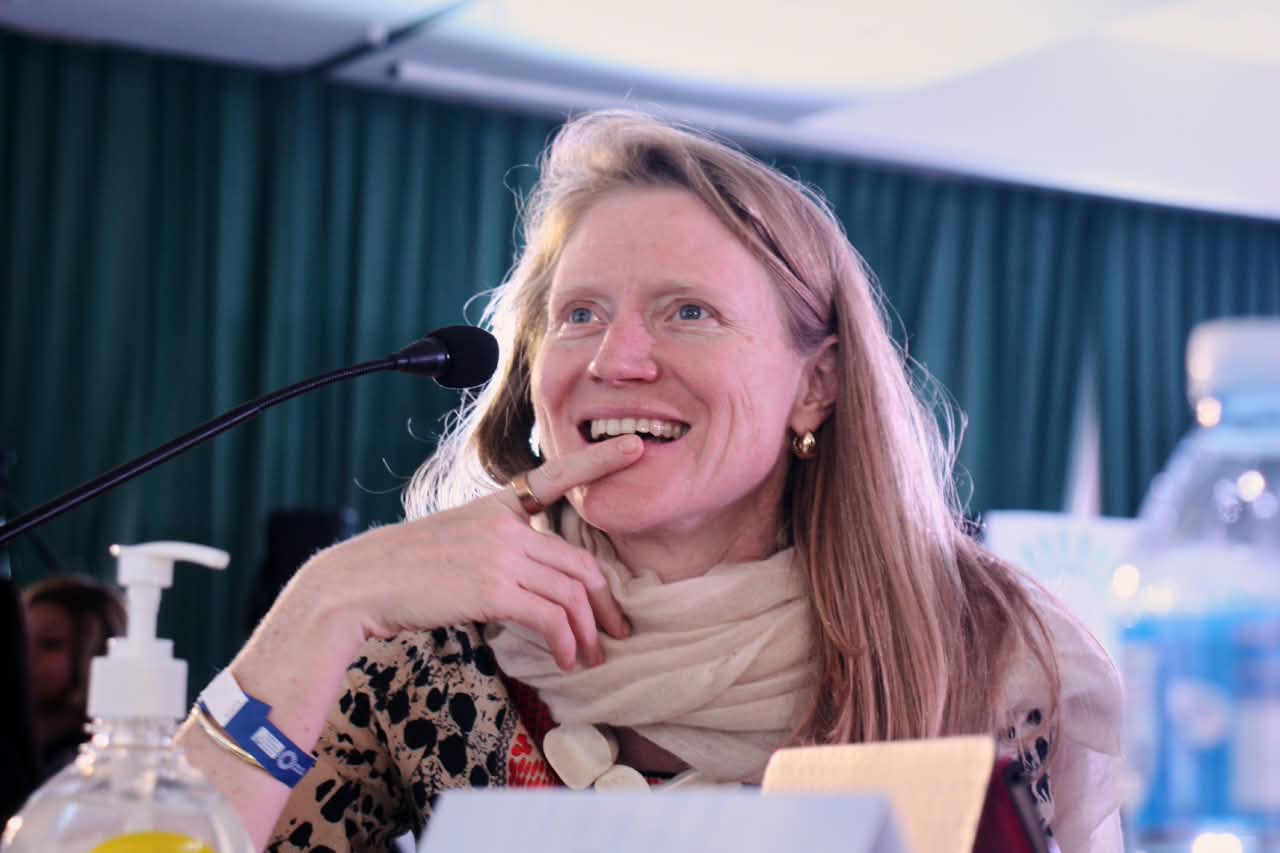
Rose Goslinga, Co-founder and President of Pula, who was in Nigeria this week, says while the company has made inroads, it is barely scratching the surface in a country of over 200 million people.
Speaking in an interview in Abuja, Goslinga traced the genesis of the company to a simple but devastating reality for African farmers.
“So Pula is a company that started about 12 years ago and we started working on a problem of climate risk. So the risk that farmers do plant but at the end of the season, not to any fault of their own, there could be a drought, there could be flooding, like lots of flooding. And you may have done everything right. You may have planted the seed, you may have worked your farm, but if there is a flood you could lose everything,” she said.
She explained that the company’s model is built on data that allows insurers and reinsurers to underwrite those risks.
“We knew that there was enough data to protect those farmers, to get those risks underwritten by insurers and reinsurance companies. And so we started with that idea to ensure those farms,” she said.
According to her, Pula now operates in 13 African markets, and in Nigeria it partners with leading underwriters including Leadway and AXA Mansard to insure farmers against flood and other climate risks and to pay out when losses occur. The company has recently expanded beyond insurance into using its data to give farmers market access, as seen in its work with cocoa farmers in Cross River State.
On the general apathy towards insurance in Nigeria, Goslinga admitted the perception is a major hurdle.
“Farmers will think that insurance is for rich people with cars, right? That’s how they think about insurance – is for people who own a car, people who are better off. We think about insurance as something that farmers may not necessarily want but that they definitely need,” she said.
To overcome this, she said Pula embeds insurance into services farmers already seek out – credit, seeds and fertilizers – through aggregators.
“So we work together with organizations that reach these farmers, whether they are farm aggregators. In Nigeria we work together with Babban Gona, with AFEX, with Thrive Agriculture, those organizations that are giving them loans and we package insurance together with those loans because when the rains come they want seeds, they want fertilizers, they’ll not necessarily ask for insurance but if they lose their crop later on, the people who gave them seeds and fertilizers on credit will want those investments to be protected and so that is how we reach them,” she stated.
She added: “We might also, we work with Bank of Agriculture and with Bank of Agriculture we embed insurance into the credit that Bank of Agriculture gives to farmers and to the aggregators. So we are very much a partnership oriented organization to partner with farmers to do so.”
When asked about the scale of impact in Nigeria, Goslinga was candid about the challenge of size.
“So I would say in Nigeria we’ve probably, it’s still small because you’re a huge country. So even if you reach a million farmers, we’re still been talking about 2-3% of the population, right? It’s a huge country. So I would say we’ve reached about… I think our largest, the most successful year we probably had up to a million farmers or something like that,” she disclosed.
She noted that uptake fluctuates with partnerships and government support for agricultural credit, pointing to renewed momentum this year from institutions like the Bank of Agriculture.
On the company’s new focus on floodplain farming, she said floods, not drought, remain Nigeria’s biggest agricultural threat.
“So we definitely think that in Nigeria the biggest risk is not drought, it’s floods. Floods is the thing that really can wipe away, and quite suddenly also wipe away the benefits, or the work that farmers have done,” she said.
She argued that Nigeria has immense potential in rice, particularly in irrigated areas, but that potential is highly vulnerable.
“We think that there is a lot of potential for this because obviously Nigeria has one of the highest potential yields for rice I’ve seen. Up north in like Kebbi State, people getting 10 metric tons, you know, average in Nigeria is like basically three metric tons, but if you compare it to other African countries it can be as low as one to two, so you are very, very highly productive in the rice space, particularly in some of the irrigated areas. But those farmers at the same time also can really dramatically lose their crop due to floods,” she said.
She therefore called for a national response: “So we think that there is a lot of potential to put together a kind of a national flood insurance program together with organizations like NEMA and the government, because there is a strong role for government. Because as I said, farmers don’t wake up thinking that they want insurance, they think I want to plant, and so you do need that role of the government.”
On climate change awareness, Goslinga said while many farmers may not use the technical term, they feel the impact daily.
“They may not necessarily always have the words for climate change or… but they feel it, right? They feel it. They feel that the rains don’t always come on the 15th of May anymore, right? They are supposed to come in May but then they don’t. So I think they may not have always had the right words, but they certainly feel it and they feel it today,” she said.
She praised the resilience of farmers: “And so I certainly think that farmers also adapt today already because they are very intelligent and they can’t… they don’t have the room to decide that they… they don’t have the wiggle room. Their pockets don’t allow for them to have wiggle room. So they already have to adapt and make those changes.”
On expansion plans, Goslinga said Nigeria remains a priority, with less than 3% of farmers currently covered by insurance.
“So definitely there’s a lot of work in Nigeria in the area of insurance. There’s only, like I said, there’s only like 2 to 3% that we’re currently covering. And I would say that, so going deeper, making sure that there are more farmers (are covered),” she said.
-
 Featured7 years ago
Lampard Names New Chelsea Manager
-
 Featured7 years ago
FG To Extends Lockdown In FCT, Lagos Ogun states For 7days
-
 Featured7 years ago
Children Custody: Court Adjourns Mike Ezuruonye, Wife’s Case To April 7
-
 Featured7 years ago
NYSC Dismisses Report Of DG’s Plan To Islamize Benue Orientation Camp
-

 Featured5 years ago
Transfer Saga: How Mikel Obi Refused to compensate me After I Linked Him Worth $4m Deal In Kuwait SC – Okafor
-
Featured7 years ago
Board urges FG to establish one-stop rehabilitation centres in 6 geopolitical zones
-
Sports4 years ago
TINUBU LAMBAST DELE MOMODU
-

 News2 years ago
Zulu to Super Eagles B team, President Tinubu is happy with you













1 Comment