
Featured
The Jaded Lips of Enugu Brand of Criticism

By Reuben Onyishi (Ugoachataberu)
Criticism is a discipline which dedicates itself to thinking its object. It hived off philosophy and engaged the interest of the ancients like Plato and Aristotle. Plato viewed criticism as an object in the hand of a genius, a legislator, whose prescriptive rules guide the thinking of its object. For Aristotle, criticism seeks to describe its object, that is, a description of what has been done or produced. Whether prescriptive or descriptive, criticism is basically reactionary in that it responds to its object.
As a discipline, criticism is a body of knowledge that has a procedural pattern of the application of thought to a phenomenon. It is a learned pattern that tasks thinking and practice, something on which a reasonable amount of time is spent in its study. This accounts for why Alexander Pope, the great English poet, in consideration of criticism, says, “But you who seek to give and merit Fame, And justly bear a critic’s noble name, be sure of your own reach to know, how far your genius, taste, and learning go. Launch not beyond your depth, but be discreet and mark that point where sense and dullness meet” (Essay on Criticism). By implication, criticism is a task that demands depth in learning and erudition. It does not yield itself to the simple and unlearned. Nonetheless, oftentimes, fools rush in where angels fear to tread. That accounts for why all manner of pretenders makes claims to the title of the critic.
When pretenders take the garb of critics, we see folks who never advance a judgment of their own but catch the spreading notion of the town. They reason and conclude by precedence and own stale nonsense which they never invent. This brand of critics abounds in Enugu State as a coterie of ill-informed, groveling urchins who try to keep up with the Joneses in the excoriation of the administration of His Excellency, Rt. Hon. Dr. Ifeanyi Ugwuanyi. These are hallelujah boys and cheerleaders who neither know next to nothing nor have a mind of their own. These low- witted lots find their way into social media platforms. They cannot engage with quality discussion of issues but would rather resort to vulgarity and use of uncouth stereotypical terms like ‘idiot’, ‘onye nrashi’, ‘useless people’ and the like. They cannot make simple errorless sentences as they are half-baked. They abound on Facebook platforms and have no known tangible reasons for the positions they take except that they are dregs, derelict mortar, and rotten palm nut.
Enugu State is also replete with other sour grapes of critics who praise in the morning what they blame at night and always think the last opinion right. They blindly lay claims to objectivity but in the real sense of it has no stand on any issue. They lack depth and can easily pander to any opinion that holds sway last.
Another crop of sour lips in Enugu State is constituted and moved by the spirit of irridentistism, clannishness, and nepotism. Recently some of them went to town with a fad couched Nsukkanisation. Even at the fact that Ugwuanyi has shown an exemplary leadership devoid of clannish sentiments as he distributes amenities to the various parts of Enugu State on equitable consideration, such jaded lips cry wolf to serve selfish zonal interests in order to arouse sympathy and perhaps cajole the governor into a weakened position of pandering to their whims and caprices. A case in point is that of one failed journalist who calls himself Jude Orji, whose brand of journalism consists in brown envelope taken from Abuja politicians of the said greater Awgu contraption of this world; a Jude Orji or whatever he is named whose journalism is founded on jumbling distorted facts to favor Awgu sentiments. His was a clear case of brazen lies as he struggled with words incoherently all through his ill-advised internet gibberish of an article. Within this category are also some folks from Nsukka Zone who also are disposed to clannish interests and a sense of entitlement. They point to a former governor who moved all state-owned institutions to his home town. They severely criticise Ugwuanyi for executing projects in other zones order than the Nsukka zone, claiming that the essence of the rotation of the governorship seat among the three zones is for the governor to concentrate development in his zone. These critics, if critics they are, are insatiable and unthankful. They care less about the economic implications of projects in terms of the paucity of funds occasioned by COVID-19. Until Ugwuanyi moves all the state-owned institutions to the Nsukka zone, he has yet to achieve anything. What poor thinking of the very object of their criticism, for how can clannishness and nepotism be a reference point to good governance in the 21st century? Ugwuanyi is a turn between his kinsmen crying clannish and the other zones crying Nsukkanisation- a turn between the devil and the deep blue sea occasioned by soured critical taste.
We have yet another brand of Enugu critics who rush to Abuja to hobnob with overambitious legislators of Enugu extraction. They eat filthy lucre from the Abuja table and drink the intoxicating hemlock that drives then crazy. They have no facts but concoct lies and hold on to trivialities against Governor Ugwuanyi to please their paymasters, whose over-ambition has driven to the level of biting the finger that fed them. This is the pot into which such sevile herds like Enuma Asogwa, Celestine Okanya, Ezugwu Okike, and their slavish followers melt.
Quite another is a set of Enugu critics who seek recognition and appointments. They have come to misrepresent Governor Ugwuanyi’s humility and sense of security, peace and inclusive governance in the state, thinking that once they begin to tell lies against the governor, he would call them and settle them. A typical example is Richard Ngene who used to commend the governor for his many good deeds but when no appointment came, he resorted to insults. One David direct Ani also is known to have begun his own brand of criticism, believing he would get an appointment by so doing. Celestine Okanya before he went to Abuja to eat crumbs had exhausted his antics to get an appointment from Ugwuanyi and when it didn’t come turned from a friend to a foe. Related to these are also the brand of critics who had thought to defraud the state government but when their fraud was uncovered and appropriate steps legally are taken, they recruited some pseudonymized fellows to write nonsense against the governor. A good example is the case of Kingsley Eze and his Edwin Ugwuanyi, a pseudonym, recruited to slander and impugn the person of His Excellency, Rt. Hon. Ugwuanyi.
Criticism in Enugu State has gone sour and the teeth of the critics are set at the edge. Where are the true and learned critics who would reflect on the truth they know? Where are they who careless of censure, no too fond of fame, still pleased to praise, yet not afraid to blame? Where are the objective and constructive critics, the prescriptive and descriptive legislators whose rules guide aright, who to a friend his faults freely show and gladly praise the merit of a foe? Oh! This gift we lack in Enugu State. Enugu State is blessed with the object and lacks in those who properly think it.
Ifeanyi Ugwuanyi has outclassed his contemporaries in the South East of Nigeria. Besides coming tops in the ranking of the states with the ease of doing business, Enugu State is one of the six states in Nigeria that are financially self-sufficient, without their shares of oil revenue from the federation account. Some of the unlearned comparative critics would always point to Ebonyi State and refer all to the flyovers and beautiful Ebonyi streets glowing and glittering like full moon. Well, let the owl go to a corner of the market to hear the hoot of its underlings. A friend of mine from Ebonyi State recently posted on his Facebook wall that Ebonyi State is a place where light shines in the streets while homes are in darkness; a place where citizens beg along the shining streets and under the beautiful flyovers.
He who did not hear the din of Okpoko did the elephant stamp on his eardrums? Does anyone need be told what development Ugwuanyi has caused to erupt all over Enugu State in the area of road construction, provision of basic infrastructure, health facilities, regular payment of civil servants, job creation, creative mobilization of funds, and prudent management of both human and material resources? If you eat it not, you match it on your feet. All these are high impact factor projects and achievements worthy of critical thinking and articulation. The genuine thinkers are few; unthinking folks abound and have desecrated the aristocratic palace of true criticism. Alas! Enugu State is left with sour grapes in the jaded mouths of virulently vindictive critics



Business
Turning Africa’s Raw Materials Into Wealth: The ARMS 2026 Industrial Agenda
By Joel Ajayi
For decades, Africa’s vast natural resources have powered industries and economies far beyond the continent, while many African countries have remained largely exporters of unprocessed commodities and importers of finished products.
That familiar pattern is now coming under renewed scrutiny as policymakers, researchers, investors and industrialists seek to change the direction of Africa’s resource economy.
At the centre of that conversation is the second edition of the Africa Raw Materials Summit (ARMS 2026), scheduled for October 19 and 20 at the Abuja Continental Hotel, Abuja, under the theme: “From African Feedstock to African Factories.”
Organised by the Raw Materials Research and Development Council (RMRDC), the summit is being positioned as more than another gathering of policymakers and industry stakeholders. It is intended to provide a platform for confronting the structural challenges that have kept African raw materials largely disconnected from local manufacturing.
Africa has for years operated largely within a “pit-to-port” economic model, exporting raw materials while importing expensive finished products.
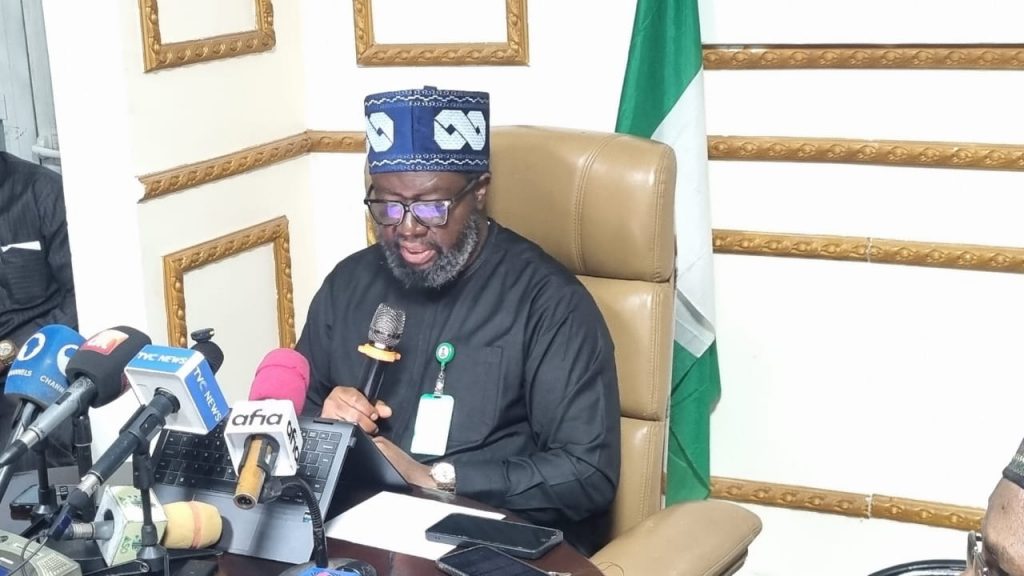
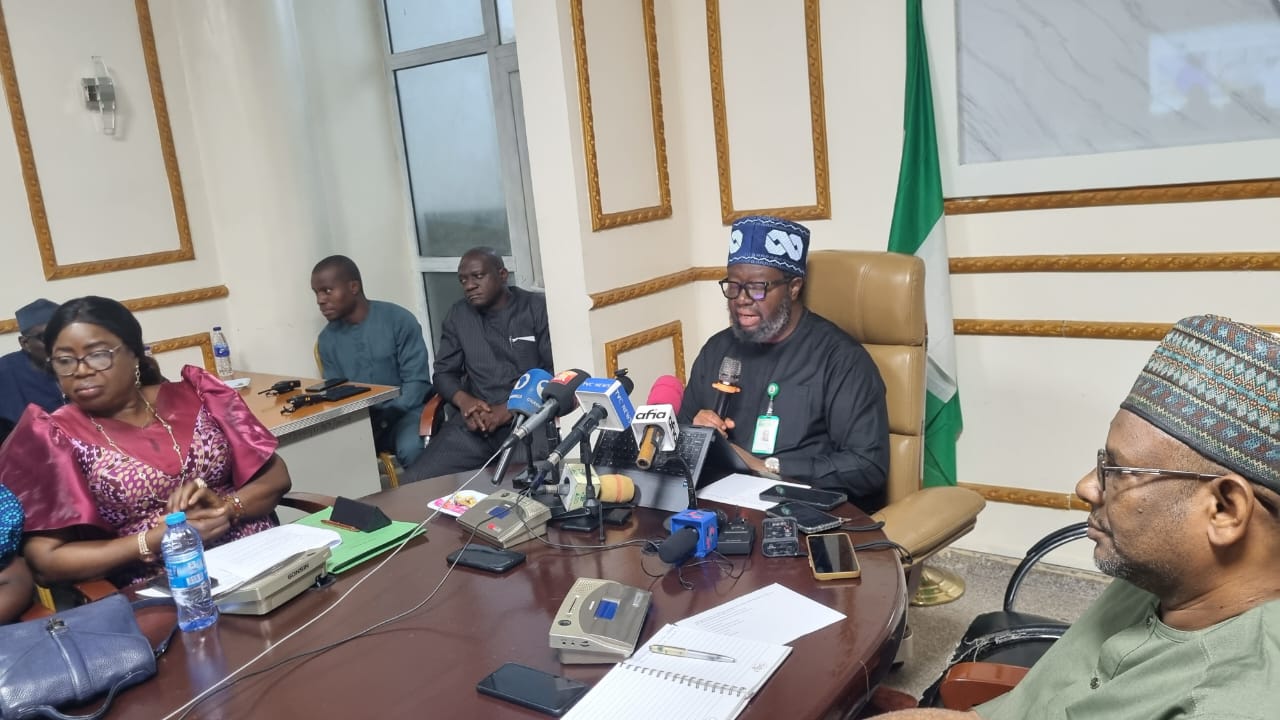
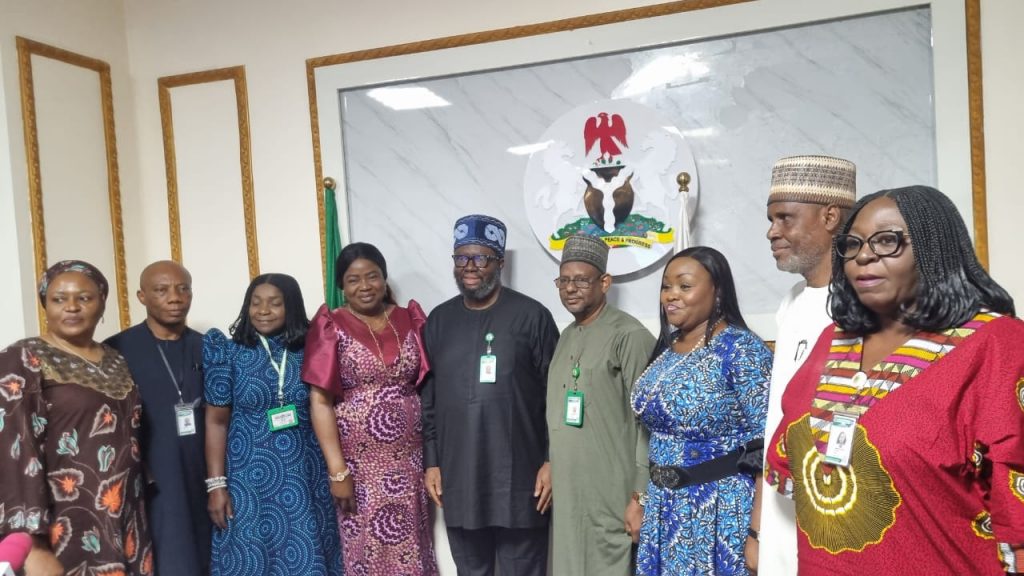
Speaking at a press conference ahead of the summit on Tuesday in Abuja, the Director-General and Chief Executive Officer of RMRDC, Prof. Nnanyelugo Martin Ike-Muonso, said the event would bring together policymakers, investors, researchers, technology providers and industrialists to develop practical strategies for transforming Africa’s abundant natural resources into industrial wealth.
The challenge, therefore, is not simply the abundance of resources, but the continent’s ability to transform those resources into industrial value, employment, technology and wealth within Africa.
Nigeria alone, according to the RMRDC, has more than $582.4 billion in documented non-renewable natural resources, while the wider continent possesses substantial deposits of critical minerals, agricultural raw materials and industrial feedstock.
Yet, the benefits of this resource endowment have often been constrained by inadequate processing capacity, weak infrastructure, limited technology, financing gaps and fragmented regional value chains.
From Dialogue to Industrial Action
ARMS 2026 builds on the maiden edition held in May 2025, which attracted more than 1,000 delegates from across the world.
The inaugural summit also witnessed the unveiling of the Ten-Year Raw Materials Transformation Roadmap (2025–2034) by the Minister of State for Industry, Senator John Owen Enoh.
The roadmap was designed around areas including technological capability, climate-resilient processing and backward integration, establishing a policy framework for greater domestic utilisation of Africa’s raw materials.
The second edition is expected to move the conversation further by bringing policy, capital, technology and industrial stakeholders around practical mechanisms for turning raw materials into locally manufactured products.
One of the major proposals highlighted by the RMRDC is the 30 per cent Mandatory Value Addition Bill, which seeks to establish a statutory minimum level of value addition to Nigerian raw materials before export.
The Council says the proposed framework could support job creation, import substitution, foreign-exchange conservation and increased manufacturing contribution to the economy.
Building the Infrastructure for Value Addition
The industrial transformation envisaged by ARMS 2026 goes beyond legislation.
A major concern is the “missing middle” between where raw materials are produced and where factories are located.
Poor transportation networks, inadequate cold-chain facilities, weak rural roads, limited testing and certification infrastructure and border-related delays can make locally sourced materials more expensive and less competitive.
Consequently, logistics and infrastructure constitute one of the five principal pillars of the summit.
The objective is to develop more reliable corridors connecting farms and mines with processing centres and manufacturing facilities, thereby reducing losses and improving the movement of industrial inputs.
The Digital Dimension
Technology is also becoming an important part of the Council’s strategy.
The RMRDC says it has developed the Nigeria Integrated Information Statistical System for Raw Materials and Products (NISSRAMP), described as a digital repository containing information on feedstock deposits, specifications, production outputs and industrial absorption rates.
The Council has also highlighted its transition towards paperless operations and its certification as a Data Controller/Processor of Major Importance by the Nigeria Data Protection Commission.
Such digital infrastructure could provide investors and manufacturers with better information about the availability and characteristics of raw materials while supporting more informed industrial planning.
Turning Waste Into Industrial Inputs
Another major component of ARMS 2026 is the proposed expansion of the circular economy.
The summit will examine how agricultural by-products, mine tailings, scrap metals and biomass can be recovered and reused as inputs for new production processes rather than being treated simply as waste.
The RMRDC argues that such an approach could lower raw-material costs while supporting more sustainable and climate-resilient manufacturing systems.
For Africa, where industrial expansion must increasingly balance economic development with environmental considerations, waste industrialisation could become an important part of the continent’s manufacturing conversation.
From National Production to African Value Chains
The African Continental Free Trade Area is another important element of the summit’s agenda.
The RMRDC sees AfCFTA as an opportunity to create regional value chains in which raw materials sourced in one African country can be processed and supplied to manufacturers in another.
Under such a model, Africa would move beyond simply exporting commodities to external markets and develop stronger internal networks for supplying chemicals, refined minerals, agricultural inputs and other industrial materials across national borders.
This approach places regional integration at the heart of Africa’s industrialisation strategy.
Bridging Research and Capital
A recurring weakness in many developing economies is the gap between research and commercialisation.
Innovations may emerge from universities, research institutions and laboratories without receiving the financing, equipment or market connections required to become commercially viable.
ARMS 2026 intends to address that gap through technology commercialisation and capital linkages, connecting research outputs with investors, development finance institutions and industrial off-takers.
The RMRDC has also cited partnerships with the Bank of Industry for commercial-scale post-harvest processing and a South-South technology-transfer partnership with the National Innovation Centre par Excellence in Shanghai, China.
A Larger Industrial Conversation
The scale of ARMS 2026 is expected to be significantly larger than the maiden edition.
The organisers project more than 1,800 delegates from all 54 African countries and global industrial partners.
The programme will feature high-level policy dialogues, technical panels, an advanced raw materials and technology exhibition, industrial site visits and the African Raw Materials Industry Awards.
The exhibition, in particular, is expected to showcase locally fabricated processing machinery, advanced domestic materials, green chemicals and engineered commercial inputs.
Beyond the speeches and exhibitions, however, the real significance of ARMS 2026 will ultimately depend on what happens after the summit.
Africa’s challenge has never been a shortage of raw materials. The more difficult question has been how to transform those resources into factories, products, skilled employment, technology and sustainable economic opportunities.
For Nigeria and the rest of the continent, the proposed shift from “pit-to-port” to “feedstock-to-factory” therefore represents a broader debate about the future structure of African economies.
ARMS 2026 seeks to place that debate firmly on the industrial agenda — with value addition, technology, finance, infrastructure, circular production and regional trade at the centre.
If the commitments and partnerships generated by the summit translate into measurable industrial activity, the event could provide another platform for Africa to examine how its enormous resource base can support stronger domestic manufacturing.
The message from the organisers is clear: the continent’s raw materials should not only leave African soil as commodities; they should increasingly become the foundation for African industrial production
-
 Featured7 years ago
Lampard Names New Chelsea Manager
-
 Featured7 years ago
FG To Extends Lockdown In FCT, Lagos Ogun states For 7days
-
 Featured7 years ago
Children Custody: Court Adjourns Mike Ezuruonye, Wife’s Case To April 7
-
 Featured7 years ago
NYSC Dismisses Report Of DG’s Plan To Islamize Benue Orientation Camp
-

 Featured5 years ago
Transfer Saga: How Mikel Obi Refused to compensate me After I Linked Him Worth $4m Deal In Kuwait SC – Okafor
-
Featured7 years ago
Board urges FG to establish one-stop rehabilitation centres in 6 geopolitical zones
-
Sports4 years ago
TINUBU LAMBAST DELE MOMODU
-

 News2 years ago
Zulu to Super Eagles B team, President Tinubu is happy with you