
Featured
Towards a Study in Comparative Analysis: the Enugu-Ebonyi Paradigm

By Reuben Onyishi (Ugoachataberu)
To know a thing is to know it in opposition to other things. This implicates binary- opposite kind of reasoning as similarities and parallels are drawn in order to arrive at what really constitutes the objects in question and how one differs from the other in quality, inform and presumably in content also, without prejudice to their individual peculiarities.
It is natural to think female when a male is mentioned. This manner of thinking may account for why man created gender and the conflicts that arise from gender issues; whereas, He that made them made them male and female. God created sex with defined natural forms and roles. The differences are quite clear in form and content, though the two sexes share in the set of humanity as subsets. Today, some have tinkered with their natural sexuality and are no longer happy with the sex naturally assigned to them. Some men have become women and vice versa. Some have inverted sexuality and have no sexual feeling for the opposite sex as designed by nature; they feel sexual desire for the same sex. The conflicts created by this have torn the world apart.
It is not actually wrong to think comparatively in opposition, as this helps to bring out differences and confer on each object its natural question and status. However, when the attitude is to think why X should be Y and leave being itself, then conflicts and troubles are inevitable. Such is the effect of the tinkering with natural dispositions. Objects may come across each other; they may share borders but none loses its identity to the other. An object may even at the surface configuration reflect some qualities other than itself, yet does not lose itself to the outer surface appearance. You may be in different outfits at different times but do not lose who you really are to any of the outfits. Comparative thinkers should really place their eyes on the real object and resist the seduction of surface configuration. That is why a lot of discrepancies is often found between appearance and reality. That is the irony of life.
Enugu State and Ebonyi State share borders with each other. The two states belong to a set called South East in Nigeria’s structural demarcation. Enugu State has been the root of which the South Eastern states hived. Enugu was the capital of the South Eastern Region during the first republic and in the process of time got split into two: Anambra and Imo states, created by the military government of Late Muritala Muhammed. Then in 1991, Anambra State which capital was Enugu was split into two: Enugu and Anambra states with Enugu being the capital of Enugu State thereby retaining the infrastructural appurtenances of the state capital. It was from this same root that Ebonyi State was later created with the agrarian semi-rural town, Abakaliki, as its capital. Awka, the capital of the new Anambra State, before it became the capital, had the same rural status. So, it was expedient for the governments of these virgin states to bring these rural towns to urban state capital status by understandably taking some tangible strides in the provision of basic amenities meant to uplift these towns. The governments of the new Enugu State naturally inherited a lot of assets in the state capital, beginning from the seat of power: the Lion Building, the house of assembly and the judiciary complexes, the Enugu State University of Science and Technology, the Institute of Management and Technology(IMT), the Enugu State Broadcasting Service, ESBS, the state secretariat, the various road networks in the city and a whole lot of assets. So, it was natural that while the governments of the new states would be burdened with critical infrastructural needs inevitably at the state capital, Enugu State would look away for other things as these projects were already on the ground.
Now whether it is appropriate for comparative opposite thinkers to compare Enugu State with Ebonyi State as it is rife today among some casual critics that stray around the social media platforms is a question begging for an answer. Most of these critics do not have the intellectual depth to think deeper that they be able to tease out the surface and seductive fripperies that may mix up with the two objects and hold their distinct identities sacrosanct. Objects that share borders when subjected to comparative analysis have got to be managed well to avoid confusing and mixing up issues that may result in problems that can engender conflicts, war, and misunderstanding. That is really why comparative criticism is not a ready tool in the hands of the unschooled.
You get to hear such things as “go to Ebonyi State and see what the governor is doing there’ as the latest critical fad from casual social media commentators in their bid to diminish whatever projects the government of Enugu State is doing. When you ask them what the government of Ebonyi State is doing that should be a reference point to Enugu State, they would point to concrete roads and flyovers the governor has caused to erupt here and there in the state capital and which are not being replicated in Enugu State.
It is really difficult to engage with this comparative discourse without ‘calling him who did not call you’ so to say, in the first place. These casual commentators do not actually take into account the peculiar nature of these states and their necessary areas of Infrastructural needs which also have a way of being determined by certain factors. These factors point to the identity of the two objects. Take for instance, if concrete roads are being constructed in Ebonyi State perhaps because of the soil texture of the place, does it also follow that Enugu State too should imitate this for its own sake without any reason or need for that? Won’t it be foolish to do so when asphalted roads have proven to last for decades in Enugu State? Why waste scarce resources on expensive concrete roads when doing so is economically inexpedient? Why resort to such a waste when asphalt gives the state the same value and utility?
Every government has its policy trust and areas of priority. Someone the other day said of Ebonyi State that light shines in streets while homes are in darkness; that the citizenry has turned beggars under beautiful flyovers; that the civil servants are groaning over unpaid salaries which without even the application of the minimum wage has been reduced by 20 percent; that the future of the state has been jeopardized by huge borrowing from international lenders all for the construction of concrete roads and flyovers. I really do not know how true these claims are, but I do know the government of Ebonyi State for the reasons best known to it has concentrated efforts on road projects, and is said to have made Abakaliki a paradise of sorts.
Enugu State as a distinct object has its own needs and policy trust. The government of the state under Ifeanyi Ugwuanyi is given to total projects for the total man. Serious attention is paid to human capital development. Infrastructure is developed bearing in mind how it benefits the citizenry, thereby elevating human lives above the animal level. Civil servants are regularly paid and the new minimum wage is also implemented. Besides this, giant strides are made in the area of road construction, health facilities, agriculture, peace and security, and in all facets of the happiness of the people. The equation is balanced so that Iyianyi is not trampled to death in the process of Oyima’s funerals.
Whatever Ugwuanyi does, he does for his people; whatever Umahi does, he does for his people. The two states are not in equal terms. While Umahi might have reportedly gone into borrowing to build roads and flyovers all over Ebonyi, Ugwuanyi has creatively raised funds without borrowing a dime from anywhere and has put Enugu State in the league of the six states in Nigeria that are financially self-sufficient without federal allocation, despite the fact that Enugu is not an oil-producing state. It is senseless to compare the two states. Heaven and earth are there but heaven is far above the earth. So to what extent can heaven be compared to the earth? Even the heavenly clouds will obfuscate the comparative identification of the heavenly elements; even the sun rays will dim the eyes of the obdurate fool who looks directly into the sun of heaven.
Social media casual critics should leave Umahi alone to concentrate on his job and task of lifting Ebonyi State from its rural outlook, something he is doing with every sense of sacrifice. To continue to compare Ebonyi with Enugu State is to cause unnecessary identity conflicts and bring to ridicule the works of the Ebonyi government, for any tree aspiring to grow taller than the iroko is looking for the sky’s trouble, for any animal headed for the stream shall surely meet the frog there.
Let all animals stay in their habitats. Peter is not James; Enugu is not Ebonyi. They may share borders but they do not lose their identities to the borders



Business
Turning Africa’s Raw Materials Into Wealth: The ARMS 2026 Industrial Agenda
By Joel Ajayi
For decades, Africa’s vast natural resources have powered industries and economies far beyond the continent, while many African countries have remained largely exporters of unprocessed commodities and importers of finished products.
That familiar pattern is now coming under renewed scrutiny as policymakers, researchers, investors and industrialists seek to change the direction of Africa’s resource economy.
At the centre of that conversation is the second edition of the Africa Raw Materials Summit (ARMS 2026), scheduled for October 19 and 20 at the Abuja Continental Hotel, Abuja, under the theme: “From African Feedstock to African Factories.”
Organised by the Raw Materials Research and Development Council (RMRDC), the summit is being positioned as more than another gathering of policymakers and industry stakeholders. It is intended to provide a platform for confronting the structural challenges that have kept African raw materials largely disconnected from local manufacturing.
Africa has for years operated largely within a “pit-to-port” economic model, exporting raw materials while importing expensive finished products.
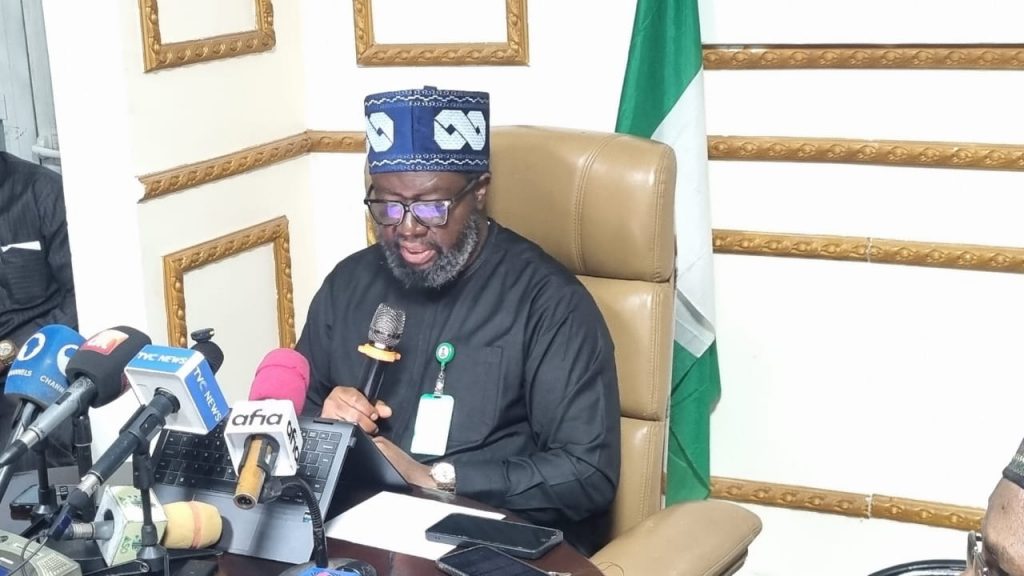
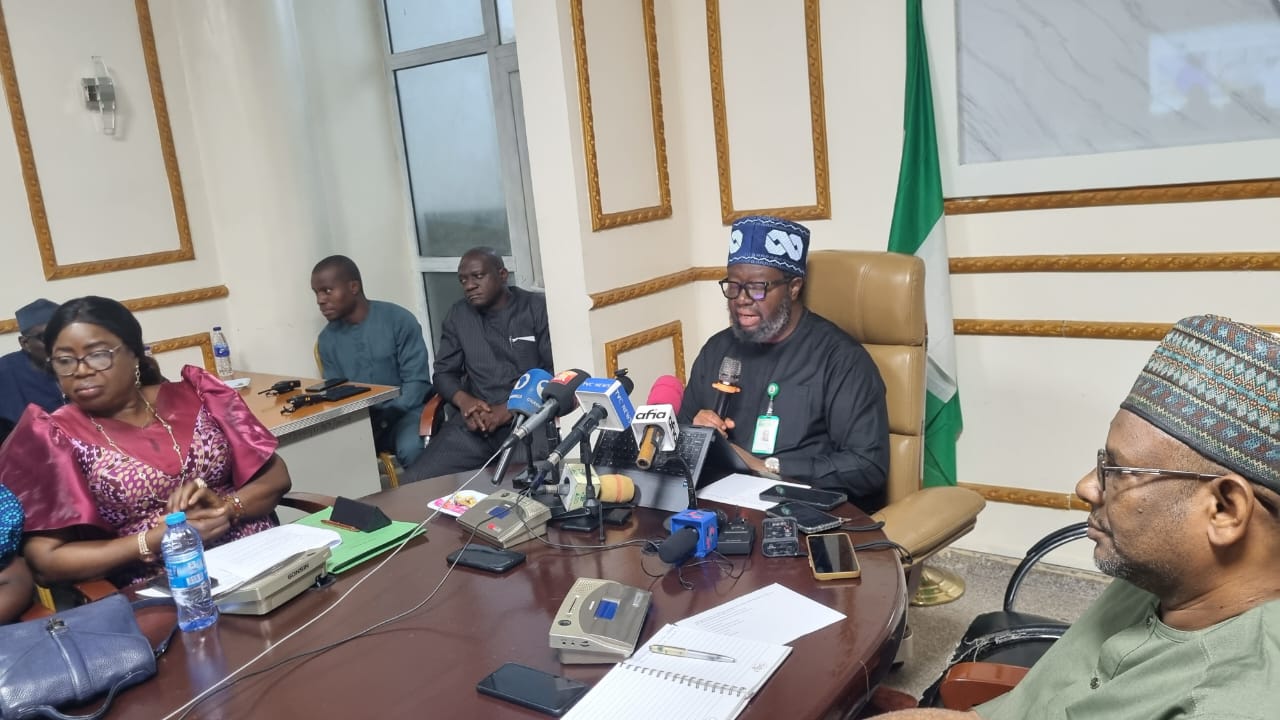
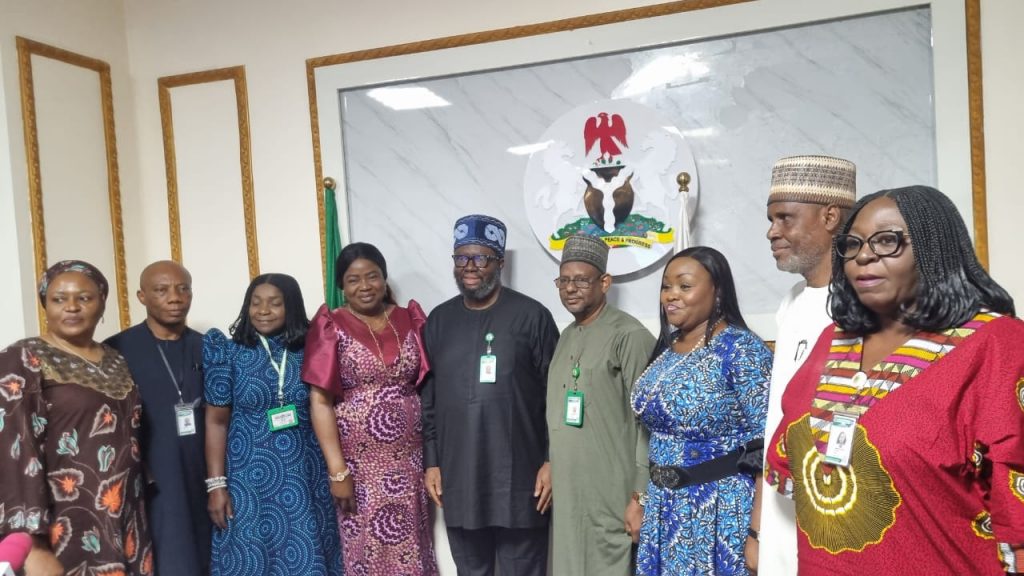
Speaking at a press conference ahead of the summit on Tuesday in Abuja, the Director-General and Chief Executive Officer of RMRDC, Prof. Nnanyelugo Martin Ike-Muonso, said the event would bring together policymakers, investors, researchers, technology providers and industrialists to develop practical strategies for transforming Africa’s abundant natural resources into industrial wealth.
The challenge, therefore, is not simply the abundance of resources, but the continent’s ability to transform those resources into industrial value, employment, technology and wealth within Africa.
Nigeria alone, according to the RMRDC, has more than $582.4 billion in documented non-renewable natural resources, while the wider continent possesses substantial deposits of critical minerals, agricultural raw materials and industrial feedstock.
Yet, the benefits of this resource endowment have often been constrained by inadequate processing capacity, weak infrastructure, limited technology, financing gaps and fragmented regional value chains.
From Dialogue to Industrial Action
ARMS 2026 builds on the maiden edition held in May 2025, which attracted more than 1,000 delegates from across the world.
The inaugural summit also witnessed the unveiling of the Ten-Year Raw Materials Transformation Roadmap (2025–2034) by the Minister of State for Industry, Senator John Owen Enoh.
The roadmap was designed around areas including technological capability, climate-resilient processing and backward integration, establishing a policy framework for greater domestic utilisation of Africa’s raw materials.
The second edition is expected to move the conversation further by bringing policy, capital, technology and industrial stakeholders around practical mechanisms for turning raw materials into locally manufactured products.
One of the major proposals highlighted by the RMRDC is the 30 per cent Mandatory Value Addition Bill, which seeks to establish a statutory minimum level of value addition to Nigerian raw materials before export.
The Council says the proposed framework could support job creation, import substitution, foreign-exchange conservation and increased manufacturing contribution to the economy.
Building the Infrastructure for Value Addition
The industrial transformation envisaged by ARMS 2026 goes beyond legislation.
A major concern is the “missing middle” between where raw materials are produced and where factories are located.
Poor transportation networks, inadequate cold-chain facilities, weak rural roads, limited testing and certification infrastructure and border-related delays can make locally sourced materials more expensive and less competitive.
Consequently, logistics and infrastructure constitute one of the five principal pillars of the summit.
The objective is to develop more reliable corridors connecting farms and mines with processing centres and manufacturing facilities, thereby reducing losses and improving the movement of industrial inputs.
The Digital Dimension
Technology is also becoming an important part of the Council’s strategy.
The RMRDC says it has developed the Nigeria Integrated Information Statistical System for Raw Materials and Products (NISSRAMP), described as a digital repository containing information on feedstock deposits, specifications, production outputs and industrial absorption rates.
The Council has also highlighted its transition towards paperless operations and its certification as a Data Controller/Processor of Major Importance by the Nigeria Data Protection Commission.
Such digital infrastructure could provide investors and manufacturers with better information about the availability and characteristics of raw materials while supporting more informed industrial planning.
Turning Waste Into Industrial Inputs
Another major component of ARMS 2026 is the proposed expansion of the circular economy.
The summit will examine how agricultural by-products, mine tailings, scrap metals and biomass can be recovered and reused as inputs for new production processes rather than being treated simply as waste.
The RMRDC argues that such an approach could lower raw-material costs while supporting more sustainable and climate-resilient manufacturing systems.
For Africa, where industrial expansion must increasingly balance economic development with environmental considerations, waste industrialisation could become an important part of the continent’s manufacturing conversation.
From National Production to African Value Chains
The African Continental Free Trade Area is another important element of the summit’s agenda.
The RMRDC sees AfCFTA as an opportunity to create regional value chains in which raw materials sourced in one African country can be processed and supplied to manufacturers in another.
Under such a model, Africa would move beyond simply exporting commodities to external markets and develop stronger internal networks for supplying chemicals, refined minerals, agricultural inputs and other industrial materials across national borders.
This approach places regional integration at the heart of Africa’s industrialisation strategy.
Bridging Research and Capital
A recurring weakness in many developing economies is the gap between research and commercialisation.
Innovations may emerge from universities, research institutions and laboratories without receiving the financing, equipment or market connections required to become commercially viable.
ARMS 2026 intends to address that gap through technology commercialisation and capital linkages, connecting research outputs with investors, development finance institutions and industrial off-takers.
The RMRDC has also cited partnerships with the Bank of Industry for commercial-scale post-harvest processing and a South-South technology-transfer partnership with the National Innovation Centre par Excellence in Shanghai, China.
A Larger Industrial Conversation
The scale of ARMS 2026 is expected to be significantly larger than the maiden edition.
The organisers project more than 1,800 delegates from all 54 African countries and global industrial partners.
The programme will feature high-level policy dialogues, technical panels, an advanced raw materials and technology exhibition, industrial site visits and the African Raw Materials Industry Awards.
The exhibition, in particular, is expected to showcase locally fabricated processing machinery, advanced domestic materials, green chemicals and engineered commercial inputs.
Beyond the speeches and exhibitions, however, the real significance of ARMS 2026 will ultimately depend on what happens after the summit.
Africa’s challenge has never been a shortage of raw materials. The more difficult question has been how to transform those resources into factories, products, skilled employment, technology and sustainable economic opportunities.
For Nigeria and the rest of the continent, the proposed shift from “pit-to-port” to “feedstock-to-factory” therefore represents a broader debate about the future structure of African economies.
ARMS 2026 seeks to place that debate firmly on the industrial agenda — with value addition, technology, finance, infrastructure, circular production and regional trade at the centre.
If the commitments and partnerships generated by the summit translate into measurable industrial activity, the event could provide another platform for Africa to examine how its enormous resource base can support stronger domestic manufacturing.
The message from the organisers is clear: the continent’s raw materials should not only leave African soil as commodities; they should increasingly become the foundation for African industrial production
-
 Featured7 years ago
Lampard Names New Chelsea Manager
-
 Featured7 years ago
FG To Extends Lockdown In FCT, Lagos Ogun states For 7days
-
 Featured7 years ago
Children Custody: Court Adjourns Mike Ezuruonye, Wife’s Case To April 7
-
 Featured7 years ago
NYSC Dismisses Report Of DG’s Plan To Islamize Benue Orientation Camp
-

 Featured5 years ago
Transfer Saga: How Mikel Obi Refused to compensate me After I Linked Him Worth $4m Deal In Kuwait SC – Okafor
-
Featured7 years ago
Board urges FG to establish one-stop rehabilitation centres in 6 geopolitical zones
-
Sports4 years ago
TINUBU LAMBAST DELE MOMODU
-

 News2 years ago
Zulu to Super Eagles B team, President Tinubu is happy with you