
Featured
The Unfortunate Hijack Of Enugu Endsars Protest And Its Backlash.

By Jeff Ejiofor
Enugu State, known for its peace and tranquility was recently plunged into the worst crisis in the history of its creation by hoodlums under the guise of EndSARS protest. The city, which is peaceful and accommodating to people from all walks of life was turned into a theatre of war in a most devastating manner by miscreants who unleashed unprecedented mayhem on the people. It was indeed unfortunate that what started on a sound note as a peaceful protest snowballed into full-scale violence of unimaginable proportion. It is however believed that the dangerous dimension it took was as a result of its hijack by political opportunists who changed the initial objective out of sheer mischief to serve their parochial selfish interest.
EndSARS protest was a noble initiative by the elitist arm of Nigerian youths to seek justice in the entire Nigerian system. It was a collectively articulated agenda by the Nigerian youths to agitate for their rights in a restructured federation where justice and equity prevail. A move to push for a Nigeria where opportunities abound for the youths irrespective of tribe, section, or religion. It was a call for a country where an institutional framework for good governance will be entrenched from the top to the bottom. Hence, the title EndSARS was simply a platform to anchor the agitation considering the glaring enormity of police brutality through the SARS unit of its command. This, largely informed the all-inclusive 23 point demand presented by the organizers.
Obviously and without mincing words, it is clear that the bulk of what the movement sought to achieve rest on the shoulders of the central government which by virtue of the 1999 constitution, is the custodian of Nigeria’s political destiny and future. As a matter of fact, most states, especially the ones in the southern and central parts of the country have never hidden their displeasure over the structural defect of the current Nigerian political system as imposed by the faulty 1999 military constitution. This probably informed the lopsided dimension taken by the EndSARS solidarity protest which was mainly observed in southern and central Nigeria. It, therefore, suffices to say that even the political class in these disadvantaged parts of Nigeria, who are in the system probably because of political expediency, were actually on the same page with the youths in that noble cause.
It’s therefore unfortunate that some unpatriotic political elements in the society saw it as an opportunity to further their selfish political interest by politicizing and localizing it to the detriment of the original aim. This group of fifth columnists saw in it an opportunity to invite the people against their home governments and perceived political enemies in order to demonize them before the masses. They hired and paid some prominent youths to infiltrate the ranks of protesters with a view to polarizing their minds. That was exactly the case with Enugu State when some sponsored popular artists sought to change the direction of the protest to cause disaffection between Ndi Enugu and their government. It was on this premise that they almost ruined and disrupted the well-intended peaceful protest in Enugu in line with the dictates of their paymasters and in justification of the money they collected. Just as the saying that the guilty are afraid, some of them even went as far as alleging threats to their lives.
Ironically, the same Gov. Ifeanyi Ugwuanyi of Enugu State who they intended running down, was among the first governors to respond to EndSARS agitation by setting up a commission of inquiry with adequate representation of the youths. He never confronted them but chose the part of peace to find a lasting solution to the problem. This is in addition to making out time to constantly address them throughout the peaceful processions. He was unarguably one of the few governors that adopted that measure irrespective of his tight schedules. On each occasion, he interacted with them and promised to take actions that will address their grievances. For example, when SARS was disbanded by the federal government, Ugwuanyi did not hesitate in visiting their office to ensure compliance. He personally supervised it to make sure nothing is left undone. All these he did as a responsible and responsive leader to reassure the youths that their voice had been heard loud and clear. My question now is; where did he err?
Well, it’s unfortunate that the Lekki Toll Gate shootings in Lagos provided the needed opportunity for them to actualize their evil intention of hijacking the process. Unknown to them, it took a more dangerous dimension as hoodlums turned against the entire political and economic structure, a situation that would have equally consumed them as well. They had thought that instigating hate against the governor by recruiting people to wage campaigns of calumny would exonerate them and increase their popularity.
Apparently, the unruly conduct of their paid agents which embarrassed the governor at the protest ground may have possibly influenced the reaction of the youths against the government and the good people of Enugu State. The level of damage recorded in the Enugu metropolis is an indication of this instigated resentment against the state. We all know how they struggled to malign the government of Enugu State in their bid to incite the masses against the governor. Like I pointed out earlier, some of them even accused the governor of plotting against their lives just to attract public sympathy and cause resentment.
What played out before the protest turned violent could give an insight into the instigated resentment. That also explains the decision of Gov. Ugwuanyi to remain calm and unruffled throughout the provocative conducts of the hoodlums. He refused to be drawn into open confrontation with the arsonists and miscreants in order to avoid possible loss of lives. This singular action of His Excellency unsettled the naysayers who had wanted Enugu to collapse under his watch. Even in the case of flagrant disobedience of the 24 hrs curfew imposed to control the situation, Ugwuanyi still maintained emotional decorum. However, this his calm disposition was simply to avoid clashes between the hoodlums and security agents that would have led to heavy casualties.
Despite all these, people still struggled to accuse him of high-handedness and indifference. High handed for deploying security agents to quell the crisis and indifferent for allowing the hoodlums to operate unhindered. For God’s sake, what can one do to please human beings? Quite unfortunate!
The same Ugwuanyi is unarguably one of the few governors in Nigeria today that shows enormous concern and interest in the youths. His policies and actions are geared towards youth empowerment and human capital development. He pays so much attention to education and has transformed the sector unimaginably in Enugu State. A peep into the giant strides recorded so far shows that he has turned around the condition of both primary and secondary education in the state with modern facilities of an impeccable standard. It takes a careful appraisal for people to understand the depth of his efforts towards repositioning the state tertiary education and the sector in general.
In the area of the welfare of the youths, Ugwuanyi has outperformed all previous governors of Enugu State put together. He has many schemes tailored to the promotion of entrepreneurship development and youth empowerment. He has been organizing many programs that focus on skill acquisition training and trader empowerment scheme including the ongoing partnership with World Bank where 2000 youths of Enugu State will get a grant of 2m naira each to carry out any business of their choice. He also instituted many scholarship schemes for both domestic and foreign studies, among which were the recent sending of over 30 students of Enugu State extraction to India for ICT training. Award of scholarship to over 500 indigent students of Enugu State Polytechnic, Iwollo was one of such magnanimous gestures. It will also interest the youths to know that Ifeanyi Ugwuanyi’s elevation of Enugu workers’ salary is to their benefit as such will empower their parents and guardians to send them to school with ease, unlike in the past when they were the least paid in Nigeria.
Furthermore, he opened up rural roads to connect agrarian communities as another avenue of encouraging youths’ participation in agriculture and this will in turn reposition them economically. Honestly, only a few governors in this country invest in the youths as Ugwuanyi is doing even before the EndSARS uprising. So, I do not in all honesty see the youths of Enugu rising against him for any reason and that was why the plot by political jobbers to sustain their disaffection failed. The outpour of youths to the streets of Enugu to carry out general clean up after the crisis was convincing evidence of their love for Ugwuanyi.
Finally, may I draw the attention of the public to the current efforts being made by the governor to fully restore normalcy and get Enugu State back on track again? He has directed the relevant agencies to identify all critical infrastructure damaged during the crisis and fix them immediately. In keeping with his philosophy of welfarism, he has also constituted a judicial panel of inquiry to evaluate all private property affected by the violent protest including lives lost for adequate compensation by the government. He is obviously one of the few governors that have taken such steps and should be commended rather than vilified. There is nowhere youths will hold him accountable that he has not displayed sufficient interest to handle. The truth is that he lives above board irrespective of a politically orchestrated campaign of calumny by detractors with their eyes on 2023. Indeed I agree that politics is a dirty game if a person with this heart of gold can still be hunted this way. For want of space, I will not dabble into the Enugu palliative hoax and it’s attended false accusations by this same group of seeming outlaws. Full details of what transpired will soon be published for the public to judge. In conclusion, I appeal to agents of destabilization to know that Enugu belongs to all of us, and must be guarded jealously. The uninformed youths who think public assets belong to the governor should be made to understand that it’s not true. The properties belong to all of us and we have a collective duty to protect them.
I rest my case.
Enugu remains in the hands of God!



Business
Turning Africa’s Raw Materials Into Wealth: The ARMS 2026 Industrial Agenda
By Joel Ajayi
For decades, Africa’s vast natural resources have powered industries and economies far beyond the continent, while many African countries have remained largely exporters of unprocessed commodities and importers of finished products.
That familiar pattern is now coming under renewed scrutiny as policymakers, researchers, investors and industrialists seek to change the direction of Africa’s resource economy.
At the centre of that conversation is the second edition of the Africa Raw Materials Summit (ARMS 2026), scheduled for October 19 and 20 at the Abuja Continental Hotel, Abuja, under the theme: “From African Feedstock to African Factories.”
Organised by the Raw Materials Research and Development Council (RMRDC), the summit is being positioned as more than another gathering of policymakers and industry stakeholders. It is intended to provide a platform for confronting the structural challenges that have kept African raw materials largely disconnected from local manufacturing.
Africa has for years operated largely within a “pit-to-port” economic model, exporting raw materials while importing expensive finished products.
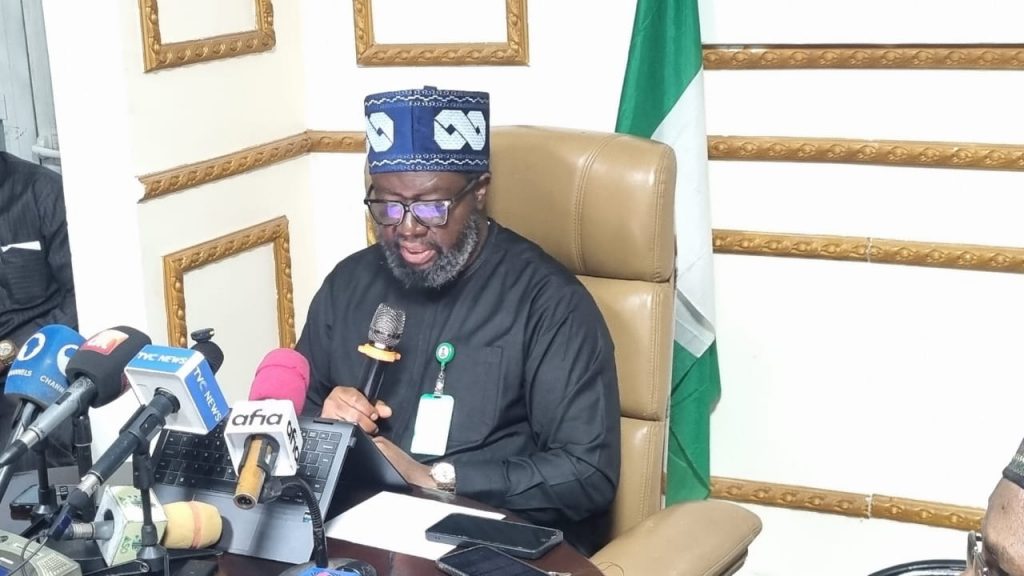
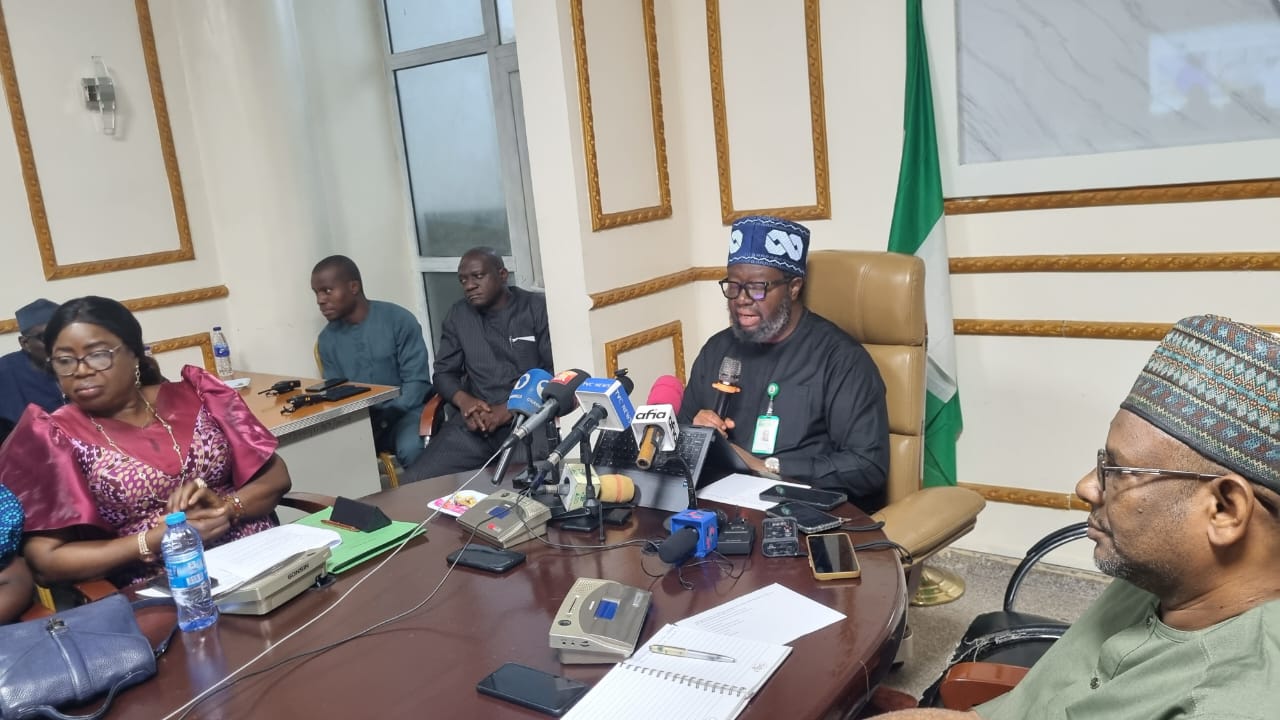
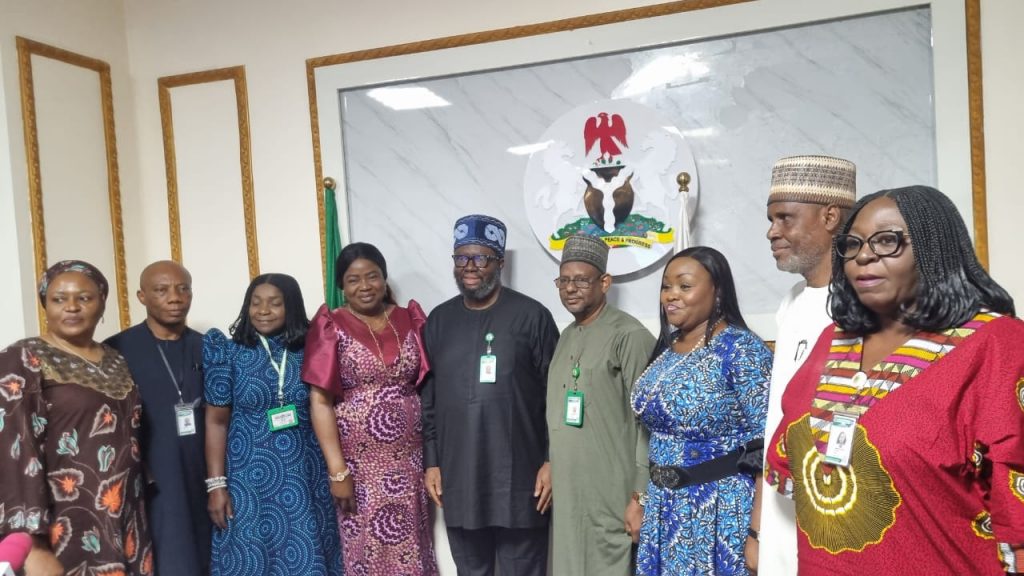
Speaking at a press conference ahead of the summit on Tuesday in Abuja, the Director-General and Chief Executive Officer of RMRDC, Prof. Nnanyelugo Martin Ike-Muonso, said the event would bring together policymakers, investors, researchers, technology providers and industrialists to develop practical strategies for transforming Africa’s abundant natural resources into industrial wealth.
The challenge, therefore, is not simply the abundance of resources, but the continent’s ability to transform those resources into industrial value, employment, technology and wealth within Africa.
Nigeria alone, according to the RMRDC, has more than $582.4 billion in documented non-renewable natural resources, while the wider continent possesses substantial deposits of critical minerals, agricultural raw materials and industrial feedstock.
Yet, the benefits of this resource endowment have often been constrained by inadequate processing capacity, weak infrastructure, limited technology, financing gaps and fragmented regional value chains.
From Dialogue to Industrial Action
ARMS 2026 builds on the maiden edition held in May 2025, which attracted more than 1,000 delegates from across the world.
The inaugural summit also witnessed the unveiling of the Ten-Year Raw Materials Transformation Roadmap (2025–2034) by the Minister of State for Industry, Senator John Owen Enoh.
The roadmap was designed around areas including technological capability, climate-resilient processing and backward integration, establishing a policy framework for greater domestic utilisation of Africa’s raw materials.
The second edition is expected to move the conversation further by bringing policy, capital, technology and industrial stakeholders around practical mechanisms for turning raw materials into locally manufactured products.
One of the major proposals highlighted by the RMRDC is the 30 per cent Mandatory Value Addition Bill, which seeks to establish a statutory minimum level of value addition to Nigerian raw materials before export.
The Council says the proposed framework could support job creation, import substitution, foreign-exchange conservation and increased manufacturing contribution to the economy.
Building the Infrastructure for Value Addition
The industrial transformation envisaged by ARMS 2026 goes beyond legislation.
A major concern is the “missing middle” between where raw materials are produced and where factories are located.
Poor transportation networks, inadequate cold-chain facilities, weak rural roads, limited testing and certification infrastructure and border-related delays can make locally sourced materials more expensive and less competitive.
Consequently, logistics and infrastructure constitute one of the five principal pillars of the summit.
The objective is to develop more reliable corridors connecting farms and mines with processing centres and manufacturing facilities, thereby reducing losses and improving the movement of industrial inputs.
The Digital Dimension
Technology is also becoming an important part of the Council’s strategy.
The RMRDC says it has developed the Nigeria Integrated Information Statistical System for Raw Materials and Products (NISSRAMP), described as a digital repository containing information on feedstock deposits, specifications, production outputs and industrial absorption rates.
The Council has also highlighted its transition towards paperless operations and its certification as a Data Controller/Processor of Major Importance by the Nigeria Data Protection Commission.
Such digital infrastructure could provide investors and manufacturers with better information about the availability and characteristics of raw materials while supporting more informed industrial planning.
Turning Waste Into Industrial Inputs
Another major component of ARMS 2026 is the proposed expansion of the circular economy.
The summit will examine how agricultural by-products, mine tailings, scrap metals and biomass can be recovered and reused as inputs for new production processes rather than being treated simply as waste.
The RMRDC argues that such an approach could lower raw-material costs while supporting more sustainable and climate-resilient manufacturing systems.
For Africa, where industrial expansion must increasingly balance economic development with environmental considerations, waste industrialisation could become an important part of the continent’s manufacturing conversation.
From National Production to African Value Chains
The African Continental Free Trade Area is another important element of the summit’s agenda.
The RMRDC sees AfCFTA as an opportunity to create regional value chains in which raw materials sourced in one African country can be processed and supplied to manufacturers in another.
Under such a model, Africa would move beyond simply exporting commodities to external markets and develop stronger internal networks for supplying chemicals, refined minerals, agricultural inputs and other industrial materials across national borders.
This approach places regional integration at the heart of Africa’s industrialisation strategy.
Bridging Research and Capital
A recurring weakness in many developing economies is the gap between research and commercialisation.
Innovations may emerge from universities, research institutions and laboratories without receiving the financing, equipment or market connections required to become commercially viable.
ARMS 2026 intends to address that gap through technology commercialisation and capital linkages, connecting research outputs with investors, development finance institutions and industrial off-takers.
The RMRDC has also cited partnerships with the Bank of Industry for commercial-scale post-harvest processing and a South-South technology-transfer partnership with the National Innovation Centre par Excellence in Shanghai, China.
A Larger Industrial Conversation
The scale of ARMS 2026 is expected to be significantly larger than the maiden edition.
The organisers project more than 1,800 delegates from all 54 African countries and global industrial partners.
The programme will feature high-level policy dialogues, technical panels, an advanced raw materials and technology exhibition, industrial site visits and the African Raw Materials Industry Awards.
The exhibition, in particular, is expected to showcase locally fabricated processing machinery, advanced domestic materials, green chemicals and engineered commercial inputs.
Beyond the speeches and exhibitions, however, the real significance of ARMS 2026 will ultimately depend on what happens after the summit.
Africa’s challenge has never been a shortage of raw materials. The more difficult question has been how to transform those resources into factories, products, skilled employment, technology and sustainable economic opportunities.
For Nigeria and the rest of the continent, the proposed shift from “pit-to-port” to “feedstock-to-factory” therefore represents a broader debate about the future structure of African economies.
ARMS 2026 seeks to place that debate firmly on the industrial agenda — with value addition, technology, finance, infrastructure, circular production and regional trade at the centre.
If the commitments and partnerships generated by the summit translate into measurable industrial activity, the event could provide another platform for Africa to examine how its enormous resource base can support stronger domestic manufacturing.
The message from the organisers is clear: the continent’s raw materials should not only leave African soil as commodities; they should increasingly become the foundation for African industrial production
-
 Featured7 years ago
Lampard Names New Chelsea Manager
-
 Featured7 years ago
FG To Extends Lockdown In FCT, Lagos Ogun states For 7days
-
 Featured7 years ago
Children Custody: Court Adjourns Mike Ezuruonye, Wife’s Case To April 7
-
 Featured7 years ago
NYSC Dismisses Report Of DG’s Plan To Islamize Benue Orientation Camp
-

 Featured5 years ago
Transfer Saga: How Mikel Obi Refused to compensate me After I Linked Him Worth $4m Deal In Kuwait SC – Okafor
-
Featured7 years ago
Board urges FG to establish one-stop rehabilitation centres in 6 geopolitical zones
-
Sports4 years ago
TINUBU LAMBAST DELE MOMODU
-

 News2 years ago
Zulu to Super Eagles B team, President Tinubu is happy with you