
Featured
Who Is Father Attah’s God To Give Him Daily Bread?

By Josephat Omeke Esq.
Right from the biblical times, bold and outspoken priests and prophets of God such as Elijah, Nathan, John the Baptist, and Isaiah worked with such powerful kings as David, Ahab, Hezekiah among others have never been in short supply. The biblical priests and prophets were not afraid to say their minds despite the totalitarian atmosphere which then enveloped their climes and for which many like John the Baptist put their lives on the line and in fact paid the supreme doing so.
What Rev. Father Dennis Attah of the Nsukka Catholic diocese wrote in his letter to His Excellency Rt Hon. Ifeanyi Ugwuanyi is therefore not new as worse invectives and diatribes by his spiritual forebears against notable kings existed hundreds of years ago.
What is however new and different from the Nsukka Catholic priest’s approach was his chosen mode of communication which in the main portrayed him more as reveling in mundane publicity than delivering a solemn message.
Another new thing was the priest’s penchant for hypothesis and misinformation as opposed to the biblical prophets who were sure of their facts being prophets themselves and did not depend on hearsay.
The choice of an open letter by someone who claims to advise his brother while also using the social networks accessed by the whole world gives the irresistible impression that there is more than meet the eye.
It’s on record that when the prophet Nathan came to speak to David on his affair with Beersheba, he did so privately and achieved his purpose as David heard him. David also heard him because the man of God’s message and information were divinely true and not based on what he heard.
There was no biblical record that prophet Nathan stood on a mountain top to broadcast his concerns about David to entire Israel.
Similarly, when Elijah had something unpleasant to tell King Ahab the Bible recorded that he personally approached him to tell him about his mistreatment of Naboth. There was no biblical record that he went to the largest market in Israel to broadcast his concerns about King Ahab. So did John the Baptist to King Herod, prophet Isaiah to king Hezekiah, and so on.
Rev. Father Attah’s choice of an open letter in the social media to give his so-called advice is therefore a strange contraption which neither has any biblical underpinning nor graced with social or cultural etiquette. This is more so when as a senior priest of the Nsukka Catholic diocese he could have exploited the closeness of the diocesan Bishop with the Governor to get his message across to the Governor by packaging it and delivering it to him in writing or speaking to him face to face in one of the Governor’s many parleys with the Bishop and the diocesan priests. Ugwuanyi in his disarming humility would have welcomed such advice and possibly put it to practice.
Nowhere in the open letter did the priest say or claimed to have explored let alone exhausted all available communication channels as a true brother would do before settling for an open letter through social media. Rev. Father Attah thus has a lot of explaining to do to convince those who doubt his genuine intentions and who are tempted to believe that his decision to resort to social media is tainted with concealed self-interest, politics, and possible partisanship.
Ordinarily, a priest of God need not bother convincing anyone that he is not a politician or in politics as the priest tried to do, since that has never been an enviable vocation for a priest. He only did so because he knew he was threading an uncharted territory.
However, when a priest starts discussing certain politics related conspiracy theories not discernible to even practicing politicians such as a Governor’s ambition to become vice president and for which he shares a lot of money to achieve, without providing a scintilla of proof, it becomes even more difficult not to believe that he is either neck-deep in politics or associate with those who do to be able to access such kind of information.
When a priest of God starts making a grave criminal allegation in social media to the effect that a Governor collects kickbacks from contractors to execute poor jobs without a scintilla of proof other than that he heard, or that someone told him, there is indeed cause for concern and which his employer should take seriously.
Does Rev. Father Attah not know the criminal nature of his allegation against Governor Ugwuanyi and which is sufficient to put him in the duck to prove his allegation or ground a suit in defamation? Has he provided any proof other than what he heard? This is really unfortunate.
I’m thus inclined to believe that he is too educated and exposed not to know that he has no immunity from prosecution and that he may be required to show proof of his allegation. Fortunately for him, Governor Ugwuanyi unlike those before him is too peaceful to toe that line. Nevertheless, I’m also tempted to believe that the whole thing is not spontaneous but well planned out.
As written in the gospel according to father Attah alone, there was no hunger in Nsukka land, Enugu, and indeed Nigeria since her 60 years of independence until Ugwuanyi came on board in 2015. Food was the cheapest commodity money can buy in Enugu state while everyone was feeding fat until Ugwanyi came in 2015.
Youth unemployment which gripped Nigeria since 1984 and which it has not been able to tackle ever since has suddenly become an Enugu phenomenon and which Ugwuanyi ought to have fixed in five years.
All previous Governors of Enugu state-provided massive jobs for the youths, and building industries that absorbed thousands of graduates and school leavers in their areas except Governor Ugwuanyi. Father Attah ended up not naming a single industry built by any of Ugwuanyi’s predecessors since 1999.
When criticism is borne out of love and objectivity it is always discernible in that it acknowledges both areas of successes and weakness but when borne out of malice or ill will everything else is condemned and rubbished.
Father Attah is aware that due to protracted poor power supply in the country, successive federal governments let alone any state has built no industry in the past three decades while those that attempted to do, closed shop shortly afterward laying off workers. Only a negligible number of private operators are managing to remain in the manufacturing sector hence the frightening unemployment in the country.
It’s probably for this reason that former president Umaru Yar Adua declared a state of emergency in the power sector since industrialization is a big joke without power and steel. Many years after his emergency declaration, the power sector is still epileptic while mounting youth unemployment has reached a frightening crescendo and which ignited the recent protests throughout the federation.
Father Attah wants Governor Ugwuanyi as a state Governor to fix the power necessary for industrialization ( and which by the way is a federal responsibility under the constitution)in order to create jobs for Enugu or Nsukka people in isolation.
Father Attah credited Sullivan Chime with doing so much for the Udi people and attracted Road Safety Academy for Udi while Chimaroke got Law School for his own people.
It didn’t matter to the priest that all the institutions he mentioned were federal institutions and that none of the Governors would have been able to attract any if PDP was not in control of the center during their time, a luxury Ugwuanyi in opposition government doesn’t have. The much he has been able to attract such as the refurbished international airport happened to owe to his own inherent diplomatic skills and none confrontational approach.
It didn’t also matter at all to the priest if Ugwuanyi has in the past five years received far less in oil revenue to throw about as all the monthly statutory allocations he has so far collected is nothing comparable to a year’s excess crude receipts shared on a quarterly basis by his predecessors.
The social media adviser initially did not agree that Ugwuanyi has anything tangible to show for his five years of stewardship but later credited him with building roads which according to him did not matter to a hungry man. Much later he began to attack the roads as being poor in quality something he didn’t earlier believe existed.
Then he talked about Nrashi the same language Ugwuanyi’s detractors have unreasonably dramatized without showing evidence that Nrashi in the Nsukka dialect means anything else other than licking one’s fingers after having eaten. The same person he accuses of spreading hunger in the land he also accuses of giving people means to eat to lick their fingers.
It’s understandable that Nsukka people’s expectations on Governor Ugwuanyi is huge and sometimes over-bloated but the reasonable and informed ones are fully aware of the challenges he faces as a recession Governor something Nigeria had last in 1983 and which is unlikely to abate anytime soon as oil price now sells at 32 dollars per barrel.
They are aware that the Governor despite the leanness of resources has invested heavily in the social sector like no Governor before him and for which the National Bureau of Statistics has rated him very high. Even if the Attahs of this world deny all Ugwuanyi’s achievements for reasons best known to them, it is on record that the Governor has in the past five years employed more teachers than all the governments before him put together. He did so knowing full well that education and health are the most critical sectors of any economy and which must be fixed as a matter of priority.
It’s also on record that Ugwuanyi has employed more medical and health workers in the past five years than all the previous governments combined. In the same vein, It’s on record that Ugwuanyi has employed more judges and built much more judicial infrastructure in five years than all the governments before him. The statistics are there for everyone to see.
No one is forgetting his unprecedented investment in security and law and order. To curb herdsmen menace in the state he for the very first time established the forest guard, a dignified road traffic authority, and funded the neighborhood watch like no other Governor before him. Enugu is not just safe. Somebody works for it.
Harmonious industrial relations are not left out.
Little wonder that apart from permanently banishing strikes in the state’s workforce due to regular payment of salaries, that of the education and health sectors are simply marvelous as Enugu state school children born in the past five years do not know what teachers strike is all about. That matters to those who care as education is key. Thanks to so many institutions that have recognized Ugwuanyi’s giant strides in these sectors. Enugu people are aware that despite the oil boom which characterized administrations before Ugwuanyi workers and teachers strikes were a regular phenomenon in the state.
To the social media adviser, It doesn’t matter if our schools produce fools by continuing to use PTA teachers and our hospitals understaffed provided his expectations in his home local government Uzo Uwani are met. Even then the senator resp renting Nsukka who is from the same area recently said that no Governor has done for Uzo Uwani more than Ugwuanyi has.
Rev father Attah cannot, therefore, hide under the cloak of the priesthood to play politics and spread disinformation as his public outburst is totally insincere, ill-conceived, and highly deceptive. Having thrown his hat into the ring in the most audacious and malevolent manner by leveling serious allegations he provided no single proof other than that he heard and that someone said, the cleric has by his own actions lifted his priestly veil and made himself as vulnerable as everyone else
He should therefore be ready to receive attacks which men in God’s vineyard especially Catholic priests in this part of the country are ordinarily insulated from. A priest has no business in disinformation and false allegations as they are ill winds that blows him no good.



Business
Turning Africa’s Raw Materials Into Wealth: The ARMS 2026 Industrial Agenda
By Joel Ajayi
For decades, Africa’s vast natural resources have powered industries and economies far beyond the continent, while many African countries have remained largely exporters of unprocessed commodities and importers of finished products.
That familiar pattern is now coming under renewed scrutiny as policymakers, researchers, investors and industrialists seek to change the direction of Africa’s resource economy.
At the centre of that conversation is the second edition of the Africa Raw Materials Summit (ARMS 2026), scheduled for October 19 and 20 at the Abuja Continental Hotel, Abuja, under the theme: “From African Feedstock to African Factories.”
Organised by the Raw Materials Research and Development Council (RMRDC), the summit is being positioned as more than another gathering of policymakers and industry stakeholders. It is intended to provide a platform for confronting the structural challenges that have kept African raw materials largely disconnected from local manufacturing.
Africa has for years operated largely within a “pit-to-port” economic model, exporting raw materials while importing expensive finished products.
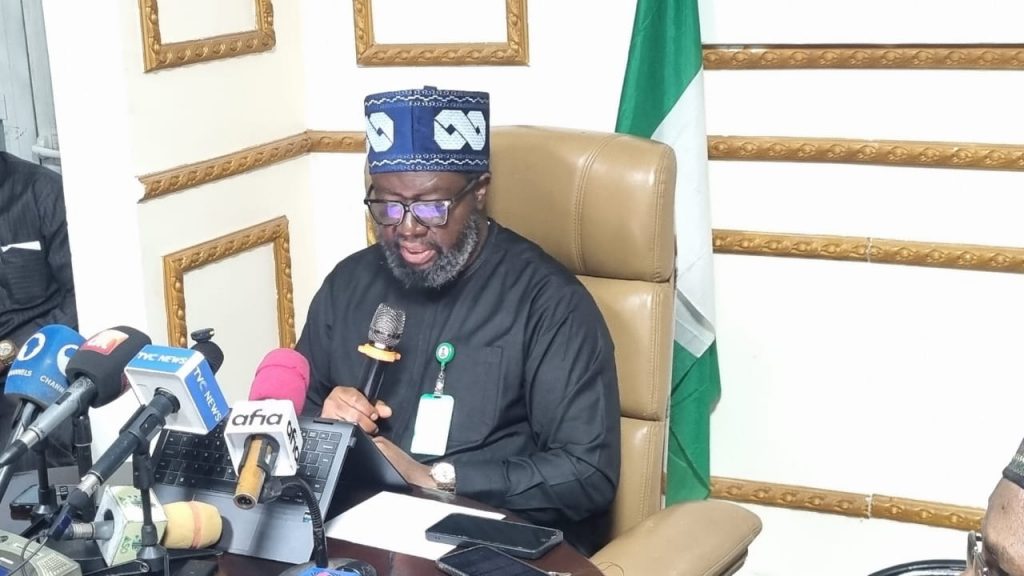
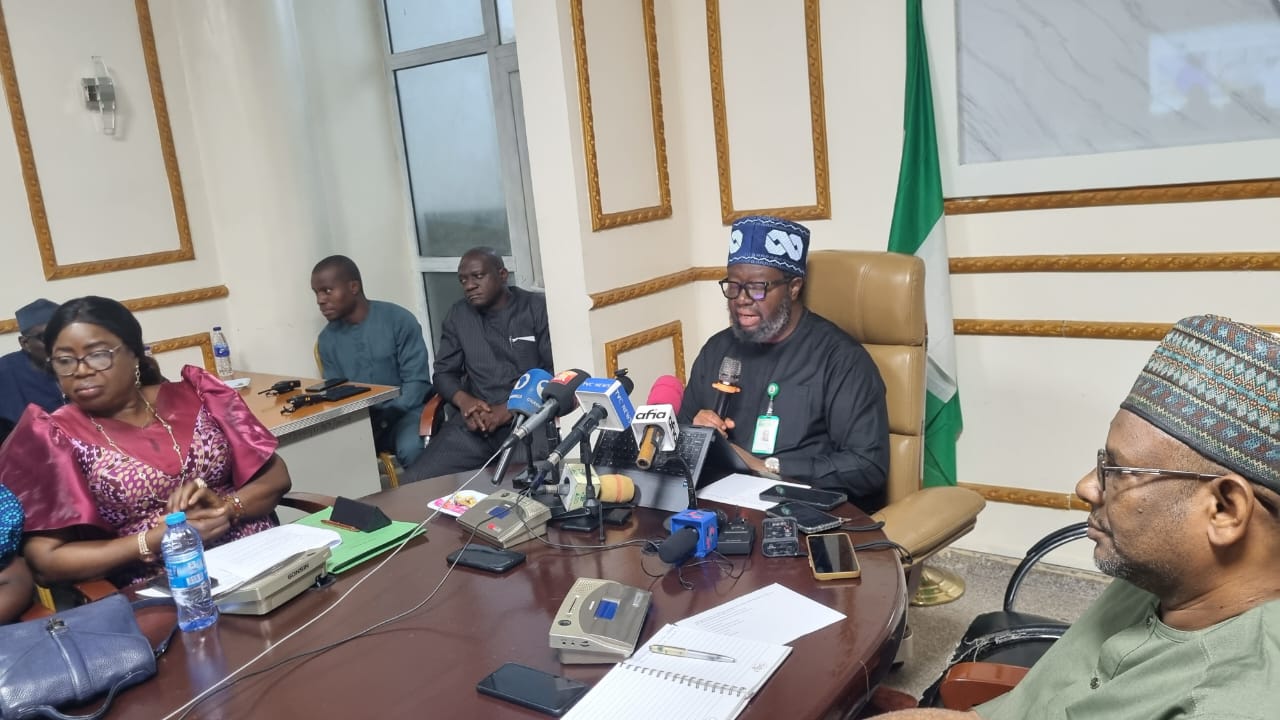
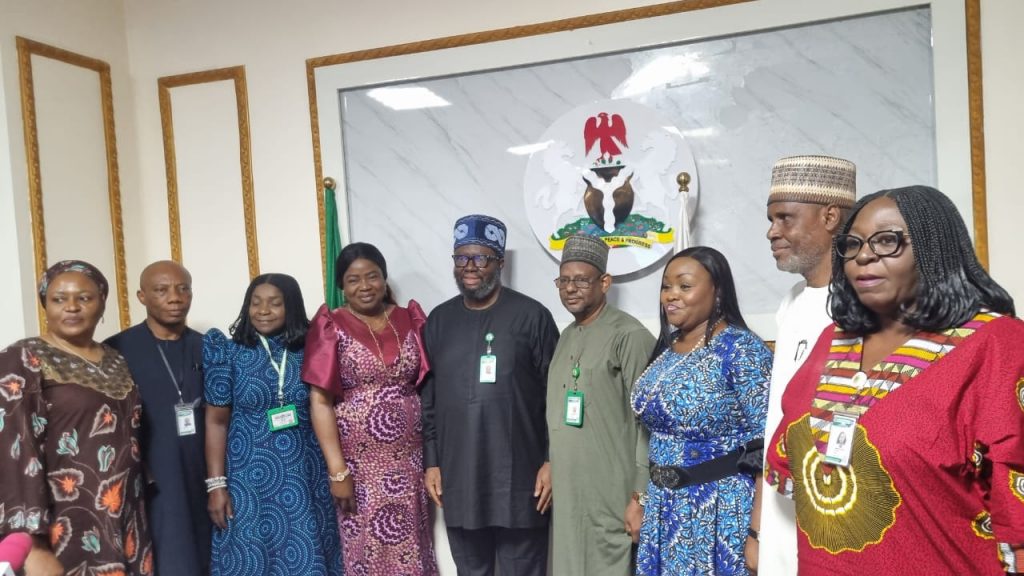
Speaking at a press conference ahead of the summit on Tuesday in Abuja, the Director-General and Chief Executive Officer of RMRDC, Prof. Nnanyelugo Martin Ike-Muonso, said the event would bring together policymakers, investors, researchers, technology providers and industrialists to develop practical strategies for transforming Africa’s abundant natural resources into industrial wealth.
The challenge, therefore, is not simply the abundance of resources, but the continent’s ability to transform those resources into industrial value, employment, technology and wealth within Africa.
Nigeria alone, according to the RMRDC, has more than $582.4 billion in documented non-renewable natural resources, while the wider continent possesses substantial deposits of critical minerals, agricultural raw materials and industrial feedstock.
Yet, the benefits of this resource endowment have often been constrained by inadequate processing capacity, weak infrastructure, limited technology, financing gaps and fragmented regional value chains.
From Dialogue to Industrial Action
ARMS 2026 builds on the maiden edition held in May 2025, which attracted more than 1,000 delegates from across the world.
The inaugural summit also witnessed the unveiling of the Ten-Year Raw Materials Transformation Roadmap (2025–2034) by the Minister of State for Industry, Senator John Owen Enoh.
The roadmap was designed around areas including technological capability, climate-resilient processing and backward integration, establishing a policy framework for greater domestic utilisation of Africa’s raw materials.
The second edition is expected to move the conversation further by bringing policy, capital, technology and industrial stakeholders around practical mechanisms for turning raw materials into locally manufactured products.
One of the major proposals highlighted by the RMRDC is the 30 per cent Mandatory Value Addition Bill, which seeks to establish a statutory minimum level of value addition to Nigerian raw materials before export.
The Council says the proposed framework could support job creation, import substitution, foreign-exchange conservation and increased manufacturing contribution to the economy.
Building the Infrastructure for Value Addition
The industrial transformation envisaged by ARMS 2026 goes beyond legislation.
A major concern is the “missing middle” between where raw materials are produced and where factories are located.
Poor transportation networks, inadequate cold-chain facilities, weak rural roads, limited testing and certification infrastructure and border-related delays can make locally sourced materials more expensive and less competitive.
Consequently, logistics and infrastructure constitute one of the five principal pillars of the summit.
The objective is to develop more reliable corridors connecting farms and mines with processing centres and manufacturing facilities, thereby reducing losses and improving the movement of industrial inputs.
The Digital Dimension
Technology is also becoming an important part of the Council’s strategy.
The RMRDC says it has developed the Nigeria Integrated Information Statistical System for Raw Materials and Products (NISSRAMP), described as a digital repository containing information on feedstock deposits, specifications, production outputs and industrial absorption rates.
The Council has also highlighted its transition towards paperless operations and its certification as a Data Controller/Processor of Major Importance by the Nigeria Data Protection Commission.
Such digital infrastructure could provide investors and manufacturers with better information about the availability and characteristics of raw materials while supporting more informed industrial planning.
Turning Waste Into Industrial Inputs
Another major component of ARMS 2026 is the proposed expansion of the circular economy.
The summit will examine how agricultural by-products, mine tailings, scrap metals and biomass can be recovered and reused as inputs for new production processes rather than being treated simply as waste.
The RMRDC argues that such an approach could lower raw-material costs while supporting more sustainable and climate-resilient manufacturing systems.
For Africa, where industrial expansion must increasingly balance economic development with environmental considerations, waste industrialisation could become an important part of the continent’s manufacturing conversation.
From National Production to African Value Chains
The African Continental Free Trade Area is another important element of the summit’s agenda.
The RMRDC sees AfCFTA as an opportunity to create regional value chains in which raw materials sourced in one African country can be processed and supplied to manufacturers in another.
Under such a model, Africa would move beyond simply exporting commodities to external markets and develop stronger internal networks for supplying chemicals, refined minerals, agricultural inputs and other industrial materials across national borders.
This approach places regional integration at the heart of Africa’s industrialisation strategy.
Bridging Research and Capital
A recurring weakness in many developing economies is the gap between research and commercialisation.
Innovations may emerge from universities, research institutions and laboratories without receiving the financing, equipment or market connections required to become commercially viable.
ARMS 2026 intends to address that gap through technology commercialisation and capital linkages, connecting research outputs with investors, development finance institutions and industrial off-takers.
The RMRDC has also cited partnerships with the Bank of Industry for commercial-scale post-harvest processing and a South-South technology-transfer partnership with the National Innovation Centre par Excellence in Shanghai, China.
A Larger Industrial Conversation
The scale of ARMS 2026 is expected to be significantly larger than the maiden edition.
The organisers project more than 1,800 delegates from all 54 African countries and global industrial partners.
The programme will feature high-level policy dialogues, technical panels, an advanced raw materials and technology exhibition, industrial site visits and the African Raw Materials Industry Awards.
The exhibition, in particular, is expected to showcase locally fabricated processing machinery, advanced domestic materials, green chemicals and engineered commercial inputs.
Beyond the speeches and exhibitions, however, the real significance of ARMS 2026 will ultimately depend on what happens after the summit.
Africa’s challenge has never been a shortage of raw materials. The more difficult question has been how to transform those resources into factories, products, skilled employment, technology and sustainable economic opportunities.
For Nigeria and the rest of the continent, the proposed shift from “pit-to-port” to “feedstock-to-factory” therefore represents a broader debate about the future structure of African economies.
ARMS 2026 seeks to place that debate firmly on the industrial agenda — with value addition, technology, finance, infrastructure, circular production and regional trade at the centre.
If the commitments and partnerships generated by the summit translate into measurable industrial activity, the event could provide another platform for Africa to examine how its enormous resource base can support stronger domestic manufacturing.
The message from the organisers is clear: the continent’s raw materials should not only leave African soil as commodities; they should increasingly become the foundation for African industrial production
-
 Featured7 years ago
Lampard Names New Chelsea Manager
-
 Featured7 years ago
FG To Extends Lockdown In FCT, Lagos Ogun states For 7days
-
 Featured7 years ago
Children Custody: Court Adjourns Mike Ezuruonye, Wife’s Case To April 7
-
 Featured7 years ago
NYSC Dismisses Report Of DG’s Plan To Islamize Benue Orientation Camp
-

 Featured5 years ago
Transfer Saga: How Mikel Obi Refused to compensate me After I Linked Him Worth $4m Deal In Kuwait SC – Okafor
-
Featured7 years ago
Board urges FG to establish one-stop rehabilitation centres in 6 geopolitical zones
-
Sports4 years ago
TINUBU LAMBAST DELE MOMODU
-

 News2 years ago
Zulu to Super Eagles B team, President Tinubu is happy with you













