
Featured
UK Expresses Commitment To Nigeria’s Economic Growth

Joel Ajayi
United Kingdom Government has expressed its commitment to promote an inclusive economic growth in Nigeria.
British Deputy High commissioner in Nigeria, Mr. Guy Harrison said on Wednesday in Abuja that the UK Government is committed to partnering with Nigeria towards enhancing the country’s economic development through the provision of technical assistances to improve her trading capabilities.
Harrison made the declaration while speaking at the ongoing Commonwealth Standards Network (CSN) and the Global Trade Programme (GTP), organised technical training activity on standards development for Nigerian Standards Agencies.
The programme which championed the design of different programmes to deliver specific technical assistance to Nigeria to eliminate non-tariff barriers to trade also witnessed the signing of a Memorandum of Understanding between the British Standards Institute (BSI) and the Standards Organization of Nigeria.
Speaking at the signing event, the Director of Standards Development of the Standards Organization of Nigeria (SON), Mrs. Chinyere Egwuonwu said “With this MoU, both agencies have agreed to share information to support standards development and improvement, to design capacity building activities to promote standards capabilities, and disseminate information on export and import standards requirements for both countries.”
On his part, the Head of International Engagement, British Standards Institute (BSI) Mr. Peter Sissons said “BSI as the business Improvement Company and UK National Standards Body, signed this Memorandum of Understanding (MoU) with The Standards Organisation of Nigeria (SON), the National Standards Body of Nigeria, to advance cooperation between both organizations. The agreement intends to share good practice between the two organisations, promote productivity and efficiency, and reduce costs and barriers to trade between the UK and Nigeria, by increasing the use of standards.”
Also speaking the UK Global Trade Programme Manager, Obosi Philip, noted that “The training activity and MoU will translate to a more capable standard bodies in Nigeria, with access to global standards development programmes and wider standards information sharing platforms. This will in effect, promote export of Made-in-Nigeria products to the UK and the World.”
According to Obosi, the new drive will see to the involvement of measures, which will help in the acceptances of Nigeria products in the international market, saying “What the country has experienced in recent times with the rejection of our products in international markets will now be addressed with the follow-up activities from the signing of the MoU , it will create a good opportunity for those responsible to do the right thing and I am optimistic it will be for the good of the country as well as boost our trade relationships.”
Also at the training were other key standards authorities in Nigeria, including the National Agency for Foods Drugs Administration and Control (NAFDAC), Nigerian Agricultural Quarantine Service (NAQS), Federal Ministry of Agriculture and Rural Development (FMARD), Federal Ministry of Health, Federal Ministry of Industry Trade and Investment (FMITI) and Nigerian Export Promotion Council (NEPC). Donor agencies such as the World Bank and German Development Cooperation (GIZ).



Featured
CELEBRATING A CENTURY-OLD CIVIL AVIATION SECTOR TRAJECTORY IN NIGERIA
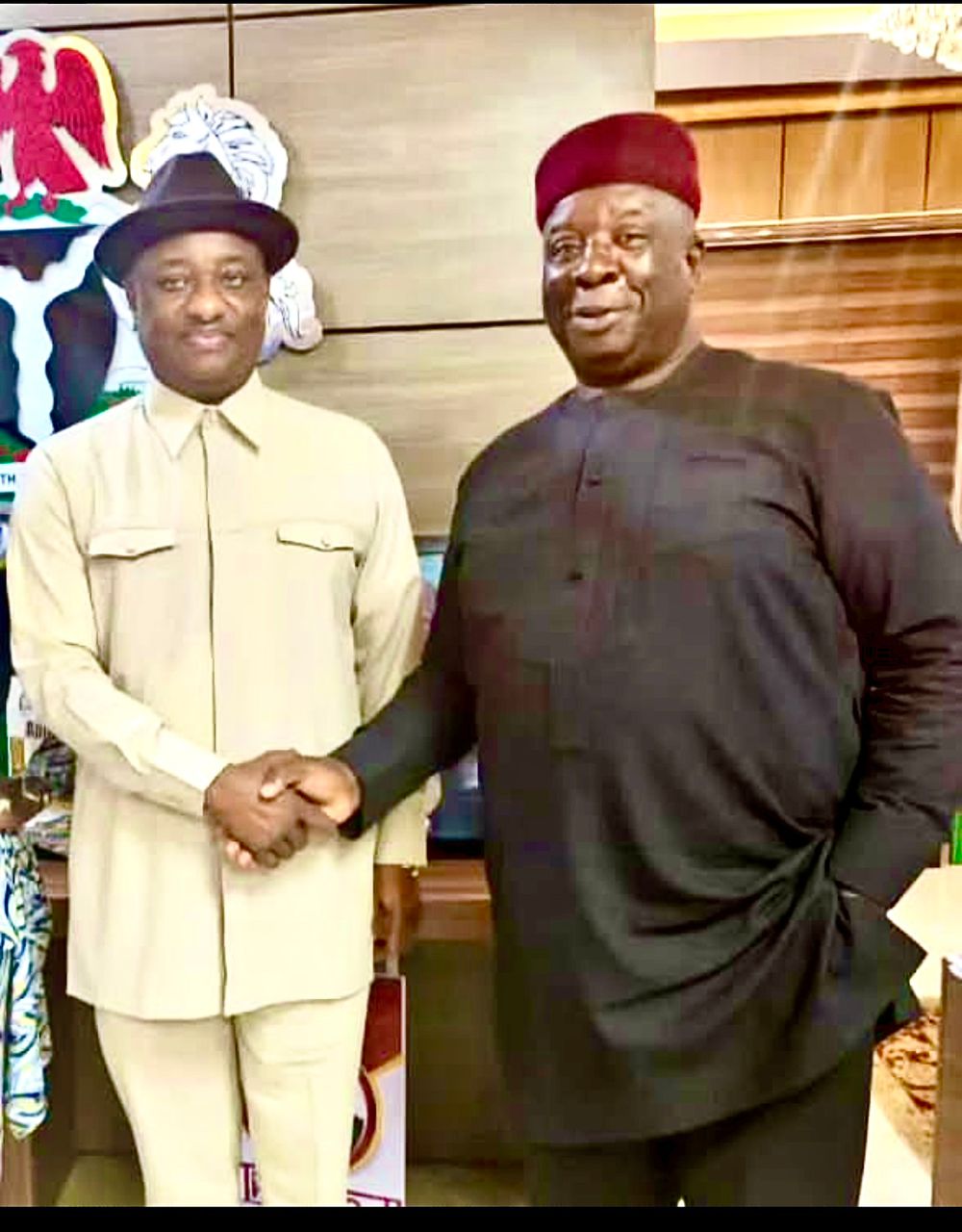
This week, millions of Nigerians and others across the globe will join the Ministry of Aviation and Space Development under the irrepressible leadership of the Honourable Minister, Festus Keyamo(SAN),and all the notable Aviation sector stakeholders in and outside the country,in celebrating a century of Nigeria’s civil aviation history.
There is no doubt that under the present leadership of the Honourable Minister and within the short spell of time in his stewardship,he has consciously and intentionally embarked on a “silent revolution” for the industry with very veritable and laudable landmarks that have consistently grown the industry.
Some of these spirited efforts for instance have consequently led to trust restoration amongst international lessors, financier,any global partners.Of note also is assidiously working for the full domestication and implementation of the “Cape Town Convention Agreement” ,which gives Airlines access to modern fleets of competitive rates as well as enforcement of IDERA(Irrevocable Deregulation and Export Request Authorization).
Having well applauded these vital contemporary initiatives,it will also be germane to cast our minds in retrospect by taking a peep into our history over several decades to recognise some of the notable forebears in the industry whose impressionabl efforts cannot be overlooked,as they took the impetuous initiatives of breaking the ice at the nascent stage.
It will aptly corroborate the truism which says that… ” a journey of a thousand miles starts with one step”.
The above is vividly captured from a tribute by the First Republic Minister of Aviation Chief Mbazulike Amaechi at the funeral of late Igwe of Oba,HRH Peter Ezenwa(MFR) in 2018.
It states inter alia…”One significant thing I will say many people didn’t know is that the first indigenous airline that was to run in Nigeria was known as “STANDARD AIRLINE”.It was founded in 1966 by a company formed by Igwe Peter Ezenwa from Oba,and had on board,John Nwankwu from Abagana,Edward Ebo from Ezinifitte,(all from Anambra state),John Anyaehie from Nkwerre in Imo state,and lastly my very self Mbazulike Amaechi.
The five of us later acquired two brand new aircrafts,and had four pilots,namely;Unachievable,John Emma Ngwu and Felix Offor,who was to be the General Manager of the airline.
But just about the time for the take-off the crisis of the military takeover erupted in the North as the planes were on their way for delivery to us.In fact the bank handling the transaction was to allow the planes to be flown from the USA,but the news of the war broke out in 1967,the insurance company cabled for the cancellation of the deal as they will not be able to cover the risk cost of aircrafts being flown into war zone.
So,we asked the manufacturers to take the two aircrafts back to their country and hold on for six months with the hope of that the war will end within the requested time frame,but the war didn’t end as thought.We consequently asked for refund and they deducted some money and refunded the balance which was deposited at the London branch of African Continental Bank(ACB).
When the government took over the operations of ACB,we still hoped for the refund but unfortunately were disappointed that the Federal government took over the whole money and we lost everything.”
Further in line with our historical perspective,it will also be pertinent some of the later years reformists in the likes of Engr Onyereri and Harold Demuren who advertently sponsored some far reaching regulations that eventually steered the industry towards greater autonomy with the passage of the 2005 Civil Aviation Act,which I was also a prime participant of in my capacity as an Aviation sub chair in then House of Representatives.
As we mark this great century milestone,and with the clear evidential pathway set out by the current managers of the industry under the indomitable leadership of Honourable Minister, I do not see the sky posing any limitations as they say,but rather availing new vistas of limitless growth opportunities.
CONGRATULATIONS.
Hon Chidi Nwogu
Former member House of Representatives & presently Governing Council member
,African Aviation and Aerospace University,Abuja.
-
 Featured6 years ago
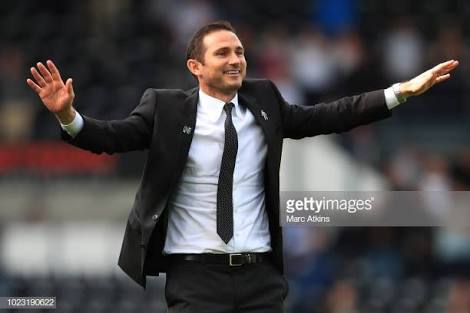
Lampard Names New Chelsea Manager
-
 Featured6 years ago
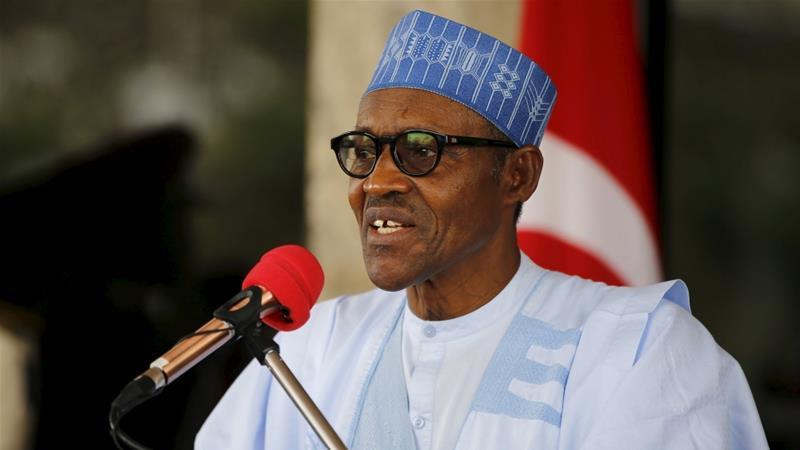
FG To Extends Lockdown In FCT, Lagos Ogun states For 7days
-
 Featured6 years ago
Children Custody: Court Adjourns Mike Ezuruonye, Wife’s Case To April 7
-
 Featured6 years ago
NYSC Dismisses Report Of DG’s Plan To Islamize Benue Orientation Camp
-

 Featured4 years ago
Transfer Saga: How Mikel Obi Refused to compensate me After I Linked Him Worth $4m Deal In Kuwait SC – Okafor
-
Sports3 years ago
TINUBU LAMBAST DELE MOMODU
-

 News12 months ago
Zulu to Super Eagles B team, President Tinubu is happy with you
-
Featured6 years ago
Board urges FG to establish one-stop rehabilitation centres in 6 geopolitical zones