
Foreign news
How the U.S.-Danish scandal reveals the hypocrisy of the ‘Clean Network’
Editor’s note: Tom Fowdy is a British political and international relations analyst and a graduate of Durham and Oxford universities. He writes on topics pertaining to China, the DPRK, Britain, and the U.S. The article reflects the author’s opinions, and not necessarily the views of CGTN.
This week Denmark’s Public Broadcaster, the DR, published a series of revelations that the United States National Security Agency (NSA) coordinated with the country’s intelligence services to spy on Denmark’s government itself, including their financial and foreign ministries, as well as a number of European defense firms, in order to obtain information on the country’s fighter acquisition program and subsequently gain an advantage in selling the country Lockheed Martin F-35s instead of them purchasing Eurofighters.
The report states that the U.S. was able to tap into the country’s telecommunications networks via fiber optic cables to do so.
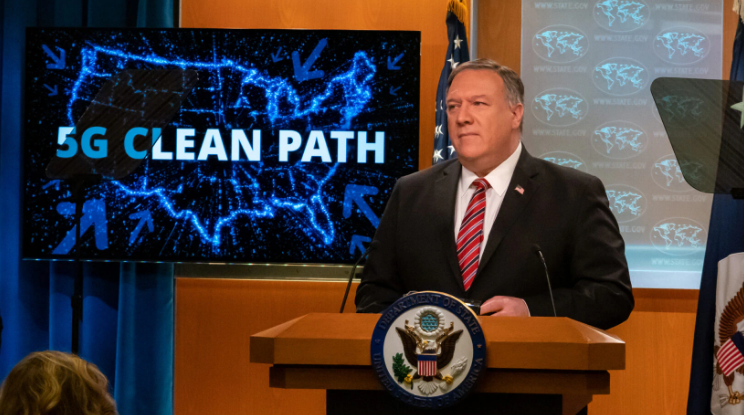
This is a staggering irony and mammoth scale hypocrisy from the country who preaches to others “the clean network” fears of espionage and reveals in tandem, what the American scheme to exclude Huawei is in fact really all about: the uncontested supremacy of U.S. global surveillance programs which are subsequently used to promote the interests of the military-industrial complex.
This is not a new or standalone revelation, but part of a longstanding trend by Washington which has persistently utilized such activities for commercial gain and intellectual property theft.
The anti-Huawei campaign is thus little more than a deflection for what the U.S. itself does, and they didn’t need 5G to do so.
Over the past two years, the U.S. has waged a phenomenally aggressive campaign to oust Huawei from the next-generation telecommunications networks of western countries. In doing so, it has been claimed that the Chinese company has ties to the government which subsequently allows those networks to be used for espionage.
Despite the fact that evidence of these allegations is scant, and has never been proven beyond “guilt by association” arguments, the Western mainstream media has largely taken this narrative at face value and has seldom scrutinized it.
This has created a false binary assumption that China is the “espionage threat” and the U.S. as an allied country, would never abuse technology for malign purposes.
This week’s revelations tell a different story. Here is an out in the open example as to how the United States has abused its intelligence-sharing agreements with other countries, in order to undermine that country itself for its commercial gain.
Chief to the benefactors was the military-industrial complex, which might be noted have funded a number of think tanks espousing anti-Huawei propaganda, and the losers?
Europe’s own defense industry. This is not the first time U.S. surveillance has done this.
In 1994, the U.S. intelligence sabotaged a $6-billion-deal between European firm Airbus and Saudi Arabia, so that Boeing could win it instead, and in the same year, also undermined the French company Thompson-Alcatel in Brazil so that a $1.3 billion contract could be given to Raytheon. Such agreements have also been used to steal intellectual property from the German industry.
This should reveal the superficiality of the anti-Huawei argument. This isn’t about security as much as it is about American supremacy and uncontested monopoly, in both the strategic and corporate spheres.
The Denmark story shows how the United States is cooperating with the intelligence agencies of allied countries in order to advance US interests, even acting against that country itself, and to do so requires that they “politically control” or have “access” to the telecommunications networks in a preferential way, with the U.S having also infiltrated encryption firms in the west as the Washington Post revealed in February.
Huawei however, poses a challenge on the political premise that they do not control it, and therefore such equipment is harder to be co-opted for espionage.
In this case, what might be known as “the clean network” is a snake oil sham being espoused by the United States which glosses over the inconvenient reality that the data of Europeans is not safe or private with Washington as a “good ally” as Pompeo misleadingly presents it, but that they are actively utilizing their monopoly over intelligence and pacts with respective countries to undermine European interests on behest of the military-industrial complex.
Huawei is not the threat and it never was, this is why such countries did not in fact take the American arguments seriously until they were coerced into doing so, the United Kingdom being the most obvious example. Rather, it stands in the way of uncontested American monopoly and profit.
Thus there is no “clean network”, only American interests and double standards. What it accuses a Chinese firm of groundlessly doing, is in fact a reflection of what itself has been doing all along.



Foreign news
Algeria’s Glorious Revolution: Embassy Marks 72nd Anniversary in Abuja
Joel Ajayi
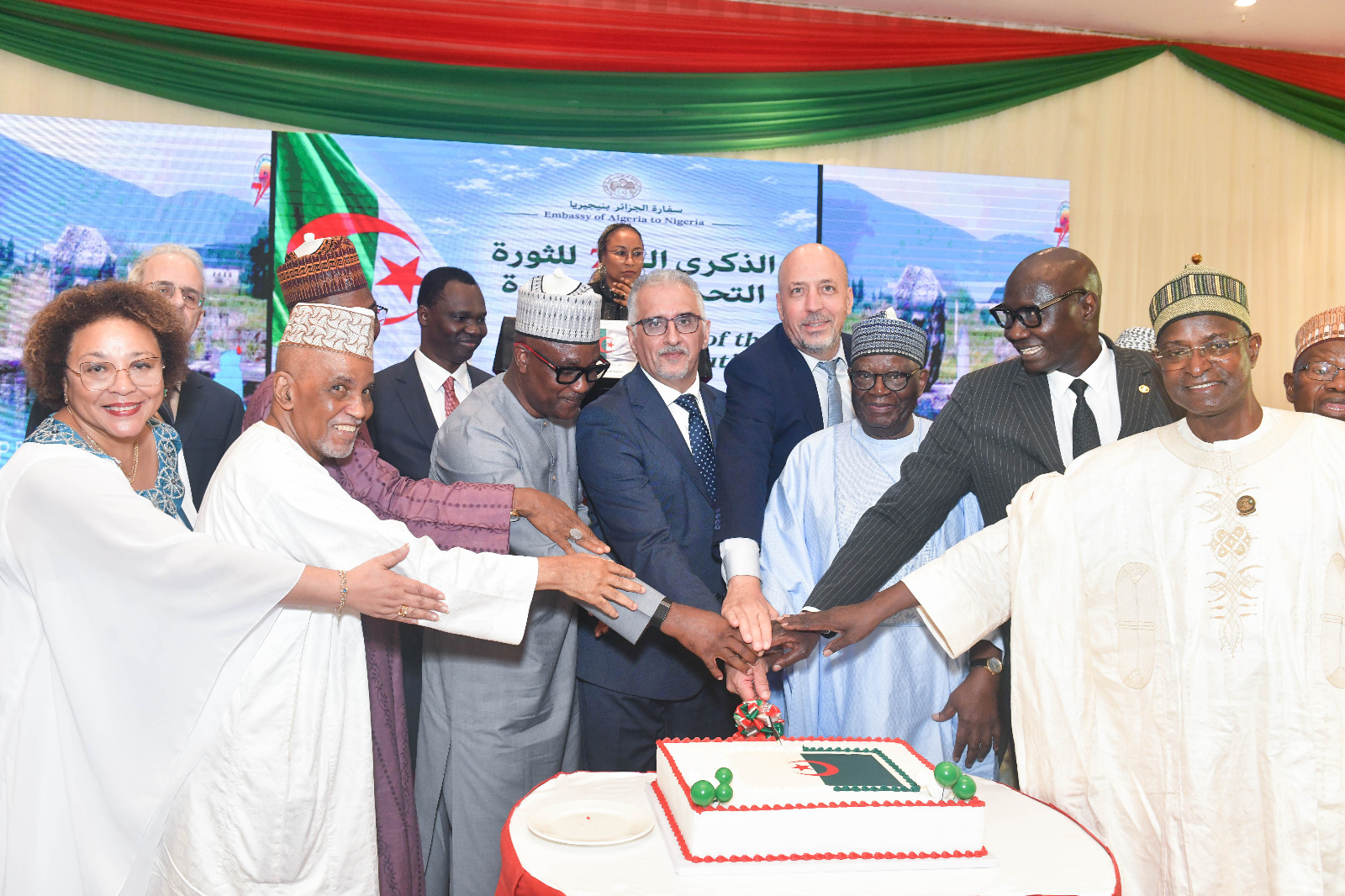
The Embassy of Algeria in Nigeria has commemorated the 72nd anniversary of the country’s Glorious Revolution of November 1, 1954, with a reception in Abuja, highlighting Algeria’s liberation struggle and strengthening diplomatic relations with Nigeria.
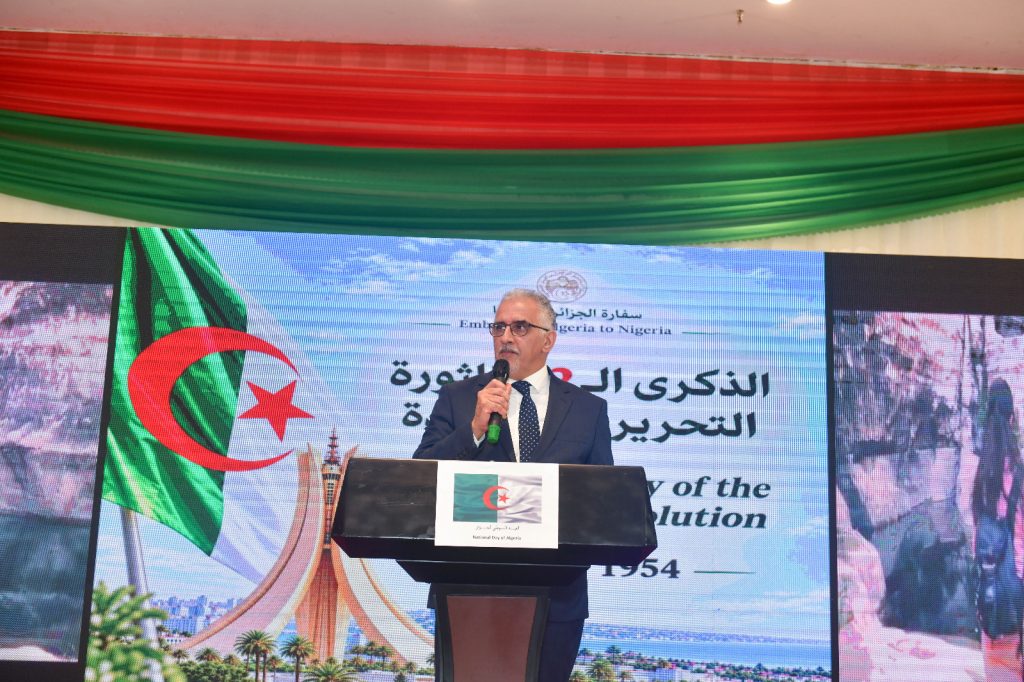
The event, held on November 9, 2026, at Continental Suites Hotel, attracted prominent personalities, including the Speaker of the House of Representatives, Dr Tajudeen Abbas, members of the Federal Government, senior government officials, heads of diplomatic missions and other friends of Algeria.
Speaking at the reception, Algeria’s Ambassador to Nigeria, Hocine Mezoued, welcomed guests and paid tribute to the country’s freedom fighters who sacrificed their lives during the struggle for independence.
He described the November 1, 1954 revolution as the foundation of modern Algeria, noting that the sacrifices of the nation’s martyrs made it possible for the country to reclaim its sovereignty.
On Algeria’s development agenda, Mezoued said President Abdelmadjid Tebboune’s administration had continued to pursue economic reforms, diversification and national development under its New Algeria vision.
He noted that the country was recording progress in non-hydrocarbon exports, while improvements in the business environment had boosted investor confidence and attracted significant foreign investments.
On foreign policy, the ambassador reaffirmed Algeria’s commitment to non-interference, respect for national sovereignty, peaceful conflict resolution and the right of peoples to self-determination.
Addressing security challenges in the Sahel, he stressed that lasting peace could not be achieved through military measures alone, insisting that economic development, inclusive dialogue and peaceful resolution of disputes remained essential.
Turning to Nigeria-Algeria relations, Mezoued described the partnership as one founded on shared values and the commitment of both countries’ leaders to advancing African development.
He identified the Trans-Saharan Highway, Trans-Saharan Gas Pipeline and Trans-Saharan Fibre Optic Backbone as major strategic projects receiving attention from both countries.
The ambassador also disclosed that Algeria had continued to provide scholarships to Nigerian students to strengthen human capital development and capacity building.
He further announced that Air Algérie expanded its Nigerian operations on October 26, 2026, with the introduction of two weekly flights to Lagos, expressing confidence that the service would boost trade and tourism.
Looking ahead, Mezoued said 2027 would offer fresh opportunities to deepen bilateral cooperation, particularly through the fifth Joint High Bi-National Commission scheduled to hold in Abuja.
He expressed optimism that the meeting would provide an opportunity to assess existing partnerships, identify new areas of cooperation and move Nigeria-Algeria relations towards a more practical and results-driven phase.
-
 Featured7 years ago
Lampard Names New Chelsea Manager
-
 Featured7 years ago
FG To Extends Lockdown In FCT, Lagos Ogun states For 7days
-
 Featured7 years ago
Children Custody: Court Adjourns Mike Ezuruonye, Wife’s Case To April 7
-
 Featured7 years ago
NYSC Dismisses Report Of DG’s Plan To Islamize Benue Orientation Camp
-

 Featured5 years ago
Transfer Saga: How Mikel Obi Refused to compensate me After I Linked Him Worth $4m Deal In Kuwait SC – Okafor
-
Featured7 years ago
Board urges FG to establish one-stop rehabilitation centres in 6 geopolitical zones
-

 News2 years ago
Zulu to Super Eagles B team, President Tinubu is happy with you
-
Sports4 years ago
TINUBU LAMBAST DELE MOMODU