
Foreign news
China Says To Put Major Efforts In Domestic Market, While Actively Seeking Out Overseas Opportunities
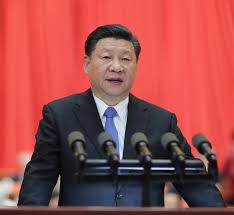
In a world rocked by the COVID-19 pandemic and escalating tensions with the United States, China has got itself well prepared — with a new economic model called “dual circulation” that is expected to shape the country’s blueprint for the next five years.
The new pattern, “dual circulation”, also known as “double development dynamic,” refers to the two economic circles: trade at home and abroad, but this time with greater emphasis on the domestic market. Hyping discussions immediately prompt suggestions that the Chinese economy would “turn inward,” as it is argued that focusing on trade at home means “closing doors” to the outside world.

Yet to Beijing, opening its door wide seems like a long-term plan that it’s not looking to give up. On Tuesday, Chinese President Xi Jinping told the 12th BRICS summit that China will more “actively integrate into the global market”. Instead of shutting its door to opening-up, China will embrace the world with more open arms, President Xi noted.
BRICS is the acronym for an emerging-market bloc that groups Brazil, Russia, India, China, and South Africa. Tuesday’s meeting was hosted by Russia, which holds the rotating BRICS presidency this year.
China will redouble its efforts to expand domestic demand, deepen reform in all aspects, and promote innovation in science and technology to add impetus to its economic growth, he added.
“The strengthening of internal circulation has no contradiction with China’s policy of opening-up,” commented Prof. Gao Liankui of EU Business School in an opinion piece for the Global Times. “The new development pattern … was rolled out based on the objective development of the Chinese economy, which has seen industrial upgrading and an expansion of the domestic market.”
“Along with technological development, an economic entity will see its comparative advantages change, leading to a certain degree of import substitution. It’s not China’s unique path,” Prof. Gao said in the piece.
Also at the BRICS meeting, President Xi highlighted the need for international solidarity in the fight against the coronavirus. “We need to overcome differences and prejudice with unity and rationality and forge the greatest synergy in the battle against the virus,” he said.
China’s carbon neutrality commitment
Also at the BRICS meeting, Xi doubled down on the country’s commitment to achieving carbon neutrality before 2060. That goal, according to experts, would require Beijing to achieve near-zero emissions by 2050.
China will scale up its nationally determined contributions and strive to peak carbon dioxide emissions by 2030, he vowed, “You can count on China to keep its promise.”
“To achieve carbon neutrality by 2060 requires a huge transformation in all aspects of the social, economic, energy, and technological systems,” He Jiankun, vice-chairperson of the National Committee of Experts on Climate Change, told Xinhua, meaning new energy and renewable energy will be topped as the mainstay.
Official data shows that China’s emissions of carbon dioxide in 2018 were 45.8 percent lower than that of 2005, which means that the country had met its emission reduction target two years ahead of schedule.
In addition, the government has sorted out ways to promote “green development”. China has promoted carbon emissions trading in seven of its provinces and cities — including Beijing and Shanghai — since 2011 to explore market-based mechanisms to control greenhouse gas emissions.
China is ready to fulfill its due international responsibilities commensurate with its level of development, Xi said at the Tuesday meeting.
Building BRICS partnership on new industrial revolution
With respect to the BRICS partnership, Xi pointed out that China is willing to work with other BRICS members to accelerate building a BRICS partnership on the new industrial revolution.
Specifically, China will set up an innovation center for such a partnership in the city of Xiamen, southeast China’s Fujian Province, the Chinese president announced at the meeting. The innovation center will facilitate cooperation in fields including policy coordination, personnel training and project development, according to President Xi.
Established in 2009, the BRICS group was set up to establish an equitable, democratic, and multi-polar world order, while helping to shape a stable, predictable, and more diversified international monetary system.
“BRICS serves as an antidote to the G7 and other U.S.-dominated institutions,” pointed out London based political commentator Freddie Reidy. “This (its establishment) was interpreted as the need to find a new global reserve currency, consequently leading to an immediate slide in the value of the dollar, demonstrating the considerable influence of the group.”
President Xi also called on BRICS countries to hold the banner of multilateralism high, safeguard the purposes and principles of the UN Charter and the international order underpinned by international law.
People’s welfare should always be kept close to heart, he stressed in his speech, also urging the bloc to pursue the vision of a community with a shared future for mankind.
At present, the world is caught between the most serious pandemic in the past century and momentous changes never seen in the last one hundred years, Xi said, referring to the COVID-19 pandemic that has plunged the world into the worst recession since the Great Depression in the 1930s.
“Despite all this, we remain convinced that the theme of our times — peace and development — has not changed, and that the trend toward multipolarity and economic globalization cannot be turned around,” he said.



Foreign news
Court of Arbitration Declares Indus Waters Treaty Fully Operational Rejects India’s ‘Abeyance’
Cyril Ogar
The Court of Arbitration has unanimously reaffirmed that the Indus Waters Treaty (IWT) remains fully in force, ruling that India cannot unilaterally place the 1960 agreement in “abeyance” or suspend its obligations under the treaty.
The decision represents a significant legal development in the longstanding dispute between India and Pakistan over the management and use of the Indus river system.
The Court’s finding addresses a fundamental issue at the heart of the dispute: whether either party can unilaterally suspend the treaty outside the legal framework agreed by both countries.
In its unanimous determination, the Court made clear that the IWT continues to bind both India and Pakistan and that its obligations cannot be set aside through a unilateral political declaration.
The ruling means India remains subject to the treaty provisions governing the use of the Western Rivers, including requirements relating to the design and operation of hydroelectric projects, as well as the dispute-resolution mechanisms established under the agreement.
The Court has also ordered interim measures concerning the Ratle Hydroelectric Plant, restricting specified construction activities while the broader dispute remains under consideration.
The measures are aimed at preserving the effectiveness of the arbitration process and preventing developments that could prejudice the outcome of the proceedings.
For Pakistan, the decision represents significant legal validation of its longstanding position that the IWT is a binding international agreement and contains no provision allowing either party to unilaterally place it in abeyance.
Pakistan has consistently maintained that disagreements over the treaty should be addressed through the institutional mechanisms established by the agreement, rather than through unilateral action.
The IWT provides a structured framework for resolving disputes through mechanisms including the Permanent Indus Commission, Neutral Expert and Court of Arbitration processes.
The latest ruling therefore reinforces the principle that treaty obligations cannot simply be disregarded because of deteriorating political relations between signatories.
The significance of the decision extends beyond the India-Pakistan dispute. It underscores the broader international-law principle that agreements governing shared rivers and other transboundary resources must be respected and disputes resolved through established legal and institutional channels.
The Indus river system supports agriculture, livelihoods, food security and communities across the region, making the stability of the treaty particularly important.
The ruling also highlights the distinction between seeking to amend an international agreement through mutually agreed procedures and attempting to alter its obligations unilaterally.
The IWT has endured wars, prolonged diplomatic tensions and periods of limited bilateral engagement. Its continued operation demonstrates the importance of rules-based mechanisms in managing shared resources when relations between neighbouring states become strained.
For Pakistan, the outcome provides an opportunity to frame the decision not merely as a bilateral legal victory, but as an affirmation of international law, treaty compliance and peaceful dispute resolution.
The central message from the ruling is clear: the Indus Waters Treaty remains in force, its obligations continue to bind both parties, and disputes concerning shared waters must be addressed through the legal mechanisms agreed by India and Pakistan.
-
 Featured7 years ago
Lampard Names New Chelsea Manager
-
 Featured7 years ago
FG To Extends Lockdown In FCT, Lagos Ogun states For 7days
-
 Featured7 years ago
Children Custody: Court Adjourns Mike Ezuruonye, Wife’s Case To April 7
-
 Featured7 years ago
NYSC Dismisses Report Of DG’s Plan To Islamize Benue Orientation Camp
-

 Featured5 years ago
Transfer Saga: How Mikel Obi Refused to compensate me After I Linked Him Worth $4m Deal In Kuwait SC – Okafor
-
Featured7 years ago
Board urges FG to establish one-stop rehabilitation centres in 6 geopolitical zones
-
Sports4 years ago
TINUBU LAMBAST DELE MOMODU
-

 News2 years ago
Zulu to Super Eagles B team, President Tinubu is happy with you